
Grapes are susceptible to various diseases. Their development is influenced by many factors: the occurrence of fungal infections, the composition of the soil in which they are grown, poor weather conditions, and other unfavorable factors. To reduce the risk of disease, preventative measures are used, one of which is the product "Shavit." This is a well-known and popular product produced by an Israeli company. To achieve the desired effect from the fungicide "Shavit" on grapes, it is important to follow the instructions for use.
Description of the drug
"Shavit" is a broad-spectrum fungicide. It is used against grapevine diseases such as rot, and has shown good results against various types of spotting, powdery mildew, and mildew. This product is also highly effective in treating late blight and scab.
This product not only rids grapevines of all types of fungi, but also prevents their occurrence in the area in the future when growing grapes.
"Shavit" protects grapevines and prevents the development of pathogen resistance. It can protect plants from various diseases before they appear.
Advantages and disadvantages
Due to the active ingredients contained in Shavit, this fungicide is considered highly effective against many grapevine diseases. Primarily, it reduces enzyme activity, slows down respiration and biosynthesis, and disrupts the pathogen's cell division. As a result, the diseases do not react to the fungicide when it is applied.
The product quickly attacks the fungal pathogen, completely destroying it and all pathogens. Moreover, the product causes virtually no harm to the grapes. It also poses no risk to soil microorganisms and is relatively safe for birds. A positive effect is observed immediately after spraying the grapes with the fungicide. The protection period lasts approximately two weeks.
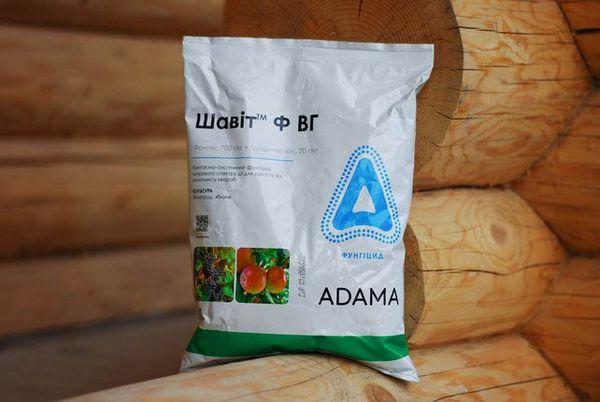
In addition to the advantages, Shavit has some disadvantages:
- Requires mandatory respiratory and eye protection when spraying, so be sure to use a protective respirator and wear clothing that covers exposed areas of the body during processing.
- When preparing the mixture, it's important to ensure the substance is completely dissolved. For this purpose, it's recommended to use special stirrers.
- This product should be reapplied two weeks after the initial treatment. Exposure to scorching sun and rain destroys the protective film it creates.
Beneficial properties
The grapevine disease remedy "Shavit" offers multiple advantages that set it apart from similar products. It is a key component of the anti-resistance defense system.
An important feature in the fight against fungal diseases is its resistance to rainfall washout. This product has a longer-lasting protective effect than similar products (14 days or more). It is non-phytotoxic to plants.
"Shavit" effectively combats almost all currently known types of fungi.
According to reviews from experienced gardeners, the fungicide "Shavit" is completely worth the investment. When applied to the soil, it decomposes into its individual components, so it poses no further environmental hazard. Harvested ripe fruits are also considered completely safe and environmentally friendly.
Release form
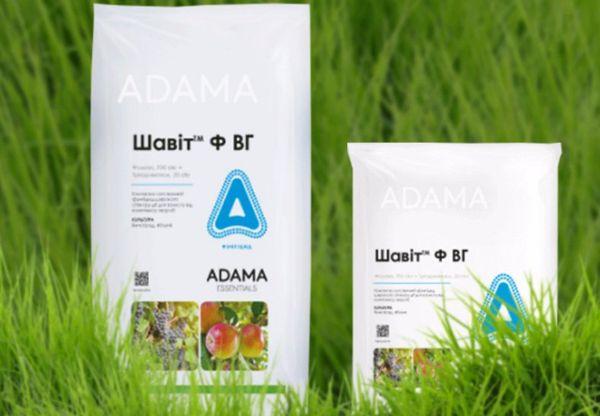
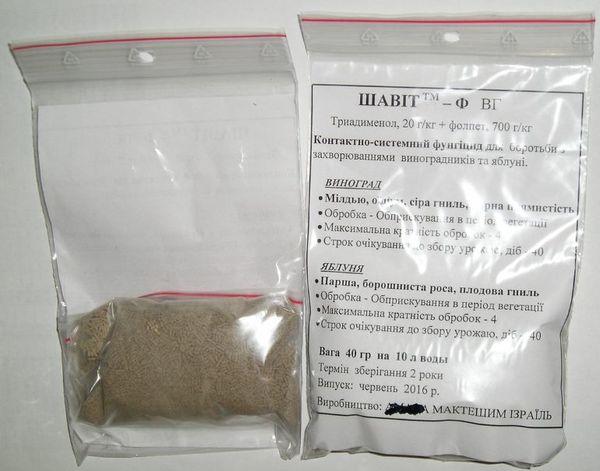
Shavit for grapes is available as a powder or water-soluble granules. It is packaged in laminated polyethylene bags of 5 or 1 kilogram capacity.
Compound
The product contains 70% folpet. This component is a phthalamide chemical. This component prevents the pathogen's cell division, preventing fungal spores from developing and reproducing. Stopping cell division ultimately kills the pathogen by removing it from the tissues.
Another substance found in Shavit is triadimenol, which makes up 2% of the total composition. It belongs to the triazole group. Its mode of action is similar to that of folpet; it also has a destructive effect on the disease. The difference is that triadimenol does not prevent cell division, but rather kills cells at the membrane level.
The substance disrupts membrane function by damaging cells, which are no longer able to proliferate due to the effects of folpet. Triadimenol destroys and eliminates any remaining pathogenic cells. The presence and successful combination of these two active ingredients in Shavit, which belong to different classes, allows for effective treatment of fungal infections without the pathogen developing resistance.
Since this fungicide is a two-component one, it cannot be fully replaced by another similar product. Products with similar properties can be found, but their effectiveness will not be as high. The following products are used instead of Shavit: Strobi, Quadris, Topaz, and Skor. These products show good results in treating grapes, but only when used in combination with other fungicides.
Take a look Also
How to apply
When growing grapes and other fruit crops, a range of diseases can cause significant damage to yields. The main disease that damages grape crops is scab. This problem affects the plant during fruit set, flowering, and bud break. Temperatures between 5 and 30 degrees Celsius and high humidity are most favorable for its development.
"Shavit" is an excellent treatment for this disease. However, treatment is only effective if started immediately after the first symptoms appear; otherwise, the treatment will be less effective. Grapes are also highly susceptible to diseases such as rubella, mildew, black rot, and oidium.
To achieve a positive result, it is recommended to follow certain points:
- to determine in a timely manner exactly when the pathogen appeared and began to multiply;
- monitor the phytosanitary conditions of the fruit-bearing plant throughout the growing season;
- carry out high-quality treatment of grapes with the fungicide "Shavit";
- prevent the development of disease resistance.
To prepare the finished substance, mix:
- drug (in powder or granules);
- water.
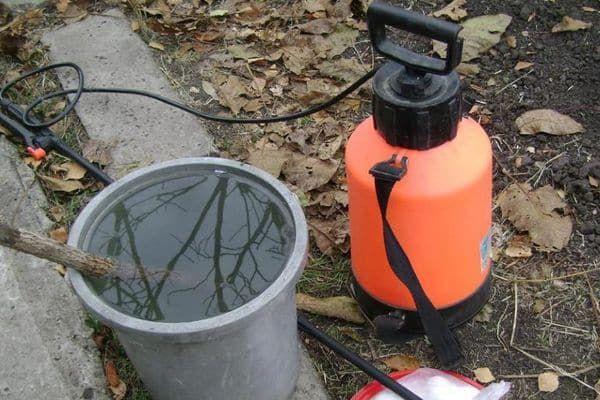
The product, in the form of powder or granules, is dissolved in water, after which the solution is poured into a sprayer and sprayed on the above-ground part of the plant.
An important point is that the mixture must be used immediately after it is prepared, as the substance tends to decompose quickly.
The first treatment is carried out before the plant has begun to bloom. In this case, it is a preventative measure. The next similar treatment is carried out after the berries have been picked.
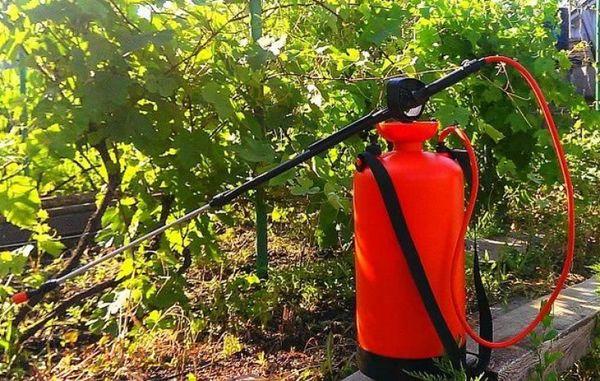
If a grapevine has been infected with fungus, the instructions call for immediate treatment. This doesn't necessarily depend on the plant's developmental stage.
For 1 square meter of vineyard, no more than 100 ml of the prepared solution, which consists of 0.2 grams of the product diluted in water, is quite sufficient.
It is recommended to use 2.0 kg of Shavit per 1 hectare of vineyard.
A certain interval must be maintained between treatments. This interval should not exceed two weeks. The most suitable weather for spraying grapes is dry, preferably warm.
No more than four treatments are recommended per season, the last of which should be carried out no later than 40 days before harvest. Before using Shavit on grapes, carefully read the instructions for the correct dosage. This is important, as the dosage varies for garden crops, fruit bushes and trees, and grapes.
Compatibility
When working with Shavit, it's important to understand which other products it can and cannot be combined with. The product is incompatible with alkaline substances and mineral oils. It is used in combination with certain pesticides. However, before combining the two, tests should be conducted to determine the potential reactions.
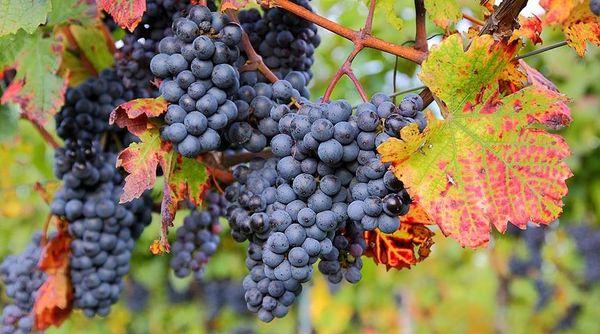
It's helpful to alternate between contact and systemic fungicides, as contact fungicides act only on the surface, while systemic ones penetrate the plant.
Security measures
"Shavit," used for the treatment and prevention of grapevine diseases, is hazardous to human health and the environment. If plants are planted near water, spraying should be done with caution. Avoid contact of the prepared solution with exposed skin and mucous membranes. Mechanical or manual treatment of the plants should be performed in the fields only after 3-7 days.
The product can rapidly contaminate lakes and rivers, causing serious harm to fish and all aquatic life. To prevent this, avoid treating plants during windy weather.
Fungicides can also sometimes kill bees. Therefore, if there's an apiary nearby, it's essential to follow all safety precautions when applying the fungicide. To protect the beekeeping facility from the fungicide, close all hive exits or move the hives to a safer location.
Before starting work, protect yourself by wearing a protective suit, mask, and gloves. The product can be stored for 2 to 3 years at temperatures between 0 and 35 degrees Celsius in a dry, hard-to-reach place, away from children and pets, and away from food products.
Related posts:
 How to grow grapes in the Moscow region in open ground without a greenhouse
 Description of the Julian grape variety, planting and care instructions
 Description of the Krasotka grape variety, planting and care technology
 The ripening time of grape vines by variety, how to speed up the process, and what to treat the plant with
 Description of 30 grape varieties for Siberia, planting and care for beginners
 Description and characteristics of the Preobrazhenie grape variety, planting and care
 Description and characteristics of the Laura grape variety, planting and care
 Description and characteristics of the Livia grape variety, cultivation and propagation