
- Description and Features
- History of selection
- Main characteristics
- Description of the bush
- Description of bunches and berries
- Productivity
- Transportability
- Frost and drought resistance
- Disease resistance
- Taste qualities
- Applications of berries
- Pros and cons of the variety
- How to plant correctly
- Recommendations for choosing deadlines
- How to choose and prepare a site
- How to select and prepare planting material
- Planting diagram
- Care instructions
- Watering mode
- Top dressing
- Trimming
- Mulching
- Preventive spraying
- Protection from birds and pests
- Preparing for winter
- Thinning
- Standardization
- Methods of reproduction
- Diseases and pests
- Gray rot
- Anthracnose
- Mildew
- Black spot
- Leaf roller
- Harvesting and storage
- Tips from experienced gardeners
The Athos grape variety was developed quite recently, but it has already attracted attention and become the stuff of legends. Hybrid grape varieties bred by amateur growers are always distinguished by excellent taste and high resistance to adverse environmental influences. This is likely due to a genuine love and dedication to the necessary and important process of breeding new hybrid forms of fruit crops.
Description and Features
The new Athos grape variety will be especially appreciated by those who don't want to wait until autumn to enjoy their favorite berry. Athos's fruits begin ripening three months after the first buds open. In southern latitudes, ripe clusters appear as early as mid-July.
Also, the new hybrid form of the fruit crop exhibits resistance to fungal infections, viruses and harmful insects.
History of selection
The Athos grape owes its origins to the Ukrainian amateur breeder V.K. Bondarchuk. In 2009, this amateur experimenter crossed the well-known Talisman berry variety with the Kodryanka grape. Three years later, the new hybrid yielded its first harvest.
Main characteristics
Based on its characteristics and taste, Athos grapes are classified as table varieties of fruit crops, with recommendations for universal use of berries.
Important! Due to the youth of the Athos grape variety, many properties and characteristics have not yet been fully studied, so they will be supplemented and changed over time..
Description of the bush
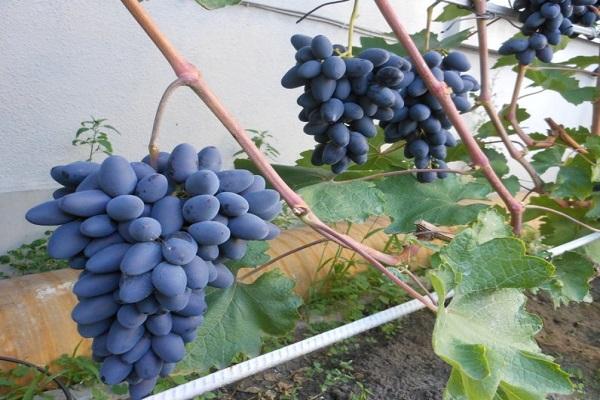
Mature Athos grape vines are tall, with strong, sturdy fruiting shoots and branches, which is essential when planting outdoors. The vines are brown, with reddish nodes, and grow up to 7 meters during the growing season, ripening fully.
The leaf blades are round in shape, with characteristic features of the fruit crop, in rich green shades.
Description of bunches and berries
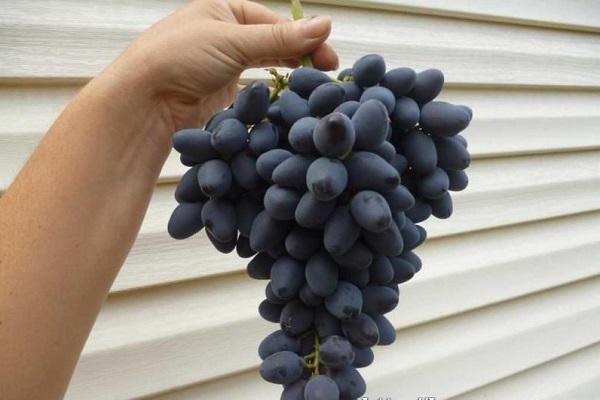
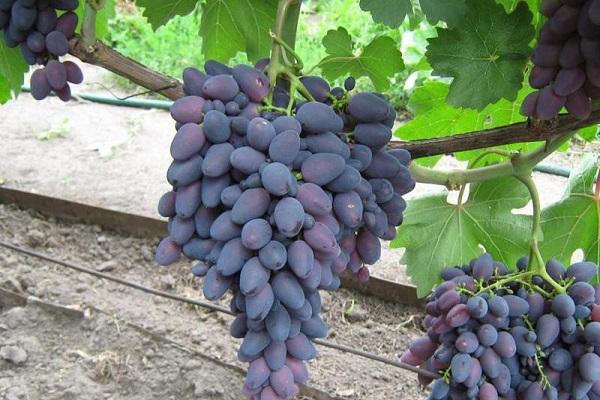
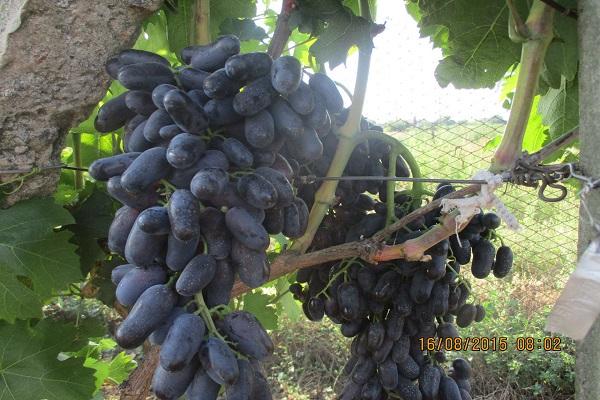
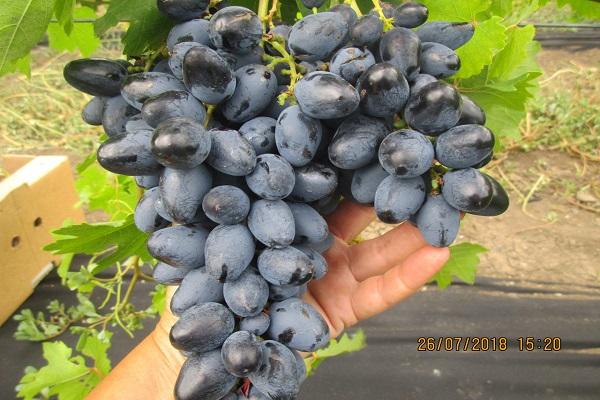
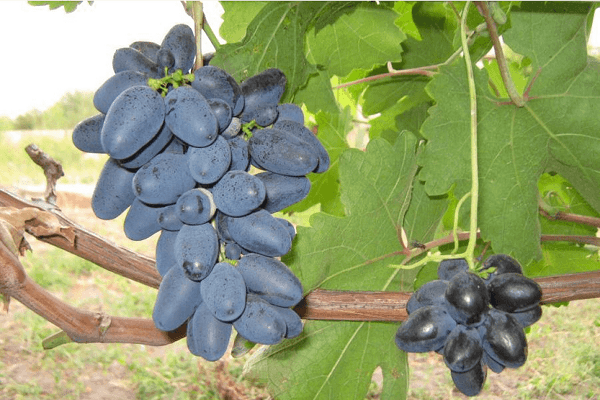
The grape clusters are impressively sized, weighing from 700 to 1,500 g, medium density, cone- or cylindrical in shape, with large, elongated berries weighing from 9 to 14 g and up to 4 cm in size. The skin is dense, but not thick, dark blue, almost black in color, with a waxy protective coating.
Tip! Once ripe, Athos grapes can remain on the vine for up to 30-35 days. The berries dry and wither in the sun, turning into large, delicious raisins.
Productivity
The Athos grapevine's first fruiting occurs in the third year of outdoor growth. The vines develop racemes with male and female flowers, allowing for complete, self-pollination.
From the beginning of the growing season to grape ripening, it takes 90 to 105 days. In industrial production, up to 13 tons of ripe grape clusters can be obtained from one hectare of land. In private gardens, with proper care and favorable weather, the yield can reach up to 20 kg of fruit per bush.
Transportability
Thanks to the dense pulp and skin of the fruit, Athos grapes easily withstand long-distance transportation without losing their marketable appearance or taste.
Take a look Also
Frost and drought resistance
Athos grapes are recommended for growing in southern regions, but experienced gardeners also cultivate these berry bushes in the temperate climates of central Russia. The plants aren't particularly resistant to low temperatures, but they can easily withstand temperatures as low as -23°C (-23°F). In temperate climates, berry bushes require careful winter insulation.
But Athos easily tolerates short-term drought and heat, without harm to plants and crops.
Disease resistance
According to winegrowers, Athos grapes have a natural immunity to many fungal, viral, and bacterial diseases. However, if cultivation practices are not followed and humidity levels are high, the vines are often attacked by gray mold.
Advice! To prevent diseases and protect against harmful insects, it is recommended to treat plants with chemical and biological pesticides in early spring and after harvest.
Taste qualities
According to winegrowers and gardeners, Athos berries have unique flavor characteristics. With a sugar content of 19 to 21%, the fruit is completely devoid of acidity. The flesh is dense, very juicy, burgundy in color, crisp when eaten, and contains 2-3 seeds.
The longer the grape clusters remain on the bushes, the sweeter the berries become.
Applications of berries
The fruits of the Athos grape variety contain a huge amount of substances beneficial for the body and human health, so it is recommended to eat them fresh.
The berries are also used to make delicious, healthy juices, nectars, jams, and marmalades. In cooking, grapes are used to make sauces, desserts, baked goods, and salads. They are also canned, dried, and frozen.
Experienced gardeners and vegetable growers make homemade liqueurs and cordials from Athos, and to produce high-quality wine, the grapes are blended with industrial fruit varieties.
Pros and cons of the variety
Like every hybrid form, the Athos grape variety has both advantages and disadvantages.
Advantages:
- Early harvesting of ripe berries.
- Easy to care for.
- Stable, annual fruiting.
- Natural immunity to fungal, viral and bacterial infections.
- Long storage periods and the possibility of long-distance transportation of the harvest.
- High yield rates.
Another advantage of the Athos grape variety is the excellent taste of its berries.
Among the disadvantages of the variety is its insufficient resistance to climatic and weather conditions.
How to plant correctly
The health of the berry bush and future yield depend on correct and timely planting procedures.
Recommendations for choosing deadlines
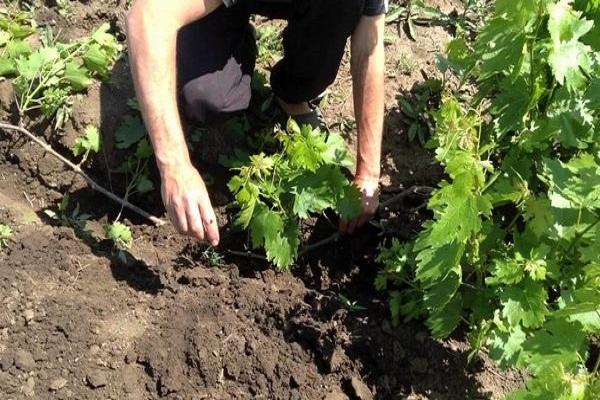
In warm, southern climates, autumn planting of seedlings in open ground is recommended. This is done 40-50 days before the first frost. In temperate climates, grapes are planted in the spring, before the growing season begins. Over the summer, the plants will have time to establish roots and receive additional nutrients from the soil.
Important! After autumn planting, grape bushes need additional cover, even in southern regions..
How to choose and prepare a site
The hybrid grape variety Athos prefers sunny, slightly elevated areas, well protected from strong drafts and cold, gusty winds.
The presence of groundwater is permitted at least 4 m from the soil level, the acidity and moisture content of the soil are neutral.
Site preparation:
- The area is deeply dug, loosened, and debris and weeds are removed.
- The soil is mixed with a mineral complex, humus and organic matter.
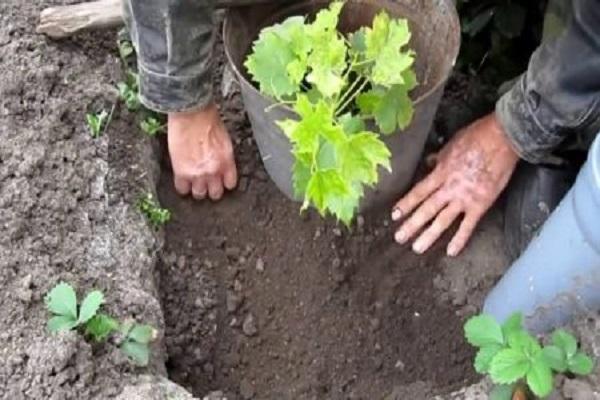
- 2-3 weeks before planting, dig holes 60 to 70 cm deep and wide.
- Considering the large size of the bushes, the distance between plantings is left at least 4-5 m, between ridges 6-7 m.
- A drainage layer is placed in the hole, soil is added, and a peg is driven in.
- The hole is filled with water and left.
Take a look Also
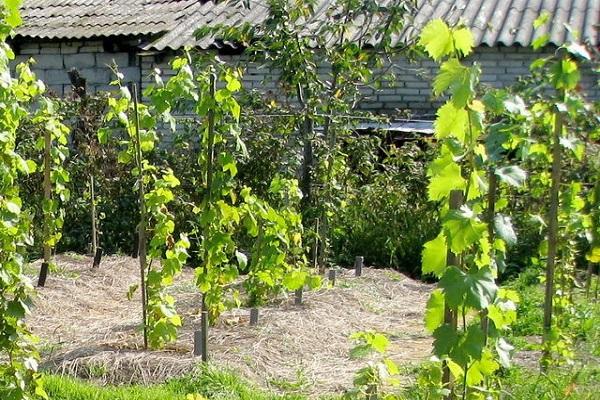
Important! Large, tall plants require additional support in the form of trellises or arches.
How to select and prepare planting material
It is recommended to purchase planting material only from proven and reliable nurseries:
- Select a plant that is 1-2 years old.
- The seedling is inspected for damage, disease and pest infestation.
- The trunk of the plant is elastic, smooth, shiny, with the obligatory presence of fruit buds or leaves.
- The roots are long, with many branches, well-moistened, without growths or signs of rot.
A day before transferring the plants to open ground, the rhizomes are soaked in a mixture of water and clay, then treated with a solution of manganese.
Planting diagram
On the day of planting, short, damaged and weak branches of the rhizomes are cut off from the grape seedlings.
Planting order:
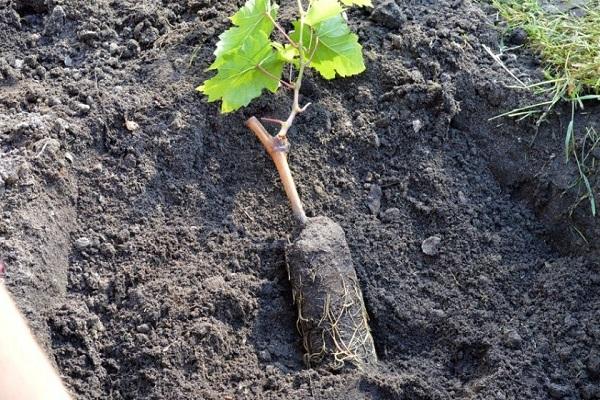
- The prepared plant is placed in the center of the planting hole.
- The roots are carefully distributed in the hole and covered with soil, leaving no voids.
- The soil around the plant is compacted, watered, and the seedling is tied to a support.
After planting is complete, the tree trunk circle is mulched with a layer of humus or dry grass.
Care instructions
Proper and timely agricultural practices will help you grow genuine, productive Athos grapes.
Watering mode
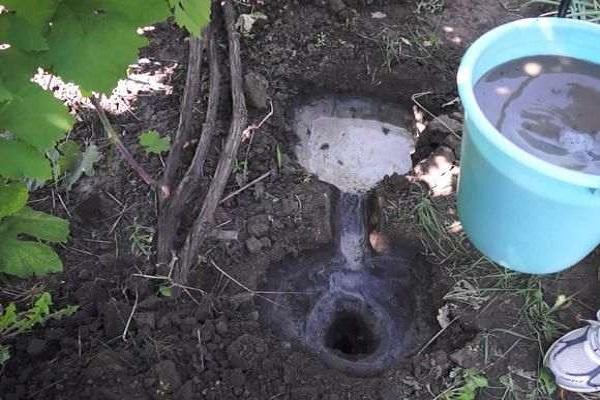
For young Athos grape seedlings, water 2-3 times per month during the first 2-3 years of growth. Mature grape vines are watered 3-4 times throughout the growing season. Irrigation is especially important before flowering and during fruit formation. Also, water generously after harvest, applying 50 to 70 liters of water per plant.
Important! During periods of drought and hot weather, increase the frequency of watering.
Top dressing
Grape vines expend a lot of energy and strength to grow and ripen fruit shoots and berries, so the plants require additional feeding.
In early spring, berry crops are fertilized with nitrogen-containing organic matter. The next time, the bushes are fed with phosphorus and potassium is during flowering and fruit set.
The last time the plant is fertilized is after harvesting, adding organic matter and a balanced mineral complex to the soil.
Trimming
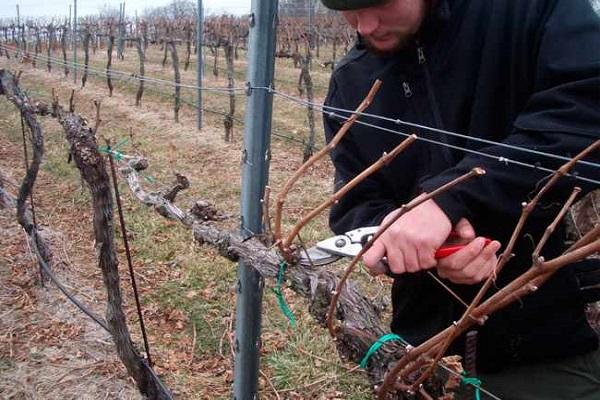
Formative pruning of bushes is carried out depending on the region where the fruit crop is grown. In southern regions, the bush is formed into four main branches; in temperate climates, two main branches are sufficient. In the fall, three to five buds are left on each branch, which will serve as the basis for new shoots to emerge the following season.
Mulching
To enrich plant rhizomes with oxygen, moisture, and essential nutrients, the soil is loosened, weeded, and the tree trunk area is mulched with natural materials. These activities are timed to coincide with watering and fertilizing.
Preventive spraying
Preventive treatment of fruit crops against diseases and harmful insects is carried out in early spring, before the beginning of the growing season, and in late autumn, using chemical and biological preparations.
Protection from birds and pests
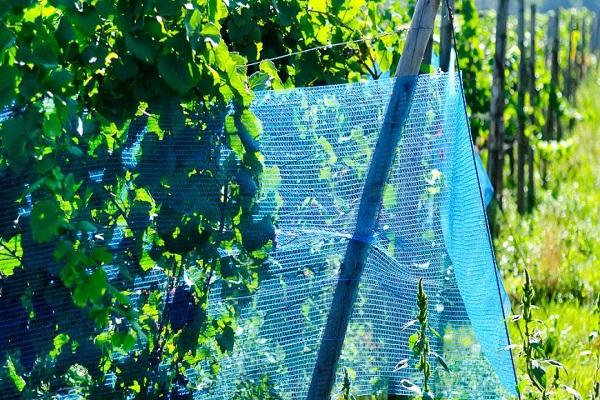
Ripening grapes are attractive to birds. The birds flock to vineyards in large flocks, causing irreparable damage to the crop. Shiny objects are used to scare away the birds, and the grapes are packed in fine-mesh nets.
Insecticide-based products are used to control insects.
Preparing for winter
In late autumn, the shoots are removed from their supports and laid on pre-prepared boards or dry leaves. The plants are covered with spruce branches and sprinkled with soil. The prepared shoots are covered with special fiber or film. As soon as the first snow falls, a large snowdrift is created over the shelter.
Thinning
After harvesting, the grape bushes are thinned out, removing young shoots, old, woody, deformed and broken branches and shoots.
Standardization
For a mature bush, 30 to 35 fruiting buds are considered normal. Excessive strain on the vine will cause the berries to shrink and the grape clusters to ripen more quickly.
Methods of reproduction
To propagate the Athos grape variety in a garden plot, vegetative methods are used.
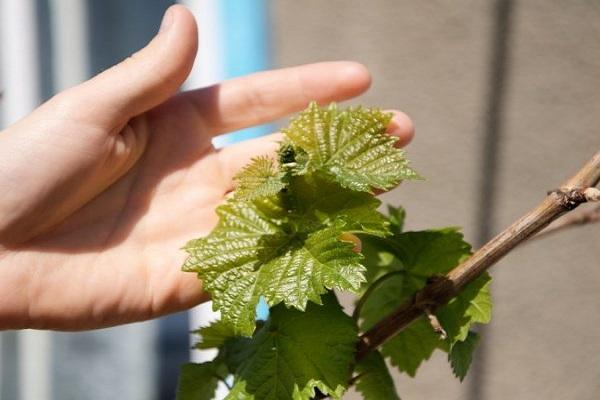
To propagate by cuttings, take a strong, healthy shoot from a mature bush and divide it into equal sections, each 30-35 cm long, leaving 3-4 buds on each cutting. The plants are planted in pots with fertile soil and then transferred to separate planting holes in the spring or fall.
You can also propagate the fruit crop by layering or by grafting a cutting onto the rootstock of an old bush.
Diseases and pests
Errors in care rules and unfavorable weather conditions increase the risk of grape bushes being damaged by diseases and pests.
Gray rot
The fungal infection affects all above-ground parts of the plant, but causes the greatest damage to grape clusters. Brownish spots and a gray, rotting coating appear on leaves, shoots, buds, ovaries, and fruits.
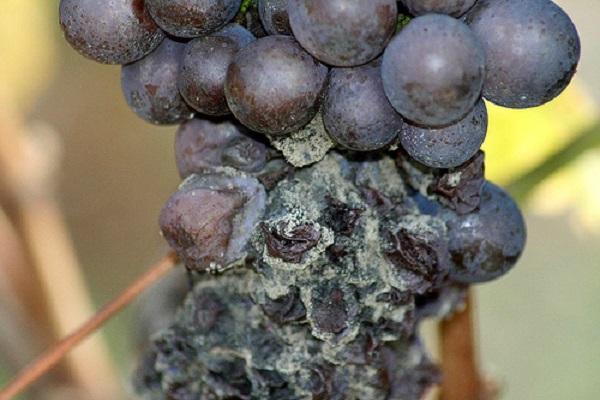
Fungicide-based preparations are used for control.
Anthracnose
The fungus attacks the leaves, shoots, and bunches of grapes. It appears as small brown spots that grow and turn purple, completely destroying the plant's cellular tissue.
For control and prevention, bushes and soil are sprayed with chemical and biological pesticides.
Mildew
When infected, yellowish spots with an oily base appear on the leaf blades. A light, powdery coating develops on the shoots and berries. Later, the plant begins to dry out, and the ovaries and leaves fall off.
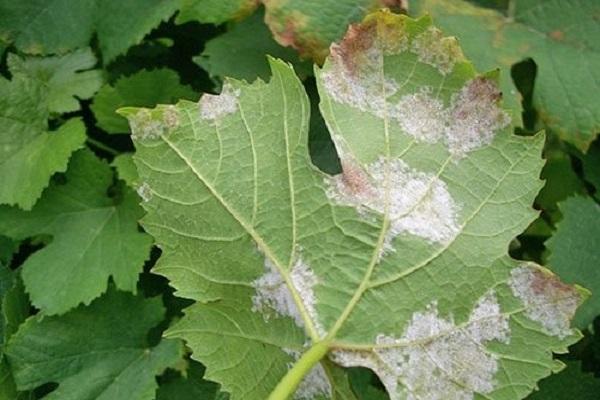
Fungicide-based products are used for control.
Black spot
The fungus affects the entire above-ground part of the plant, manifesting itself as black spots on leaves, shoots and fruits.
Biological and chemical means of protection are used for treatment and preventive treatment.
Leaf roller
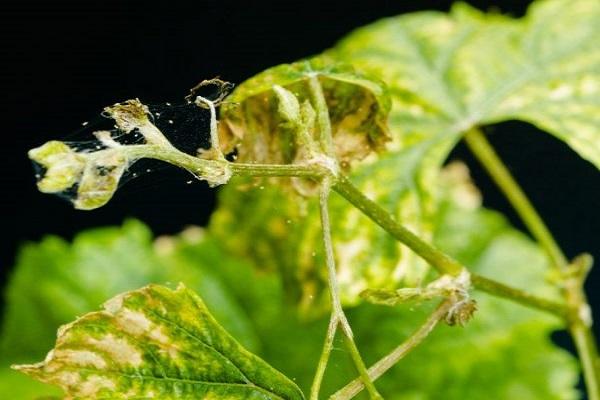
A small moth, it poses a particular threat in its caterpillar stage. To combat this pest, plants are treated with insecticides.
Harvesting and storage
Athos grapes ripen depending on weather and climate conditions. In southern regions, harvesting begins in late July. In temperate climates, the berries ripen only in late August or early September.
In a refrigerator or specialized storage facilities, grape bunches can be stored for up to 2 months without losing their taste or appearance..
Tips from experienced gardeners
The Athos grape variety is a very young crop, and we're still learning about it. However, according to experienced gardeners, proper and timely care is all it takes to ensure a high-quality and abundant harvest.
Related posts:
 Description of 30 grape varieties for Siberia, planting and care for beginners
 The ripening time of grape vines by variety, how to speed up the process, and what to treat the plant with
 How to grow grapes in the Moscow region in open ground without a greenhouse
 Description of the Julian grape variety, planting and care instructions
 Description of 30 varieties and types of Muscat grapes, planting, cultivation and care
 Beginner's Guide to Growing Grapes in Open Ground in Central Russia
 Description of the Krasotka grape variety, planting and care technology
 Description and characteristics of the Syrah grape variety, where it grows