
- Description and Features
- History of selection
- Main characteristics of the variety
- Medicinal properties
- Caloric content
- Benefits and harms
- Acidity
- Berries and bushes
- Disease resistance
- Frost resistance
- Productivity
- Transportability
- Advantages and disadvantages
- How to plant
- Recommendations for choosing deadlines
- Site selection and preparation
- How to select and prepare planting material
- Roots
- Stem
- Kidneys
- Preparation of planting material
- Planting diagram
- Care instructions
- Watering
- Top dressing
- Mulching
- Formation
- Preventive treatment
- Installation of the support
- Lighting and humidity
- Protection from diseases and pests
- Methods of reproduction
- Seeds
- Cuttings
- Air layering
- Harvesting and storage
- Applications of berries
- Tips and advice from experienced gardeners
Among the vast diversity of grape varieties, the Amur grape occupies a special niche. This unique plant thrives not only in regions with warm climates and mild winters. It is equally successfully grown in the Moscow region and neighboring areas. It is often used as a basis for developing new frost-resistant varieties and is the source of many successful breeding achievements.
Description and Features
Amur grape is a dioecious plant pollinated by insects and wind. It stands out among its peers for its vigorous vine growth, reaching up to three meters per season. It requires constant monitoring and pruning of dense areas.
History of selection
The Amursky variety was developed from wild grapes native to the Far East. Through extensive crossbreeding, A.I. Potapenko developed the Amursky Proryv (Breakthrough). This variety subsequently became the basis for many frost-hardy grape varieties resistant to common diseases.
Today, there are several different varieties:
- Amur breakthrough;
- Golden Potapenko;
- Amur triumph;
- Early Russian.
These varieties differ slightly from each other in terms of ripening time and yield.
Main characteristics of the variety
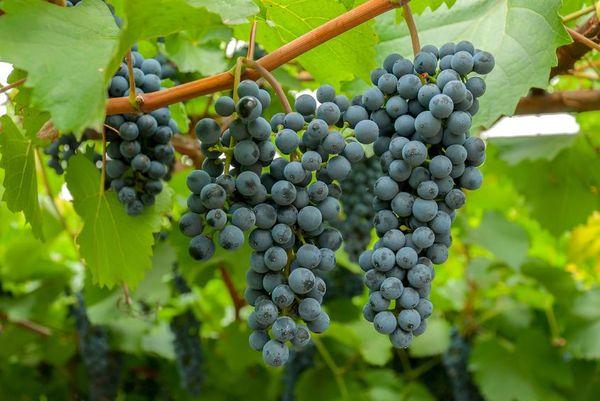
Amur grapes are vigorous vines with well-developed, long tendrils capable of easily supporting heavy clusters of ripening berries. In autumn, the foliage turns fiery red, dramatically transforming any garden.
Medicinal properties
Grapes have medicinal propertiesCalluses—the white growths on the cut surface of the cuttings—are particularly noteworthy. The plant proteins they contain slow the development of cancer cells and tumors. The berries restore metabolic processes. They are often used to treat liver and gallbladder problems. They are also used as a general immune booster.
Caloric content
Amur grapes are low in calories. 100 grams of berries contain approximately 60 kcal. The fructose and glucose found in grapes are quickly absorbed into the bloodstream and do not cause fat formation.
Benefits and harms
The fruits and leaves of Amur grapes are often used as raw materials for the production of medicinal products, as they contain pectin substances, sucrose, glycoside, and fructose.
Diabetics are advised to consume the berries with special caution.
Acidity
Amur grapes contain malic, citric, stearic, succinic, and oxalic acids. The acid content depends on the hybrid variety and ranges from 6 to 8%. Wild grapes contain the highest amounts of acid.
Berries and bushes
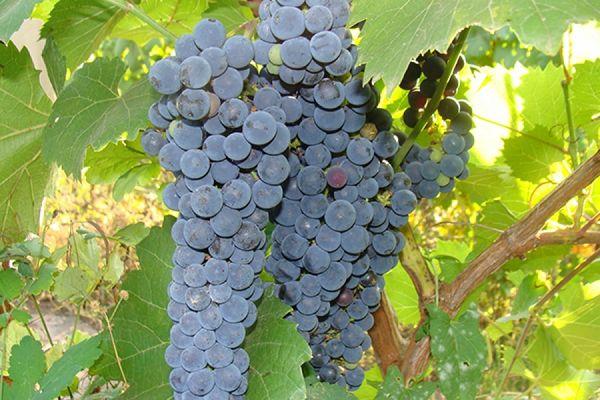
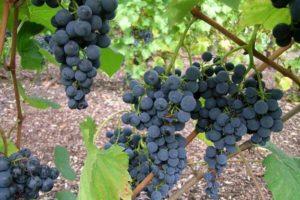
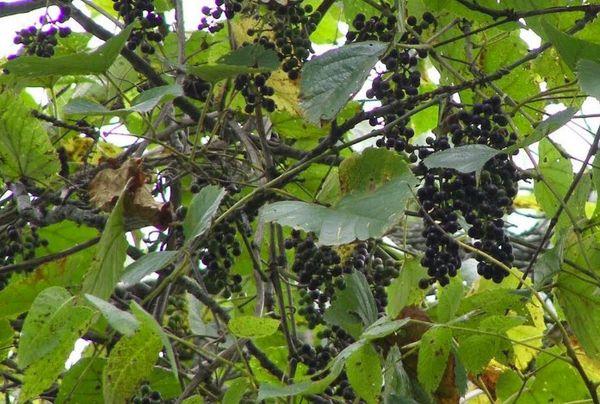
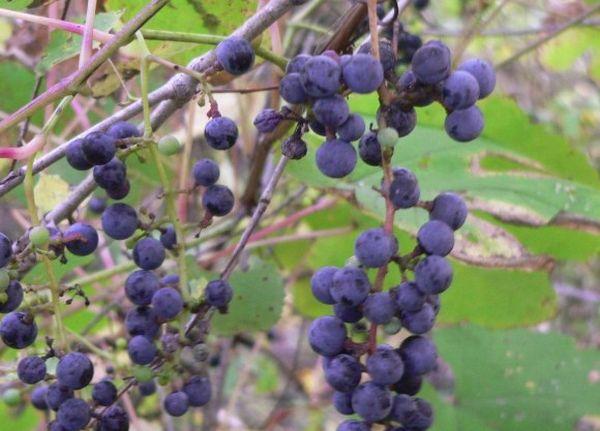
Amur grapes are distinguished by their long vines, often reaching up to 20 meters. They twine around nearby trees and supports, forming dense canopies. In September, the bushes bear small, dark-blue berries with a tart flavor and sugar content of up to 12%. The berries are gathered in small clusters weighing 150 to 500 grams.
Disease resistance
Shows good resistance to diseases: extremely rarely affected by mildew and oidium.
Frost resistance
This variety tolerates temperatures down to -40°C, so it's often grown uncovered. It's also resistant to the first frost. When exposed to frost, the berries lose their tart flavor, becoming very tasty and aromatic.
Productivity
Amur grapes are not known for their high yields and are not profitable when grown on an industrial scale. Yields vary greatly from year to year depending on ripening conditions. They also depend on the varietal characteristics. Under different growing conditions, yields range from 1.5 to 10 kg.
Transportability
Amur grapes are distinguished by their excellent transportability. Thanks to their dense skin and strong attachment to the stem, they tolerate any handling well and can be moved from place to place.
Advantages and disadvantages
Amur grapes have a number of advantages:
- adapts well to a new location;
- winters well without cover;
- ripens in the conditions of the short Siberian summer;
- resistant to pests and diseases;
- easy to transport;
- often used as a decorative ornament to the site.
However, harvesting is difficult due to the vigorous growth of the bushes. To maintain a high yield, the plant requires heavy pruning.
How to plant
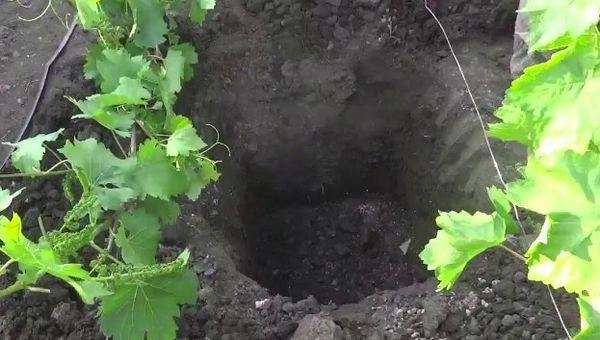
Amur grapes are easy to grow and thrive in new locations. Planting techniques are similar to those for other varieties.
Recommendations for choosing deadlines
Planting times depend on propagation methods:
- propagation by layering is carried out in spring;
- grafts take root with equal success in spring and autumn;
- Sowing of seeds is most often done in the fall.
After autumn grafting, grapes require high-quality multi-layer insulation with covering material or spruce branches.
Site selection and preparation
A well-lit area on all sides promotes uniform ripening of the crop at the right time. When planted in areas shaded by trees or buildings, grapes are often affected by powdery mildew.
How to select and prepare planting material
Planting a healthy seedling guarantees good survival, allowing you to grow a bush with strong immunity and high yields.
Roots
A plant's root system can be a good indicator of its health. Choose a seedling with well-developed roots, uniform coloring, and no signs of rot or other diseases. If you break off a healthy root, you'll see a drop of moisture and a white cut. A seedling with overdried roots will not survive. A darkened root is dead, and the plant is doomed to die.
Stem
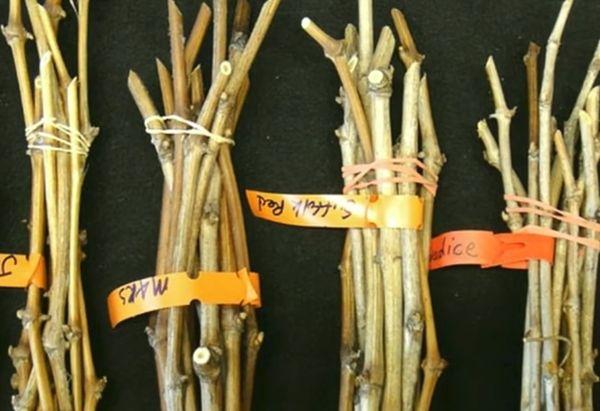
When purchasing a seedling, pay attention to the above-ground part. The plant should have mature shoots at the base and developed buds. The stem diameter at the base should be at least 5 cm. A healthy seedling will have a characteristic light green color when cut at the top. A fresh stem will bend easily in your hands; a dried one will break.
Kidneys
The first-year growth has a uniform brown color and at least 4-5 well-ripened buds. These buds should be vibrant and firm, firmly attached to the shoots.
Preparation of planting material
Before planting, the above-ground portion of the seedling is trimmed back, leaving four mature buds. The roots are dipped in a mixture of clay, manure, water, and Kornevin. In this form, the seedling is planted in the planting hole.
Planting diagram
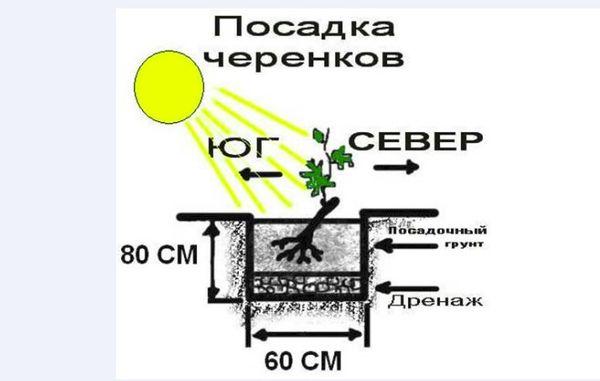
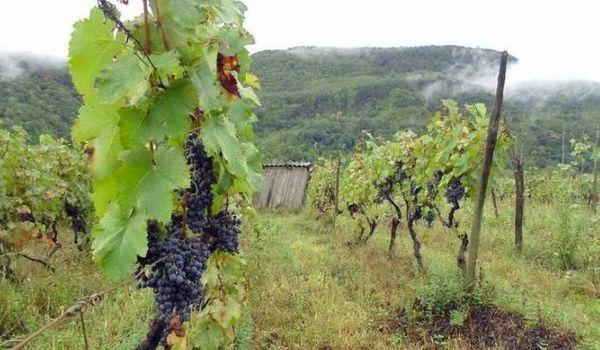
When planting grapes in multiple rows, larger yields are possible with a loose planting pattern. The distance between individual plants should be at least 1.5 meters, and between rows, 2 meters. In these conditions, both plants will receive sufficient sun and nutrients from the soil.
Care instructions
Amur grapes are easy to care for. Even an inexperienced gardener can easily tend them and reap bountiful harvests.
Watering
Grapes love moisture, and natural watering is not enough. Water the plant as the soil dries out. It should remain slightly moist. Watering should be stopped a week before flowering.
Excessive watering often causes flowers to fall off and slows down the ripening of berries.
Top dressing
Grapes are fed with liquid manure diluted in water at a ratio of 1:5. This solution can be replaced with complex fertilizers containing potassium, phosphorus, and nitrogen.
Mulching
Mulching Amur grapes is especially important when grown in regions with moderate climates and low winter temperatures. A thick layer of mulch will protect the root system from freezing and delay flowering by at least a week.
Formation
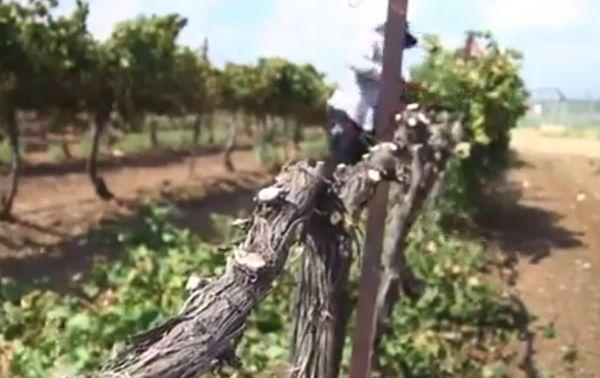
Vineyard training helps increase yields. Training begins at two years of age: two very strong shoots with four buds are left, the rest are ruthlessly broken off. The following year, two shoots are left on each shoulder, and the excess is removed.
Overwintered shoots are shortened to 50 cm. In the fourth year, a fruiting link is formed: on each two-year-old shoot, the upper shoot is left, and the lower shoot is shortened to three buds. A harvest can be expected as early as the fifth year after this shaping.
Preventive treatment
Careful care of Amur grapes and a number of timely measures will help boost immunity and prevent the development of most diseases. To do this, you need to:
- remove fallen leaves;
- carry out preventative treatment with fungicides in spring and autumn;
- thin out the dense crown.
If the plant is well ventilated and exposed to sunlight throughout the day, it is much less likely to be affected by fungal diseases.
Installation of the support
Vigorously branching grapes require sturdy supports. Thick cuttings or branches at least 1.5 meters tall are suitable for this. They are firmly driven into the ground and intertwined with wire or rope. The resulting structure consists of two or more horizontal rows. The bottom row is positioned at least 40 cm above the ground.
Lighting and humidity
For uniform ripening, grapes require good light. This should be taken into account when planting them. Timely pinching of the vines will help prevent excessive shade.
Humidity also affects yield. During the flowering period, the optimal humidity for grapes is 70-80%. If the air is too dry, pollination is difficult, and the berries don't develop the necessary sugar content.
Protection from diseases and pests
Under unfavorable weather conditions, grapes are susceptible to viral, fungal, and bacterial diseases. They are also susceptible to various pests. Delayed treatment can lead to significant yield losses.
Maintaining high yields is achieved through systematic implementation of all necessary agricultural practices and chemical treatment of plants. The choice of treatment depends on the specific disease and its stage.
Methods of reproduction
Amur grapes are propagated:
- cuttings;
- layering;
- seeds.
The most common and effective method remains cuttings.
Seeds
When stored properly, seeds remain viable for many years. They are most often planted in the fall. Before spring planting, they require stratification. The seeds are planted 1.5 cm deep in prepared soil. The first shoots appear within 20-35 days.
Cuttings
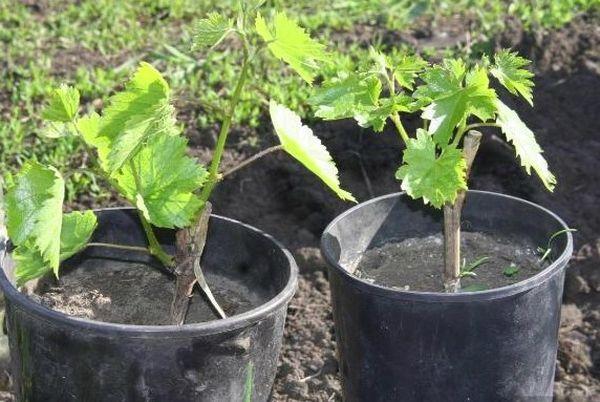
Amur grape cuttings take root easily. Before planting, soak them in water with potassium permanganate or Kornevin for two days. Remove about 3 cm of bark from the bottom of the cutting, place it in wet sand, and leave it at room temperature. Roots will appear on the cutting within three weeks. Now you can transplant the grapes into pots filled with soil.
Air layering
The young vine is passed through a plastic bottle and filled with soil. After a while, the shoot will take root. Once the vine has matured, it is separated from the bush and planted in its permanent location.
Harvesting and storage
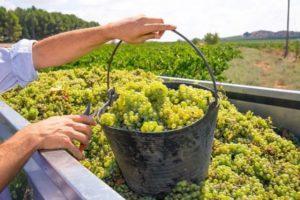
Harvesting begins in mid-September. Dry weather is chosen for this. The bunches are cut carefully, taking care not to damage the waxy coating. For storage, the bunches are placed in ventilated boxes or baskets.
Applications of berries
Amur grapes, in addition to being consumed fresh, are actively used to make compotes, juice, preserves, marmalade, and wine.
Tips and advice from experienced gardeners
Adherence to all necessary agricultural practices will help grow a healthy, fruitful bush. To successfully grow Amur grapes, you need:
- At the seedling stage, ensure regular watering and do not allow the soil to dry out.
- Mulch the soil with a layer of at least 5 cm.
- Despite the high winter hardiness, in cold regions it is better to use shelters.
Amur grapes attract gardeners with their undemanding growing conditions and frost resistance.
Climbing vines with original foliage often become the main participants in the exterior of a garden plot.
Related posts:
 Description of 30 grape varieties for Siberia, planting and care for beginners
 How to grow grapes in the Moscow region in open ground without a greenhouse
 Description of the Julian grape variety, planting and care instructions
 The ripening time of grape vines by variety, how to speed up the process, and what to treat the plant with
 Description of 30 varieties and types of Muscat grapes, planting, cultivation and care
 Description of the Krasotka grape variety, planting and care technology
 Beginner's Guide to Growing Grapes in Open Ground in Central Russia
 The best grape varieties for growing in the Urals, planting and care rules in summer