
- Description and Features
- Vine
- Inflorescences
- Berries
- Taste
- Growing regions
- History of selection
- Main characteristics
- Drought resistance
- Frost resistance
- Productivity and fruiting
- Areas of application of fruits
- Resistance to diseases and pests
- Pros and cons of the variety
- How to plant correctly
- Recommendations for choosing deadlines
- Choosing a location
- Soil requirements
- Site preparation
- How to select and prepare planting material
- Planting diagram
- Care instructions
- Watering mode
- Top dressing
- Preparing for winter
- Mulching
- Prevention of diseases and pests
- Trimming
- Methods of reproduction
- Diseases and pests
- Powdery mildew
- Mildew
- Anthracnose
- Harvesting and storage
- Tips from experienced gardeners
Cultivated grapes have been known to mankind for thousands of years. Recently, varieties adapted to the conditions of central Russia have emerged. These include the grape known as Rombik. This cultivated crop makes a beautiful addition to a fence or wall, and also produces excellent dessert fruit suitable for canning and fresh consumption.
Description and Features
The Rombik hybrid got its name from the shape of its fruits, which actually resemble geometric figures.
Vine
In its first year, the Rombik grape produces a single shoot. The following season, several developed, elongated shoots emerge. It is on these shoots that flowers and fruit appear.
The plant sometimes breaks under the weight of the brushes, so young bushes secured to trellises or with the help of supports.
Inflorescences
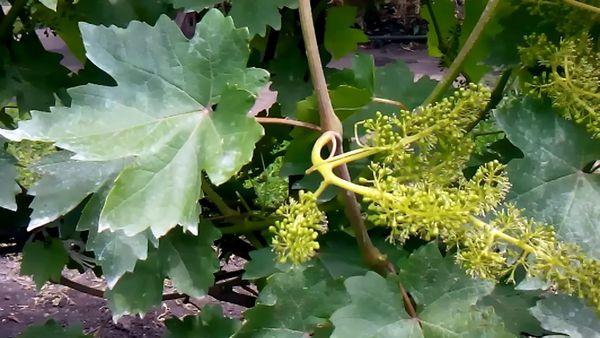
The flowers of the Rombik grape are bisexual, white, and small, gathered in a complex inflorescence. No other pollinators are required near the vineyard.
Since the bush grows quickly and becomes massive, only two inflorescences are left on each shoot. This pruning allows the clusters to have more space. Furthermore, the plant will have sufficient nutrients available for a small number of berries. All this allows the two clusters to ripen well.
Berries
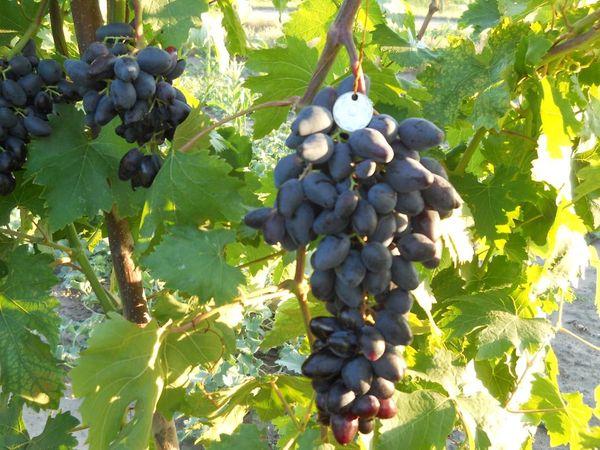
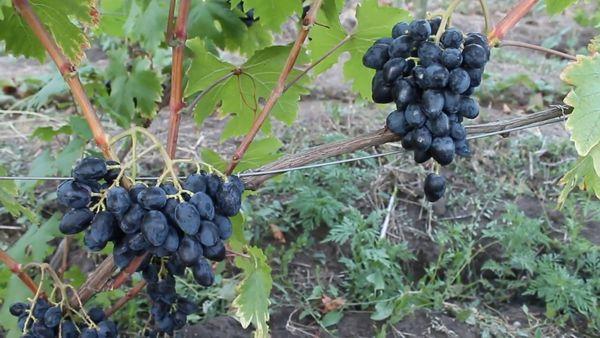
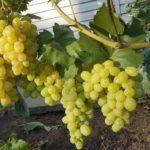
The plant's brushes have the following characteristics:
- The shape is correct, conical.
- Medium looseness.
- The weight ranges from 600 to 900 grams.
Rombika fruits are not tightly pressed in bunches, yet they retain their shape. This quality is beneficial during harvesting. The collected bunches fit tightly into the container, taking up little space without bursting under the weight.
The appearance of the hybrid berries is as follows:
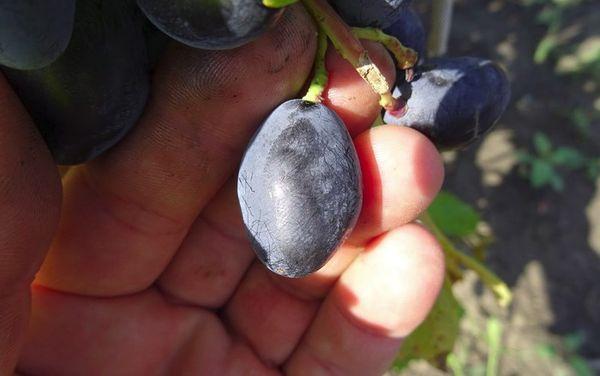
- The shape resembles a rhombus with rounded corners.
- The mass can be more than 15 grams.
- As the grapes ripen, they turn a dark purple color, which then turns black.
- There are a small number of seeds inside.
- The skin is thin.
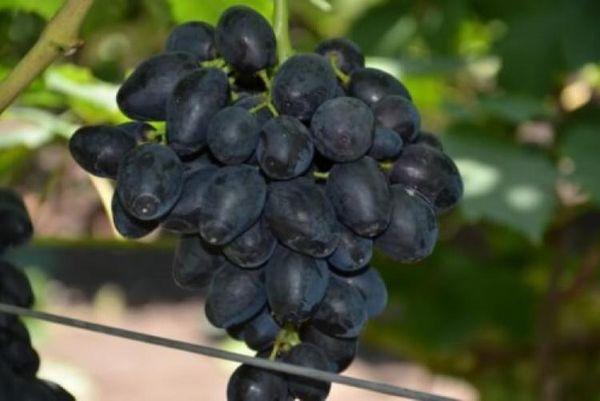
The fruits of the Rombik hybrid are firmly attached to their stalks. Even after they're fully ripe, they don't fall off or crack, so some gardeners leave the berries on the vine until they turn into raisins. Knowing these nuances allows you to obtain high-quality dried fruit without wasting time and resources on additional processing.
Taste
The dark flesh of the plant's fruits is moderately sweet, with a fruity flavor. Slowly tasting the grapes reveals a rich, juicy cherry-like flavor. The slight bitterness of the skin creates a soft, pleasant blend of tender flesh and a hint of acidity.

Growing regions
The Rombik hybrid is grown in the southern regions, in the Non-Black Earth Region, and in the Moscow region.
History of selection
This grape variety emerged at the very beginning of the 21st century thanks to the work of Evgeny Georgievich Pavlovsky. This renowned breeder has given gardeners many fruit crops. This time, Krasotka and Super Extra were crossed to create Rombik, which inherited only the best traits from its parents. Thanks to extensive plant selection, these positive characteristics are retained even as the offspring of subsequent generations develop.
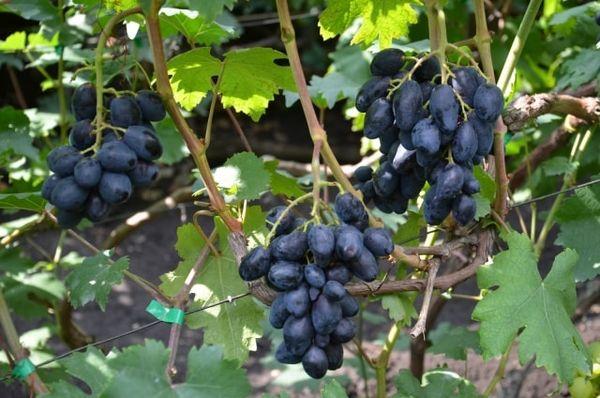
The hybrid is currently undergoing trials in home gardens. Many gardening enthusiasts have spoken highly of the plant's properties.
Main characteristics
The Rombik hybrid has a number of positive characteristics.
Drought resistance
The plants have good drought tolerance. Thanks to their powerful root system, they draw water deep from the soil. However, a lack of moisture negatively affects the vines. Grapes grow slowly, and their leaves change color.
Young and incorrectly planted bushes suffer the most from drought.
Frost resistance
The Rombik hybrid is frost-resistant and can withstand temperatures down to -25°C, but only if it is well covered.
Productivity and fruiting
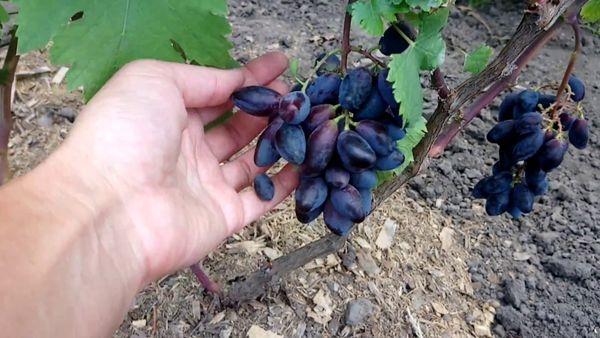
The plant's main advantage is its extremely early ripening period. Just three months after the bushes awaken from hibernation, in the second ten days of July, you can enjoy the first fruits. In southern regions, this can happen as early as early July.
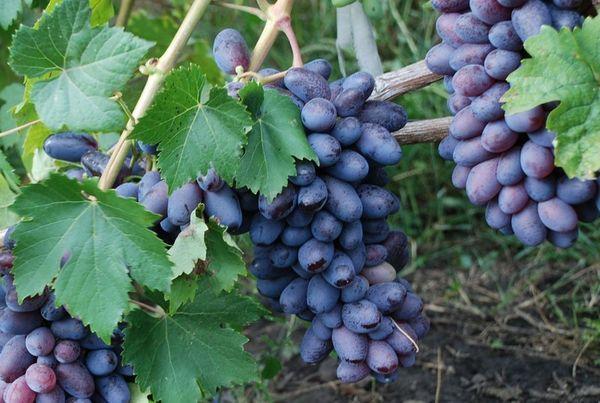
In the variety description, producers claim the hybrid is high-yielding. However, no verified or documented data has been provided.
Areas of application of fruits
Rombica berries can be eaten fresh or dried. You can also make preserves for the winter from grapes – jams and compotes. The plant's fruits are not suitable for making wine.
Resistance to diseases and pests
Manufacturers position the Rombik hybrid as resistant to major diseases and insect pests.
Pros and cons of the variety
Many gardeners point out the grape variety's shortcomings: its youth, the lack of professional cultivation recommendations, and the fact that the fruit lacks sugar. However, its positive qualities far outweigh its negatives:
- unusual taste;
- resistance to infections;
- good transportability;
- frost and drought resistance;
- beautiful appearance of berries;
- early maturity and productivity.
A large number of advantages makes the plant attractive to gardeners.
How to plant correctly
To ensure that the grapes grow comfortably and bear fruit well, planting rules must be followed.
Recommendations for choosing deadlines
Experienced gardeners recommend planting the plant in the spring after the ground has thawed.
But don't forget that a sudden frost can damage seedlings.
Choosing a location
Choose a site for the vineyard that's protected from drafts. Most importantly, it should be well-lit and not located in a low-lying area. This can cause moisture to stagnate, which can negatively impact the plants. A vigorous vine also requires ample space. A sloping site is advantageous because water drains better.
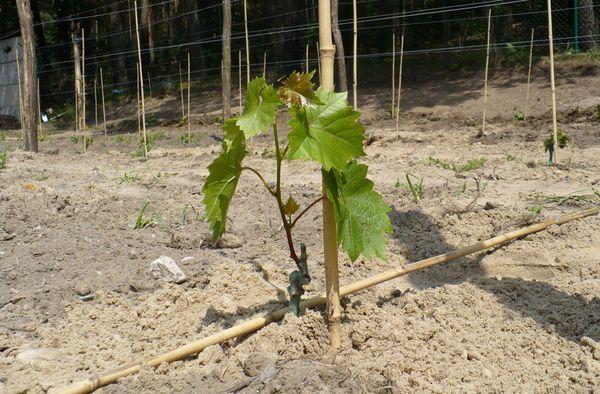
If a gardener plans to create a full-fledged vineyard, then its direction should be from north to south.
Soil requirements
The soil should be light, sandy, and have a pH of 6-7. If the soil contains clay, a drainage system is essential.
Site preparation
A couple of weeks before the planned planting, prepare the permanent site. The soil is dug, a complex fertilizer is applied, and weeds are removed.
How to select and prepare planting material
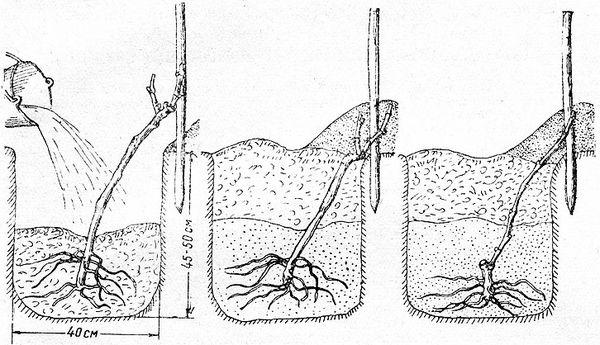
The healthiest seedling is selected, with an undamaged root system and three nodes. It is placed in a growth stimulator diluted in water for several hours. The leaves and roots are then sprayed with a weak solution of copper sulfate. After these steps, the Rombik grape is ready for planting.
Planting diagram
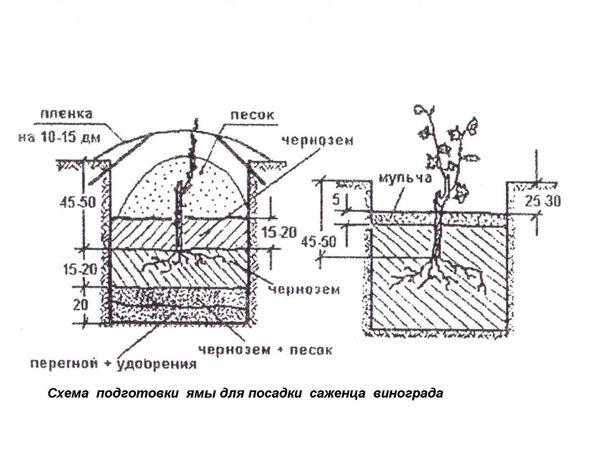
In the prepared area, dig holes 70-80 cm in diameter and 50-60 cm deep. Maintain a distance of 70-80 cm between them. Maintain a distance of 1.5 m between rows.
Care instructions
Planted grapes Rombik require constant care.
Watering mode
During the first couple of months, plants grow rapidly and require abundant, regular watering. Then, reduce the frequency of watering to one watering every 7-10 days.
Top dressing
During the first year of growth, Rombik grapes are not fertilized. The following spring, after the plants awaken, they are watered with a solution of bird droppings. During the budding period, foliar feeding with boric acid is performed. After harvest, a specialized fertilizer is applied.
Preparing for winter
To prevent the bushes from freezing in winter, they are covered:
- the hybrid vines are separated from the trellises;
- remove old plants and leaves;
- Rombik grapes are sprayed with a solution of copper sulfate;
- shallow trenches are dug and their bottoms are covered with film;
- vines are placed into the holes and covered with soil.
The top is covered with hay and roofing felt. Boards are placed on the structure to protect it from strong winds.
Mulching
The soil around the plants is always mulched with freshly cut grass. As it dries, more is added.
Prevention of diseases and pests
In the spring, after the first leaves appear, Rombik grapes are treated with copper sulfate to prevent fungal diseases. Repeat the treatment two weeks later.
Trimming
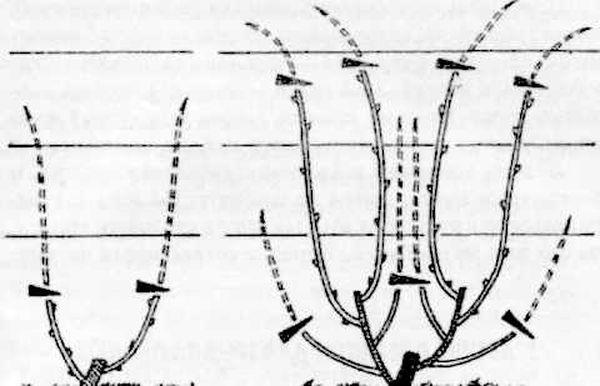
Pruning is done twice per season. The first time, in the spring, is to remove broken and old grapevine shoots. The second time, in the fall, is to remove branches that have not produced a single berry.
Methods of reproduction
The Rombik hybrid is propagated exclusively by cuttings. These are purchased from a nursery in the spring. Young plants are placed in water with a growth stimulant diluted in it and kept for the time specified in the instructions. After this, the vines are planted in a prepared location.
Diseases and pests
Although the Rombik hybrid is considered disease-resistant, it can still be overcome by disease.
Powdery mildew
Powdery mildew attacks the leaves and shoots of grapes, developing a gray or white coating. Flowers on the bush dry up and fall off. At the first sign of the fungal disease, the Rombik hybrid is treated with chemicals at 10-day intervals.
Mildew
Downy mildew is a fungal disease that attacks entire grapevines. Initially, yellow or green oily spots appear on the leaf blades. The infection then spreads further, leading to the death of the grapevine.
Treatment of infected and nearby plants is carried out with organic fungicides.
Anthracnose
Anthracnose causes brown spots on the hybrid's leaves and fruits. Treat the plant with any copper-containing preparations.
Harvesting and storage
Vineyard harvesting is carried out in dry weather. Raw fruit does not store well. Ripe fruit is not very light, so the vines must be supported from below, and branches must be trimmed with pruning shears or a sharp knife.
Store berries in single-layer wooden boxes in a cellar or basement at a temperature of 2-8°C and a humidity of 75-85%. It's important to keep the air temperature between these values. Sudden temperature fluctuations reduce the shelf life of the fruit.
The room should also be dark and have ventilation, as light and sunlight destroy the beneficial substances in grapes.
Tips from experienced gardeners
To ensure the Rombik hybrid grows well and bears fruit, you should heed the advice of experienced gardeners:
- During the season, it is necessary to fertilize the plants 3-4 times with tank mixtures consisting of protective agents and a growth stimulant.
- Young hybrid vines are tied up after the threat of night frosts has passed.
- It is essential to trim the growth point and remove side shoots.
- 7-8 buds and 3-4 fruit-bearing shoots are left on the grape vine.
- In early spring and autumn, treat with Bordeaux mixture.
- In summer, water the grapes 3-4 times.
- From mid-summer, constantly break off plants that do not have ovaries.
If you follow all the cultivation rules, you can grow the Rombik hybrid even in temperate climates and reap a good harvest. The berries will ripen right on the vine. And if you over-ripen them, you'll get delicious raisins, because even overripe berries don't fall off or crack.
Related posts:
 Description of 30 grape varieties for Siberia, planting and care for beginners
 Description of the Julian grape variety, planting and care instructions
 How to grow grapes in the Moscow region in open ground without a greenhouse
 Description of the Krasotka grape variety, planting and care technology
 Description of 30 varieties and types of Muscat grapes, planting, cultivation and care
 Beginner's Guide to Growing Grapes in Open Ground in Central Russia
 The ripening time of grape vines by variety, how to speed up the process, and what to treat the plant with
 Description and characteristics of the Laura grape variety, planting and care