
- Varieties suitable for growing in Udmurtia
- Requirements for grapes
- Bush size
- Ripening and fruiting periods
- Frost resistance
- How to Plant Grapes in Udmurtia: Basic Rules, Tips, and Recommendations
- Required soil composition
- We decide on the landing site
- Preparing the seedling and planting hole
- What to look for when choosing seedlings
- Technology of planting vines in open ground and in a greenhouse
- Specifics of grape care
- Bush irrigation regime
- Fertilizer application at the root and on green leaves
- We trim and shape the bush
- Disease and insect prevention
- We tie the vine to the trellis
- Preparing bushes for winter
- Harvesting and storage
- Reproduction of culture
- Cuttings
- Graft
- Layers
The very short summers and long winters in Udmurtia complicate not only planting heat-loving grapes in open ground but also their subsequent care. Selecting a variety suited to local conditions, careful attention to the plant throughout the year, and a tremendous amount of labor make it possible to grow this exceptionally tasty berry in a temperate continental climate.
Varieties suitable for growing in Udmurtia
Fruitful cultivation of grapes in conditions of short summers and long frosty winters is possible by planting the following varieties:
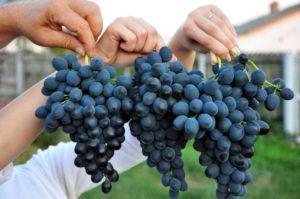
- The Aleshenkin variety ripens in 118 days. It produces large berries, up to 4.5 g. It is distinguished by excellent vine ripening. The crop ripens even under unfavorable conditions.
- The Pamyati Dombkovskaya variety ripens in 115 days. It produces black berries. It is suitable for growing in high-risk farming zones.
- The Russian Corinth ripens in 115 days. It produces small, golden-yellow berries weighing up to 2 g. It tolerates temperatures down to -26°C.
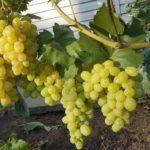
- The Tukai grape produces yellow berries weighing up to 4 g, which are not prone to pea formation. The variety is frost-hardy to -25°C.
Udmurtia's winegrowers are also trying to grow Kamila, Elf, Russkiy Ranniy, Kodryanka, Tayezhny, Avgustin, Bashkirskiy Izumrud, Kishmish, and many other short-ripening, winter-hardy varieties. In greenhouses, they use the varieties Queen of Vineyards, Kesha 1, Victoria, Prometheus, Arkadia, and others.
Requirements for grapes
In the southern part of Udmurtia, grapes are grown fruitfully in open ground. Despite the short, warm summer, they ripen well and delight gardeners with their harvest. In the northern part, things are much more complicated.A dry spring and large amounts of rainfall in July create a favorable environment for the development of fungal diseases. The first frosts are possible as early as the end of August. Here, grapes are grown in greenhouses.
To ensure that a seedling takes root, develops promptly, and survives a harsh winter, special requirements are placed on the variety.
Bush size
Tall and dense vines hinder grape ripening. To ensure a good harvest, side shoots are removed throughout the summer, and half of the bunches are picked.
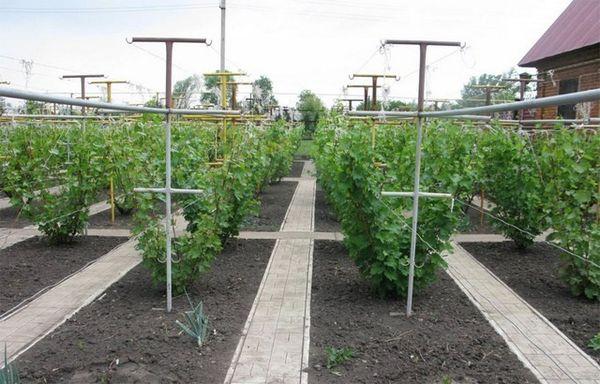
Ripening and fruiting periods
The short summer places its own demands on the variety. In Udmurtia, only early and ultra-early grapes, with a growing season of no more than 130 days, can be productively grown. Only then can the plant prepare for winter and, under a thick layer of snow, easily withstand severe frosts.
Frost resistance
Udmurtia's cold, snowy winters also play a role in gardening. Winter temperatures here often drop to -30°C. In such conditions, grape growing will only be fruitful if you use varieties with increased winter hardiness and provide adequate plant protection.
Recurrent frosts are no less dangerous for grapes.
To prevent flowers from freezing, plant varieties that are resistant to recurrent frosts and cover the bushes until the end of the dangerous period.
How to Plant Grapes in Udmurtia: Basic Rules, Tips, and Recommendations
Grapevines are not planted in the fall in Udmurtia, as the weak saplings don't have time to establish themselves and prepare for winter during the short autumn period. Planting takes place when the threat of frost has completely passed. This period typically lasts from late May to mid-June. A cloudy morning or evening after a good rain is the most favorable time.
To ensure mature bushes receive ample sunlight and have time to mature in the short summer, they are spaced loosely. Leave at least two meters between bushes in a row, and 2.5 meters between rows.
Required soil composition
Grapes are relatively easy to grow. Light, loose soil is the most favorable environment for growing grapes. Plant growth is poor in marshy areas without good drainage. Dense, heavy soil does not allow water and air to pass through well, so it requires loosening.
Poor in micronutrients, the planting hole needs to be well prepared and the necessary fertilizers added. Soils high in nitrogen promote vigorous plant growth and delay vine ripening. Sandy soil freezes deeply and often causes root freeze-out.
We decide on the landing site
With short summers, choosing a suitable planting site is crucial. A sunny clearing, sheltered from cold northern winds, is ideal for establishing a vineyard.
The close proximity of tall trees or a fence creates shade and becomes a serious obstacle to the timely ripening of the crop.
A south-facing slope is the most suitable option. Snow melts here first, and the sloping terrain provides reliable protection from the wind. However, avoid situating the vineyard in a low-lying area: moisture accumulates there, the vines develop poorly, and are prone to frostbite.
Preparing the seedling and planting hole
Before planting a seedling in open ground, it requires hardening. An unprepared plant has a much harder time establishing itself, is more susceptible to disease, and begins bearing fruit late. When placed in an unfamiliar environment with unfavorable conditions, an unprepared seedling often experiences severe stress and dies.
Over the course of two weeks, the seedling is brought outside, increasing the time spent there each day. To protect the delicate plant from fading in the bright rays, it is covered with a covering material during the first few days. If the nights are warm, at the end of the adaptation period, the seedling is left outside for a full day.
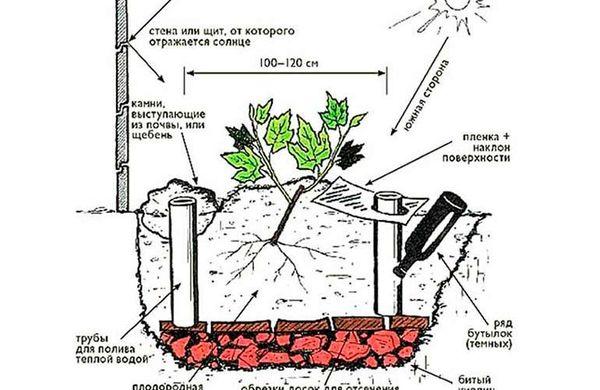
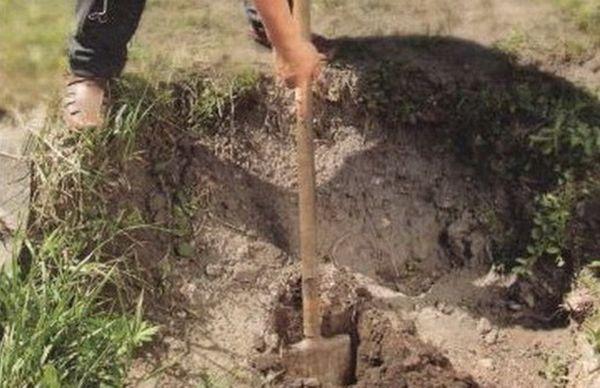
For grapes, a large planting hole is prepared, at least one meter wide and deep. This is prepared in advance. A thick drainage layer is placed at the bottom. The soil composition is adjusted depending on the local conditions.
The soil is mixed with rotted manure, wood ash, phosphorus-potassium fertilizers, and a small amount of sand. Before planting, the roots are placed in a slurry consisting of clay, manure, and a small amount of rooting agent.
What to look for when choosing seedlings
Purchasing a healthy seedling guarantees good survival, fruitful plant development, and a high yield in the future. It's best to purchase seedlings from specialized nurseries in your region. A well-developed root system is crucial; it should have at least three strong roots at the time of purchase.
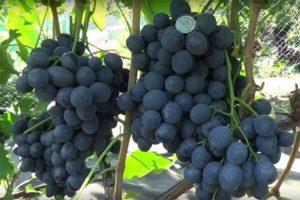
The denser the root system, the easier it will be for the seedling to take root. A root section should reveal a live, light-colored rootlet. Avoid purchasing a plant with a dark, dry root system. A dark, mature shoot with a light-colored core also indicates a healthy plant, suitable for planting.
Technology of planting vines in open ground and in a greenhouse
For the first year or two, it's best to plant the seedling in a large, bottomless container and store it in a cool room for the winter. This way, the plant has time to quickly adapt to the surrounding weather conditions in the summer and won't be damaged by frost in the winter. The vines also have time to mature in these conditions.
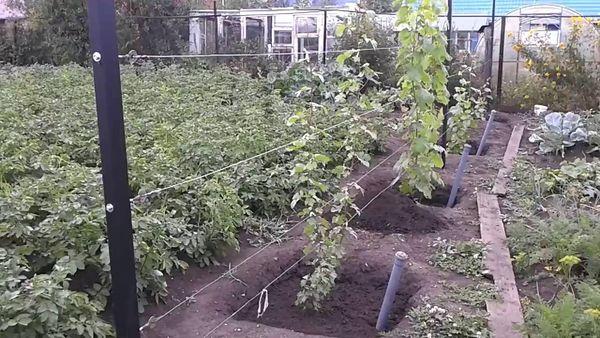
The following spring or the following year, the plant is transplanted to its permanent location. To make it easier to care for mature vines, many gardeners plant them in trenches lined with boards. Using such structures makes it easy to insulate the vines before winter.
Planting the vine at a 45° angle makes it much easier to tuck the mature plant away for the winter and protect it from frost. This placement, with proper pruning, increases the strain on the bush as it ages.
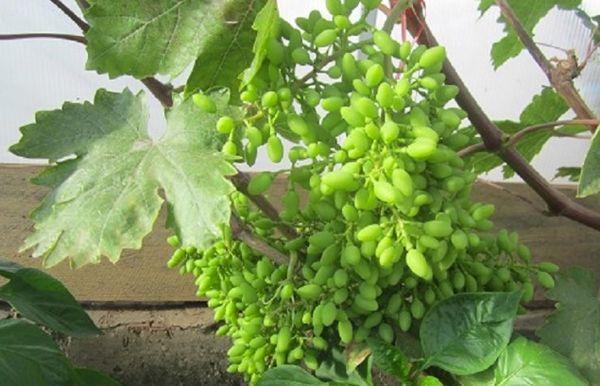
When growing grapes in a greenhouse, the soil warms up much faster, so planting times are delayed. Seedlings should be placed at least 50 cm from the walls of the structure. Forced ventilation is installed to protect the plants from fungal diseases.
Specifics of grape care
Planting grapes is the first step in a complex process and the beginning of an incredible amount of labor. Afterward, they require constant attention and monitoring of the outdoor temperature.
Bush irrigation regime
Spring in Udmurtia often passes without precipitation, so grapes require urgent watering before flowering. Subsequently, irrigation is controlled based on weather conditions. During dry periods, the vine is watered at least once a month.
During the flowering period, watering is avoided to prevent blossom drop. Watering is also stopped shortly before harvest. This preserves the integrity of the berries and prevents them from cracking. If the autumn is dry, moisture is especially necessary. During this period, the plant is actively gaining strength before the challenging winter and requires ample watering.
Fertilizer application at the root and on green leaves
The plant doesn't need fertilization for the first few years. It's perfectly adequately supplied with the micronutrients added during planting hole preparation.
Before flowering, to improve fruit set, grapes are fed with nitroammophoska with a small amount of boric acid. To stimulate the growth of young shoots and berry formation, repeat the feeding ten days after flowering. Before berry ripening, use 15 g of potassium salt, 1 tbsp of potassium magnesium sulfate, and 20 g of superphosphate.
During the ripening period of the berries, an ash infusion is applied under the roots. After harvesting, preparing grapes for winter use potassium fertilizers.
If root feeding doesn't produce the desired results, spray the grapes with foliar fertilizer. Use complex fertilizers before and after flowering, such as "Akvarin" or "Kemira." Experienced gardeners recommend avoiding foliar feeding from late July onward, so that the grapes can focus their energy on ripening the fruit rather than on shoot growth.
We trim and shape the bush
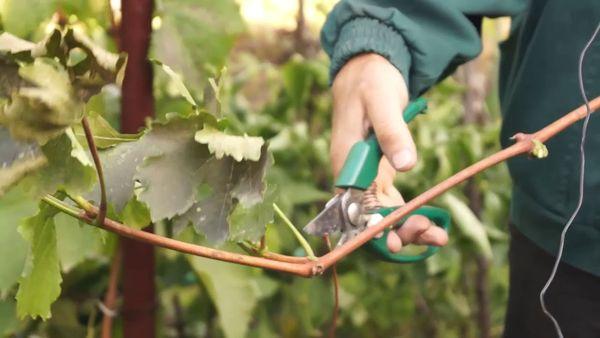
Immediately after planting, the vine is pruned back to two buds. To prepare the young grapevine for its first winter, 12 buds are left on the shoot. Excess side shoots are cut off. A year later, the pruning is repeated on a different vine. Thus, by the age of three, the vine will have two fruiting vines. This is how the bush is trained for the first six years.
Take a look Also

Disease and insect prevention
Long periods of rainfall hinder the growth of healthy plants. Under such conditions, grapes are often susceptible to mildew and other diseases. Preventative treatment with complex fungicides in the spring, fall, and during periods of prolonged rainfall helps reduce the incidence of these diseases.
We tie the vine to the trellis
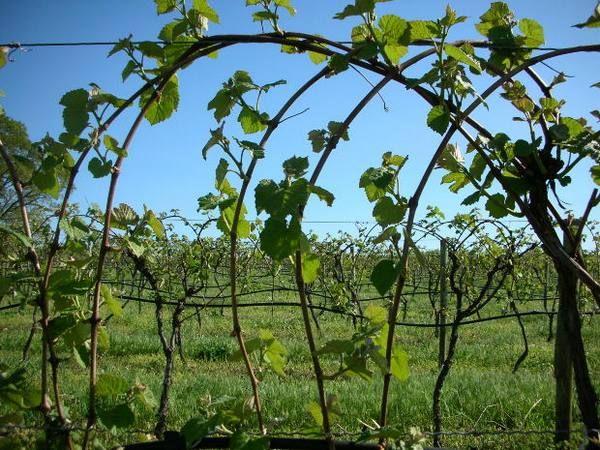
As the grapevine grows, it needs to be supported. This facilitates foliar feeding, promotes shoot growth, reduces the risk of diseases, and promotes uniform ripening of the grapes. The vines are trained horizontally along the trellises. Young vines that grow during the summer are positioned vertically so that the branches do not shade each other or interfere with the ripening grapes.
Preparing bushes for winter
When growing grapes in Udmurtia, reliable winter protection is essential. Several methods are used:
- cover the grapes with a layer of soil;
- wrap each bush with burlap and covering material;
- use wooden shelters.
When there is permanent snow cover, the grapes are covered with snow.
Harvesting and storage
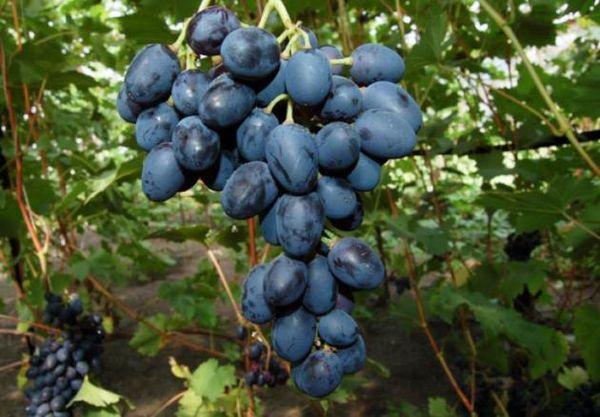
The harvest is carried out before the first frost in dry weather. The bunches are stored in wooden crates in a single row or hung on hooks, after removing any damaged berries.
Reproduction of culture
To propagate grapes, gardeners use one of the following methods:
- grafting onto frost-resistant varieties;
- cuttings;
- layering.
Let us dwell on each of the methods in more detail.
Cuttings
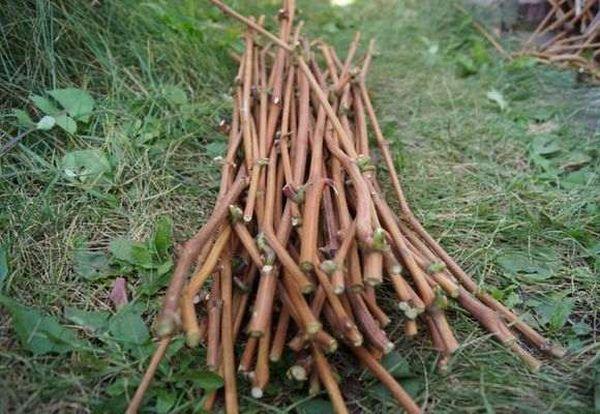
During fall pruning and preparation of grapes for winter, the strongest cuttings are left for further propagation. Before storing the cuttings for the winter, they are treated with ferrous sulfate. This will protect them from mold and mildew. From early spring, the cuttings are germinated at room temperature, and by mid-June, they will have grown into full-fledged seedlings.
Graft
Propagating desired grape varieties by grafting is quite simple. To do this, cut a bud from the scion and make a cut of exactly the same size on the rootstock. The resulting bud is pressed firmly against the rootstock, coated with garden pitch, and securely secured with a plastic bandage.
Layers
The easiest way to propagate grapes in your garden is by layering. To do this, select a sturdy stem, carefully bend it down, and cover it with soil. The following spring, it will sprout and be ready to separate from the mother plant.
The use of regionalized varieties with high winter hardiness and reliable winter insulation make it possible to grow this once southern plant even in Udmurtia. Daily painstaking work and careful attention to the mature plant facilitate the ripening of the harvest in the short summer.
Related posts:
 Description of 30 grape varieties for Siberia, planting and care for beginners
 How to grow grapes in the Moscow region in open ground without a greenhouse
 The ripening time of grape vines by variety, how to speed up the process, and what to treat the plant with
 Description of 30 varieties and types of Muscat grapes, planting, cultivation and care
 Description of the Julian grape variety, planting and care instructions
 Beginner's Guide to Growing Grapes in Open Ground in Central Russia
 Description of the Krasotka grape variety, planting and care technology
 Description and characteristics of the Laura grape variety, planting and care