
- The need for a garter
- How to tie it up correctly
- Dry
- Green
- On the trellis
- Types of trellises
- Method of garter
- Peculiarities of gartering young grapes
- Recommendations for choosing deadlines
- How to choose a garter material
- Advantages and disadvantages of growing without staking
- Common mistakes made by beginners
- Tips and advice from experienced gardeners
In their natural habitat, grapevines spread along the ground. In vineyards, they are trained into a structured form using various methods of staking. Staking facilitates maintenance and harvesting. There are also methods for staking young grapevines and mature vines. Plants are either secured to trellises or grown free-standing. Each option has advantages and disadvantages.
The need for a garter
Grapes grow quickly and entwine neighboring trees and outbuildings. The vines, growing haphazardly, become intertwined, turning the vineyard into a thicket. But if the vines are tied up, the planting takes on a more cultivated appearance.
Benefits of tying up grapes:
- the bush receives more oxygen and is less susceptible to fungal infection;
- the bunches are well lit by the sun, ripen faster, the bush produces large berries;
- the plant looks neat;
- each vine is available for care and harvesting;
- flowers of the straightened branch are open for pollination;
- shoot growth can be controlled;
- the bush produces shoots evenly.
Staking is essential for growing grapes on farms. Summer cottages and vegetable gardens occupy a small plot of land, but even there, staking is essential for grapes, as it saves space.
How to tie it up correctly
The method for tying grapes depends on the length of the shoots and the age of the vines. They are positioned horizontally or at an angle. Only young shoots that have emerged this year are raised.
Dry
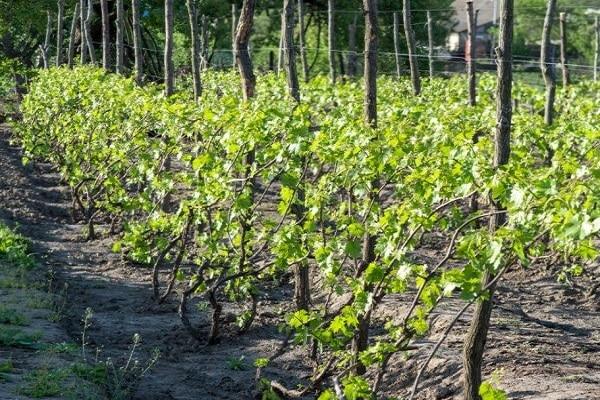
Securing a vine branch before bud break is called dry staking. The plants are uncovered, lifted, and secured to a support before the sap begins to flow, so as not to damage the new buds. Otherwise, the harvest will be meager. When dry staking, the branches are always positioned horizontally or at an angle.
The main vine branches should be secured parallel to the supporting wire or at a slight angle to ensure all buds are released. If the vines are directed upward, leaves and new shoots will appear only at the top.
The vine is wrapped around a wire stretched between the support posts and secured in two places—slightly away from the top and the base. This will ensure the vine stays in place during windy weather.
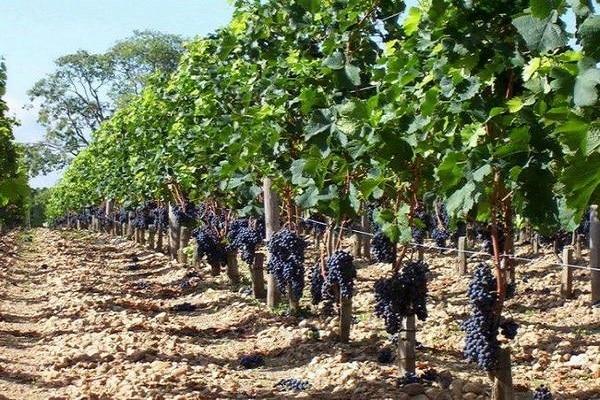
The same approach is used to secure fan-shaped bushes. They consist of two main branches growing from the base. Two more shoots branch off from these, which also branch into two shoots. The branches are pruned in the fall, leaving two buds on each. After a few years, the bush takes on a fan-like appearance. Perennial bushes are secured horizontally, and in the fall, they can easily be removed from their supports for placement in trenches for the winter.
Green
Young, fragile shoots are secured with green ties to protect them from rain and wind. The stems are secured vertically, spaced apart to ensure each branch has enough light, air, and space. This method is used to form standard bushes.
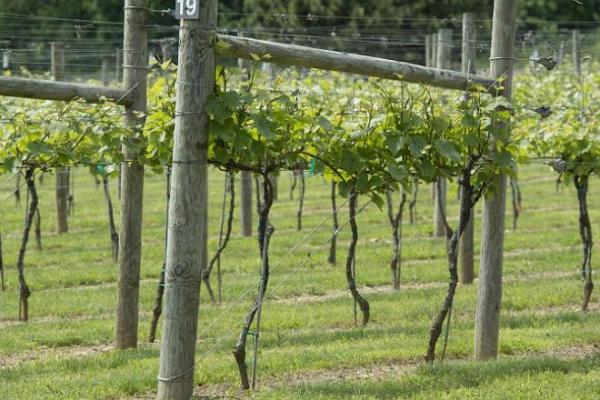
The grown vines are untied and secured higher. This process is repeated up to four times per season. However, after the berry clusters appear, tying is stopped to avoid damaging the fruit. The final tying is done before flowering or when the first ovaries appear. Care must be taken when handling young shoots—the green stems are fragile and easily broken.
On the trellis
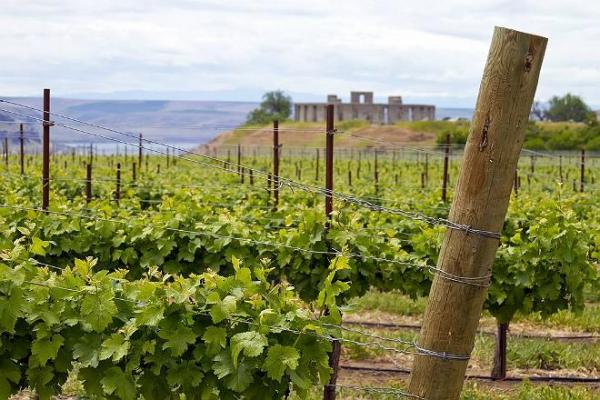
A trellis consists of two supports with horizontal wires stretched between them. Galvanized wire is suitable for trellises, but polymer-coated wire is better. It won't rust in the rain or heat up in the sun.
For the supports, use metal pipes with a diameter of 10-15 centimeters and a length of 2 meters. They are driven into the ground to a depth of 50 centimeters, spaced up to 3 meters apart. Wooden beams made of chestnut, acacia, oak, and other hardwoods can also be used.
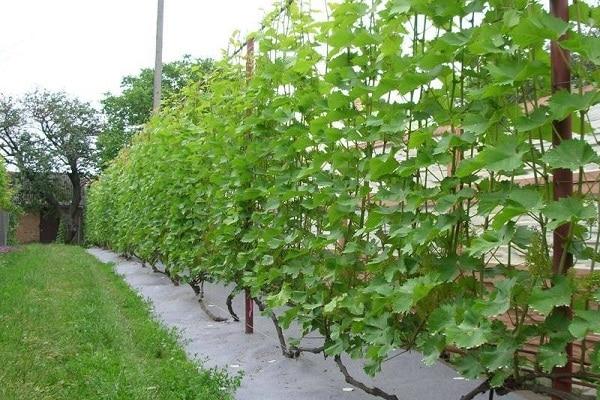
To ensure the structure remains firmly in the ground, the length of the supports should be equal to the width between the rows. Since the distance between rows reaches 3 meters, the structure will be tall. Climbing a ladder will be necessary to work with the grapes.
For a bush with one-sided branching, supports are placed at varying distances from the center: 60 centimeters on one side and 1.5 meters on the other. For double-sided branching, branches are distributed symmetrically on both sides, and supports are placed at equal distances from the center.
The first tier of wire is stretched 40-50 centimeters above the ground, and the remaining crossbars are attached at the same distance from each other. To secure the wire, screw self-tapping bolts into the supports.
The number of levels should correspond to the growth capacity of the bushes: 2 levels are enough for low-growing varieties, 4-5 levels for medium-growing ones.
Types of trellises
Trellis can be single-sided or double-sided:
- A single-sided trellis is installed on one side of a row. It's the most common type. A plant secured to one side is easy to access. A single-sided support can be easily fashioned from scrap materials, such as leftover pipes or beams. However, it won't support a tall bush. A single-sided trellis can accommodate a single fruiting vine.
- A double-sided trellis consists of two grids with a bed running between them. The supports are either parallel to each other or connected at the base, forming a wedge. Building a double-sided trellis requires more materials.
Another type of trellis is a single support with horizontal crossbars. Wire is wound around the ends of these crossbars. This type of trellis allows vines to be easily suspended on both sides, and they produce more shoots.
Method of garter
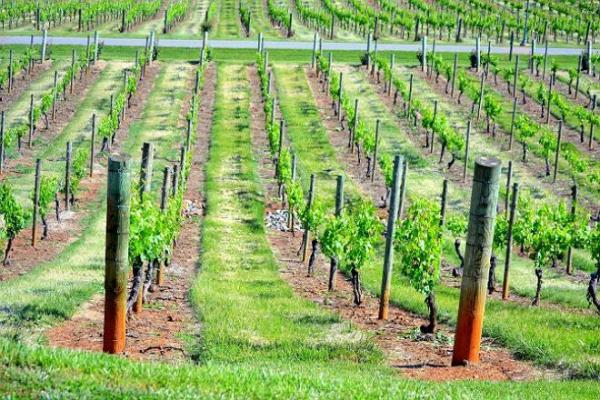
How to fix grape bush on a trellis:
- the main branches are distributed parallel to the lower level of the wire;
- secondary shoots are raised and secured at the second level at an angle of 45-60 degrees.
When the plant produces new shoots, they are secured higher, on the next levels of the frame.
Shoots secured vertically bear less fruit: the lower ones grow poorly, and the upper ones grow too long. Therefore, old vine branches are secured at an angle or horizontally.
Leaning and vertical vines are tied with various knots and loops made of twine and elastic bands. Horizontal main branches can be tied with paper or plastic-wrapped wire. Avoid tying tight knots; instead, wrap the wire in a spiral. You can first wrap a section of the branch with rags and then wrap the wire over it.
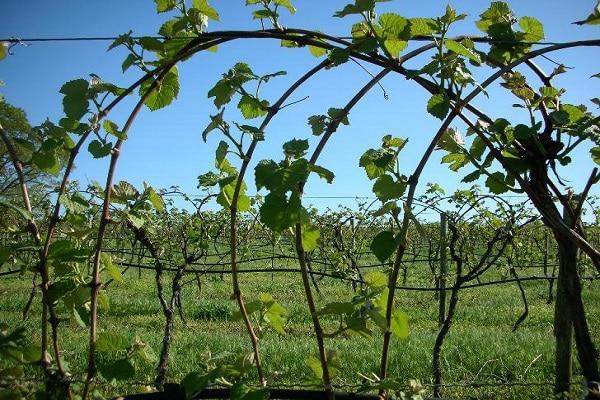
Peculiarities of gartering young grapes
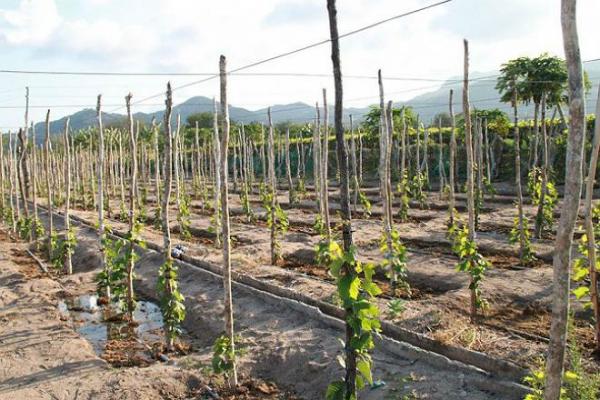
Young seedlings are tied to a mesh trellis or stakes. The stakes are made of wood or metal.
In the first year, the seedling is just establishing roots. In the second year, the bush is actively developing, and by this time, a multi-tiered trellis should be prepared for it.
Young seedlings are tied to the supports with polyethylene strips. Once the stems reach a height of more than 30 centimeters, it's easier to arrange them on a trellis. You can use lightweight cucumber netting secured to the posts. Commercial netting is made of flexible polymer threads, but you can also weave it yourself from thin rope.
A young plant needs to grow long shoots, so in this case vertical garter is necessary.
Recommendations for choosing deadlines
Favorable time for tying up grapes:
- spring - for dry perennial vines and young seedlings;
- Summer is for green shoots.
When consistently warm weather returns in the spring, the vines are uncovered, damaged branches are trimmed, and carefully tied up. In the summer, young shoots should be tied up when they reach 40-50 centimeters in length. In the fall, the vines are removed, lowered to the ground, and covered.
How to choose a garter material
For tying up grapes, soft materials are chosen:
- elastic bands;
- nylon tights;
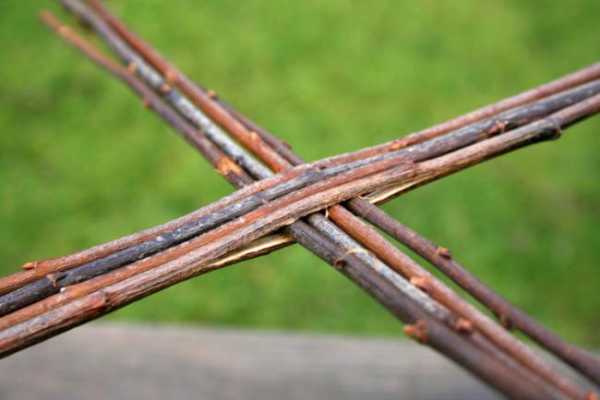
- willow twigs;
- rags.
To secure the stiff lower sleeves, you can use cord—wire wrapped in paper. Gardeners also use special scissors for tying loops, a stapler, and a glue gun.
In commercial cultivation, hooks, clips, cambric, and rings are used to tie branches. These are handcrafted. These devices help save time on tying knots.
Young shoots in a small garden are conveniently secured with orchid clamps. Their teeth close tightly, like crab claws, and hold the branches securely. The clamps are easily and quickly removed in the fall.
Advantages and disadvantages of growing without staking
Growing grapes without staking doesn't mean allowing the plant to grow freely, as it would in the wild. On the contrary, it requires more careful maintenance and pruning.
Instead of a trellis, you need to install a horizontal bar or crossbar and throw the shoots over it without tying them.
Standard and fan-shaped bushes with vines of varying lengths are grown without supports. In southern regions, this method is used for spreading crops. On standard bushes up to 40 centimeters tall, the branches are pruned short. One-year-old shoots are tied into bundles to give the bushes a cup-like shape. Grape arches are formed from adjacent bushes.
The advantages of this method are that the bushes are easy to shape and there is no need to construct complex structures.
Disadvantages of the method of growing grapes without garters:
- Suitable only for low and medium-sized varieties;
- It is not allowed to harvest crops on plantations using machinery;
- the bushes are thickening;
- the risk of fungal development increases;
- the productivity of bushes decreases.
Growing without staking is rarely practiced in commercial vineyards. Over large areas, unsupported vines are often planted without a system. In a garden plot, with careful care, 3-4 vines can be grown this way.
Take a look Also

Common mistakes made by beginners
The most common mistakes made by inexperienced gardeners when tying up grapes are the following:
- securing branches in bunches, vertically - each branch must be tied separately, at an angle or horizontally;
- tying with rigid materials - wire, fishing line damage growing shoots, squeeze and damage the bark, as a result, nutrition does not reach them, and the plant dies;
- tying the vine by the upper end directs the growth of the stem to the side, the internodes close to the attachment dry out;
- the formation of rings and arches from shoots - strong bends block the movement of sap and nutrients.
The garter directs the growth of the branches and is not intended to give the plant a decorative shape.
 A poorly secured frame is dangerous. A strong wind will cause the frame to fall and break the plant. Therefore, supports should be driven into the ground at least 0.5 meters deep. Loosely secured branches will also come loose and break in the wind. To ensure they hold securely, wrap tape between the stems and the support in a figure-eight pattern.
Tips and advice from experienced gardeners
How to tie up grapes so that they grow well and bear fruit:
- After tying up, you need to dig up the soil under the bush with complex fertilizer;
- To ensure that water reaches the roots, you need to dig a hole near the trunk;
- To prevent corrosion, the bases of the supports are treated with copper sulfate and coated with resin before installation;
- To make the ribbons hold the plant more firmly, they are folded in half;
- long branches of an adult bush are attached to the net at an angle of 45-60 degrees;
- replacement branches are tied to the lowest crossbar, line;
- fruit vines are spirally wound onto wire and secured with twine in a figure eight pattern;
- If the shoot cannot be secured horizontally, it is tilted;
- The vines should not be tied too tightly with rope, as they may break;
- To ensure that the vine holds tightly to the frame in strong winds, during tying it up it is wrapped in fabric, the ends of which are secured to a wire;
- long shoots should be attached to the upper wires, short ones to the lower ones;
- The best material for garters is nylon tights. They are durable, stretch easily under the weight of the growing vines, and don't pinch them.
Staking is a key component of grape growing techniques on plantations and in garden plots. This technique helps control the direction of branch growth, maintain their health, and create favorable conditions for fruiting.
Related posts:
 How to prune grapes step by step for beginners
 The best eggplant varieties for growing in a polycarbonate greenhouse: planting and care
 How to properly tie up currant bushes, fences, and supports yourself
 A diagram and how to prune blueberries for beginners
 When and how to prune gooseberries to ensure a good harvest
 When and how to prune cherry trees correctly, and tree shaping schemes for a good harvest
 When and how to prune blackberries: timing and instructions for beginners
 The best ways to properly tie up tomatoes in open ground and greenhouses