
- Why is it necessary to tie up tomatoes?
- General rules and recommendations for tying up tomatoes
- Device for tying up tomatoes
- Leg-split
- rods
- Clothespins
- Loop
- Methods of tying up tomatoes
- Mounting on a wire frame
- Linear mount
- Trellis fastening
- Fastening to the mesh
- On wooden pegs
- Features of tying up tomatoes in a greenhouse and in open ground
- Gardeners' mistakes
The question of how to properly tie up tomatoes naturally arises as spring approaches. At this time, the desire to grow tomatoes in the garden increases significantly. This is due to the weather conditions and dreams of a bountiful harvest. There are several tying methods for growing beautiful tomatoes; let's look at the most popular and sought-after among gardening enthusiasts.
Why is it necessary to tie up tomatoes?
The plant naturally seeks sunlight, as its light promotes photosynthesis and fruit ripening. If the fruit is left on the ground, it's unlikely to grow and ripen in such conditions. Furthermore, such tomatoes are an easy prey for slugs and worms.
So, for what purpose should garters be used?
- They help fruits grow and ripen.
- They protect the plant trunk from injury and fractures.
- They protect fruits from weeds and dampness.
If the weight of the fruit breaks the plant's trunk during growth (which often happens), it will die. To prevent this, gardeners quickly tie up their tomato plants.
But this must be done carefully so as not to damage the fruits or the trunk of the plant by squeezing them.
Experienced gardeners know that tomatoes should be weeded at the roots, leaving no weeds behind. This can be difficult if the tomatoes are already established in the ground. In some countries, where the climate is warm and pliable and the sun is strong, staking tomatoes is not recommended. This is avoided because the sun's rays will simply burn the fruit. However, lying in the garden bed will provide the necessary moisture and warmth, allowing them to ripen.
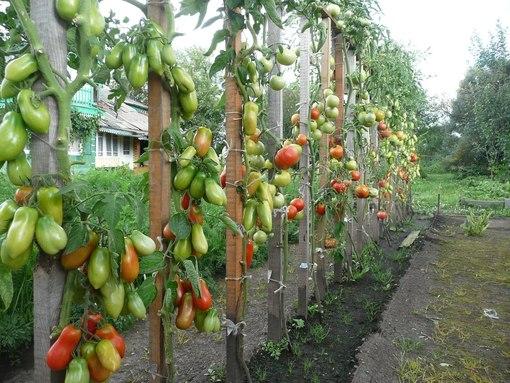
General rules and recommendations for tying up tomatoes
To do everything right, you'll need to prepare in advance. Gardeners like to use "old material" for ties, but this is relatively unsafe.
What should be taken into account when carrying out such procedures:
- It is advisable to use a material that will not harm plant trunks;
- The ties hold the tomatoes firmly but gently, without applying too much pressure. This is important to avoid damaging the integrity of the trunk;
- the material must be “clean”, not contaminated, otherwise it may lead to the death of plants;
- The fastenings should not interfere with or limit the growth of tomatoes, otherwise you won’t be able to get any fruit.
Don't restrict your tomatoes' sun and space; provide them with comfortable conditions and periodically replace the supports. The structures are modernized to avoid causing serious damage to the tomatoes.
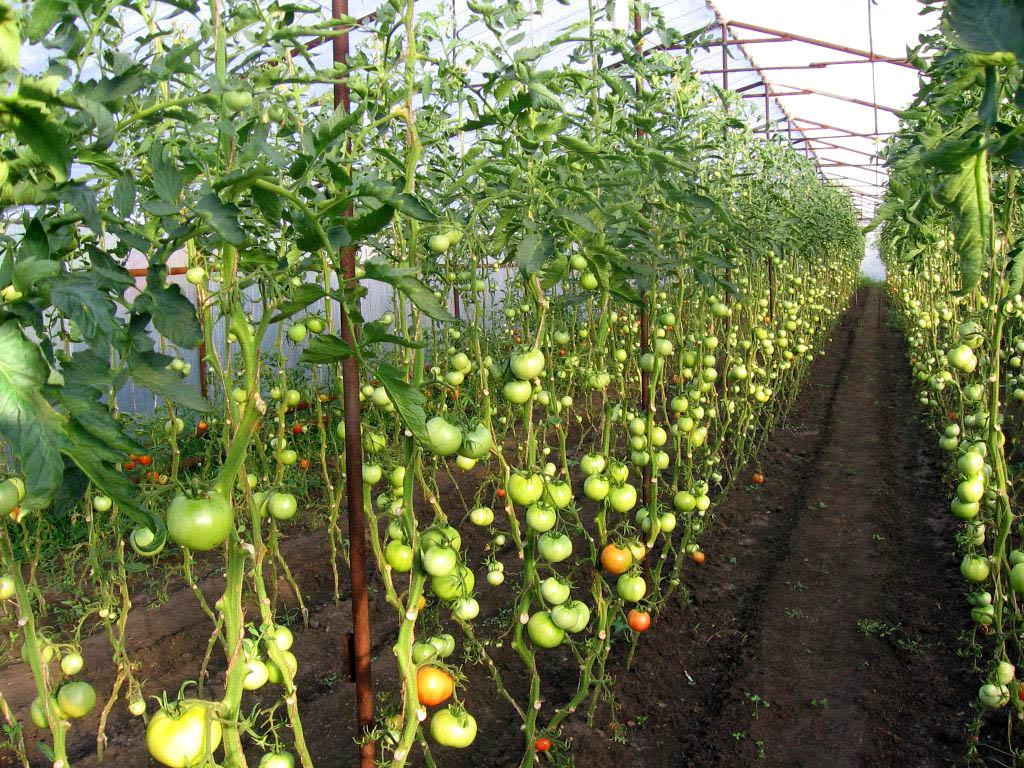
Damaging the plant's trunk will cause it to dry out, the tomatoes will die, and there will be no harvest.
Take a look Also

Device for tying up tomatoes
When choosing a "tool" to hold the plant's fruits, consider various accessories. Don't get hung up on ropes or nylon threads. A proper assessment will help you make the right choice.
Let's look at the main disadvantages of these devices:
- Wire – exerts strong pressure, can damage the plant trunk, does not provide proper fastening.
- The fishing line is dangerous because it can cut the plant trunk if pulled too tightly or too tightly.
- Ropes for tying up tomatoes are quite suitable, but you shouldn’t use ones that have already been used.
- Rags do not inspire confidence and may not withstand the stress, causing the plant to break under the weight of the fruit.
Leg-split
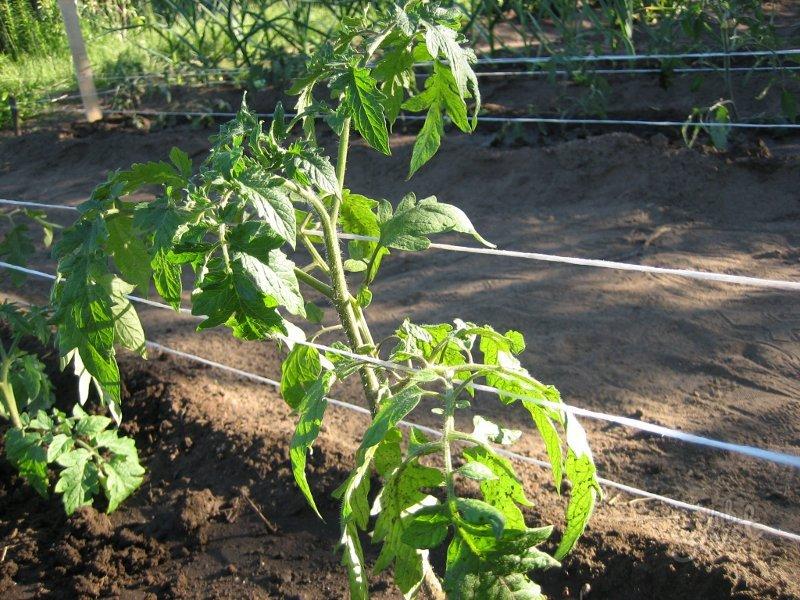
Two flax ropes attached to stakes or trellises will prevent tomatoes from falling over. The ropes can be placed horizontally and vertically next to each plant. To avoid having to deal with similar problems multiple times throughout the season, attach the ropes to the greenhouse's roof. Even if the plant bends under the weight of the fruit, the twine support will prevent them from falling and will not disrupt the flow of sap.
rods
Wooden or metal rods are used; they are ideal for greenhouses because they prevent toppling in strong winds. However, wooden rods often damage tomato roots.
What does the design look like:
- The rods are buried 30-40 centimeters deep, having first prepared the soil - it should not be too soft;
- Then the plant trunks are attached to the rods; the ties can be changed as the trunks grow and the tomatoes ripen.
Clothespins
Clips or clothespins can be made of wood or plastic. Clips with a ring mechanism or a circular fastening are ideal for those new to growing tomatoes and those with limited gardening experience.
These versatile devices help secure tomato stems to various structures. Using clothespins, you can:
- Attach the tomato stem to a larger, more stable plant.
- Attach to a rope hanging from the ceiling of the greenhouse or to its wall.
Using clips, you can hold the plant in the desired position, periodically adjusting the height. Convenient and practical.
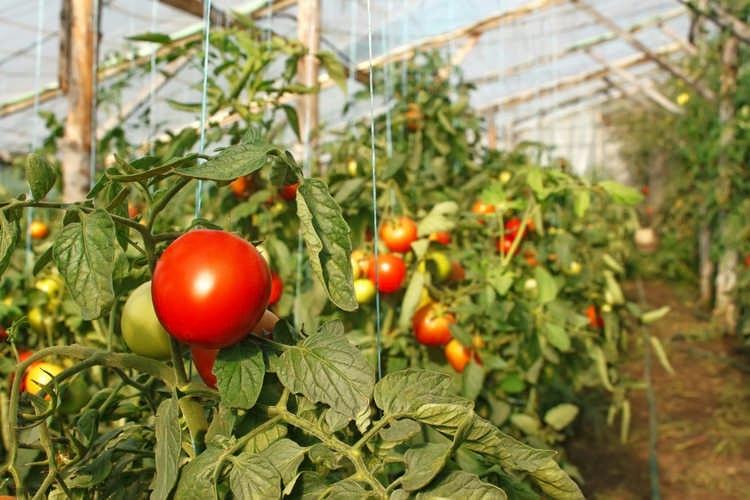
Loop
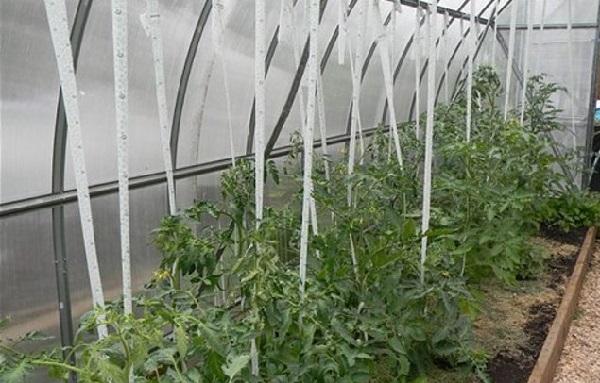
A loose loop is suitable for a greenhouse; it requires the construction of a structure. It consists of a loop made of rope or other material, tied to a long stake. Several bushes are placed in the loop and secured to stakes, rods, or other horizontal supports. Metal greenhouse roof supports are also suitable.
As the plant grows, the loop will support it without putting pressure on the trunk. Tall varieties are often tied with loops.
What you need to do:
- cut the twine into 100-centimeter pieces;
- Use a free loop to grab two bushes standing next to each other, while the length of the ends of the rope should be different;
- the shorter end of the twine is placed behind the main loops;
- then tighten the knot by inserting the end of the twine into the loop.

Methods of tying up tomatoes
When choosing the best method, evaluate general parameters such as fruit size and growth rate. This will help you make your choice. Creative ideas and personal experience will help you solve your current problem.
Mounting on a wire frame
A cone-shaped wire frame is made and used to cover the plant. You can wrap the wire around the tomato plant, creating circles and connecting them together so the tomatoes can hang from the frame. The frame is installed once, cone-side up, so the plant can reach toward the sun without the structure interfering with its growth.
Linear mount
This simple and unusual design is perfect for beginners. The tying is done using several wooden pegs and rope. Let's take a closer look at the design:
- Three medium-length pegs are driven into the soil.
- A rope is attached to them in several rows (2-4), horizontally.
- Tomatoes will grow and rely on this structure.
Trellis fastening
This unique method is suitable for those growing tall tomato varieties outdoors. The device can be constructed as follows:
- drive a peg 3-5 meters high into the ground;
- then attach the plank to the pegs; you will need 3 pegs in total;
- they will be located at the edges and in the middle;
- You will also need a rope, it is attached to the pegs and the sleeper, which is located horizontally;
- Tomatoes are tied to this rope; it will hold the plants and prevent them from falling or breaking.
Fastening to the mesh
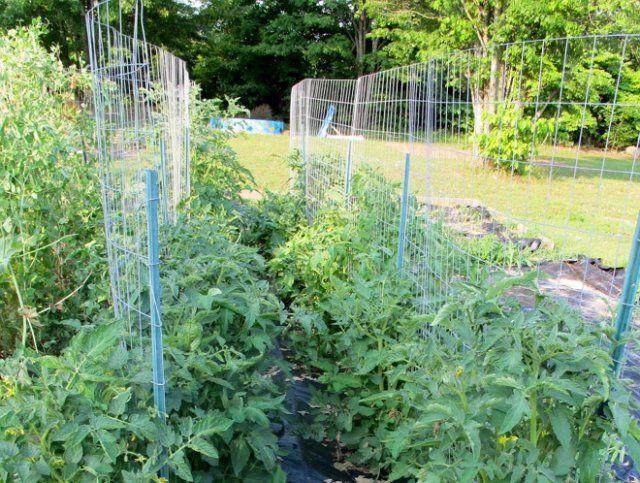
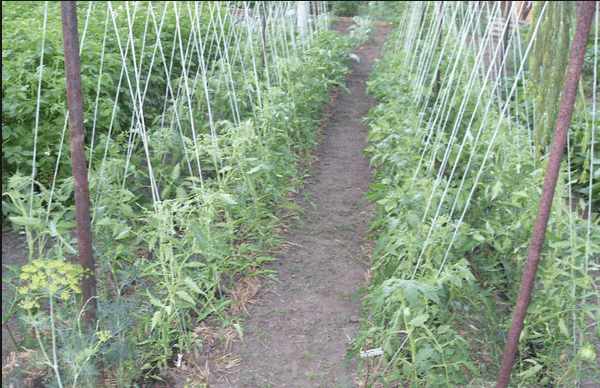
A simple structure will support tomato plants without stakes. The netting is buried 10-15 centimeters into the ground. As the plants grow and develop, they will use the netting for support. You can attach it to one side or surround the plant with the netting.
In the second case, it's more practical to surround several tomato plants with a structure. For example, plant 2-4 tomato plants together, surround them with netting, and the structure will serve as support as they grow and develop.
Caution! It's preferable for the mesh to be coarse rather than fine, otherwise this "support" will be of no use.
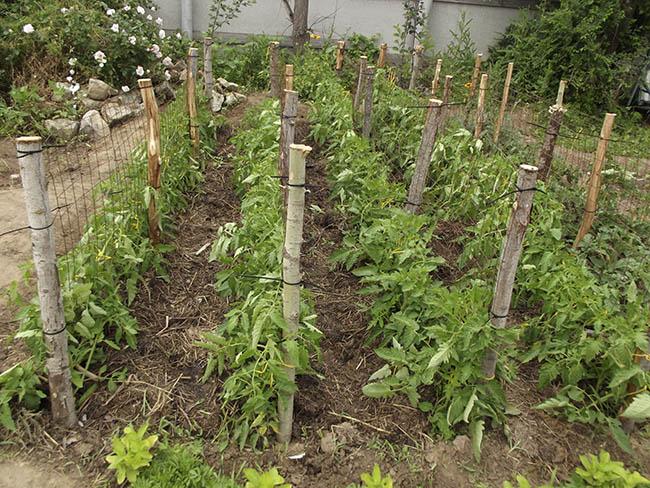
On wooden pegs
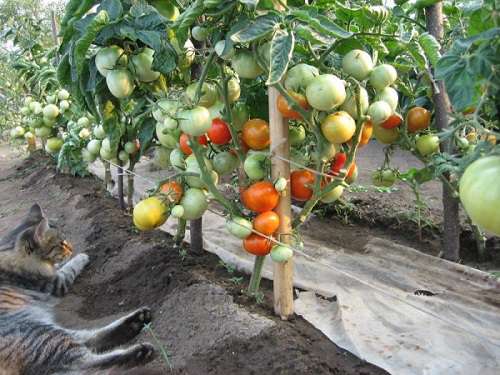
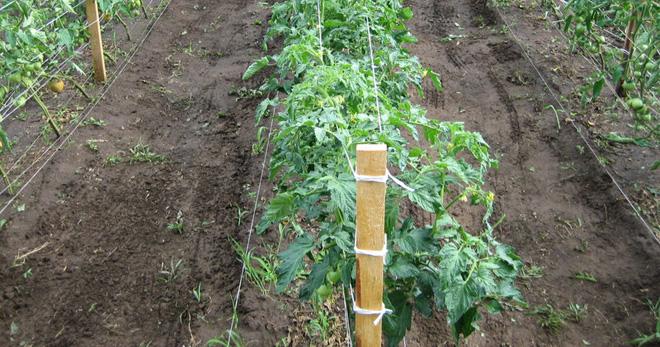
The simplest and relatively good method. Drive wooden or metal stakes into the ground and attach the tomatoes to them with nylon thread. You can also tie the tomatoes with other materials, but not fishing line or wire.As the plants grow, the garter should be raised, provided that the stake is of the appropriate length.
Features of tying up tomatoes in a greenhouse and in open ground
Whether in a polycarbonate greenhouse or any other type, in the open ground, or in any other conditions, it's important to determine whether the plant is ready for these procedures. Gardeners know the rules for determining whether tomatoes are ready for staking.
Generally accepted standards, or when it is worth tying up tomatoes:
- If 8 to 10 well-formed leaves have appeared on the trunk.
- If tomatoes grow quickly, due to the characteristics of the variety, then the procedures are carried out on the 40th day.
- If the variety ripens slowly, it is recommended to tie it up on the 70th day.
- For regular tomatoes – on the 60th day.

For tall varieties, it's important to keep the ropes off the ground and away from it. These varieties require watering at the roots; if the ropes are exposed to the soil, they will rot over time or at least lose their strength.
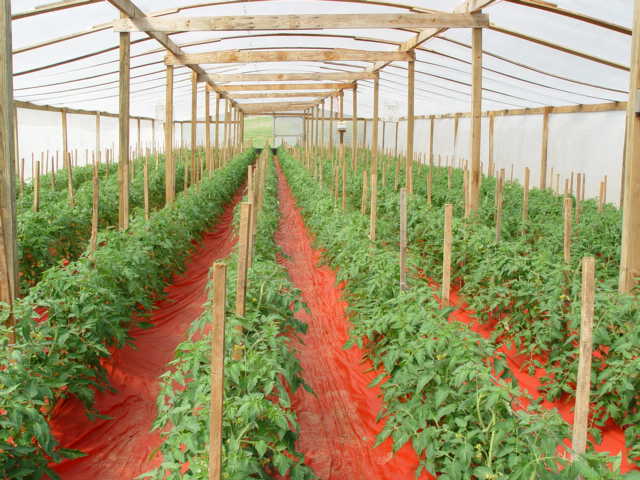
In a greenhouse, it's best to secure tall varieties to ceiling structures. In open ground, use tall stakes to prevent the plant from bending under its own weight.
Basic needs of tomatoes:
- they need loose and moist soil - you will have to regularly cultivate the soil to “saturate” it with moisture and oxygen;
- It is easier to install and secure the structure in a greenhouse, for this reason you can choose a convenient option;
- In open ground, it is better to give preference to pegs and clothespins - this will make the main work easier.
When planting tomatoes in a greenhouse or in the ground, remember that their growth will be gradual, which means that the fastenings will have to be changed.
Gardeners' mistakes
There are a number of mistakes that amateur gardeners make due to inexperience or carelessness. What gardeners do wrong:
- Tomatoes are being tied up with inappropriate material. Using wires and strings is unacceptable – they will damage the plant and lead to its death.
- They are using old material, which is unacceptable, since it may not withstand such an impact.
- Do not treat the garter material - it may become contaminated, which will lead to the death of the plant.
- Tying the bushes too low without changing the structure is fraught with certain consequences and can affect the quality and quantity of the harvest.
When choosing a staking method, consider the tomato variety and other characteristics. Staking tomatoes, despite its simplicity, is quite effective if done correctly. How to do it and what tools to use are a personal choice for each gardener, but don't neglect these tips; they will help optimize the process and yield a good harvest.
Related posts:
 Description of the best varieties of black tomatoes for open ground and greenhouses
 Methods for tying up grapes and choosing the right material for beginners
 Which tomato varieties are best for open ground?
 The best eggplant varieties for growing in a polycarbonate greenhouse: planting and care
 Methods for planting and propagating cherries at home
 What varieties of tomatoes are best to plant in a polycarbonate greenhouse?
 How to tie up cucumbers in open ground: step-by-step instructions
 15 simple recipes for pickling tomatoes in jars for the winter