
When growing grapes, you often encounter various diseases. Some are treatable, while others are so dangerous that saving the plant is impossible. The fungicide Quadris for grapes helps combat many diseases. If you follow the instructions, you can get rid of them very quickly.
General description of the drug
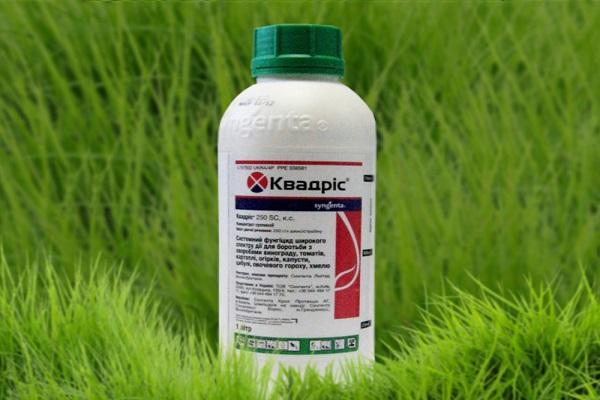
Quadris is a strobilurin fungicide. It is used both to treat existing grape diseases and as a preventative measure. It is effective against powdery mildew (both downy and true), late blight, gray mold, and a number of other common diseases. It penetrates the leaf blade, protecting it from pathogens on both sides.
Before use, carefully read the instructions, especially the recommended application period and weather conditions. The results exceed all expectations. This is a highly effective treatment that can cure almost anything. grape diseasesIts effectiveness may decrease in the later stages of disease development. But in some cases, even it won't help, which is why preventative treatments are so important.
Compound
The fungicide "Quadris" contains the substance azoxystrobin.
Purpose
Quadris has a broad spectrum of action and is used to treat most grapevine diseases.
Mildew
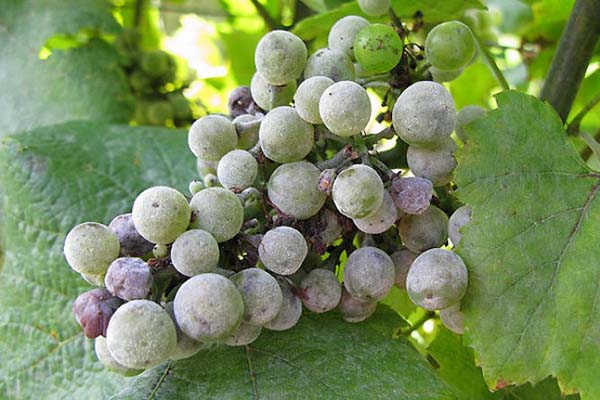
Downy mildew is a type of downy mildew. Characteristic signs of this disease include the appearance of a white coating on foliage and fruit, reduced yield, flower drop, and yellow spots on the upper surface of the leaf.
Downy mildew is considered one of the most common and dangerous diseases of grapevines. Grapes fail to develop, gradually turning purple, then shriveling and falling off. Downy mildew is caused by high humidity and cold water irrigation.
Late blight
Another common grape disease is late blight. This disease is dangerous because it can spread from plant to plant, and if not addressed promptly, most of the crops in the area will soon become infected. Late blight typically appears in the second half of summer. It is caused by excessive moisture and low temperatures.
The first signs of the disease are dark spots surrounded by a white border that appear on the leaves. The affected parts of the grapes die after a while. The grapes grow small, lose their flavor, and become unfit for consumption.
Oidium
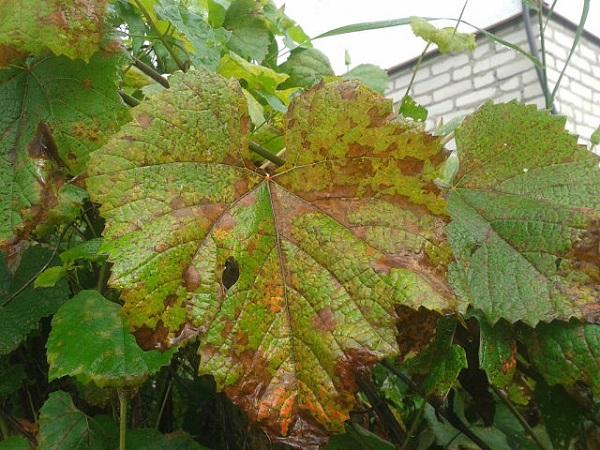
Powdery mildew is a true powdery mildew. As the disease progresses, the fungus also attacks the berries. Grapes begin to crack before they're fully ripe. Like the leaves, they become covered with a white coating. Another sign is the smell of rotten fish.
The main danger of powdery mildew is that the disease develops quickly and can kill an entire vineyard in just a few weeks.
Gray rot
With gray mold, inflorescences wilt and fall off. In damp weather, they become covered with a gray coating. The berries turn brown and become covered with fuzz. They then rot and fall off. The fungus rarely attacks leaves, only in humid conditions. Then, dark spots appear on them. Gray mold develops primarily in September. Regular pruning and preventative treatments can prevent the disease.
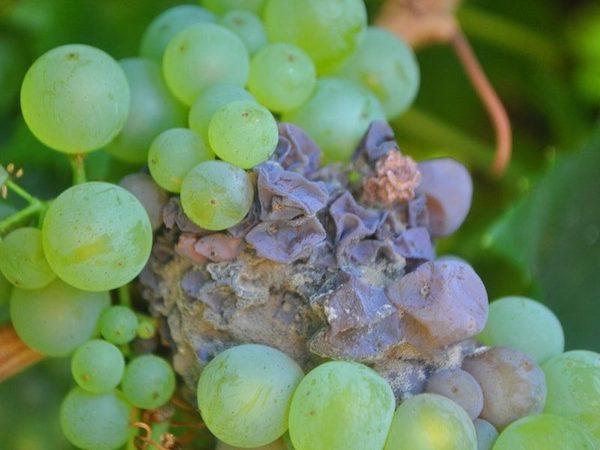
Peronosporosis
Peronosporosis is one of the names for downy mildew.
Alternaria
Alternaria leaf spot causes necrosis of the above-ground parts of grapevines (leaves, shoots, petioles). Weakened vines are particularly susceptible to this disease. Hot, humid weather is the primary cause of Alternaria leaf spot.
The foliage begins to develop light spots. These can easily be confused with powdery mildew. As the disease progresses, they turn dark brown. In the final stage, the foliage turns black and dries up. Treatment should begin as soon as the first symptoms appear.
If you delay, the fungus will not only kill the vineyard, but also spread to nearby crops.
Powdery mildew
The first signs of the disease appear on young leaves and shoots. The leaves take on a whitish tint, as if they've been dusted with flour or dust. Rubbing the leaf with your finger removes the coating.
Black spot
Black spot is also known as escoriosis, dead arm disease, and phomaspis. The disease affects all parts of the grapevine, from the stems to the foliage. Black spots initially appear on the foliage and gradually increase in size. The edges are lighter and slightly denser. The spots are usually located near veins. This causes the leaves to develop a curled appearance, eventually causing the leaf to turn yellow and fall off.
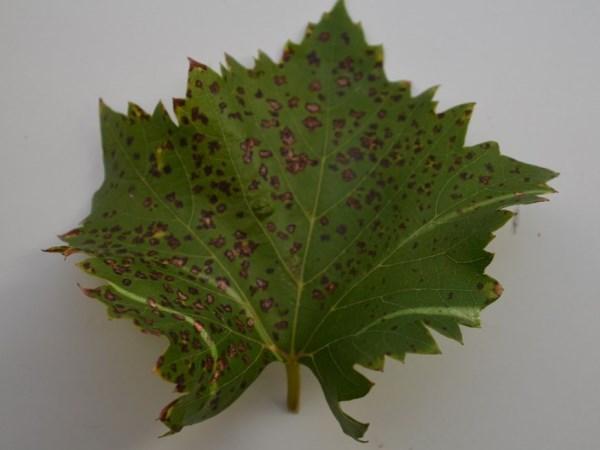
Spots appear on shoots towards the end of flowering. Diseased shoots break easily. If the disease is left untreated, the vine will gradually become covered with black scabs. If the fungus penetrates deep into the wood, most of the bush dies, leaving only the option of digging it up.
Infectious drying
Infectious bush dieback can be caused by a fungal disease called black canker, or by eutyposis. Symptoms of infectious dieback can vary depending on climate conditions and the pathogen.
The disease is divided into two stages. The first is the accumulation of microorganisms in the wood, which lasts 2-3 years. During this time, the disease may not manifest itself. The second stage is the drying out of the bushes. If the stem is cut, dead wood will be found inside. Damaged parts of the vine must be destroyed. To prevent the development of infectious drying, preventative treatments are carried out in the spring and during the growing season.
How to prepare the solution correctly
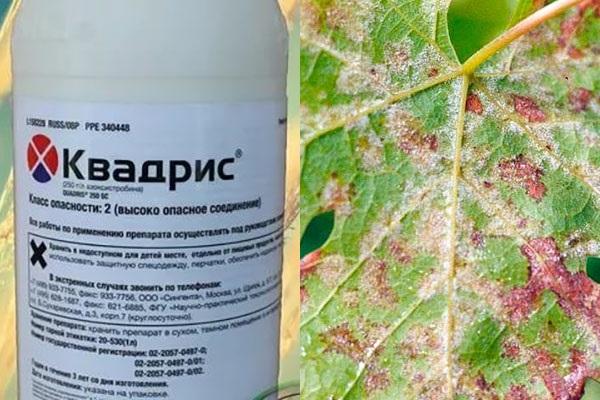
The preparation is used as an aqueous solution. It's important to follow the dosage precisely when preparing it. For treatment, take 8 ml of the preparation and dilute it in 5 liters of water. For prevention, also take 8 ml of the chemical, but dilute it in 10 liters of water.
How to apply
Spraying with the drug "Quadris" is carried out in the morning or evening, when the sun's rays are no longer so scorching. The solution should be applied sufficiently to cover the entire vineyard. Avoid allowing the solution to run off and fall onto the soil. To prevent this, use a spray bottle with the finest nozzle.
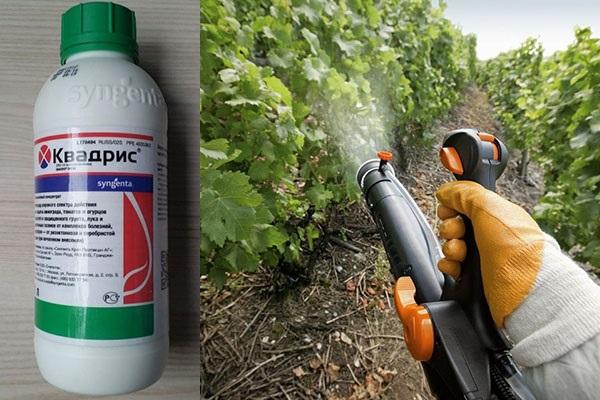
The maximum number of treatments allowed per season is three, if the solution is used for treatment. Preventive spraying is carried out twice per season, with intervals of 10-14 days.
It is not recommended to spray if the foliage of the grape bushes is wet.
Pros and cons of use
The advantages of using a fungicide include:
- It destroys not only spores, but also fungal hyphae, which allows for better disease control.
- It is characterized by low toxicity for plants, animals and humans;
- Can be used as a preventative measure against diseases.
- The treatment can cure the grapevine after several applications.
- Long-lasting protective action.
- Promotes increased crop yields.
- Compatible with many other drugs.
- Has a beneficial effect on the quality of grape bunches.
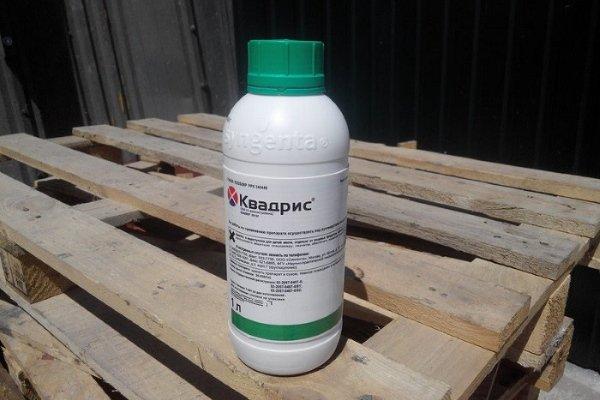
The disadvantages of using it include the following:
- The drug accumulates in the inflorescences, so its use is prohibited during the flowering period.
- If you frequently use a fungicide to control diseases, the pathogens that cause them develop resistance to its effects.
- If the dosages indicated on the packaging are not followed, the fungicide may be toxic.

The drug "Quadris" has many advantages, but it also has significant disadvantages.
How to store properly
The product has a shelf life of up to 3 years. Store the chemical in a dark place away from sunlight. The optimal temperature is between 5 and 30 degrees Celsius. Do not store the fungicide near food. Keep the area securely protected from pets and children.
Precautionary measures
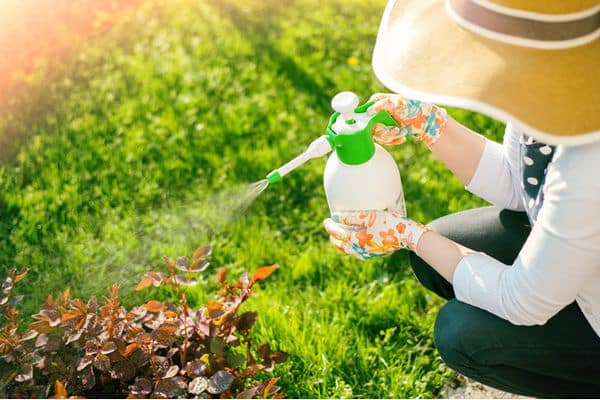
The product is toxic only to fungal spores and poses no danger to humans. However, it is still advisable to take precautions during treatment. If a small amount of the chemical enters the body, the following symptoms may occur:
- dizziness;
- nausea;
- vomit.
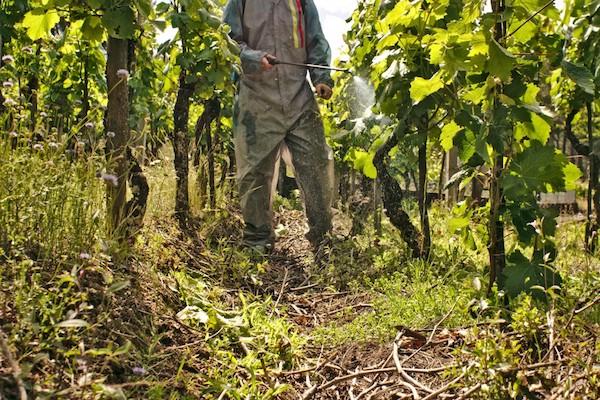
It's best to call an ambulance immediately, but if that's not possible, perform a gastric lavage. To prevent such situations, wear a protective suit and mask before spraying to avoid inhaling the solution. Animals should also be kept away from the solution.
Tips and recommendations
Tips and recommendations for using the fungicide "Quadris":
- The solution must be prepared immediately before use; it can be stored for 6 hours.
- After spraying, eating grapes is not allowed for 4 days.
- It is not recommended to use Quadris against fungal diseases in combination with herbicides. It is compatible with all other types of chemicals. If two types of these fertilizers must be used, leave at least a week between applications.
- Do not use the product on the same area for more than two years in a row. Fungi develop immunity to this chemical.
- The drug can penetrate the body through the hair, so it is also worth protecting it during work.
You can cure grapes of diseases very quickly if you notice their signs in time and start spraying.
Related posts:
 How to grow grapes in the Moscow region in open ground without a greenhouse
 Description of the Julian grape variety, planting and care instructions
 Description of the Krasotka grape variety, planting and care technology
 The ripening time of grape vines by variety, how to speed up the process, and what to treat the plant with
 Description and characteristics of the Preobrazhenie grape variety, planting and care
 Description of 30 grape varieties for Siberia, planting and care for beginners
 Description and characteristics of the Livia grape variety, cultivation and propagation
 Description and characteristics of the Laura grape variety, planting and care