
- The history of selection and origin of the Valiant grape
- Pros and cons of culture
- Description
- Bush
- Clusters
- Berries
- Pollinating varieties
- Ripening time
- Yield and fruit size
- Sweetness and acidity
- Where are berries used?
- Features of the Valiant variety
- Requirements for lighting, humidity and soil composition
- Frost resistance
- Susceptibility to diseases and pests
- Agricultural technology and care
- Selecting and preparing a site for planting
- Timing and technology of planting vines
- Watering
- Fertilizer
- Formation of fruit-bearing vines
- Preventive treatments
- We cover the vines from wasps and birds
- Winter protection
- Reproduction
- Reviews from winegrowers
If you're unfamiliar with the Valiant grape variety, it's time to get to know it better. Harvest begins in late August and early September. Now you can sample the delicious berries of this amazing hybrid, which thrives even in harsh weather conditions and enjoys a well-deserved popularity. We'll discuss the variety's origins, its properties, cultivation methods, and its use in landscape design.
The history of selection and origin of the Valiant grape
The hybrid was created by American grape breeder R. Peterson. The research was completed in 1967. Frost-resistant overseas grape varieties Fredonia and Riparia were selected for the cross.
By 1972, the hybrid had already passed varietal testing and was given the name Valiant, meaning "brave." Furthermore, the crop was classified as a "universal hybrid."
Pros and cons of culture
The advantages of this variety include:
- Increased frost resistance.
- Fruit ripens early.
- The following indicators speak for the yield: 12 kg of harvest is harvested from an area of 2-4 square meters.
- The use of berries is universal.
- The use of shrubs in landscape design is widespread.
One of the downsides is that grapes are susceptible to mildew (downy mildew). Therefore, when mildew appears, spraying with fungicides is recommended.
Description
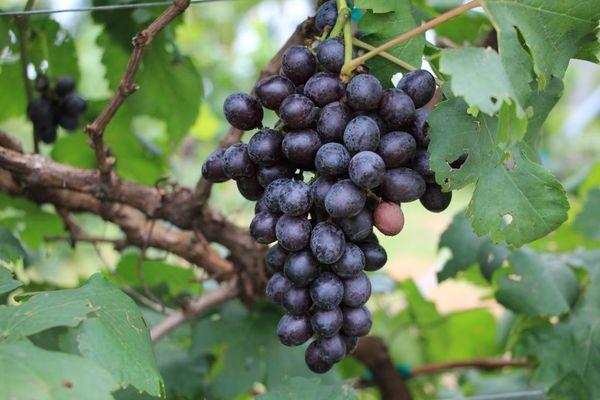
Valiant is a tall plant with a rich crown. It produces beautiful, tasty clusters with high sugar content and medium acidity.
Bush
The grape vine has the following characteristics:
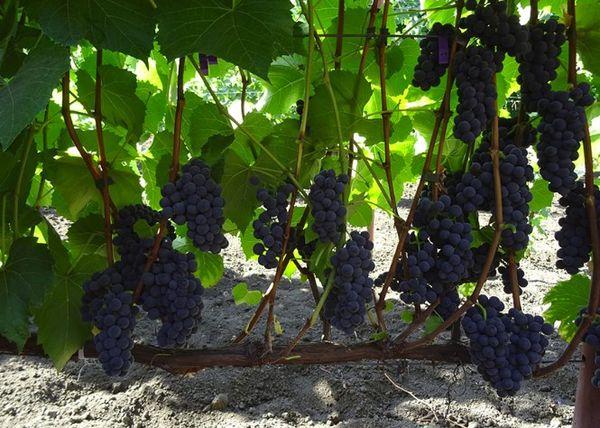
- tall fluffy bushes;
- vine – about 10 cm;
- slight pubescence of shoots;
- the color of the bush is green;
- petiole notch – open;
- early ripening;
- high winter hardiness;
- Good yield. 3-4 bunches per shoot.
The structure of a vine resembles a tree (bush). It has a trunk, roots, and a crown.
Clusters
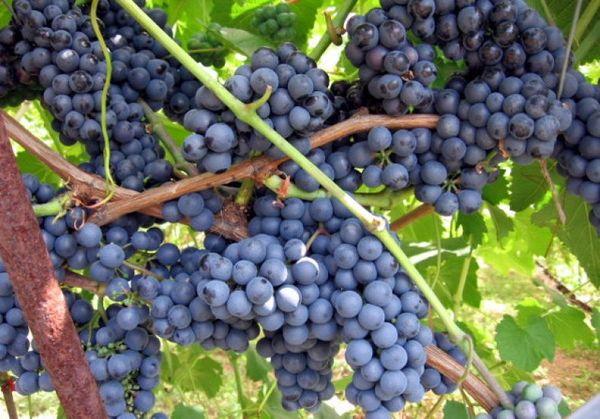
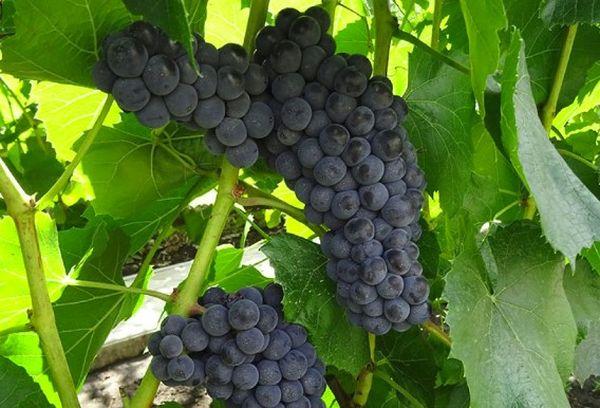
The cultivar produces inflorescences of both sexes. The clusters resemble cones, weighing up to 100 grams. The fruits are black with a purple tint.
Berries
Small berries have the following properties:
- oval shape without dents;
- the weight of one berry is 1.5-3 g;
- close arrangement of fruits relative to each other;
- sugar content – about 20%.
Take a look Also
The pleasant aromatic taste with a hint of strawberry and pineapple attracts not only humans, but also birds and wasps.
Pollinating varieties
Gardeners say Valiant doesn't particularly need grapes as a pollinator. However, planting such plants wouldn't hurt. This will increase growth.
Arcadia, a popular, high-yielding variety producing large berries with a muscat flavor, is considered more suitable. Rusbol, a variety grown specifically for northern regions, and Radiant Kishmish, with large, sweet berries with a muscat flavor, are also suitable.
Ripening time
Valiant grapes are a mid-season variety. The plant's life cycle begins with budding and continues for 128-140 days until harvest. However, this process depends on the planting location. Ripening begins in late August (early September).
Yield and fruit size
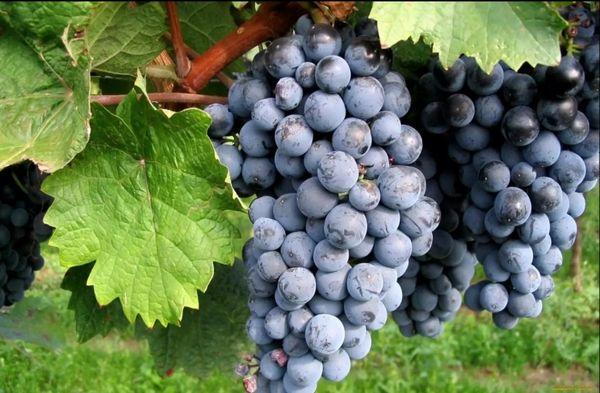
Valiant is a high-yielding variety. From 2.5-4 square meters, at least 10-12 kg are harvested annually, sometimes even more. A good harvest is achieved with proper care and favorable weather conditions.
Sweetness and acidity
By the time of ripeness, Valiant grapes have a sugar content of about 20%. Acidity is above normal, about 10 g per liter.
Where are berries used?
The delicious, fragrant berries are primarily eaten as food. They are used to make juices, jellies, compotes, and jams. Dry wines made from the grapes are also in demand. The dark ruby-colored grape drinks have a pleasant flavor. The hybrid is also used as a component in blended wines.
Thanks to the bush's characteristics and high winter hardiness, Valiant is used for landscaping and decorating architectural structures, arches, canopies, and as an element of landscape design.
Features of the Valiant variety
When growing a variety, its characteristics and preferences are taken into account.
Requirements for lighting, humidity and soil composition
Valiant grapes thrive in bright light and a draft-free location. Only in these conditions will they fully blossom and produce a bountiful harvest.
The variety is demanding of moisture. Although heavy rainfall doesn't affect yield, it weakens the plant's immunity. This explains the emergence of fungal diseases. Therefore, during rainfall, the bushes need to be covered to prevent moisture from reaching the bunches and foliage.
Valiant grapes thrive in sandy loam and sandy soils. Loamy soil will also do well.
Frost resistance
The crop is frost-hardy. Grapes tolerate temperatures down to -45°C. Gardeners note that grapes are a good rootstock for crops in areas with little snow in winter, which often leads to root freeze.
Susceptibility to diseases and pests
The Valiant grape is poorly adapted to the following diseases:
- Mildew is a fungal disease that causes yellow spots to appear on the leaves, followed by a coating on the inflorescences and foliage, which then rots.
- Oidium. A fungal disease that manifests as a dark gray coating. It affects not only the leaves, but also the inflorescences and fruits.
Agricultural technology and care
Quality and yield depend on proper agricultural practices and subsequent care.
Selecting and preparing a site for planting
Choose a sunny, wind-free site for planting Valiant grapes. A dry climate is ideal for planting. This ensures the grapes are protected from fungal diseases.
The site is chosen near a fence or building that will protect the grapes from the wind. This will allow the plant to develop normally.
The soil is prepared in the fall. Black soil and mineral fertilizers are added, then the soil is dug. Grapes thrive in loose, light, and warm soil.
Timing and technology of planting vines
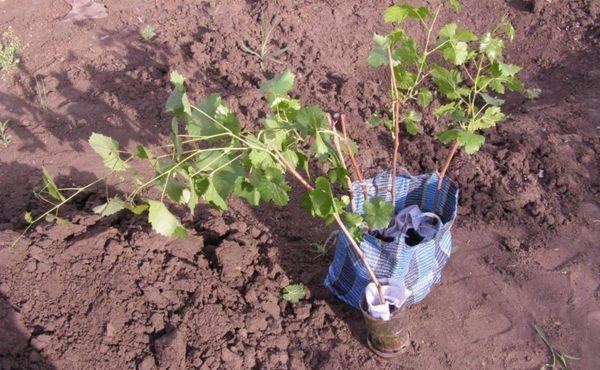
The best time to plant Valiant grapes is fall and spring. The seedlings are planted in the usual way. A trench or hole measuring 70 x 80 x 60 cm is dug. The interval between plants is about half a meter. The holes are filled with black soil or a soil mixture with organic fertilizer.
The seedling is placed in the center of the hole, next to the pre-dug support. It is tilted slightly toward the north. The rhizome is straightened and covered with soil. Water thoroughly. The soil is mulched.
Watering
When the soil dries out, water the vines. Reduce the frequency of watering during the rainy season. In good weather, apply up to four liters per bush per month. Drip irrigation is the best watering option. It distributes moisture evenly and eliminates the risk of leaf burn.
To prevent the soil from becoming over-watered, which can lead to root rot, create depressions near the rhizome or make drainage holes.
Fertilizer
The Valiant grape variety is fertilized in spring and fall. Organic and mineral fertilizers containing high levels of nitrogen, potassium, and phosphorus are used. Fertilization improves the plant's performance, increasing the yield and flavor of the berries.
Formation of fruit-bearing vines
Valiant grapes are pruned to shape the crown and ensure a bountiful harvest. This spring pruning, carried out during the early growing season, involves removing dead branches.
In August, 30 cm are pruned from each shoot. As soon as the vines shed their leaves, old and deformed shoots are removed. Pruning ensures the berries receive the maximum amount of nutrients and improves their ripening.
Preventive treatments
Grapes are moderately resistant to fungal diseases, so preventative treatment of the vines is carried out.
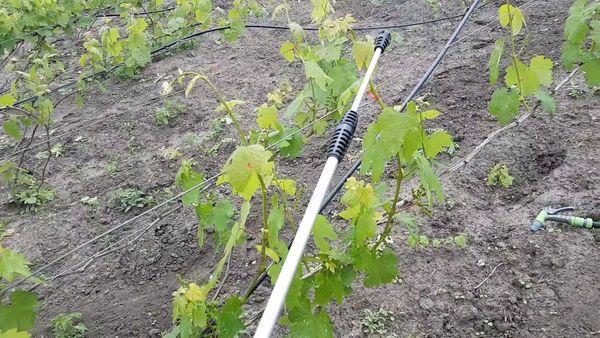
For these purposes, universal products are suitable:
- Captain;
- Thiram;
- Zineb;
- Dichlorfluanid;
- Follett;
- Maneb;
- other.
In severe cases, copper and sulfur are used. During rainy seasons, fungicides are applied to the foliage to combat diseases. At the slightest suspicion of powdery mildew, the grapes are disinfected with Rubigan, Bayleton, Topsin-M, or sulfur.
Take a look Also
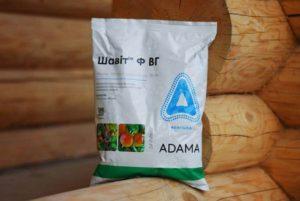
Despite its resistance to diseases, they are still possible. Therefore, constant monitoring of the bush's condition and timely intervention will preserve its health. Store-bought products should be used strictly according to the instructions.
We cover the vines from wasps and birds
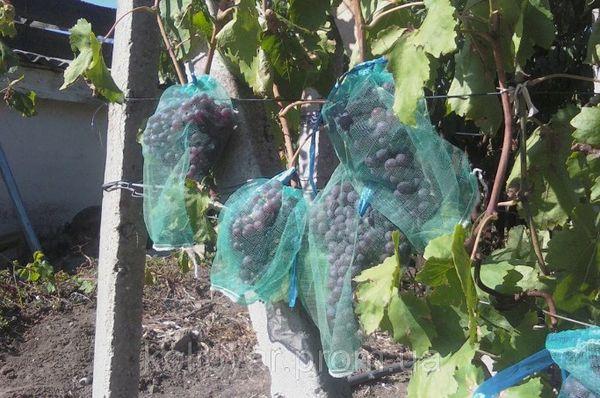
Chemical and folk remedies are used to repel insects and birds from grapes, but they are inferior to protective nets that can be purchased or made at home.
Statistics show that birds and wasps can reduce crop yields by 30%. It's much easier to buy a modern protective bag made from environmentally friendly products and preserve your harvest, and thus, your flora and fauna.
Winter protection
The plant is frost-hardy. However, gardeners say it's not a good idea to expose grapes to extreme conditions right away. Acclimate the hybrid to frost gradually. During the first two years of growth, the vines are covered during the winter.
In the 3rd year, with a sharp change in weather, the vine overwinters on the ground or a board, covered with snow.
Reproduction
The hybrid is propagated by the following parts of the plant:
- cuttings;
- seedlings;
- layering;
- vaccinations;
- seeds.
Experienced winegrowers are proficient in methods 3 and 4. For beginner gardeners, cuttings are a suitable method.
Reviews from winegrowers
Olga, 46 years old, Tver
"The Valiant variety planted in the plot gives reason to believe that, despite some shortcomings, it's a good variety. It provides dense shade, doesn't require covering, and, if you're not picky, the grapes are quite edible."
Sergey Ivanovich, 50 years old, Saratov region
"The Valiant variety has a subtle Isabella aroma, but also a hint of fruit and floral notes. Keep the vines away from wasps; the floral scent attracts many of these insects, which harms the hybrid."
Valiant grapes are a hardy and versatile variety whose combination of characteristics makes them attractive not only to those living in northern regions. They are grown in areas where flavor, transportability, a wide range of uses, and ease of care are prized.
Related posts:
 How to grow grapes in the Moscow region in open ground without a greenhouse
 Description of 30 grape varieties for Siberia, planting and care for beginners
 The ripening time of grape vines by variety, how to speed up the process, and what to treat the plant with
 Description of 30 varieties and types of Muscat grapes, planting, cultivation and care
 Description of the Julian grape variety, planting and care instructions
 Beginner's Guide to Growing Grapes in Open Ground in Central Russia
 Description of the Krasotka grape variety, planting and care technology
 Description and characteristics of the Syrah grape variety, where it grows