
- Description and features of the drug
- Composition and action
- Main characteristics
- Speed of impact
- Waiting period
- Period of protective action
- Scope and spectrum of activity
- Toxicity
- Indications for use
- Advantages and disadvantages of using
- How to apply
- Recommendations for choosing deadlines
- Before flowering
- After flowering
- Berries the size of a pea
- At the beginning of the berry coloring
- What is needed
- How to prepare a solution
- For prevention
- For disinfection
- Spraying rules
- Protective measures
- In what conditions and for how long can it be stored?
- Compatibility with other drugs
- Common mistakes
- Tips from experienced gardeners
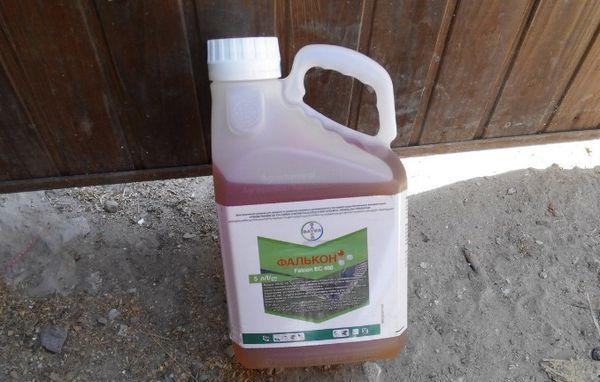
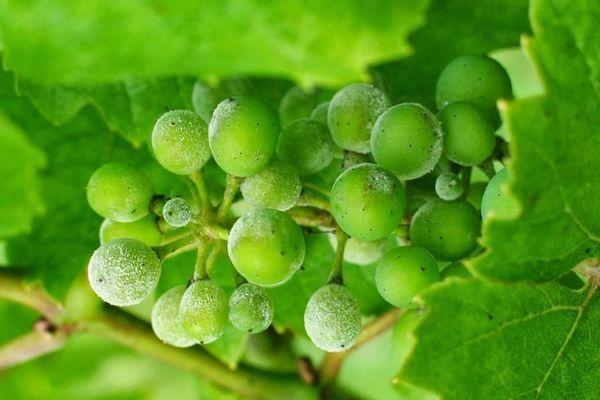
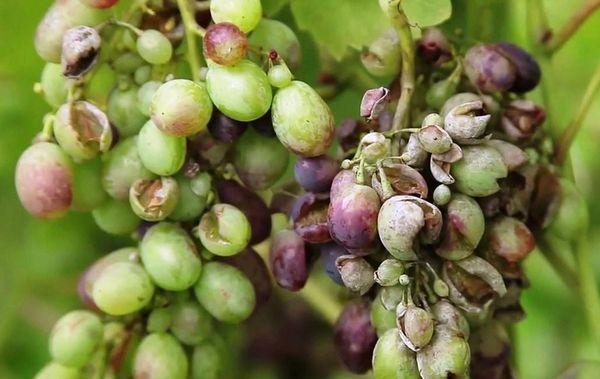
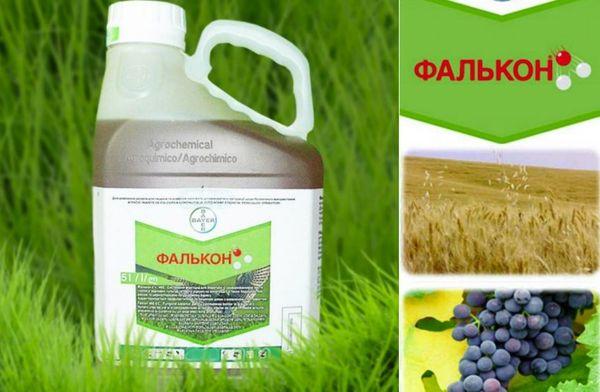
Powdery mildew, a fungal infection that can destroy most, if not the entire grape harvest, poses the main threat to winegrowers and gardeners. To combat this fungus, German scientists have developed a new-generation fungicide for grapes—Falcon. Instructions for use are provided below. It is used not only for therapeutic but also for preventative purposes.
Description and features of the drug
German chemists faced the daunting task of developing a unique pesticide that would not harm either vineyards or the soil in which the fruit crops grow. The product also had to completely destroy fungal spores that penetrate plant cells and pose no threat to humans, animals, or beneficial insects. The scientists accomplished this challenging task, resulting in the development of the next-generation three-component fungicide Falcon.
Composition and action
The complex composition of the preparation helps prevent the spread of the disease and 100% destroys fungal spores of powdery mildew varieties.
Compound:
- The main active ingredient in Falcon fungicide is tebuconazole, with a mass fraction of 16.8%. This pesticide penetrates deep into plant cells and completely destroys fungal spores.
- The component spiroxamine, with a mass fraction of 25%, also fights the spread of fungal infections at the cellular level.
- The auxiliary component triadimenol, with a mass fraction of 4.3%, enhances the effect of the two previous substances.
Important! A multi-component fungicide with a narrow focus, capable of suppressing powdery mildew spores and is effective against oidium.
Main characteristics
Before protecting your vineyard from disease, you need to understand the basic properties and characteristics of the Falcon fungicide.
Speed of impact
Thanks to its highly effective ingredients, the product begins to work within the first two hours of spraying the vineyard. This time is sufficient for the active ingredients to penetrate plant cells and begin their destructive work against the fungus.
Waiting period
To properly spray a vineyard with a fungicide, weather conditions, air temperature, wind strength, precipitation, and solution concentration are taken into account. If all requirements are met, Falcon begins to work within 2 hours of finishing spraying.
Period of protective action
The fungicide has its maximum effect on the fungus within 2 weeks from the first treatment, but the protective effect of the preparation lasts from 1 to 1.5 months.
Important! At high temperatures, Falcon decomposes quickly, significantly reducing the product's effectiveness. Therefore, vineyards should be treated at temperatures no higher than 25°C.
Scope and spectrum of activity
Powdery mildew spores spread most rapidly in high humidity and temperate climates. This fungal disease affects not only vineyards, but also other fruit, grain, and vegetable crops. Farmers, gardeners, and vegetable growers successfully use Falcon fungicide for beet treatment, currant bushes, garden strawberries, peppers, tomatoes and cucumbers.
Toxicity
Thanks to the competent and professional approach of German scientists in developing Falcon, the product received a low toxicity rating of Class 3. When working with the fungicide, it is necessary to use the usual set of personal protective equipment.
If all requirements are met, the drug does not pose a threat to human health.
Indications for use
The new generation drug Falcon has a fairly narrow range of application, but this characteristic in no way affects the main purpose of the fungicide.
Application area:
- Prevention and treatment of vineyards affected by powdery mildew and oidium.
- Treatment of vegetable crops from all types of powdery mildew, cercospora and phomosis.
- Protection of grains from rust, powdery mildew and septoria.
Fact! With proper care and agricultural practices, the risk of fungal diseases spreading is significantly reduced.
Advantages and disadvantages of using
When developing the drug, scientists observed all necessary requirements, which can be considered as advantages of the fungicide.
Advantages:
- The product does not contain chemicals that can accumulate in soil and plant cells. After its effective period, the fungicide completely decomposes, leaving no negative effects.
- The product completely destroys fungal spores at the cellular level, leaving no harmful substances in berries, vegetables, and grain crops.
- Low toxicity level, which allows the fungicide to be used on large areas of land.
- The drug has a targeted effect on the treatment and prevention of fungal diseases.
- Convenient for use form of the drug in the form of an emulsion or concentrate.
- The fungicide has a long shelf life even when unopened.
Another advantage of Falcon is the low cost of the drug.
The disadvantages of the fungicide include loss of effective action and rapid decomposition of active ingredients at high temperatures.
How to apply
To carry out high-quality treatment and preventative spraying of vineyards, it is necessary to find out when and how best to apply the drug.
Take a look Also
Recommendations for choosing deadlines
As a preventative measure, the Falcon fungicide is applied in early spring, before the start of the growing season, or in late autumn, after harvesting.
If the disease is in an active stage, plants are treated several times during the growing season.
Before flowering
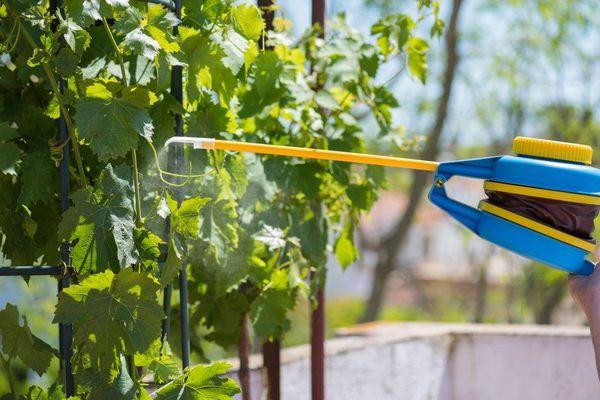
The first treatment of grape vines is carried out before the flowering period begins. This treatment begins as soon as unopened buds appear on the grape clusters.
After flowering
The next spraying of the vineyard is carried out immediately after the end of the flowering period.
Berries the size of a pea
If the previous measures have not helped in the fight against fungal infection, then treatment is carried out when green grapes reach the size of a pea.
At the beginning of the berry coloring
The last medicinal treatment of the bushes is carried out at the initial stage of fruit coloring, but no later than a month before the final ripening of the berries.
Important! Treat vineyards with Falcon fungicide only in cool, dry, and windless weather.
What is needed
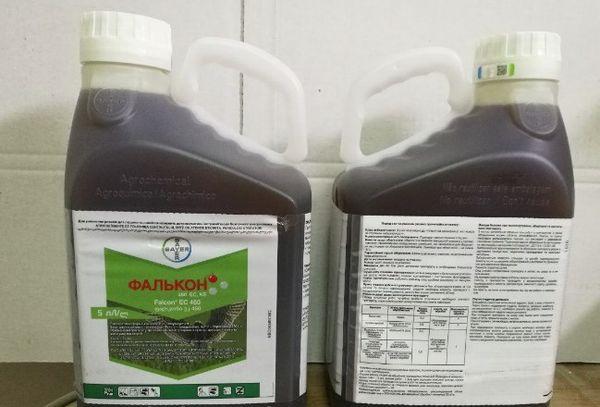
To carry out the work, you will need a standard sprayer and personal protective equipment. For industrial land, professional equipment is used.
How to prepare a solution
The concentration of the solution for processing fruit crops is selected depending on the purpose of the work.
For prevention
The dose of the drug for prophylactic treatment is calculated as follows:
- In the first year, 3 milliliters of the preparation per 10 liters of solution is sufficient.
- When treating bushes in the 2nd year, use 4 milliliters of fungicide per 10 liters of solution.
- In the 3rd and 4th years, 6 milliliters of the substance are added to the solution.
- In subsequent seasons, the concentration of the fungicide is increased to 10 milliliters per 10 liters of solution.
Advice! If grapevines still become infected after preventative treatments, increase the fungicide concentration to the recommended therapeutic level.
For disinfection
Plants affected by fungus require a higher concentration of the preparation in the working solution.
- In the first year of infection, the bushes are sprayed with a fungicide solution containing at least 6 milliliters of the preparation per 10 liters of solution.
- In the second year, the concentration of Falcon is increased to 12 milliliters per 10 liters of solution.
- In subsequent seasons, the solution is prepared based on a dosage of 20 milliliters of fungicide per 10 liters of solution.
Important! Stop spraying with Falcon fungicide one month before the grapes are fully ripe.
Spraying rules
Fruit bushes are treated at a rate of 80 to 100 milliliters of fungicide solution per square meter of plant cover. A moist film containing the necessary substances should appear on the leaf blades.

Protective measures
To avoid poisoning and allergic reactions, use personal protective equipment when working with pesticides:
- Anyone treating plants should wear protective clothing with long sleeves, high boots, safety glasses, gloves, and a respirator. Headgear should also be worn.
- After treatment, all clothing, protective equipment and used equipment are washed with detergents and plenty of running water.
- During the period of work with fungicide, no strangers, especially children and pets, should be present on the site.
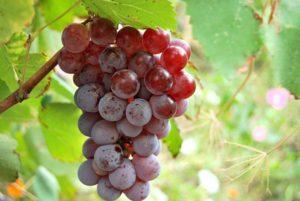
Work is carried out early in the morning or after sunset in calm, cool weather.
In what conditions and for how long can it be stored?
Falcon fungicide requires careful storage conditions. It does not tolerate either high or low temperatures, as these will cause the active ingredients to lose their properties and characteristics. It is best to store the product in a cool, dark place, out of the reach of small children and pets.
The packaged fungicide can be stored for up to 4 years; an opened container of the pesticide must be used within 2 years.
Compatibility with other drugs
The new-generation fungicide Falcon has no contraindications and interacts easily with other similar products. Experienced gardeners and farmers have combined several different fungicides, achieving unique results in the treatment and prevention of fungal diseases.
Common mistakes
The main mistake when using a fungicide is failure to adhere to the timing of plant treatments and a violation of the concentration of the working solution for preventive and curative treatments.
Tips from experienced gardeners
Although Falcon is considered a mildly toxic drug, the following precautions must be observed during handling:
- Spraying of plants is carried out at least 150-170 meters from reservoirs and sources of drinking water.
- The distance from residential premises should be at least 15-20 meters, from sheds and other buildings from 5 meters.
Important! If there are bee apiaries in the area, the minimum distance is 1.5-2 kilometers.
After completing the work, be sure to take a shower under plenty of running water.
Related posts:
 Instructions for use of the Falcon fungicide for roses and other plants, analogues
 Types of garden fungicides and descriptions of the top 24 best, instructions for use
 Instructions for use and composition of the fungicide Fitosporin-M, application rates
 Instructions for use and composition of the fungicide Teldor, application rates
 Instructions for use of the fungicide Topaz for plants, composition and analogues
 Instructions for use and composition of the fungicide Raek, application rates and analogues
 List of the top 16 fungicides for grapes and instructions for their use
 Instructions for use of Fitosporin for grape diseases and dosage