
- What is included in the composition and mechanism of operation
- Purpose
- Dosage form and substitutes
- Flow calculation and instructions for use
- For cucumbers
- For cereals
- For beets
- For roses
- For strawberries
- For grapes
- For tomatoes
- Precautionary measures
- Is compatibility possible?
- How to store it correctly and for how long
Multi-component fungicides are particularly popular with both farmers and home gardeners. Multiple active ingredients with different mechanisms of action against pathogens prevent the development of resistance and eliminate fungal microorganisms much more quickly. The instructions for the Falcon fungicide state that it is suitable not only for roses but also for fruit crops.
What is included in the composition and mechanism of operation
Fungal diseases, which develop under unfavorable climatic and weather conditions and can lead to the loss of a significant portion of the harvest, are the most damaging to agricultural and ornamental crops. Falcon fungicide is a cutting-edge product with a broad spectrum of activity, making it indispensable in the fight against pathogenic microorganisms.
One of the undeniable advantages of the chemical agent is that it can be used both on large fields with crops and on small garden plots.
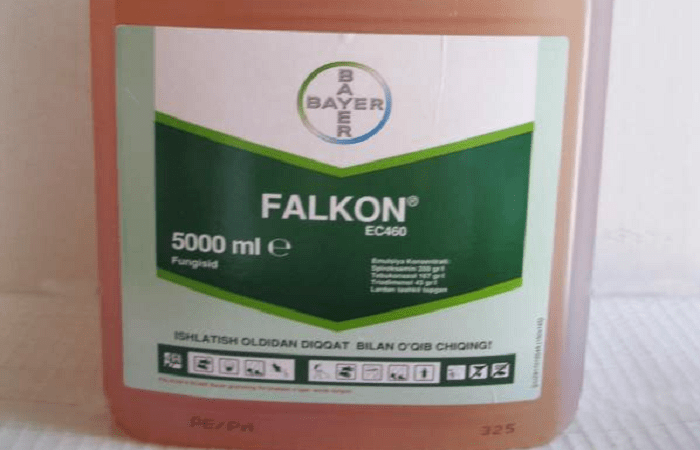
The chemical contains 250 grams of spiroxamine, 167 grams of tebuconazole, and 43 grams of triadimenol (the concentration is indicated per liter of the product). Thanks to this combination of active ingredients, Falcon is effective even against mixed infections, eliminating the need for multiple agents.
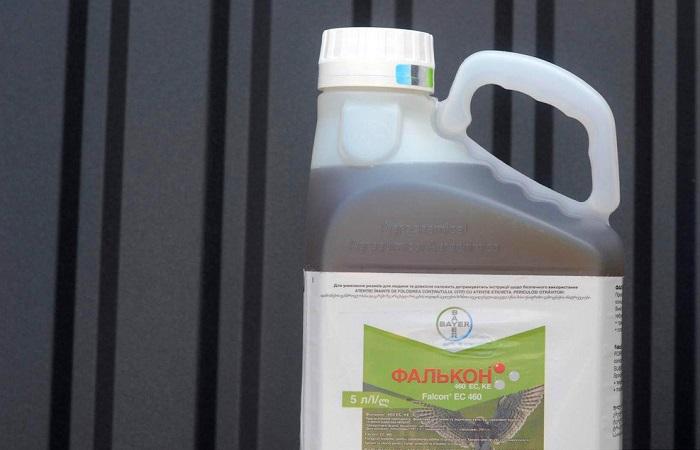
The mechanism of action of active substances on fungal pathogens is as follows:
- Tebuconazole stops the development of mycelium and, in addition, is characterized by a growth-regulating effect.
- Triadimenol has a destructive effect on the cell membranes of fungi.
- Spiroxamine acts on powdery mildew fungi and causes their death.
Each active component has a detrimental effect on different stages of membrane biosynthesis, which together results in high efficiency.
Purpose
The instructions for use state that the fungicide is intended for treating grain crops against fungal infections, as well as for the prevention of fungal diseases in sugar beets and grapes. However, the chemical is also successfully used by home gardeners to spray fruit crops and ornamental plants, including rose bushes.
The only thing we don't recommend using this product on is early-ripening berries. This is because the waiting period before harvest is at least three weeks, during which time the berries can become overripe and spoil on the bushes.
The list of pathogenic microorganisms against which Falcon works successfully includes pathogens of the following diseases:
- root rot and all types of rust that affect grain plants;
- septoria and various types of spotting;
- seed mold and fusarium head blight;
- sugar beet phoma and cercospora;
- Rhynchosporiosis and powdery mildew;
- oidium of grapes.
Dosage form and substitutes
The fungicide "Falcon" is produced by the German company Bayer. It is available in stores as an emulsifiable concentrate or a water-soluble concentrate. Both have a strong, distinctive odor. Before use, concentrates must be diluted with water in the proportions specified in the instructions for each plant.
Gardeners and farmers who have had the opportunity to evaluate the chemical's performance in practice have identified several advantages of Falcon that distinguish it from other similar products.

The advantages of the fungicide include:
- A wide range of fungal microorganisms against which the drug exhibits therapeutic and prophylactic effects.
- The speed of penetration into tissue cultures after treatment and the beginning of the destruction of pathogens.
- The possibility of multiple applications per season for 5 years is due to the different mechanisms of action of the active components, which helps to avoid the development of resistance.
- Long-lasting protective action – up to 4 weeks, and this is not affected by weather conditions or the stage of fungal development.
- Low toxicity of the chemical for humans, animals and insects.
- High resistance to precipitation.
- Long shelf life (up to 4 years) even after opening the package and the possibility of using the fungicide in small portions.
- Affordable cost and economical use of the drug.
- Can be used in tank mixtures with other chemicals after compatibility testing.
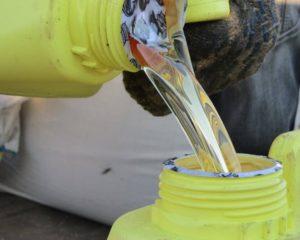
If Falcon fungicide is unavailable, it can be replaced with other products with similar effects, such as Horus, Ridomil, or Topaz. These products are less effective than the above-described chemical, and its only drawback is the long waiting period after application before harvest.
Flow calculation and instructions for use
The manufacturer's instructions specify application rates for different plants, which must be followed when preparing the working solution. Despite the product's low toxicity, it's best to avoid overdosing.
For cucumbers
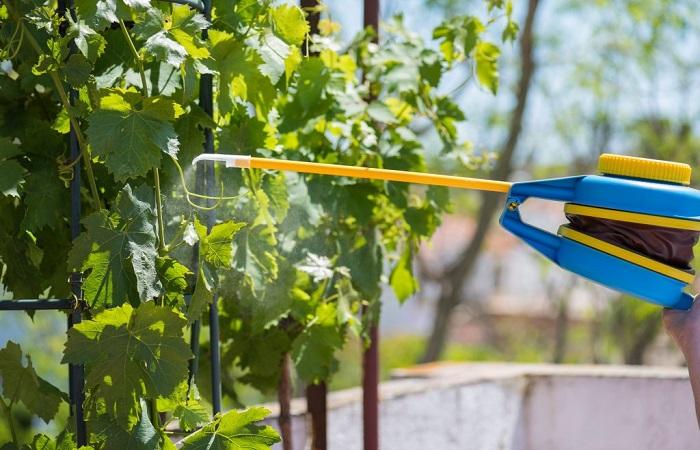
The fungicide is rarely used for treating cucumber crops due to its long waiting period before harvest. Furthermore, due to its strong, specific odor, spraying greenhouse vegetables is not recommended. If a gardener decides to use Falcon in their garden, dilute 5 ml in 10 liters of clean water and water the plants early in the morning or evening. This concentration is used for preventative treatment. For already diseased plants, a different dosage is used: 10 ml of the chemical per 10 liters of water.
For cereals
Rye, barley, and wheat are treated with 6 ml of fungicide per square meter of crop. The application rate is 20 to 30 ml per square meter of field. If necessary, repeat treatment after 40 days. Spray the crops at the end of heading.
For beets
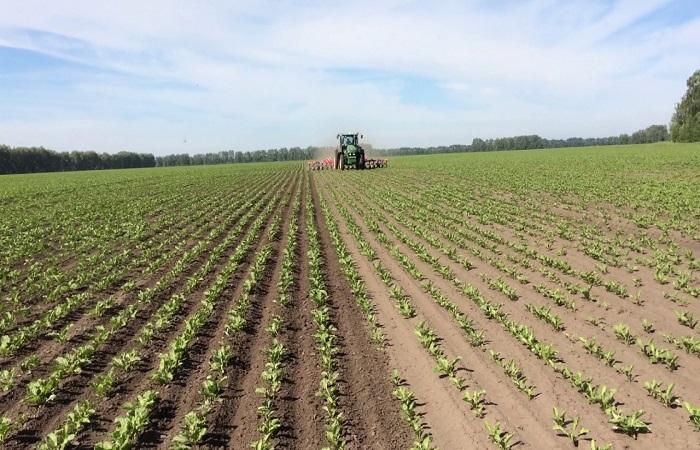
Sugar beets are sprayed with the product throughout the growing season, possibly twice at three-week intervals. Use 5 to 6 ml of concentrate per square meter of planting, and 60 to 80 ml of working solution per square meter of planting.
For roses
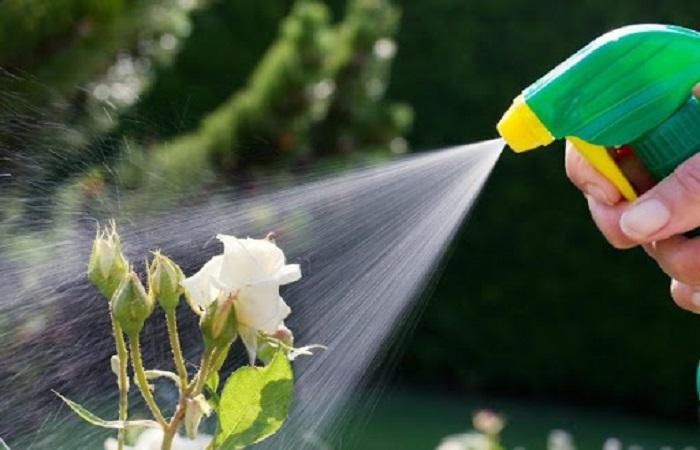
The fungicide is also used on ornamental plants, and is most effective on conifers and roses. The concentration of the working solution depends on the intended use: for treatment, 10 ml is required per 10-liter bucket of water, while for prevention, 5 ml per the same amount of liquid is sufficient. Spray up to four times per season, ensuring that the air temperature does not exceed 25 degrees Celsius during treatment.

For strawberries
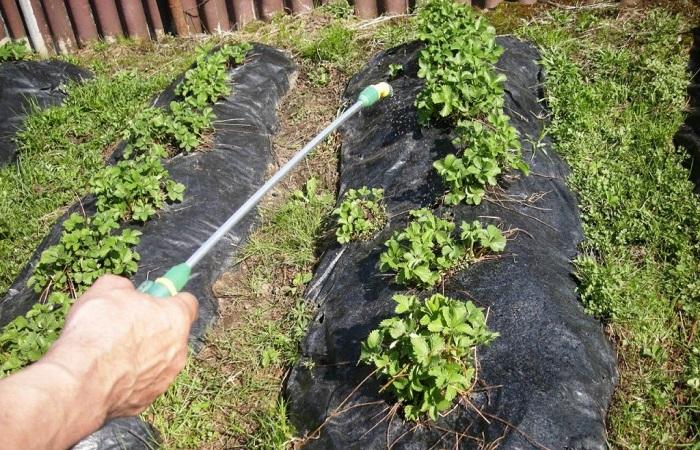
Since strawberries are early ripening berries, using Falcon on them is not advisable.
For grapes
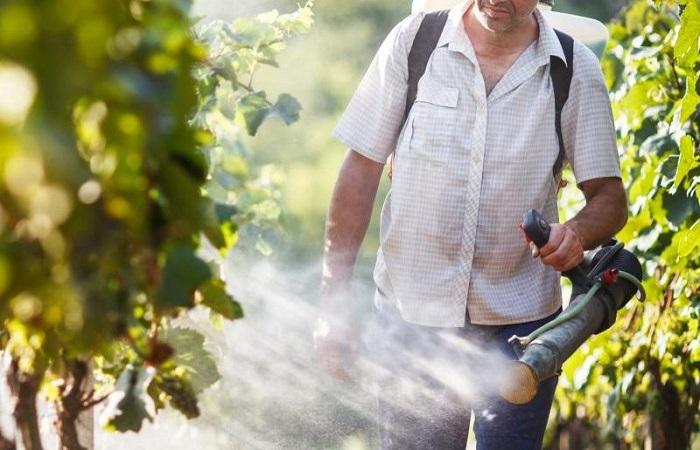
Spray grapevines against fungal diseases up to four times per season: during cluster formation, after flowering, during ovary formation, and when the grapes begin to color. Use 80 to 100 ml of the working solution per square meter of vineyard, the concentration of which depends on the age of the vine and the purpose of the treatment:
- 1 year - 6 ml for treatment and 3 ml for prevention;
- 2 years - 12 ml for treatment and 4 ml to prevent infection;
- 3-4 years – 20 ml for treatment and 6 ml for prevention;
- 5 years and older – 20 ml for treatment and 10 ml for prevention.
For tomatoes
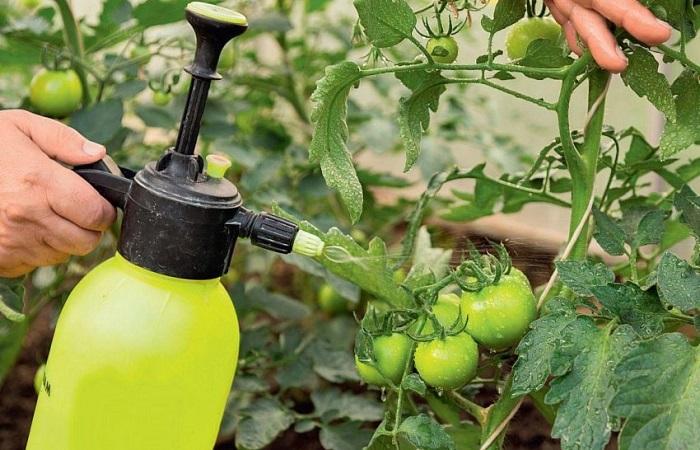
Tomatoes are treated with Falcon only in the early stages of plant development—it's important that at least 30 days pass before harvest. The standard concentration is 5 ml for preventative spraying and 10 ml for already infected plants.
Precautionary measures
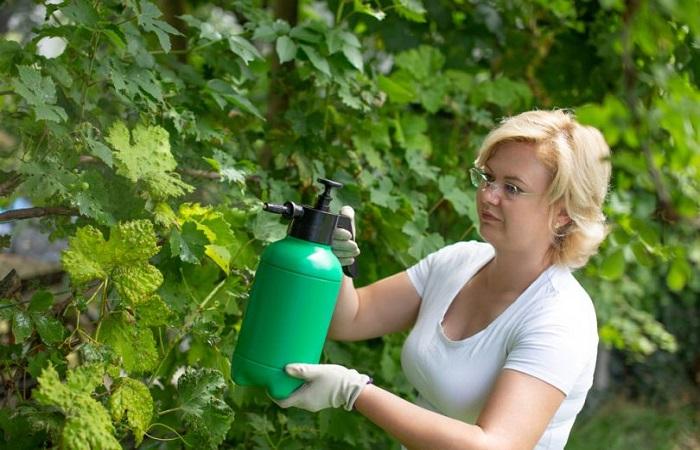
The product belongs to toxicity class 3 and is of low hazard to humans. However, when working with it, basic safety precautions should be followed: wear protective clothing and gloves, as well as a respirator.
Is compatibility possible?
The fungicide can be used in tank mixtures with other agents, but a chemical compatibility test is carried out first.
How to store it correctly and for how long
The manufacturer's stated shelf life is 4 years. Store the chemical away from food and in a separate, dark area, out of reach of children and pets.
Related posts:
 Instructions for using Falcon fungicide for treating grapes
 80 Best Eggplant Varieties for Different Regions with Descriptions and Characteristics
 Instructions for use of the fungicide Topaz for plants, composition and analogues
 The best eggplant varieties for growing in a polycarbonate greenhouse: planting and care
 The best grape varieties for growing in the Urals, planting and care rules in summer
 How to treat grapes after rain in July: medications and folk remedies
 Methods for planting and propagating cherries at home
 Description of varieties of sowing peas and cultivation, to which family they belong