
- Description and Features
- Roots
- Stems
- Escapes
- Eyes
- Leaves
- Flowers
- Fruit
- Main characteristics of the variety
- Ripening and yield
- Disease resistance
- Applications of berries
- Pros and cons of the variety
- How to plant
- Choosing a location
- Recommendations for choosing deadlines
- Site preparation
- How to select and prepare planting material
- Planting diagram
- Care instructions
- Watering mode
- Top dressing
- Mulching
- Preventive treatment
- Sanitary pruning
- Crown formation
- Preparing for winter
- Garter
- Protection from rodents
- How to protect against wasps and birds
- Difficulties of growing
- Harvesting and storage
- Tips from experienced gardeners
The Bogatyanovsky grape variety is highly sought after by gardeners due to its large berries, which can weigh up to 20 grams. This hybrid variety is a cross between the Kishmish Radiant and Talisman grapes. Bogatyanovsky combines the benefits of these varieties. With proper care, a single vine can yield 15-20 kilograms of grapes in a single season.
Description and Features
Bogatyanovsky was bred by Viktor Nikolaevich Kraynov, who kept the method for producing this variety a secret for a long time.
This grape has a number of advantages:
- fruit size;
- the number of berries in a bunch and its total weight;
- increased frost resistance;
- bush size;
- reduced susceptibility to diseases;
- moderate grape ripening period;
These advantages make this variety a favorite among gardeners, winemakers, and those who sell it. The grapes can be stored for a long time without spoiling. They have an attractive presentation and a pleasant taste.
Roots
The root system of this variety consists of dew roots and heel roots. They can reach depths of up to 10 meters. This depth is only achieved when the plant experiences a constant lack of moisture. The dew roots are located close to the soil surface at a depth of 40 centimeters. With sufficient and consistent watering, the rhizomes grow outward rather than inward.
Stems
The stems of this variety are virtually indistinguishable from other grape varieties. The only difference is the length of the branches, which is achieved by not pruning them in a timely manner. With adequate watering, the vines can reach 40 meters in length.
Escapes
A grapevine produces sterile and annual shoots. The latter are used for propagating the variety. There are many of them; more than 20 annual shoots can be cut in a single season.
Eyes
Buds appear only on fruiting shoots. From these shoots emerge leaves and flowers, which then become clusters of grapes. Because the fruits of this variety are heavy, it is recommended to leave 15-20 buds on a single vine. In cold climates, up to 7-10 buds per branch are recommended. If buds are not removed, the branches may sag due to the large number of clusters. Under these conditions, the berries ripen and lose their flavor.
Leaves
The leaves have 3 to 5 margins with characteristic serrations along the edges. The color ranges from light to dark green.
Flowers
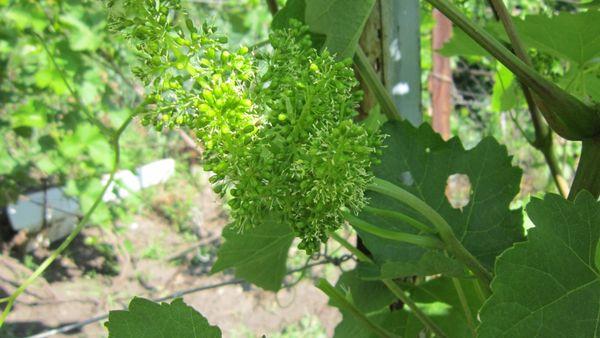
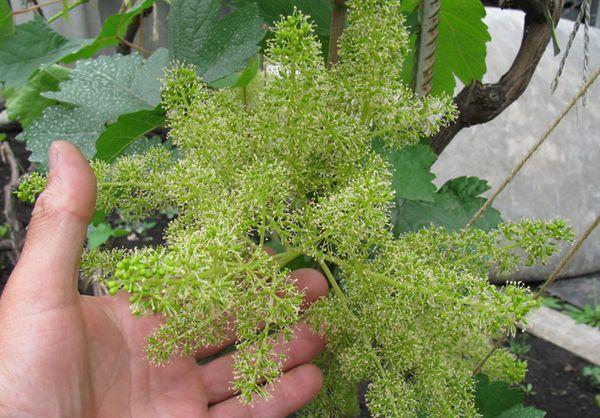
This variety's flowers are small and green. Flowering begins from early May to the second half of June, finishing after two weeks.
Take a look Also
Important! At the end of flowering, clusters of berries begin to develop from the flowers.
Fruit
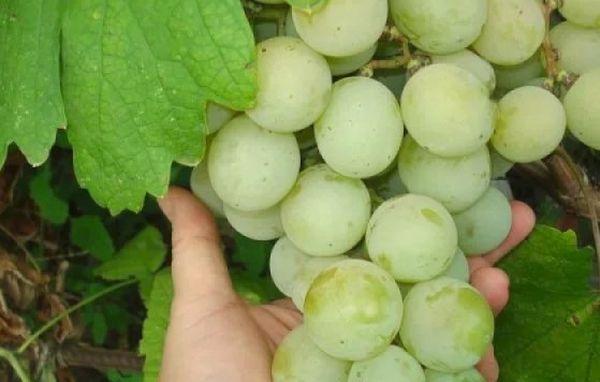
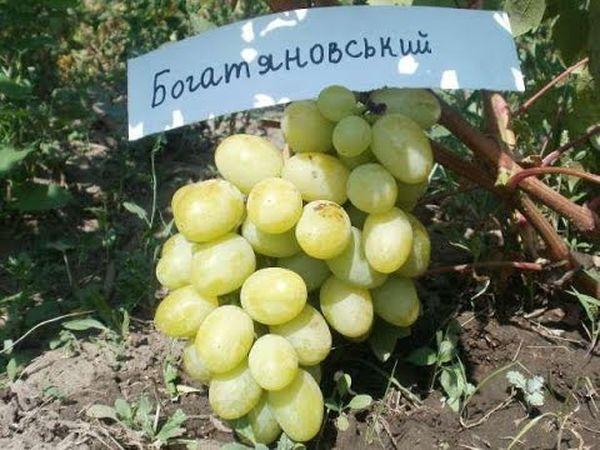
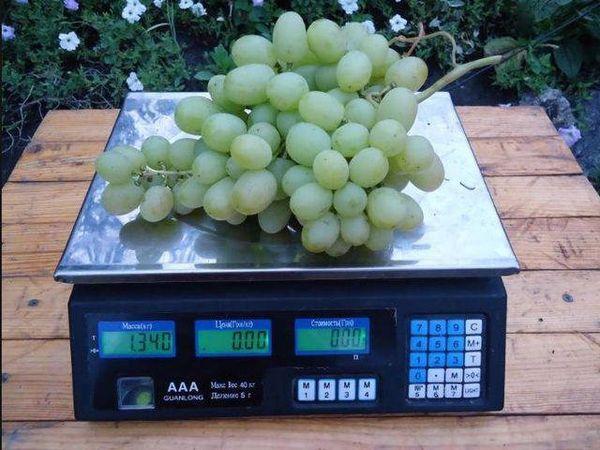
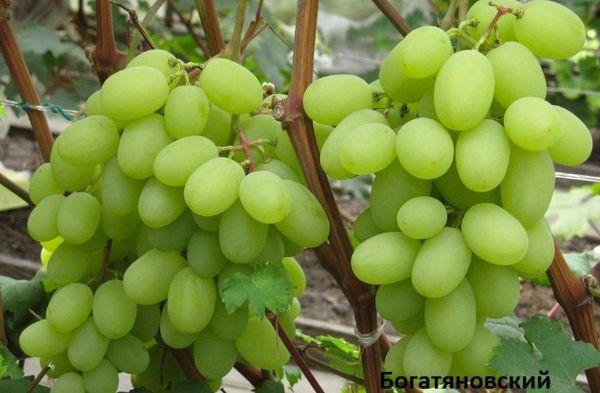
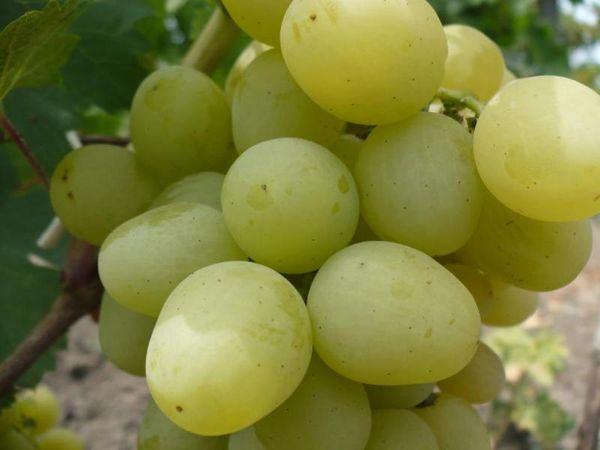
Bogatyanovsky grapes have soft, juicy flesh and a light, yellowish color. Fruits of this variety can reach 25 grams, with the entire bunch weighing 1-2 kilograms. The flavor of these grapes is moderately sweet with a characteristic tartness. The berries contain two seeds, which are not secured by the pulp and fall out easily when cut. The skin is firm.
Main characteristics of the variety
The Bogatyanovsky grape is a table grape variety with an early to mid-season ripening period. Its growing season lasts 120 days. This plant is undemanding and can be grown even in sandy or clay soil.
Grapes are used in the production of dry, semi-sweet and dessert white wines.
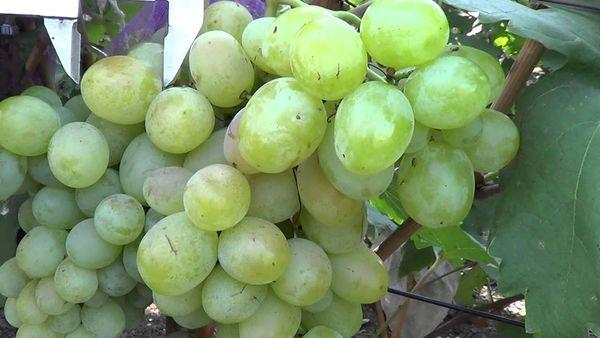
The berries are rich in useful substances:
- vitamin C;
- vitamin B;
- phosphorus;
- potassium.
On average, grapes require temperatures above 10-12°C for comfortable development, and flowering begins at 20°C. To ensure the fruit develops a rich color, the plant needs consistent sun and temperatures of 23-25°C. On average, 35-40 bunches of grapes can be harvested in a single season. Since these fruits will weigh 1-2 kilograms, it is important to provide sturdy support for the vines to support their weight as the berries ripen.
Ripening and yield
With a minimum number of buds on the branches, the fruit yield is 10-15 kilograms. Full ripening occurs at the end of July.
Disease resistance
The Bogatyanovsky variety has increased resistance to the following diseases:
- downy mildew – 3 points;
- gray rot – 4.5 points;
- oidium – 3.5 points.
Applications of berries
Bogatyanovsky grapes are used in the production of dry, semi-sweet, and dessert white wines, as well as in cooking (dishes and confectionery). The most common use of this variety is for sale for human consumption.
Pros and cons of the variety
The advantages of the Bogatyanovsky grape variety include:
- rapid ripening of vines;
- number of fruits (about 40 bunches per season);
- increased resistance to various diseases;
- frost resistance, which means that the plant can withstand temperatures down to -20°C;
- juicy and large berries;
- large size of grape bush;
- a small number of seeds in berries (2-3 pieces);
- long-term storage of fruits;
- uniform ripening of grapes.
Among the disadvantages we can note:
- watery structure of the pulp around the seeds;
- the requirement for periodic preventive procedures;
- rapid sugar content after a long stay on the vine.
How to plant
Grapes are easy to grow, requiring specific soil types, environmental conditions, and temperature. By following the proper care, you can achieve a higher yield.
Choosing a location
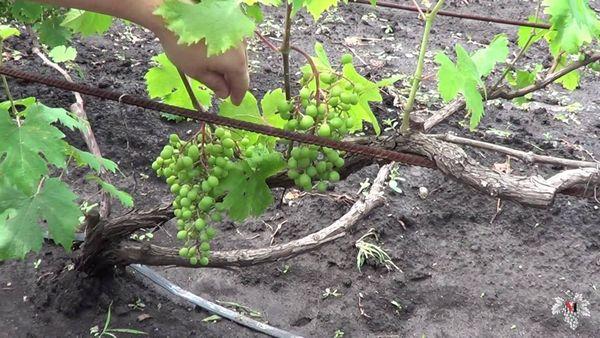
A sunny location with consistent sunlight is best. When planting several seedlings at once, space them 2-3 meters apart, as the vines grow vigorously. A good location is 2 meters from a residential building, ensuring the plants receive consistent heat.
Recommendations for choosing deadlines
This variety is best planted in early spring or fall. It is recommended to plant it by grafting cuttings.
Site preparation
Before planting, dig a hole 1 meter deep and 60 centimeters wide. The bottom should be provided with artificial drainage using a mixture of sand, pieces of golden brick, and crushed stone. The mixture should fill a depth of 15-20 centimeters.
How to select and prepare planting material
Also, before planting the seedling, you need to fertilize the soil with a mixture:
- 1 bucket of manure;
- 100-150 grams of superphosphate;
- 1 bucket of peat;
- 80-100 grams of potassium salt;
- 1 bucket of sand;
- 1 liter of wood ash;
- 1 bucket of humus.
Planting diagram
An 80-centimeter-long drainage tube should be inserted into the hole, and the surface should be covered with black soil. Before planting, trim the vines closest to the base of the seedling. After this, plant the seedling with its roots facing south and its buds facing north. Bend the seedling toward the installed tube, which serves as support. Then, fill the remaining space in the hole with fertile soil mix. After planting, water the plant with 1-2 buckets of warm water.
Care instructions
With proper care, the plant will grow healthy and provide the gardener with a plentiful supply of grapes. This requires regular watering, fertilizing, pruning, mulching, and preventative measures against insects and various diseases.
Watering mode
The need for watering can be determined by the soil moisture beneath the plant and the overall weather conditions (air humidity, temperature, daily rainfall). During the dry summer months, watering can be done twice a month. The soil should be moist within half a meter around the base of the vine. If there is significant rainfall during the month, watering can be stopped altogether.
Top dressing
For best plant growth, it's best to fertilize three times per season. Start in the spring before flowering begins. To do this, mix 10 liters of settled water with 30 grams of granules.
Water the plant with this solution. As the fruit begins to ripen, add 30 grams of superphosphate, 3 grams of boric acid, and 25 grams of potassium salt to a bucket of warm water. Water the plant with the resulting mixture. Repeat the feeding after two weeks. To prepare it, you will need:
- 10 grams of potassium salt;
- 5 milliliters of iodine;
- 8 grams of soda;
- a bucket of warm running water.
After mixing all the ingredients, the resulting mixture should be sprayed on the leaves and branches of the grapes.
Mulching
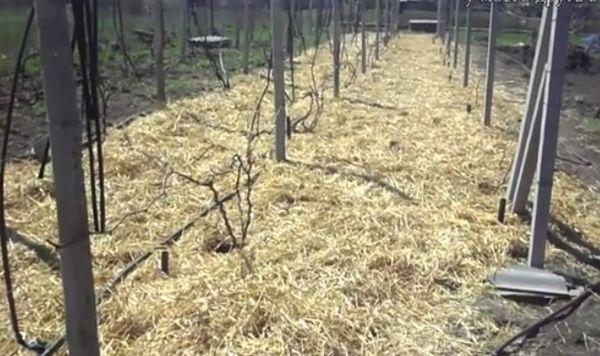
It's best to begin mulching when the vines' buds begin to open. To do this, apply a 5-centimeter layer of straw around the base of the grapes.
Preventive treatment
There are 6 products suitable for processing:
- Efalom.
- Sandofan.
- Amistar.
- Impact.
- Rovikurt.
- Rolihom.
Important! Periodically, the plant should be treated prophylactically to detect early signs of disease.
Sanitary pruning
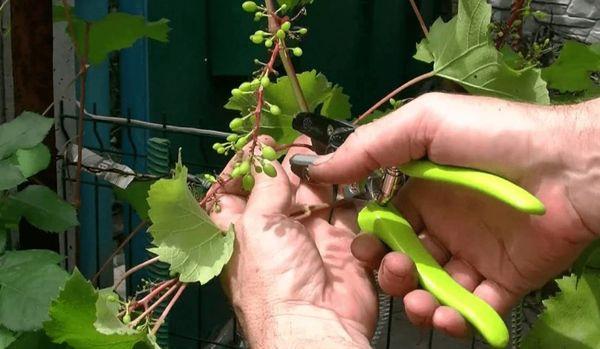
Sanitary pruning is performed in the summer, when dead or dying vines are visible. This procedure is also necessary when diseased shoots are discovered on the bush. These areas should be pruned.
Take a look Also
Crown formation
Proper plant shaping will increase your yield. Pruning methods include:
- standard;
- fan-shaped;
- cordon;
- Guyot.
Preparing for winter
When winter arrives, grapevines need to be prepared. It's recommended to completely cover the vines and perform pre-winter pruning. To cover the vines, remove all vines and defoliate, then press the branches closer to the ground.
The plant should be wrapped in natural fabric or a special insulating film.
Garter
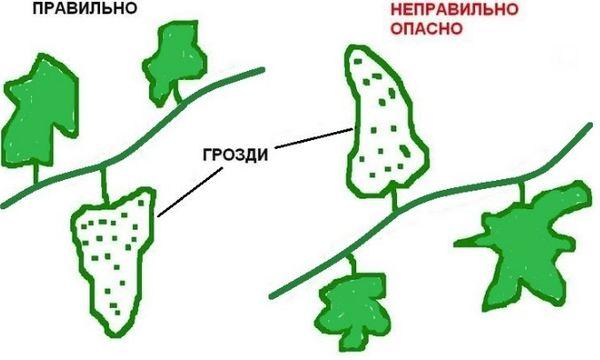
It is important to monitor the plant's branches and periodically tie them up so that they do not sag under their own weight.
Protection from rodents
The most effective rodent control method is to wrap grapevine branches in plastic film. This method ensures complete safety for the plant.
How to protect against wasps and birds
To protect grape clusters from wasps and birds, cover the fruit with special nets or nylon tights. However, it's important to note that this will reduce ventilation, increasing the risk of disease.
Difficulties of growing
The main difficulty in growing the Bogatyanovsky variety is its excessive growth. Without proper pruning, the branches can extend for several dozen meters. Therefore, their size and condition must be constantly monitored. Covering the Bogatyanovsky bush during winter can also be quite challenging.
Harvesting and storage
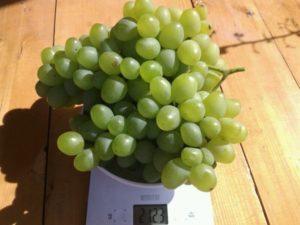
Bunches of this variety should be cut and used shortly after they are fully ripe. If fully ripened fruit remains on the vine for a long time, it may begin to sugar.
It is best to store grapes in a well-ventilated place without constant access to sunlight, as it is harmful and degrades the taste of the fruit.
Tips from experienced gardeners
For those who have decided to grow the Bogatyanovsky grape variety, here are some tips from experienced gardeners:
- It is best to buy planting material in specialized stores.
- To obtain a large number of grape clusters, it is necessary to constantly inspect the condition of the branches, water, pruning and carry out preventive procedures.
- It's recommended to try new methods of staking and pruning. This variety is very easy to grow and can even thrive in challenging conditions for other plants.
Related posts:
 How to grow grapes in the Moscow region in open ground without a greenhouse
 Description of the Julian grape variety, planting and care instructions
 The ripening time of grape vines by variety, how to speed up the process, and what to treat the plant with
 Description of the Krasotka grape variety, planting and care technology
 Description of 30 grape varieties for Siberia, planting and care for beginners
 Description and characteristics of the Laura grape variety, planting and care
 Description of 30 varieties and types of Muscat grapes, planting, cultivation and care
 The best grape varieties for growing in the Urals, planting and care rules in summer