
- Description and Features
- History of selection
- Properties
- Caloric content
- Benefits and harms
- Acidity
- Bush characteristics
- Vine
- Bunch
- Productivity
- Taste qualities
- Winter hardiness and drought resistance
- Disease resistance
- How to plant correctly
- Recommendations for choosing deadlines
- Site selection and preparation
- How to select and prepare planting material
- Planting diagram
- Care instructions
- Watering
- Top dressing
- Mulching
- Garter
- Disease prevention
- Oidium
- Mildew
- Protection from birds and pests
- Preparing for winter
- Pruning and shaping
- Topping
- Crop rationing
- Methods of reproduction
- Growing on its own roots
- By vaccination
- Layering
- Advantages and disadvantages of the variety
- Harvesting and storage
- Tips and advice from experienced gardeners
The Valek grape variety has gained particular popularity among viticulturalists, distinguished by its excellent flavor and increased resistance to external influences. This Muscat variety has proven itself to be an easy-to-grow plant, capable of growing almost anywhere. To ensure a consistent and abundant harvest from Valek grapes, it's important to understand the basic principles of planting and care, as well as consider its strengths and weaknesses.
Description and Features
The Valek grape variety is considered an ultra-early variety. Harvesting is possible as early as 105 days after bud break. The vines are resilient to adverse environmental factors; under extreme conditions, they either stop growing or experience reduced yields.
The Valek grape also looks spectacular as a decorative addition to the facades and walls of outbuildings at the dacha. This hybrid variety is used to create shade, and to decorate arched structures and gazebos.
History of selection
To receive The Kesha 1 variety was used for the Valek grapes, Rizamat, and Zvezdny. The creator of this hardy and promising hybrid was Ukrainian breeder N. P. Vishnevetsky from the Kirovohrad region. In addition to the Valek variety, he developed such well-known varieties as the Black Panther and Chameleon.
Properties
The Valek grape variety has gained its popularity due to its many beneficial qualities and relative undemanding nature regarding growing conditions.
Caloric content
The calorie content is directly affected by the sugar concentration in the fruit. The higher the concentration, the higher the calorie content. The color, size, and flavor of the berries are irrelevant. White grapes contain 45 calories per 100 grams.
Benefits and harms
Regular consumption of grapes allows you to:
- cleanse the body of harmful substances;
- improve immunity;
- improve the functioning of the nervous system;
- get rid of fungal diseases;
- strengthen the walls of blood vessels;
- improve skin condition;
- increase hemoglobin levels.
If you have conditions such as stomach ulcers, diabetes, hypertension, diarrhea, cirrhosis of the liver, or oral problems, it's best to avoid grapes. The harm will outweigh the benefit.
Acidity
The acidity levels of the Valek grape variety are within the range of 5-6 g/dm33And the sugar content varies in the range of 17-19%.
Bush characteristics
To successfully grow grape bushes, it is necessary to become familiar with their basic characteristics in order to create the most favorable growing conditions for them.
Vine
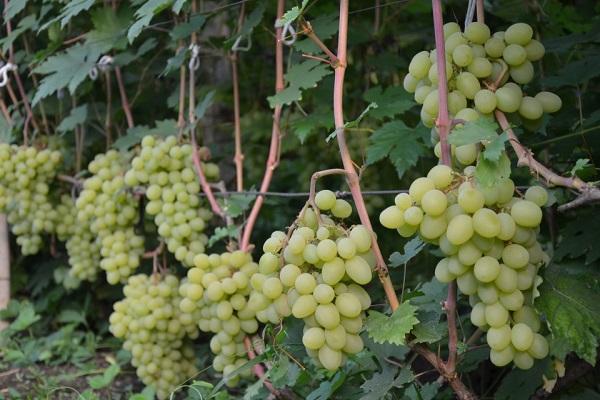
The Valek variety produces a vigorous vine with shoots running its entire length. Each shoot produces 2-3 fruit clusters. Fruit ripening is characterized as excellent. The vine bears medium-sized, green leaves with a pubescent underside.
Bunch
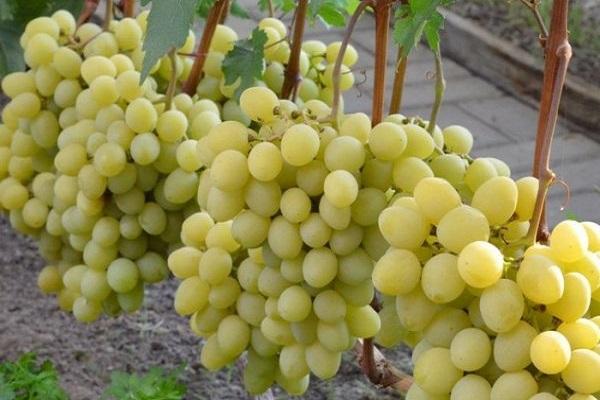
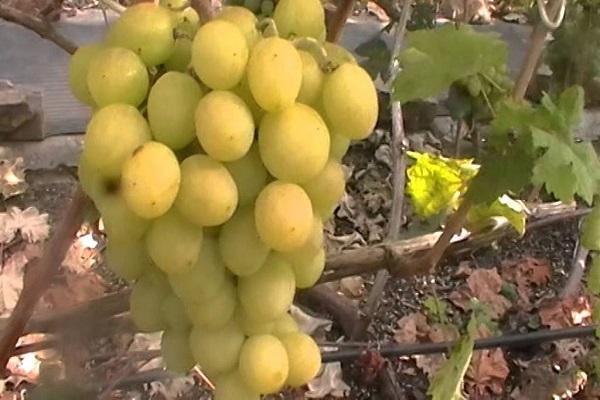
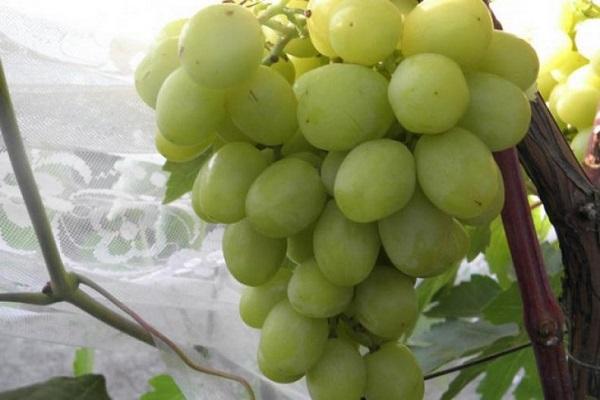
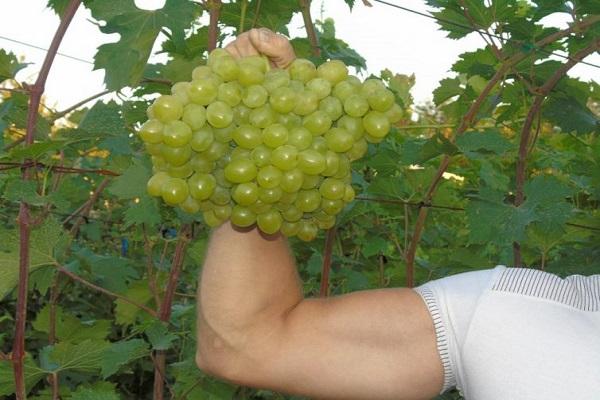
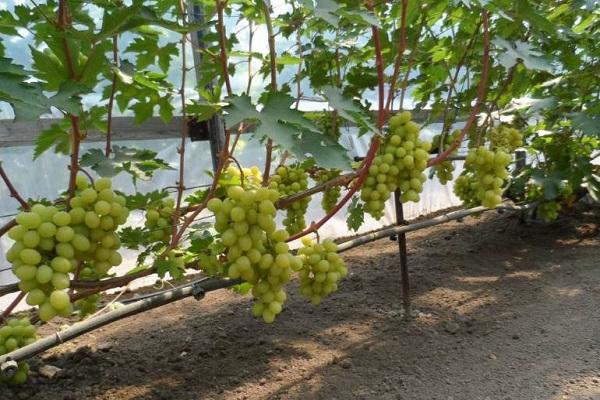
The Valek grape variety produces cone-shaped clusters, characterized by large, tightly packed berries. The average weight of a single bunch is 684 g, with maximum yields ranging from 2-2.5 kg. The berries are yellow, oval, and large (3 cm long and 2.8 cm wide), weighing 9-17 g each.
Productivity
Given its high productivity, Valek grapes are a promising variety. With proper cultivation practices, a single bush can yield up to 35-40 kg of delicious berries.
Taste qualities
Once ripe, the berries acquire a bright yellow color and have a distinct muscat aroma. The taste of the Valek grape variety is very similar to that of a pear. Thanks to the moderately thick skin, the berries can be eaten whole, and they are also quite sweet.
Important! The crop tolerates long-distance transportation and has good shelf life..
Winter hardiness and drought resistance
The vigorous, large-fruited Valek variety tolerates temperatures as low as -24°C without issue. If planted in cold climates, additional winter protection will be required, especially for young vines. Valek grapes are drought-resistant, but the soil around the trunk should not be allowed to dry out completely.
Disease resistance
The Valek variety has been shown to have increased immunity to fungal infections. Gray mold is extremely rare. Valek grapes are resistant to mildew. and oidium. Wasps pose a major threat to it.
How to plant correctly
To achieve the desired result, you need to know how to properly plant grape bushes in a permanent location.
Recommendations for choosing deadlines
It's recommended to plant the Valek variety in the fall, a month before the onset of frost. Particular attention should be paid to protecting the seedlings from low temperatures. It's also possible to plant Valek grapes in the spring, once warm temperatures have set in, providing the young vines with sufficient moisture.
Site selection and preparation
Since the Valek variety develops a strong root system, the optimal distance between bushes is 3 meters. It is recommended to plant the seedlings in a sunny location. The soil at the planting site should be fertile and permeable to air and moisture.
Important! The Valek grape variety should not grow in areas with excessive moisture or shade. It should also be protected from cold drafts by choosing a location near the walls of a house or fence.
How to select and prepare planting material
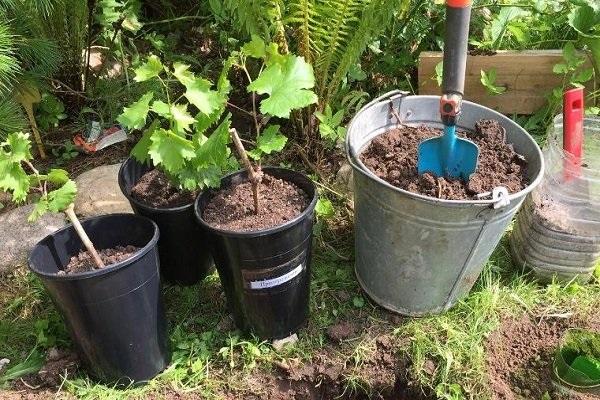
Valek seedlings should be purchased from specialized retailers and nurseries. When choosing, pay attention to the overall condition of the planting material. It should be free of rot, mold, or other damage. The cuttings should be at least 1 cm thick.
The root system of the bushes should also be healthy and well-developed. You can check the root's quality by cutting it; it shouldn't be dry. If the seedling is in a transparent container, you can inspect its underground part through the walls.
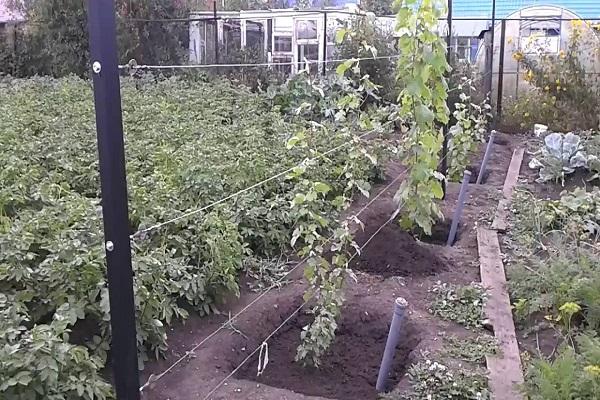
Planting diagram
The landing algorithm involves the following steps:
- Dig a pit with dimensions of 80x80x80 cm.
- Place a drainage layer of broken brick, expanded clay, or crushed stone on the bottom. The layer should be 15 cm thick.
- Fill the hole alternately with the top layer of soil and compost.
- After a week, place the prepared seedling in the center of the hole and keep it in a container with water for 24 hours.
- Sprinkle the straightened roots with fertile soil and compact it carefully.
- Water.
If the bushes are planted in the fall, the roots must be protected from freezing..
Care instructions
Caring for the Valek grape is easy, even for beginners.
Watering
Irrigation is carried out three times a year. The first treatment is done at the flowering stage, then at the fruiting stage, and before winter. During the dry season, the bushes are watered unscheduled.
Two buckets of water are used per plant.
Top dressing
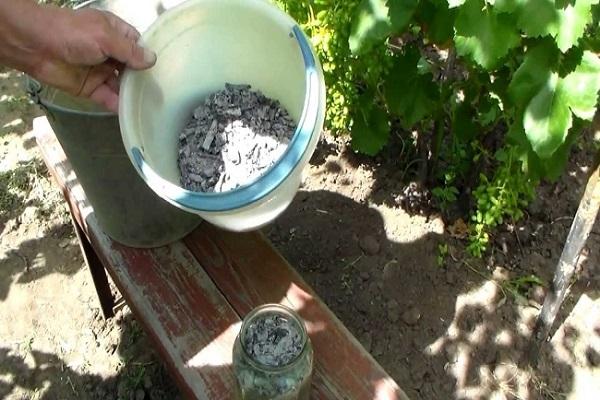
Feeding is best done in the fall. Use rotted manure at a rate of 6 kg per square meter or wood ash at a rate of 100 g per square meter.
Mulching
A layer of mulch around the tree trunk helps retain soil moisture, control weeds, and enrich the soil with nutrients. Straw is used as a mulch, and the layer should be at least 10 cm thick.
Garter
Given the large size of the clusters, the vines need to be tied up. Excessive strain on them can cause damage. This procedure is carried out both in the spring and summer after the shoots have grown (40-50 cm). Fabric strips or a special device with tape are used to tie the bushes.
Disease prevention
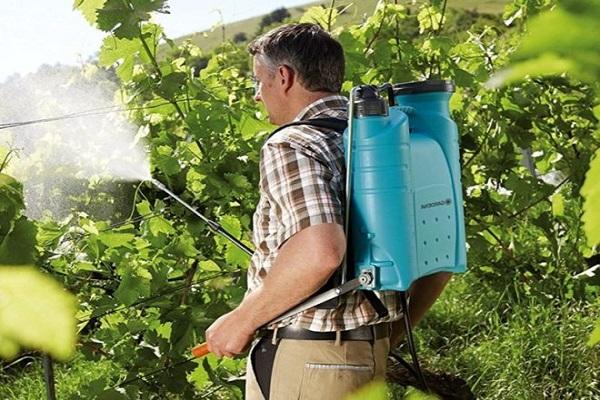
To prevent the development of dangerous diseases, Valek grapes are sprayed with agrochemicals.
Oidium
The following preventative measures are very helpful against this disease:
- control over soil moisture levels;
- weed removal;
- good drainage pad;
- treatment of grape bushes with preparations three times per season.
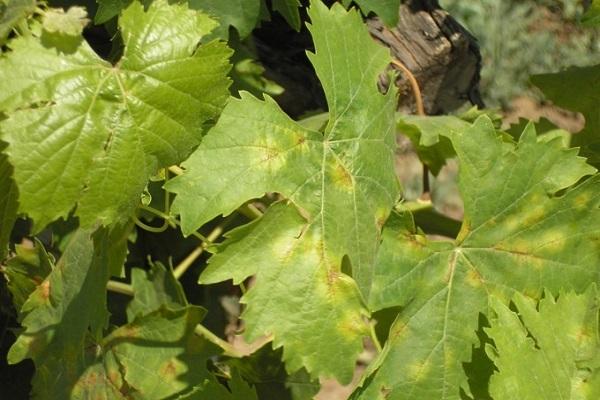
Mildew
You can prevent the occurrence of fungal diseases by following the maintenance rules:
- In the spring, the bushes are treated with preparations such as Bordeaux mixture, Oxyhom, Abiga-Peak;
- at the stage of formation of 4-6 leaves, use Polihom or Polycarbocin with the addition of colloidal sulfur (80-90 g) to spray the bushes;
- Before the flowering phase, Thiovit, Actellic, and Topaz are used for treatment.
Protection from birds and pests
The Valek variety is known for its juicy and sweet berries. To protect them from birds, use mesh bags, and wasps can be kept at bay using special traps filled with a sweet liquid. Wasp nests located near the bushes should also be destroyed.
Preparing for winter
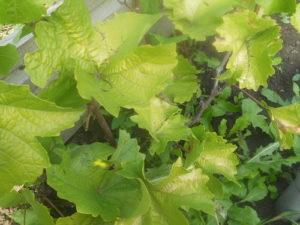
When grown in warm regions, winter protection for grape vines is not necessary. If the variety is grown in colder regions, in September-October, when the leaves have fallen, the vines are removed from their supports, bent to the ground, and covered with spruce branches or roofing felt.
Pruning and shaping
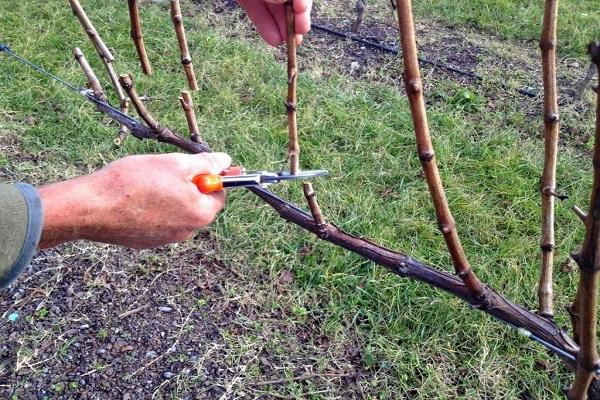
This procedure is carried out in the fall, a couple of weeks after harvesting. If there are still many leaves left on the bushes, they need to be artificially defoliated. Pruning is done down to living wood, ensuring that there is still 2 cm of shoot above the living bud. Additionally, depending on the growth rate of the bushes and the shoot thickness, an appropriate number of buds should be left, with a diameter of:
- 5 mm – 5 eyes;
- 6 mm – 5-6 eyes;
- 7 mm – 7-8 mm;
- 8 mm – 8-9 eyes;
- 9 mm – 9-11 eyes;
- 10 mm – 11-13 eyes;
- 11 mm – 12-14 eyes;
- 12 mm – 13-15 eyes.
Topping
This procedure should be performed before the buds appear to prevent the grapes from growing too tall. The tops of the shoots are pinched, and side shoots are also removed.
Crop rationing
To prevent pea-shaped and sour fruits, the Valek variety requires thinning. No more than two clusters should be left on a single fruiting stem.
Methods of reproduction
There are several ways to grow grape bushes, each with its own subtleties.
Growing on its own roots
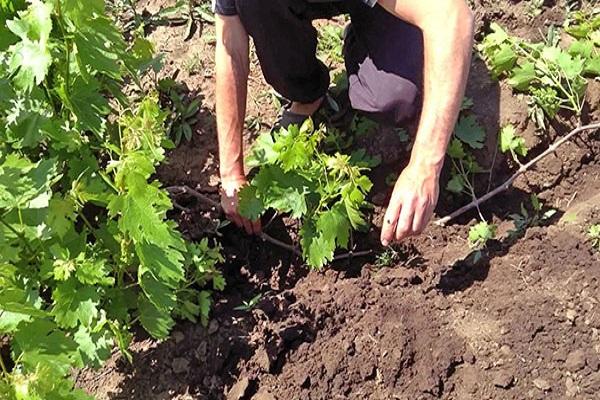
You should purchase a seedling from a nursery or a specialized retailer. A cutting from a mature plant will also work. In the spring, place it in a container with fertile soil and drainage and water it periodically.
By vaccination
This method offers the potential for rapid growth. However, finding suitable rootstock is difficult. Experimenting with this approach is possible.
Layering
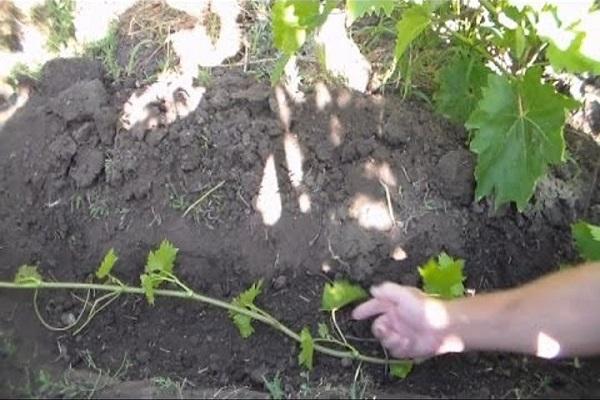
This method involves burying a mature vine without separating it from the mother plant. Once its own roots have formed, the shoot is cut off and placed in its permanent location.
Advantages and disadvantages of the variety
The positive characteristics of the Valek variety include:
- large-fruited;
- unpretentiousness;
- high productivity;
- excellent consumer qualities;
- good shelf life of fruits;
- transportability of the crop;
- frost resistance;
- drought resistance;
- increased immunity.
Among the disadvantages of the hybrid are noted:
- vigorous growth;
- the need for standardization.
Harvesting and storage
The first bunches are picked as early as early August. Cool rooms and refrigerators are chosen for storage, where the berries can last for up to a month.
Tips and advice from experienced gardeners
The Valek grape variety is a promising and undemanding variety. To grow it, select sunny, spacious sites, monitor soil moisture, and implement preventative measures. Young plants should be covered for the winter. Pruning and thinning the bushes will ensure a large and bountiful harvest.
Related posts:
 How to grow grapes in the Moscow region in open ground without a greenhouse
 The ripening time of grape vines by variety, how to speed up the process, and what to treat the plant with
 Description of 30 grape varieties for Siberia, planting and care for beginners
 Description of the Julian grape variety, planting and care instructions
 Description of 30 varieties and types of Muscat grapes, planting, cultivation and care
 Beginner's Guide to Growing Grapes in Open Ground in Central Russia
 Description of the Krasotka grape variety, planting and care technology
 Description and characteristics of the Syrah grape variety, where it grows