
- The advantages of this method of growing
- Temperature conditions
- Earlier harvest
- Protection from diseases and pests
- You can completely abandon chemicals
- Protection from frost and drought
- High yield
- Comfortable working conditions
- How to choose a variety
- Recommended varieties
- Kishmish
- Korinka Russian
- Michurinsky
- Beauty of the North
- Ruslan
- Friendship
- In memory of Shatilov
- Early Russian
- Frankenthal
- Laura
- Irinka
- In memory of Dombkovskaya
- Alexandrian Muscat
- Queen of Paris
- Moscow sustainable
- Features of a polycarbonate greenhouse for grapes
- Greenhouse dimensions
- Foundation
- Sheathing
- Frame
- Heating
- Lighting
- Ventilation
- How to make trellises yourself
- Vertical
- T-shaped
- How to plant
- Recommendations for choosing deadlines
- How to select and prepare planting material
- Planting diagram
- Care instructions
- Temperature conditions
- Access to sunlight
- Pollination
- Shaping and pruning
- Top dressing
- Preparing for winter
- Watering mode
- Tips and advice from experienced gardeners
Grapes thrive in warmth and require plenty of sunlight to thrive. However, not all regions offer these conditions. In climates with cold winters and cool summers, greenhouse cultivation offers an excellent option.
The advantages of this method of growing
Growing grapes in a greenhouse has many advantages. This method is ideal for those who live in northern latitudes but still have a passion for viticulture.
Temperature conditions
A greenhouse is the easiest way to regulate the temperature and adjust it to each grape variety. If you're growing more than one variety in a greenhouse, you can choose the optimal temperature to keep all the plants comfortable. If you grow grapes in a cold climate, they won't freeze in winter.
Earlier harvest
Greenhouse conditions make it possible to accelerate crop ripening and grow it even during colder seasons, such as autumn or early spring.
Protection from diseases and pests
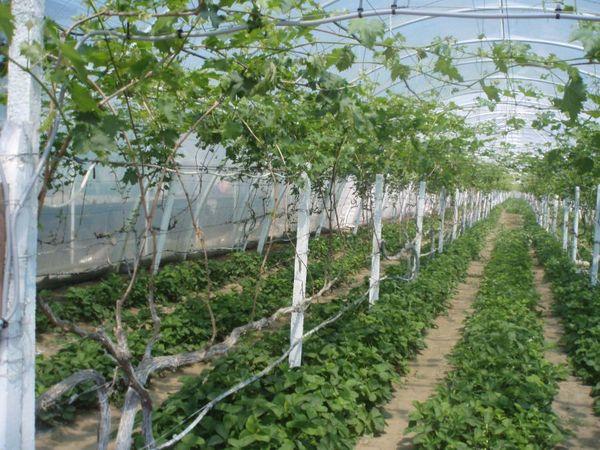
Compared to the outdoors, a greenhouse provides sterile conditions. It's closed most of the time, preventing insects from getting in. This also prevents the spread of diseases, as insects are the carriers of most illnesses. If you wash your greenhouse several times a year, the likelihood of diseases will be low.
You can completely abandon chemicals
Chemicals are used in most cases to kill large insect populations or combat diseases. However, grapevine diseases are rare in greenhouses, so chemicals are unnecessary. If insects do appear, their numbers are small, so they can be controlled with folk remedies. Chemicals are only used in greenhouses as a last resort.
Protection from frost and drought
Another advantage of growing grapes in a greenhouse is that the vines are always protected from frost and drought. The temperature is comfortable for the plants, and if it gets too hot, additional ventilation is available.
High yield
A greenhouse can always produce a good harvest, thanks to the fact that the temperature and light conditions can be adjusted and configured to create ideal conditions for plant growth.
Comfortable working conditions
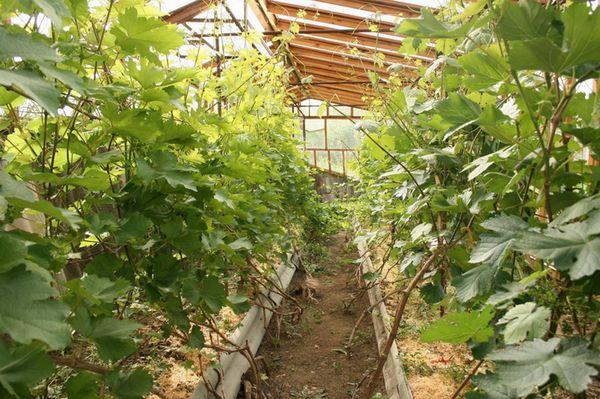
The advantages of growing grapevines in a greenhouse include convenient working conditions. If, for example, you need to do something in the greenhouse and it's already dark outside, just turn on the lights.
How to choose a variety
To grow good bushes and get a good harvest, you need to choose the right grape variety that will be suitable for cultivation in a greenhouse at your dacha.
For greenhouse planting, it's best to choose early, bisexual varieties. The main problem with greenhouse grape planting is pollination, so it's best to choose a self-pollinating variety.
Recommended varieties
The best grape hybrids for growing in greenhouse conditions.
Kishmish
This is one of the most popular hybrids among gardeners. A distinctive feature of Kishmish is the absence of seeds in the pulp. It is an early-ripening plant, with the harvest ripening no more than 100-104 days after the flowers appear. The clusters are large, weighing almost 650 g. Fully ripened berries are yellow-emerald. When planting in a greenhouse, keep in mind that the bushes are tall and grow quickly, so pruning will be necessary.
Korinka Russian
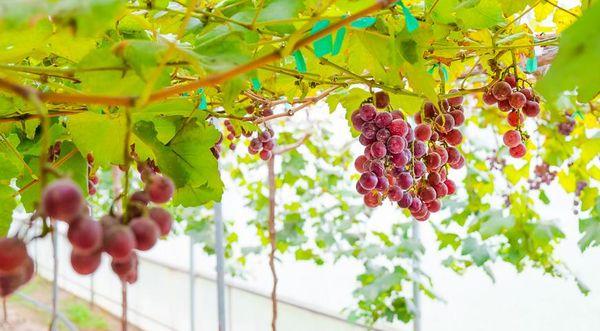
This variety was developed by Russian breeders. It's another hybrid with seedless flesh. Korinka Russkaya is an early-ripening hybrid; the harvest can be completed approximately 102 days after fruit set. The bushes are vigorous and tall. A sturdy support is required for tying the vines. The clusters are medium-sized, weighing up to 300 g. The berries are small, with a yellow-green skin. In the sun, they acquire a pinkish blush.
Michurinsky
This variety is a table hybrid. The clusters ripen mid-early, 110 to 125 days after fruit set. The bushes are characterized by vigorous growth. Fully ripened clusters are medium-sized, weighing from 200 to 350 g. The berries are small, resembling a perfect oval. The skin is almost black with a cherry tint. The advantages of this hybrid are that the fruits do not crack after ripening and do not rot.
Beauty of the North
Krasa Severa is a table grape hybrid. Harvest ripens early, just 109 days after flowering. The clusters are large, loose, and cone-shaped, weighing approximately 350 g. The berries are oval, with a light green skin and flesh. A pink blush may develop on the skin as they ripen. The ripe flesh has a sweet, slightly tart flavor. The vines require ample light to produce a bountiful harvest.
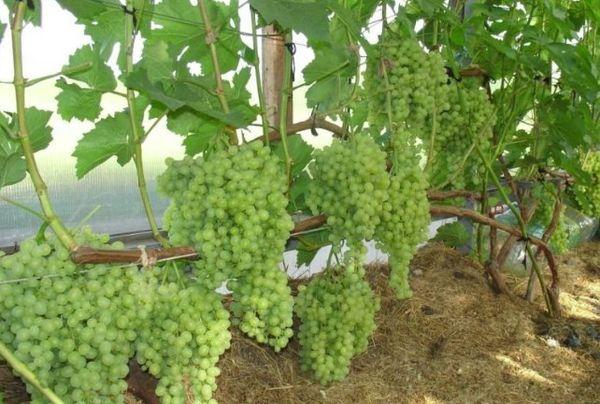
Ruslan
This hybrid is classified as a table grape. The harvest ripens early, with a growing season of only 104-112 days after fruit set. The flesh has a unique flavor, with a plum-like aroma. The clusters are very large, with a maximum weight of almost 800 g. The flesh is a rich purple. The berries are oval-elongated. Disease resistance is a prominent advantage of this hybrid.
Friendship
This variety is suitable for all-purpose use. Fully ripened bunches are pointed and conical, weighing up to 300 g. The ripe skin and flesh are light yellow. The berries are large, weighing up to 2 g. The harvest ripens late, with ripe bunches picked in mid-August. This variety is sweet, with a pleasant tartness and a muscat flavor.
In memory of Shatilov
A Russian-bred variety. The grapes produce very large clusters, with the maximum recorded weight reaching almost 1 kg. The average bunch weighs 500-700 g. The skin and flesh are dark purple. The skin is thin, the flesh is juicy, and the sugar content is high. The ripening period is 105 to 116 days after the flowers appear.
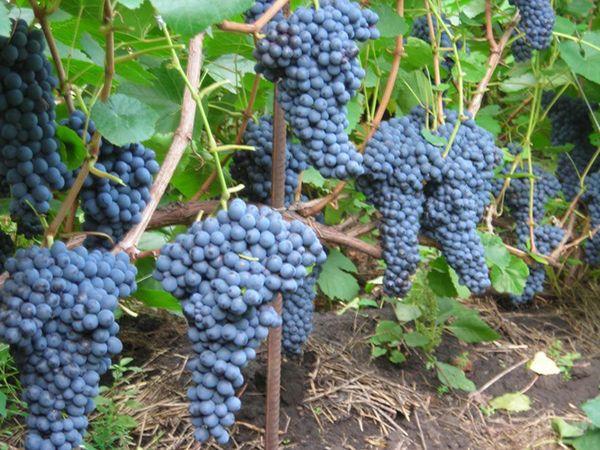
Early Russian
This easy-to-grow variety produces a good yield. With regular care, the vines can begin producing fruit in July. Mature bushes are tall and require annual pruning. The grapes are small, weighing up to 6 g. When fully ripe, the flesh is sweet and juicy with a unique caramel aroma. The skin is pinkish-green, covered with a thin bloom.
Frankenthal
A mid-early hybrid, the growing season lasts approximately 155 days after inflorescence. It is considered a table grape. The clusters are large, with round grapes that are dark red or almost black. The skins are covered with a waxy coating, making the berries appear lighter. The clusters are characterized by a cylindrical shape.
Laura
The grapes ripen early, taking approximately 95-106 days. The clusters are large, 40-45 cm long. Under favorable growing conditions, a single cluster can weigh up to 1.5 kg and is moderately loose. The grapes are cylindrical, with emerald skin and flesh. The berries have a pleasant, slightly tart flavor. Pollination rates are high, making this variety ideal for greenhouse cultivation.
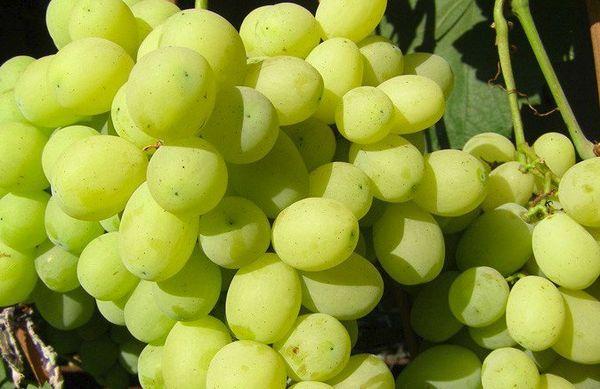
Irinka
An early-ripening table hybrid. The growing season lasts approximately 116 days after flower formation. The vines bear bisexual inflorescences. The clusters are large at full maturity, weighing up to 1 kg. The grapes are conical in shape and medium in density. The berries are initially white, turning yellow as they ripen.
In memory of Dombkovskaya
A distinctive feature of this hybrid are its bluish-black berries, covered in a waxy coating. There are no seeds inside the pulp. The sugar content of the pulp depends on the amount of time the vines spend in the sun. The ripe clusters are dense and can have a variety of shapes. The dense arrangement of the berries allows them to release juice.
Alexandrian Muscat
This hybrid is used both as a table grape and for wine production. The clusters are small, weighing between 250 and 345 g. A characteristic feature of this hybrid is its high, yet variable, yield. One year, the vine may be covered with grapes, while the next, there may be only a few bunches.
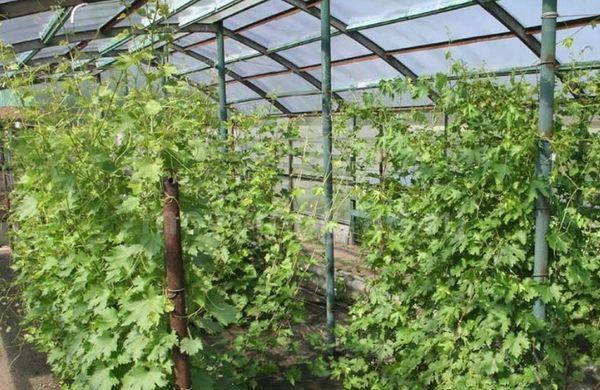
Queen of Paris
The bushes are characterized by medium vigor, making them ideal for greenhouse cultivation. The harvest ripens early, within 125 days. The clusters are large, weighing from 500 to 650 g. The grapes weigh from 5 to 7 g. The pulp at the technical ripeness stage has a unique, muscat-citrus flavor.
Moscow sustainable
This hybrid has an unusual grape flavor—pineapple-muscat. The clusters are cylindrical, and the harvest ripens early. The growing season lasts approximately 123-130 days. The grapes are perfectly round, with amber-colored skins.
Features of a polycarbonate greenhouse for grapes
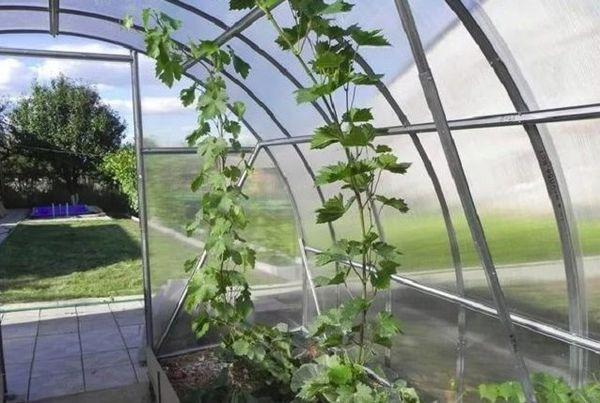
For grapes, it's best to build greenhouses from high-quality materials to ensure the interior is always warm and the vines receive sufficient light. This is especially important when growing in areas with harsh climates.
Greenhouse dimensions
The size of the greenhouse depends on how many grapevines you plan to grow on the site. If you only have one or two grapevines, a small greenhouse will suffice. It's also important to consider the height and spread of the plants. If the grapevine is tall, even with regular pruning, it will grow large, requiring a lot of space.
Foundation
A foundation is necessary to distribute the load evenly across the walls and ceiling. It's also essential if the greenhouse is made of lightweight materials. Strong winds can easily blow it away. The stronger the foundation, the longer the greenhouse will last.
Sheathing
A common type of cladding is polycarbonate. This lightweight material is durable and resistant to adverse weather conditions.
Frame
The greenhouse frame must be durable. Wood, plastic, and metal are all suitable materials. The choice of frame depends on the type of cladding. For example, a metal frame is best for polycarbonate.
Heating
There are several types of heating:
- gas;
- using warm air;
- biological;
- solar;
- water;
- using an infrared heater;
- boiler or stove.
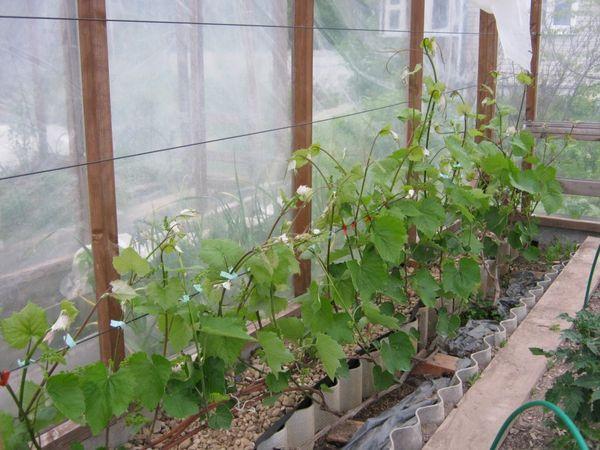
The cheapest heating method is biological. As manure decomposes, it releases a large amount of heat and retains it for about four months.
All other methods are quite expensive.
Lighting
Grapes require a lot of light, especially during the cold season (if you plan to grow them year-round). Standard incandescent bulbs can be used. Besides providing illumination, they also provide heat, but the light they produce isn't ideal for plants. Mercury-vapor, fluorescent, or sodium-vapor lamps are best.
Ventilation
When building a greenhouse, don't forget about ventilation. A small window should be installed to allow for ventilation during the colder months.
How to make trellises yourself
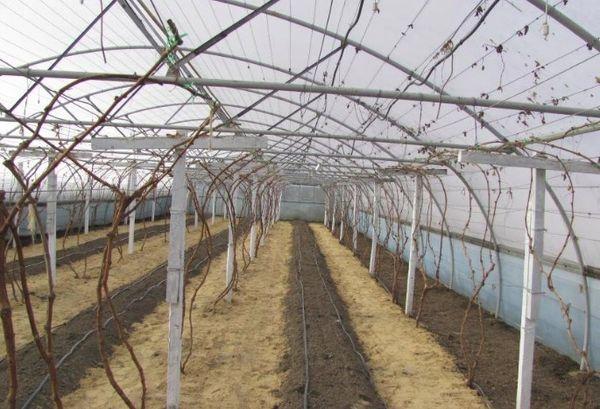
It's impossible to grow grapes without support. To grow properly, vines require support.
Vertical
Trellis are spaced 2-3 meters apart. The diameter of the posts ranges from 5 to 20 cm. The first and last posts should be the strongest, as they bear the heaviest load. To install the supports, dig holes up to 1.5 meters deep. Then, secure strong ropes to them. The bottom post is 40 cm above the ground.
T-shaped
The height of this type of support is 150 cm. Sturdy posts with a T-shaped partition at the top are driven into the ground at the ends. Ropes are then nailed to them.
How to plant
An important step in growing grapes is planting the seedlings. The process is no different from planting in open ground.
Recommendations for choosing deadlines
For planting seedlings in the ground, it is better to choose spring or autumn. In warm regions, it is better to choose dates in October-November for planting, in areas with a cold climate - in September. In spring, planting takes place in late April or early May. At this time of year, timing may vary depending on the region, just as with fall planting.
How to select and prepare planting material
When choosing seedlings, pay attention first to their appearance. The roots should be strong, resilient, and well-developed. There should be no dry spots, kinks, or signs of damage. The same applies to the stems. Purchase grape seedlings only from trusted sources. You can end up with a diseased bush if you buy it secondhand or from untrusted gardening companies.
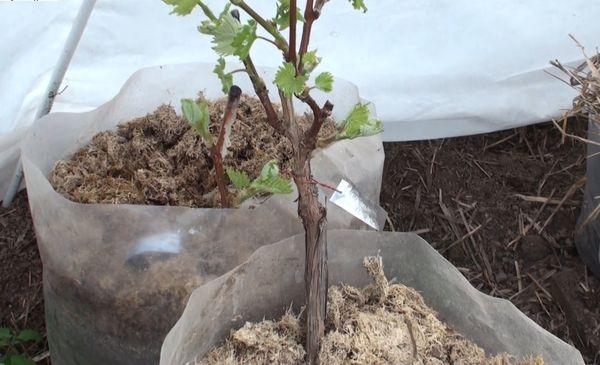
Planting diagram
Planting vines in a greenhouse is easy.
Grape planting technology:
- Dig a hole 40 cm wide and 70 cm deep.
- Fine drainage is poured into the bottom of the hole.
- Then you need to lay down a layer of cardboard.
- Cover the top with a layer of soil mixed with humus.
- Place the vine in the hole and cover it with soil.
- Lightly compact the soil at the base of the stem.
After planting, water the hole generously with warm water.
Care instructions
After planting the seedlings, it's important to remember to care for the grapes. Greenhouse conditions aren't as favorable as outdoors, so care requires as much attention as possible to ensure a good harvest.
Temperature conditions
When growing grapes in a greenhouse, consider the temperature regime. As is well known, this crop is heat-loving and will only produce fruit if grown in warm conditions. The greenhouse temperature should not fall below 25 degrees Celsius. From the moment the berries begin to set, the temperature should be gradually increased.
Access to sunlight
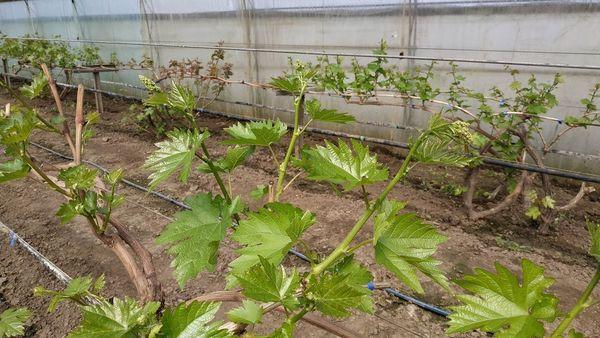
Greenhouses typically have a lighting system installed and turned on as needed. Grapes require at least 16 hours of daylight per day.
Pollination
Self-pollinating varieties don't require pollination. However, if pollination is necessary, beehives can be placed in the greenhouse during flowering. However, they will need to be removed later. You can also gently tap the flowers with a stick to remove pollen. It's important not to increase the greenhouse temperature too much; high temperatures can cause sterility in the flowers.
Take a look Also
Shaping and pruning
In the first year, the shoulder—the strongest vine—is grown. In the second year, the shoulder is tied vertically, and three stems are left on it. In the third year, all the young buds on the shoulder are pruned, leaving them on only three stems. By the fourth year, the vine is fully formed.
Sanitary pruning is carried out annually. All diseased and dead branches are trimmed from the vine. If necessary, the bush can be thinned if foliage blocks light from reaching the clusters.
Top dressing
The vine's need for nutrients depends on the growing season.
What substances do grape bushes need:
- Nitrogen (responsible for the growth of foliage).
- Phosphorus (necessary at the beginning of flowering).
- Potassium (improves the taste of grapes and prepares the vine for winter).
- Copper (increases resistance to frost and heat).
- Boron (increases sugar levels in grapes).
But mineral fertilizers alone won't be enough for the plant. Grape vines also require organic fertilizers, primarily manure. Manure improves soil aeration and enriches it with nutrients. Compost, bird droppings diluted in water, and wood ash can be used as fertilizers. Wood ash can be sprinkled on both the vines and the soil, and then watered.
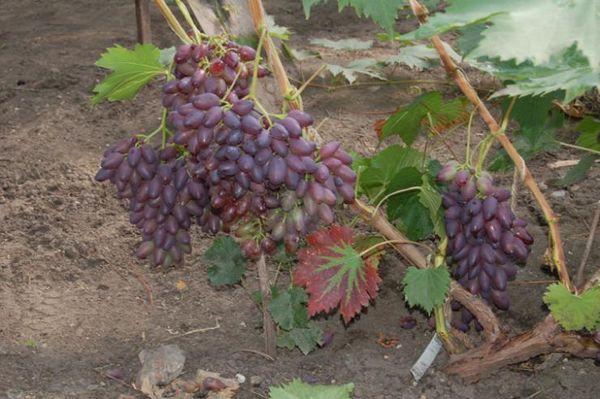
Ditches are dug near the vines and fertilized. It's important that the entire root system has access to nutrients.
The first application is made before the bushes begin to leaf out. The second application is made before flowering. The third application is made before the harvest ripens. The final application is made before the onset of cold weather to prepare the soil for winter.
Preparing for winter
Greenhouse grapes require year-round care, including winter. However, preparing greenhouse grape vines for winter is easier than when grown outdoors. Before the onset of cold weather, potassium is added to the soil. Dry and damaged branches can then be trimmed. However, sanitary pruning is done at your own discretion, based on the appearance of the vines.
If the greenhouse is heated, there's no need to cover the plants. Without heating, covering is essential to prevent the grapes from freezing. The vines are hilled up. The mound should be at least 25 cm high. After this, it's covered with dry straw or spruce branches.
Watering mode
The first time the plants are watered is immediately after planting. Always use warm water for irrigating the soil. Cold water has a negative impact on the plants, leading to chilling of the roots and the development of diseases. The second time, the vines are watered a week after the first watering.
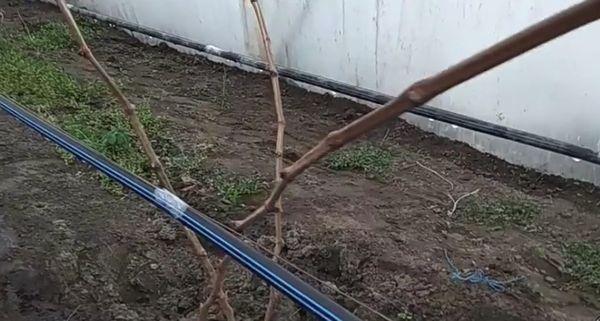
In summer, plants should be watered at least once a week. During the colder months, reduce the frequency of irrigation. To prevent berry skins from cracking, the vines should be watered less frequently during the first fruiting period. Furthermore, it's also undesirable to water the grapes in the evening, as this can contribute to fruit rot.
Tips and advice from experienced gardeners
Tips for growing grapes:
- It's not recommended to plant varieties with dense clusters in a greenhouse. Due to insufficient ventilation, they may become susceptible to disease.
- The seedlings should be planted at a distance of 30-45 cm from the walls.
- Planting of seedlings in the greenhouse is carried out in February.
- The temperature in the greenhouse must always be maintained above zero.
- It is necessary to regularly weed the soil and remove weeds.
- Warm water is used to water the bushes.
- When pruning vines, the tool should be wiped with alcohol before each cut.
- After planting a seedling, it's best to mulch the soil around it. This will help maintain the required soil moisture level and prevent weeds from appearing in the area.
Growing grapevines in a greenhouse is easy, but remember to take care of the plant. It's impossible to get a good harvest without putting in some effort.
Related posts:
 How to grow grapes in the Moscow region in open ground without a greenhouse
 Description of the Julian grape variety, planting and care instructions
 Beginner's Guide to Growing Grapes in Open Ground in Central Russia
 The best grape varieties for growing in the Urals, planting and care rules in summer
 Description of the Krasotka grape variety, planting and care technology
 Description of 30 varieties and types of Muscat grapes, planting, cultivation and care
 The ripening time of grape vines by variety, how to speed up the process, and what to treat the plant with
 Timeframes and methods for preserving grapes for the winter at home