
- Description and Features
- Vine
- Inflorescences
- Berries
- Taste
- Growing regions
- History of selection
- Main characteristics
- Drought resistance
- Frost resistance
- Productivity and fruiting
- Areas of application of fruits
- Resistance to diseases and pests
- Pros and cons of the variety
- How to plant correctly
- Recommendations for choosing deadlines
- Choosing a location
- Soil requirements
- Site preparation
- How to select and prepare planting material
- Planting diagram
- Care instructions
- Watering mode
- Top dressing
- Preparing for winter
- Mulching
- Prevention of diseases and pests
- Trimming
- Methods of reproduction
- Harvesting and storage
- Tips from experienced gardeners
Korinka Russkaya is a seedless grape variety distinguished not only by its ultra-early ripening berries but also by its frost resistance, high yields, undemanding growing conditions, and excellent flavor. Korinka's ornamental vine will enhance any garden. It is an ideal choice for northern latitudes and beginning winegrowers.
Description and Features
Gardeners appreciate the Russian currant for its early harvest: the crop is harvested as early as late July or early August. This variety has gained worldwide recognition for its unique characteristics.
Vine
This fast-growing variety has a strong, robust vine capable of supporting a large harvest, reaching a height of 3 meters. The branches of the Russian Korinka are light brown, wide, and bear large, dissected, five-pointed leaves. The bright green leaves have yellow veins with a slight pubescence. The roots are strong and well-developed.
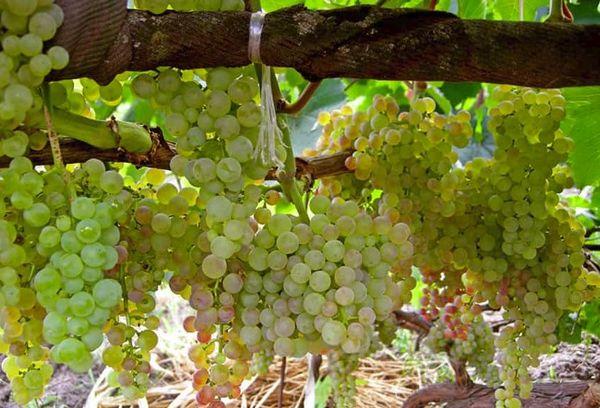
The clusters are small, weighing approximately 200-300 grams. They are conical in shape and semi-loose in structure, with lateral branches; sometimes the clusters form a wing-like shape. To increase yield, Korinka is treated with Gibberellin. Each shoot produces one cluster.
Inflorescences
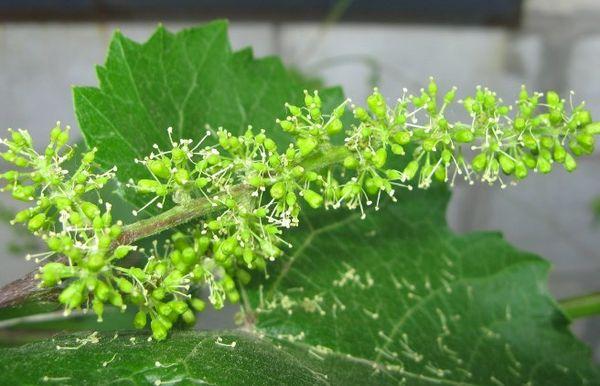
The vine bears small, bisexual white flowers; the variety is self-pollinating. The Russian Corinthian begins blooming in late May or early June, a process that lasts approximately 10-12 days.
The grapes bear fruit from the first year, but after 2-3 years the yield is 2 times higher than the first year’s harvest.
Berries
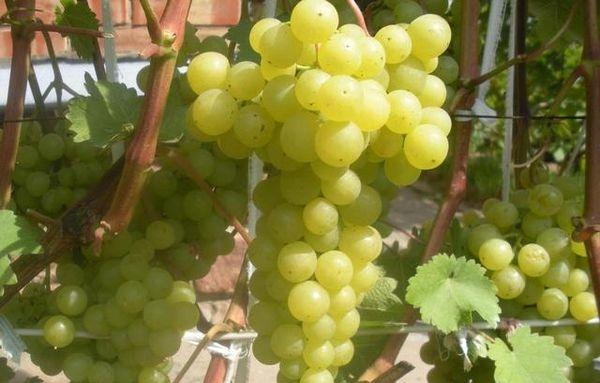
The berries of the Russian Corinka are small, round, reaching 1-1.5 cm in diameter, weighing 1.5-2 g. The color of the fruit is yellow-golden, the berries turn pink on the sunny side.
Taste
The flesh of the Korinka berry is very sweet, without an unpleasant aftertaste, juicy, and with a soft grape aroma. The berries are covered with a thin, tough skin. The seeds are present, but very small and soft, so they are unnoticeable and undetectable when eaten, making them ideal for baby food.
The sugar content of the Russian Corinka fruits reaches 23% and higher, the acidity is up to 5 g/l – this is the most favorable ratio of acidity and sugar content.
Growing regions
The Russian currant grows well in any climate; the vines survive at -30°C and continue to develop. This allows gardeners in northern regions to grow grapes in their plots.
In Russia, the variety is popular in the southern regions, in the Central and Northwestern regions, in the Far East and in Siberia.
Grapes are also in demand among Poles, Belgians, Balts and Canadians.
History of selection
The seedless Korinka was developed by Tambov breeders I. M. Filippenko and L. T. Shtin at the I. V. Michurin Central Garden Laboratory. The authors used parent pairs of Zarya Severa and Kishmish Cherny to produce a winter-hardy variety. Their efforts paid off; the new plant can withstand temperatures of -30°C. The variety is included in the State Register of the Central Black Earth Region.
Main characteristics
Korinka fully ripens in 105-112 days from the start of the growing season. This variety has been tested for frost and drought resistance and tolerates temperature fluctuations and extreme weather.
Drought resistance
The Russian Corinthian grape also survives extremely hot conditions, withstanding prolonged dry periods. However, during the fruit ripening period, regular and generous watering is required to ensure a bountiful harvest.
Frost resistance
The Russian Corinthian is a cold-hardy variety, surviving temperatures down to -30°C. It does not require winter shelter in southern regions. However, it is advisable to protect young bushes before the first hard frosts (late September or early October) before their first winter.
Productivity and fruiting
Korinka grapes yield approximately 80 centners of berries per hectare. Vine maturity ranges from 2/3 to 6/7 of the total area.
Already in the first year, you can grow a large harvest of Russian Corinth: 1 bush produces up to 12 kg of fruit.
Areas of application of fruits
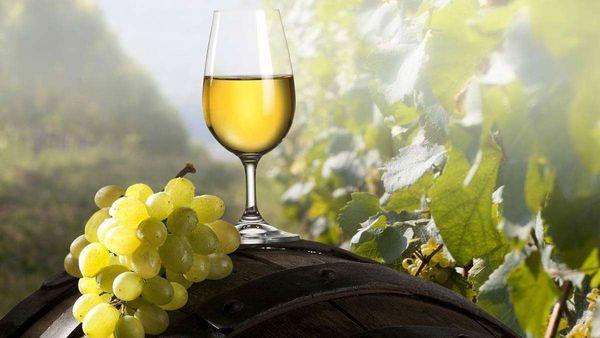
The berries of the Russian Corinthian are used extensively: fresh, used in various dishes and drinks, and for winter preserves. The table variety is suitable for making jams and compotes, juices, and jellies. Raisins are also made from it, and are also added to a variety of desserts. Winemakers favor the Russian Corinthian, as the berries make a delicious and light wine.
Resistance to diseases and pests
Corinth is not resistant to pests and diseases, there is a risk of infection:
- oidium - all parts of the grapevine are covered with a white coating;
- mildew - oily spots form on the leaves, the spread of which will destroy the vine and the plants closest to it;
- Gray mold - the bushes become covered with a gray coating, which quickly kills the entire vine and infects other garden crops.
To prevent the plant from dying, it must be hardened off and treated promptly. Grapes are protected from flying insects with special nets.
Pros and cons of the variety
The Russian Corinth stands out among other seedless varieties:
- maximum maturation of shoots;
- sweet taste;
- high yield;
- durability, which allows berries to be transported over long distances without loss of quantity and quality;
- wide range of applications;
- absence of pea-shaped fruits;
- resistance to severe winter frosts and drought;
- virtually seedless;
- decorativeness;
- unpretentiousness in care;
- self-pollination;
- very early maturation.
Among the variety's many advantages, its disadvantages, such as weak immunity to diseases and vulnerability to pests, are overshadowed; furthermore, these problems can be prevented and easily eliminated.
How to plant correctly
Before planting, young grapevines need to be prepared. The soil under the vines also needs to be pre-treated.
Recommendations for choosing deadlines
It's best to plant Russian Corinthium after the last frost has passed. In some regions, this favorable time is early May, while in others, it's not until early June. The key is to ensure the soil has warmed up sufficiently. It's best to plant in the morning or evening. The grapes will take root more quickly on cloudy days.
If you plan to plant the crop in the fall, do so in October, remembering to cover the young bush for the winter, because the plant has not yet had time to adapt to the conditions.
Choosing a location
To ensure that the grapes accumulate the greatest amount of sugar, it is recommended to plant them in the southern part of the plot, away from trees and bushes that shade the vines and thereby slow down their growth.
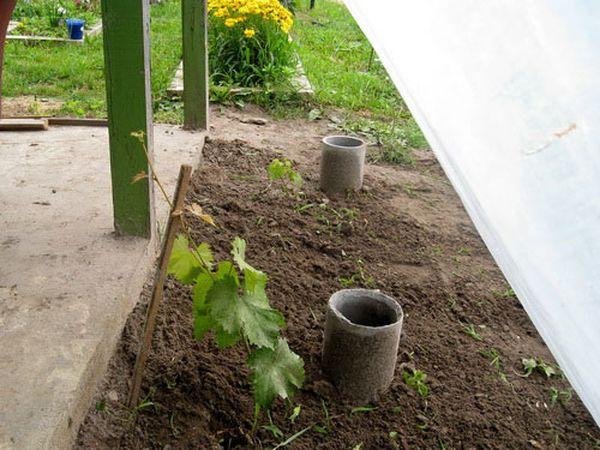
The variety prefers bright spaces, without drafts, protected from strong winds.
Russian currant should not be planted under a roof slope; if water from the roof runs onto the plant, it will die.
Soil requirements
Korinka will thrive in any soil, but it shouldn't be depleted. Korinka grows best in rich black soil; any other soil will require fertilizer to ensure it's nutritious and loose.
The proximity of groundwater is also important: ideally, it is located deep; if the depth is less than 2 m, a drainage system will have to be installed - crushed stone, broken brick, or expanded clay are placed at the bottom of each hole.
Grapes thrive in light, sandy or rocky soils with fertile humus, and the berries ripen 10-14 days earlier in such soil. Peaty or clayey soils also need to be drained with crushed stone.
Site preparation
The area allocated for grapes must be dug up, all weeds and pest larvae removed, and mineral and organic fertilizers added.
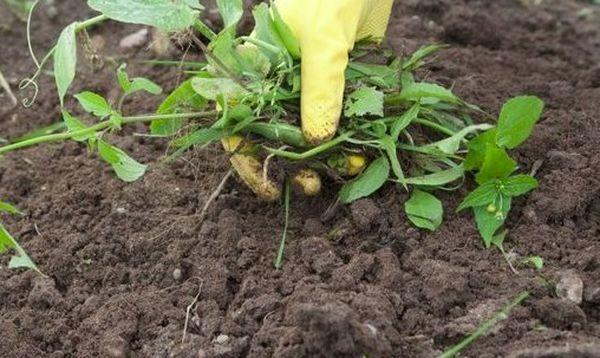
25-30 days before planting young seedlings, dig holes 80-90 cm wide and 90-100 cm deep, keeping a distance of 3 m between holes. If there are too many seedlings for the allocated area, dig a trench 50 cm wide and 80 cm deep, planting the plants at a distance of 1 m from each other.
Fill the holes halfway with a mixture of fertile soil (20-30 cm of soil removed from the top) and organic fertilizers (for 20 liters of rotted manure or compost, take 1.5 kg of wood ash and 300 g of nitroammophoska or other complex fertilizer).
On light soil, you can dig small holes, on clay soil – larger ones.
To obtain a large harvest, it is advisable to grow Russian Corinth on a trellis:
- At a distance of 1.5-2 m from each other, metal poles from 3 to 5 m high are buried or cemented into the ground to a depth of 1 m.
- Wire is stretched onto poles with a cross-section of 7-9.5 cm - the first row is 50 cm from the ground, each subsequent row is at the same distance.
In rainy weather, without having time to dig holes, you can leave the Korinka seedlings until autumn planting.
You can preserve the crop until this time by planting it in containers with drainage holes, half-filled with soil, and watering it regularly.
How to select and prepare planting material
Store-bought seedlings should be inspected for damage, dried-out roots, and pest or disease infestations. To rejuvenate the seedlings, you can trim their shoots and roots slightly.
Preparing Russian Corinthium seedlings for planting begins with hardening them off to ensure they establish quickly and are disease-free. To do this, take the vines outside every day for 12-14 days (but not in direct sunlight). On the first day, for 20 minutes, increasing the time by 30 minutes each day. For the last 3-4 days, the Corinthium should be kept outdoors continuously.
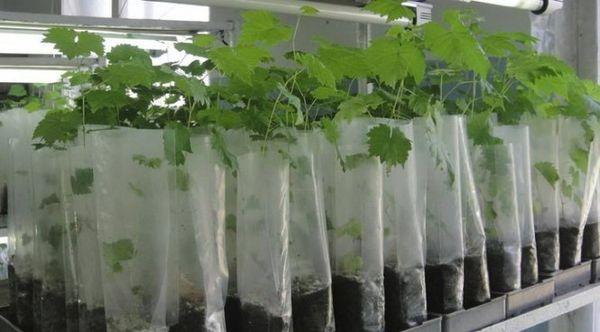 If forecasters predict frost, it is better to postpone hardening procedures for the Russian Corinth and wait for favorable weather.
Planting diagram
Before planting, the soil in the prepared holes must be mixed, 20 liters of water must be poured into each hole and, after waiting for the moisture to be absorbed, a little soil must be added.
When planting, place the roots and soil ball into the fertile soil mixture and cover with soil. Then, compact the soil thoroughly, water the seedling with warm water, add more soil (without compacting it), and cover with mulch to prevent a crust from forming and moisture from evaporating.
The root formation zone of the Corinthium should be 30-40 cm below the ground level, and the “eye” from which the lowest shoot grows should be 7-10 cm below the same level.
Overly elongated seedlings will have to be planted at an angle.
Care instructions
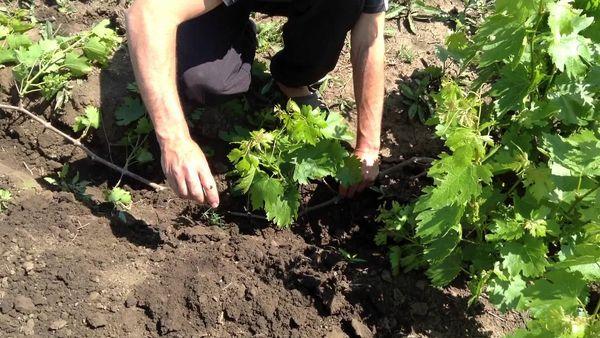
Russian Corinthium needs to be cared for before pests or diseases attack the vine. Regularly water, feed, loosen the soil, and weed.
Watering mode
Water the grapes in the evening with warm water 1-2 times a month. In hot weather, water every 10 days. Each bush will require 5-10 liters of settled water.
30 days before harvesting, soil watering is stopped.
Top dressing
Russian Corinthia won't require intensive feeding in the first year after planting; all necessary fertilizers were applied at planting time. At the end of the summer, you can add a nutrient mixture to prepare for the winter: 10 g of potassium sulfate and 20 g of superphosphate per 1 m.
The following year, complex fertilizers are applied four times per season: nitrogen in the spring, potassium and phosphorus before flowering and during fruit formation, and mineral or organic fertilizers after the berries are harvested. In the fall, before wintering, a small amount of organic fertilizer is added.
Preparing for winter
Before the October frosts, young Corinth bushes are removed from the trellis, laid on the ground and covered with agrofibre, straw or spruce branches, and sprinkled with soil on top.
Mulching
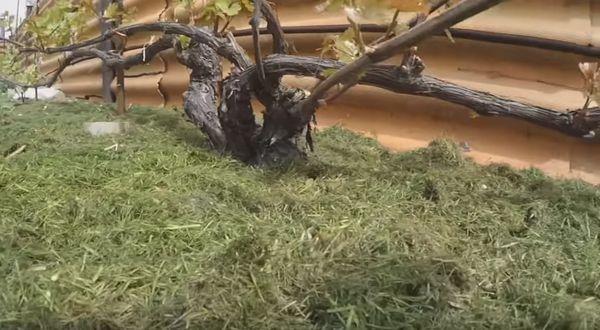
Mulch Korinka with mown grass, straw, or peat to help the soil retain moisture longer. Apply a layer at least 10 cm thick.
Prevention of diseases and pests
In spring, Russian Corinthia should be sprayed with 1% Bordeaux mixture (450 g of lime and 300 g of copper sulfate are diluted in 10 liters of water), which protects against the development of fungus.
To protect against insect pests, the plant should be sprayed with a mixture of laundry soap and water (1 bar dissolved in 10 liters).
Immediately after planting, Korinka seedlings are shaded from the sun for 10-14 days, covered with spunbond or other available materials.
The Russian currant is not the most resistant to pests and diseases, so to prevent the plant from becoming infected, preventative measures are taken:
- to prevent powdery mildew, before the buds open, the vine is sprayed with a 3% solution of Bordeaux mixture or Kumulus, Topaz, Quadris;
- Mildew is also treated with Bordeaux mixture or Antracol, Thanos;
- Copper sulfate will help against gray mold (10 g of the preparation is diluted in 10 liters of water).
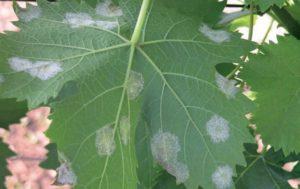
To prevent the plant from dying, it is necessary to harden it in a timely manner, provide proper care and protect it in a timely manner.
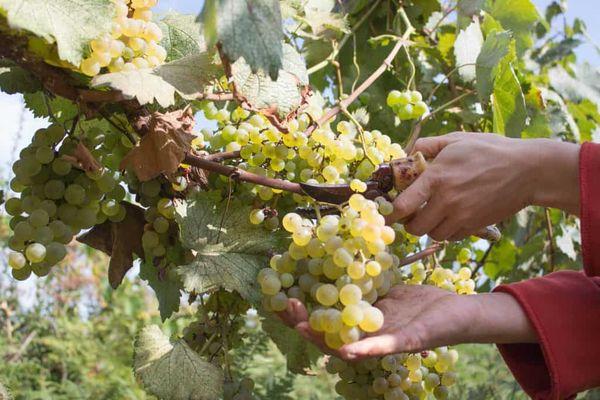
To prevent wasps, hornets and birds from attacking the sweet berries, the bunches must be covered with special mesh bags that prevent anyone from getting to the fruit.
You can completely cover the grape trellis with a fine mesh.
The soil around the seedlings is treated with Storm to protect against rodents.
It is not recommended to treat Korinka vines with chemicals more than 3 times per season; you must act in accordance with the instructions.
Trimming
The Korinka vine requires formative, thinning and sanitary pruning, which are carried out in spring and autumn.
A single grapevine should bear a total of up to 40 buds. The yield is regulated, leaving one bunch per shoot.
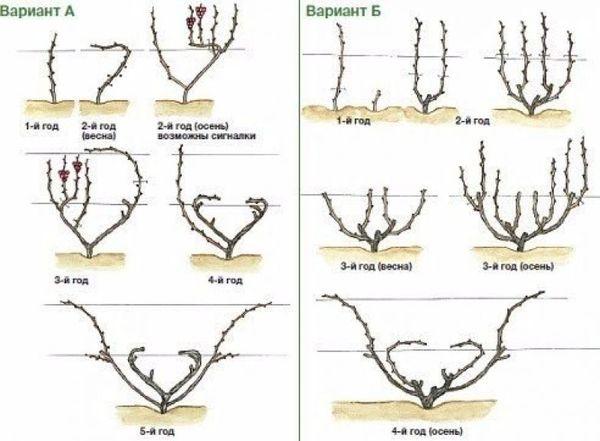
In the first year after planting, Korinka is pruned to two buds, removing all others. During annual pruning, remove all buds between six and eight to prevent dense bushes from becoming a source of disease or reducing the yield.
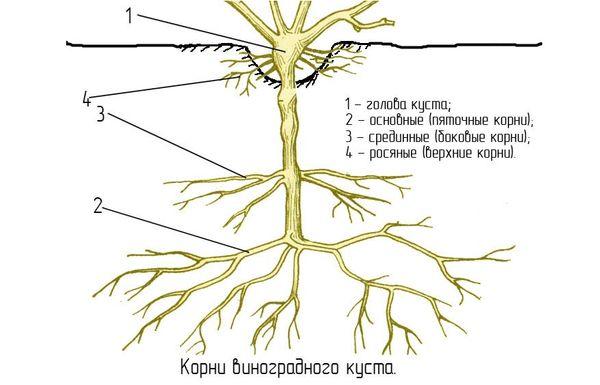
Superficial roots are also removed – a procedure called root canalization.
Methods of reproduction
Grapes are propagated by cuttings. In the evenings of late May or early June, shoots are cut from the lower or middle portion of the vine, placed in a bucket, sprayed with water, and covered with a damp cloth. After this, they are placed in a cellar or box overnight.
- In a 50 cm deep box, the bottom is lined with film or glass, 10 cm of fertile soil is added, and a 5 cm layer of sand is placed on top.
- Water with plenty of water.
- The cuttings are cut into pieces with two leaves, where the lower leaf is removed and the upper one is cut in half.
- After that, the cuttings are immediately placed in a container with water, and then planted in sand to a depth of 3 cm, placing them at a distance of 10 cm from each other.
- The planted cuttings are sprayed with water and the box is covered with glass or film, creating a kind of greenhouse.
- Every day, 4-5 times a day, you need to spray the plants with water heated to +20 °C using a watering can or spray bottle.
- After 12-14 days, when the roots appear, spraying is carried out three times a day.
After a month, the root system of the Russian Corinth will be formed, and you can harden the cuttings by opening the box initially for 10 minutes a day, adding another 30 minutes daily.
The box can be replaced with a hotbed or a greenhouse.
Harvesting and storage
The fruits of the Russian Korinka grape can be stored for a long time on the vine, becoming richer in sugar. They can be refrigerated for extended periods without losing their flavor. The grapes are well suited for long-distance transport, making them suitable for commercial cultivation.
Tips from experienced gardeners
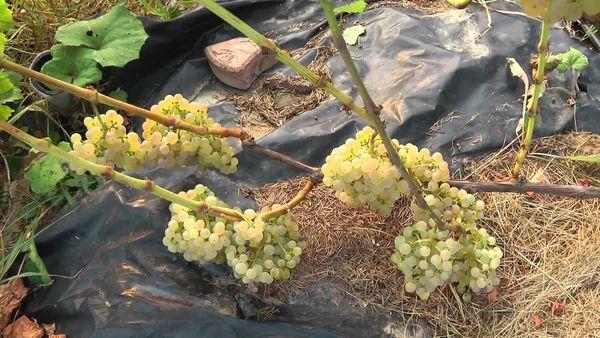
The longer ripe berries remain on the bushes, the tastier they become. The sweetest berries are harvested in northern regions in early September, before frost sets in.
According to 90% of experienced winegrowers who grow Korinka, the vine begins to get sick from rainy weather and in conditions of high humidity, and you need to be prepared for this.
Before planting, it would be a good idea to dip the roots of the Korinka in a manure-clay mixture so that they take root faster.
Related posts:
 Description of 30 grape varieties for Siberia, planting and care for beginners
 Description of 30 varieties and types of Muscat grapes, planting, cultivation and care
 The best ways and methods for properly covering grapes for the winter
 Beginner's Guide to Growing Grapes in Open Ground in Central Russia
 Description and characteristics of the Syrah grape variety, where it grows
 The ripening time of grape vines by variety, how to speed up the process, and what to treat the plant with
 Description and cultivation techniques for the Muromets grape variety
 Description of the Galbena Nou grape variety, planting and care rules