
- History of origin
- Description and Features
- Main characteristics of the variety
- Purpose
- Ripening time
- Productivity
- Taste qualities
- Frost resistance
- Bunch
- Berries
- Disease resistance
- Methods of reproduction
- Cuttings
- By vaccination
- Layering
- How to plant correctly
- Recommendations for choosing deadlines
- Site preparation
- How to select and prepare planting material
- Planting diagram
- Care instructions
- Watering mode
- Top dressing
- Trimming
- Mulching
- Garter
- Preparing for winter
- Protection from birds and wasps
- Diseases and pests
- Ticks
- Bacterial cancer
- Pros and cons of the variety
- Harvesting and storage
- Applications of berries
- Tips and advice from experienced gardeners
Senator was developed relatively recently, but has already won the hearts of grape lovers. It produces large clusters of large, burgundy berries with a muscat aroma. Senator grapes are mid-early ripening, and the harvest is in late August or early September. Below is information on growing the grape in your garden, along with tips and recommendations from experienced winegrowers.
History of origin
There are two varieties under the name "Senator." One was developed by Pavlovsky, a breeder from the Rostov region, by crossing "Podarok Zaporozhye" and "Maradona." The other was developed by Burdak, an experienced Ukrainian winegrower, by crossing "Talisman" and "Arkadia." Since then, the varieties have been known as "Senator Pavlovsky" and "Senator Burdak."
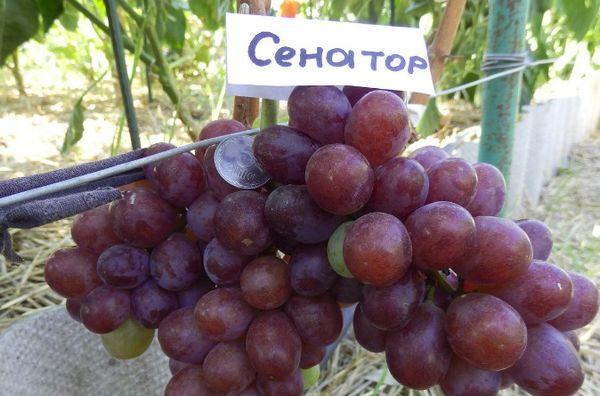
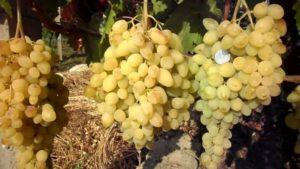
The most commonly sold grapes are from a Russian breeder. This variety produces large, oval, and burgundy-colored berries. Senator Burdak's berries are smaller, oval, and yellow-green.
Description and Features
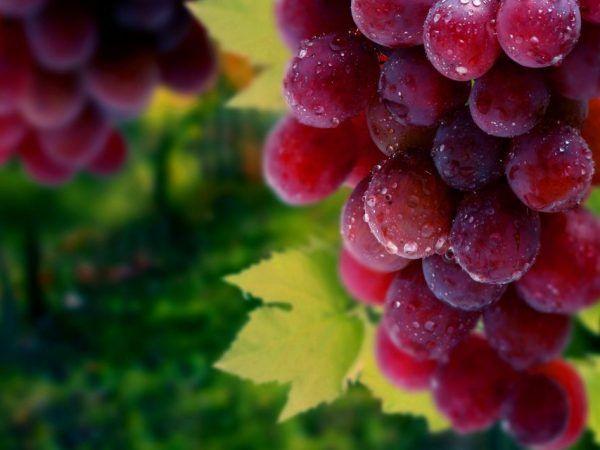
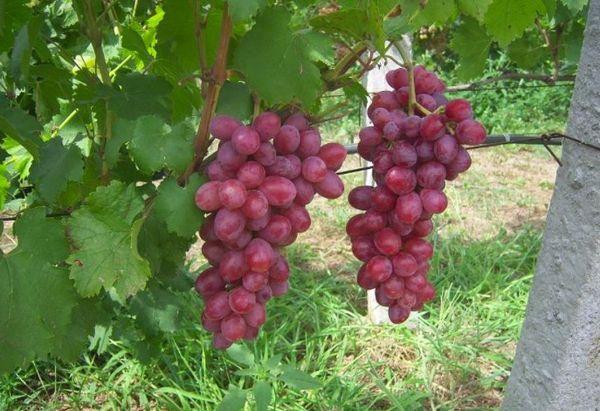
The Senator Pavlovsky bushes grow quickly, with long, vigorous vines. The leaves are green and large. The Senator variety is self-pollinating and does not require pollinators. The berries range in color from pink to burgundy.
The grape flesh is tender, melting in the mouth. The skin is thin but strong, making it suitable for transportation. The clusters are dense, which isn't always a good thing: the berries can rot after rain.
Main characteristics of the variety
It takes 120-125 days from bud break to berry ripening. This variety has become widely popular due to its positive characteristics.
Purpose
Senator grapes are versatile. They are eaten fresh, used to make wine, and used to make juices. Beverages made from this variety have a pleasant floral-muscat aroma.
Ripening time
Grapes ripen in southern regions in the third ten days of August. In temperate climates, the harvest occurs in late summer or early fall. The berries have a long shelf life, making them suitable for long-distance transport.
Productivity
The variety produces fruit well. Yield depends largely on weather conditions and the gardener's agricultural practices. Preventative spring treatments significantly increase the number of high-quality grape clusters.
Taste qualities
The grapes are sweet in taste, with a distinct Muscat flavor. The berries are soft and juicy, and their texture literally melts in the mouth. This combination of flavor and texture makes them ideal not only for winemaking but also for fresh consumption.
Frost resistance
Without cover, the Senator Pavlovsky grape variety can withstand winter temperatures down to -24°C. It is recommended primarily for southern regions. It can be grown in temperate climates, but will require winter insulation.
Take a look Also
Bunch
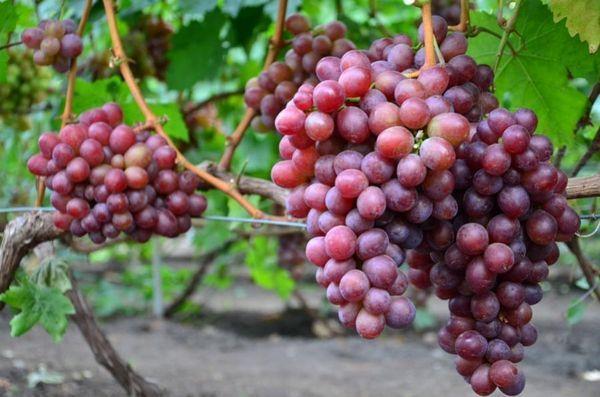
Grape clusters grow in an inverted cone shape. The bunches are dense and large, weighing between 700 grams and 1.5 kilograms. The more thickening vines are pruned, the greater the cluster weight. Soil fertility and weather conditions also influence berry weight.
Berries
Senator grapes are slightly oblong and weigh up to 18 grams. Each berry contains 2-3 small seeds. Ripe grapes are burgundy in color and do not develop peas.
Disease resistance
The Senator grape variety has good immunity. It is rarely affected by common grape diseases such as powdery mildew and gray mold. With timely preventative treatments, the risk of mildew and anthracnose is reduced.
Methods of reproduction
Senator grapes are propagated by cuttings, grafting, and layering.
Cuttings
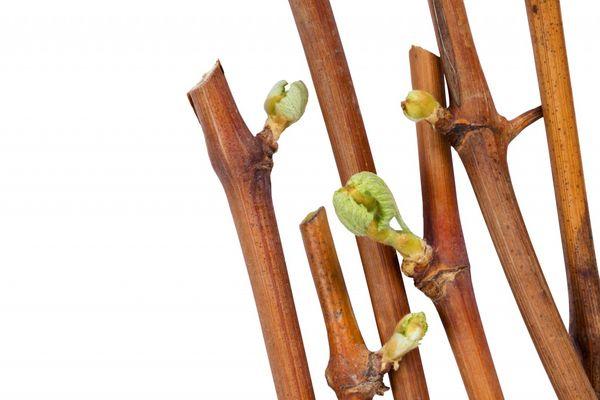
Propagation can be done using green or mature cuttings. In the former case, the procedure is carried out in the spring, taking cuttings (slivers) with 1-3 buds and planting them in boxes filled with sand. The rooted vines are then planted in a nursery for further growth.
In the fall, woody cuttings are taken, planted in a container with damp sand, and stored in a basement. In the spring, they are washed in a solution of potassium permanganate and planted in pots with fertile soil. Once the bushes have grown, they are planted in the ground.
By vaccination
There are several methods for grafting grapevines. Below is information on the most common full-cleft grafting procedure:
- all shoots are removed from the scion and a horizontal cut is made on the trunk;
- a splitting knife is placed in the center and a cut is made to a depth of 3-4 centimeters;
- on the scion, on the side of the lower bud, oblique cuts are made: on one side there is a deep cut, on the other, only the wood is cut;
- The scion is inserted into the rootstock so that the cambium layers match.
The grafting site is tied with twine, then covered with a plastic bag, which is loosely tied to the trunk. After three weeks, the bag is removed.
Layering
The procedure of propagation by layering is carried out as follows:
- a shallow ditch is dug near the grape bush;
- in the spring, leaves are removed from a long vine, it is bent towards a dug ravine, and secured with bent wire;
- water and cover the shoot with soil.
Throughout the summer, the area where the vine meets the ground is watered and cleared of weeds. Once the stem has taken root and new shoots have emerged, it is dug up and new bushes are planted separately.
Please note! Grape cuttings can only be separated from the mother plant after they have taken root and young vines have developed.
How to plant correctly
Grapes are sun-loving crops, so they should be planted in a well-lit area. The groundwater table in the chosen area should not be too high.
Recommendations for choosing deadlines
Winegrowers recommend planting the crop starting in March. However, this only applies to warmer regions. During the planting period, you need to be sure there will be no further frosts.
Senator grapes can also be planted in the fall: September or October, depending on the region. They should have time to establish themselves a month before frost sets in. For the winter, the seedlings are mulched and covered with spruce branches or agrofibre.
Site preparation
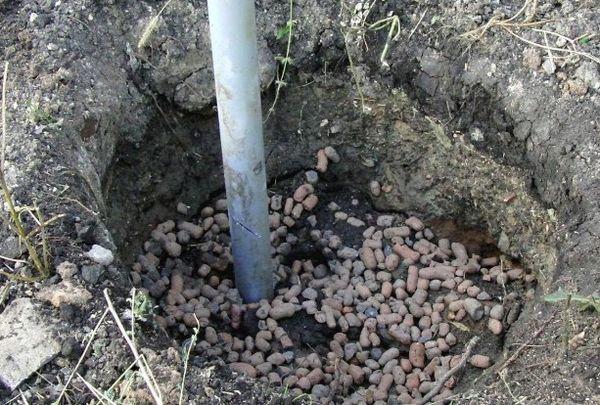
The site for the grapes is prepared well in advance: if planting is planned for spring, then in the fall, and vice versa. If this preparation is missed, the hole is dug at least two weeks before planting the seedlings. In heavy soils, a 10-15 centimeter layer of drainage material is placed in the planting holes.
How to select and prepare planting material
Before purchasing, carefully inspect the seedling. The above-ground portion of the bush should be free of blemishes and scratches, and the roots should be healthy, moist, and free of growths and thickenings. Place the seedling in a bucket of plain water or a weak solution of potassium permanganate for 24 hours. Trim any overly long roots before planting.
Planting diagram
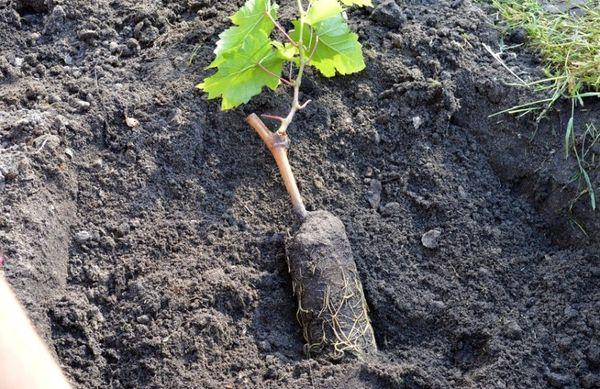
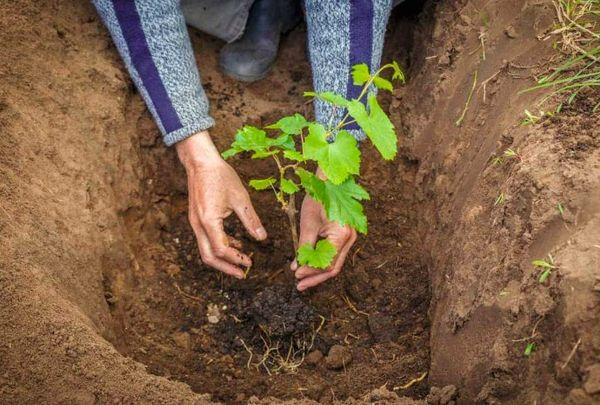
Senator grape bushes are planted 1.5 meters apart, with 3-3.5 meters between rows. Planting is as follows:
- a little soil is poured into the bottom of the hole;
- place a bush in the center, straighten the roots, and sprinkle a little more soil;
- water the seedling generously;
- they fill it with the rest of the earth.
To retain moisture, the tree trunk circle is covered with mulch.
Care instructions
Senator grapes don't require much care. Like other varieties, they require pruning, fertilizing, and staking. To ensure the plants survive the winter, they need to be prepared for this period.
Watering mode
Immediately after planting, young grapevines require plenty of water. Subsequently, grapes only require watering during periods of severe drought. While the berries are ripening, do not wet the soil, otherwise they may begin to crack.
Top dressing
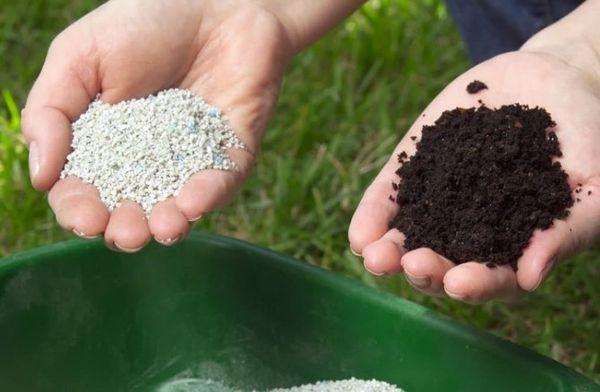
Grapes are fertilized with manure, bird droppings, and mineral complexes. In the spring, the soil is watered with nitrogen-containing fertilizers, followed by potassium-phosphorus fertilizers. The plant responds well to aqueous fertilizer solutions.
Trimming
Every spring, Senator grapevines are cut back to 7-8 buds. This is considered a long pruning. Another practice is a medium pruning, which involves pruning back to 5-6 buds. Formative pruning is also performed in the first year after planting.
Mulching
After watering, the grapevine's trunk circle is covered with mulch made from straw, sawdust, and dried grass. This helps retain moisture in the soil and prevents a crust from forming, which can impede root respiration. Mulch also prevents weed growth.
Garter
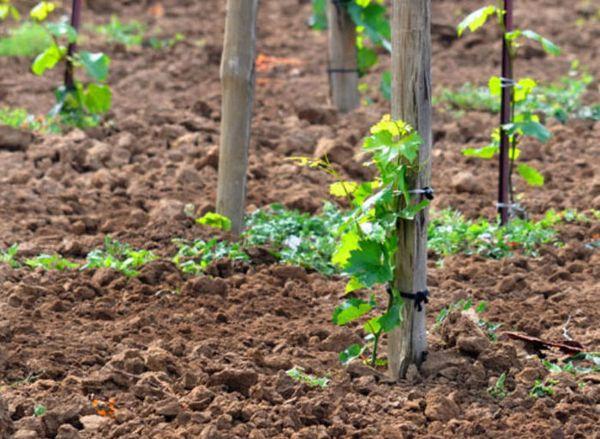
If the shoots aren't tied up, they'll fall to the ground, break, and the grape clusters will get dirty. Therefore, a stake for subsequent tying is installed immediately upon planting the vine. Then, throughout the spring and mid-summer, the shoots continue to be trained and tied up.
Preparing for winter
To prepare grape vines for winter, they are fed with potassium after fruiting. Additionally, they are watered in late autumn to replenish moisture. When the first frosts arrive, the vines are earthed up. If a harsh winter is expected, the vines are removed from their supports and covered.
Protection from birds and wasps
Grapes attract birds and wasps. To protect against the avian pests, scarecrows are installed, and sticky traps are used to keep wasps away. Additionally, each bunch of grapes is placed in a fine-mesh net. This prevents pests from reaching the berries, and the grape clusters receive sufficient sunlight.
Diseases and pests
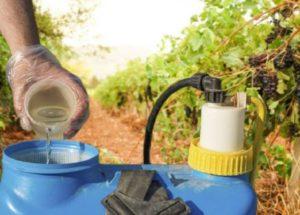
Senator grapes are rarely affected by common diseases. To prevent diseases and pests, preventative spraying with fungicides and insecticides should be performed several times per season.
Ticks
This is the most common pest of the Senator grape variety. To prevent it, spray both sides of the leaves with pesticides such as Bi-58 or Kleschevit.
Bacterial cancer
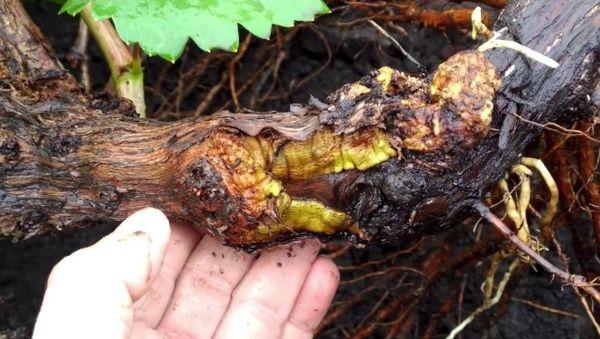
There's a risk of bacterial canker developing on grape vines. There's no cure for this disease, so gardeners must focus all their efforts on preventing it. This involves pruning away any shoots that crowd the canopy and regularly fertilizing the vines with mineral fertilizers. Infected vines are uprooted and burned.
Important! Do not spray grapes with chemicals during flowering, as this could kill the bees collecting nectar.
Pros and cons of the variety
The advantages of the Senator grape variety include the following qualities:
- rapid growth of vines;
- good immunity;
- stable yield;
- suitability for transportation;
- density of bunches;
- good taste and aroma of berries.
One of the positive characteristics can also be negative under certain conditions: due to the density of the bunches, the berries can begin to crack and rot in wet weather.
Harvesting and storage
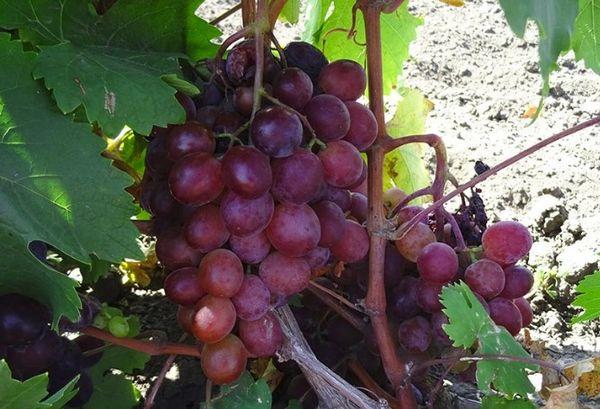
When the berries acquire a rich red-burgundy hue, they begin harvesting. This process is carried out in warm, dry weather; humid air will prevent the grapes from storing well. This variety tolerates transportation well and can also be stored for a long time. To prolong the shelf life of the harvest, the bunches are placed in single layers in paper-lined boxes.
Applications of berries
Senator grapes are eaten fresh, used to make juices, wines, and pickles. The berries have a long shelf life, and after a short storage period, they become even more flavorful and aromatic. Wines from this variety are raspberry-colored with a Muscat aroma.
Tips and advice from experienced gardeners
Experienced winegrowers offer the following tips and recommendations for growing Senator grapes:
- Choose a place with maximum sun exposure for planting the crop.
- Before planting, place the root system of the seedlings in an aqueous solution of potassium permanganate.
- Water the grapes only during periods of severe drought.
- In spring, prune the vine to 5-6 buds.
- If many clusters have formed on the shoot, leave 2 and remove the rest.
- After fruiting, feed the grape bushes with potassium.
- Conduct preventive spraying with insectofungicides.
By following the advice and recommendations of experienced winegrowers, gardeners can easily grow Senator grapes on their plots.
Related posts:
 Description of 30 grape varieties for Siberia, planting and care for beginners
 How to grow grapes in the Moscow region in open ground without a greenhouse
 Beginner's Guide to Growing Grapes in Open Ground in Central Russia
 The ripening time of grape vines by variety, how to speed up the process, and what to treat the plant with
 Description of 30 varieties and types of Muscat grapes, planting, cultivation and care
 Description of the Julian grape variety, planting and care instructions
 Description of the Krasotka grape variety, planting and care technology
 The best grape varieties for growing in the Urals, planting and care rules in summer