
- Description and Features
- Vine
- Inflorescences
- Berries
- Taste
- Growing regions
- History of selection
- Main characteristics
- Drought resistance
- Frost resistance
- Productivity and fruiting
- Areas of application of fruits
- Resistance to diseases and pests
- Pros and cons of the variety
- How to plant correctly
- Recommendations for choosing deadlines
- Choosing a location
- Soil requirements
- Site preparation
- How to select and prepare planting material
- Planting diagram
- Care instructions
- Watering mode
- Top dressing
- Protection from rodents
- Preparing for winter
- How to protect crops from birds and insects
- Insulation
- Repellers
- Mulching
- Prevention
- Oidium
- Powdery mildew
- Gray rot
- Trimming
- Methods of reproduction
- Harvesting and storage
- Tips from experienced gardeners
Grapes are native to the south, but breeders have adapted them to temperate and cold climates. The white table grape variety Dolgozhdanny is frost-resistant and suitable for growing in the central part of the Russian Federation. These sweet, translucent green grapes are similar to sultanas, easy to care for, and do not attract pests or wasps, making them a popular choice for garden plots.
Description and Features
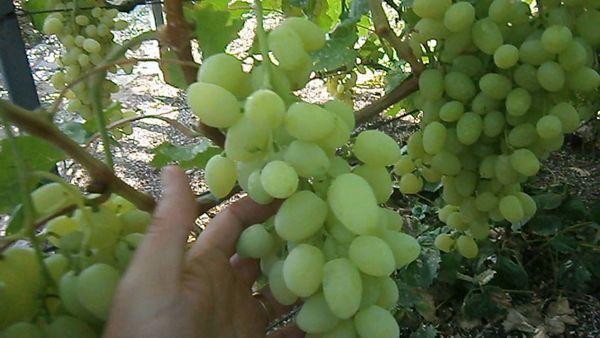
The main external differences of the Dolgozhdanny variety are its very large clusters and seedless berries.
Vine
The bush produces, on average, 25 shoots. The vines are completely covered with clusters.
Inflorescences
Male and female flowers bloom on a single grape bush. They begin blooming in the second half of June.
Berries
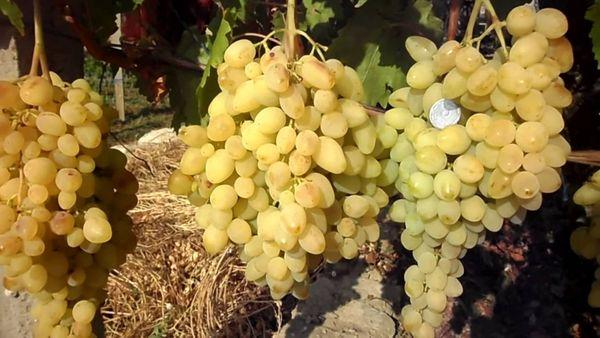
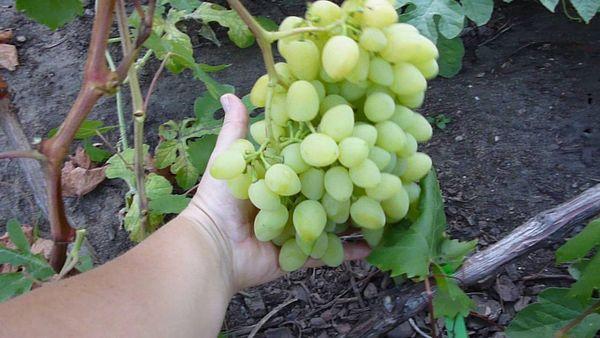
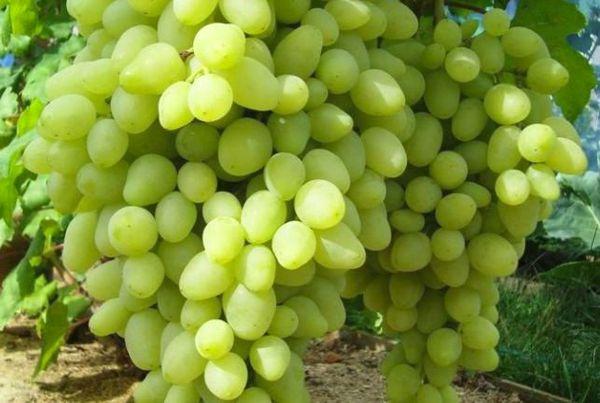
The large, oval, yellow-green fruits weigh 15-20 grams. The seeds are soft and rarely found. The skin is thin, but the flesh is firm. The bunches are consistently large, weighing up to 800 grams. The berries do not shrink. The grapes transport well and do not bruise.
Taste
The sweet and sour bouquet leaves no tart aftertaste. The juicy berries contain 20% sugar. Tasting score: 4.5 points.
Growing regions
The Dolgozhdanny variety is suitable for growing in the south and central regions. In the north, it requires more shelter during harsh winters.
History of selection
The Dolgozhdanny hybrid was created by crossing the Kishmish Luchisty and Talisman varieties. It was developed by amateur breeder V.N. Kraynov on his dacha near the Tuzlov River in the Rostov region. The new variety inherited the best flavor qualities of its parents.
This tasty, fruitful, frost- and pest-resistant seedless variety has long been a dream of gardeners, hence the name "Long-awaited."
Main characteristics
The main properties of the variety are frost resistance, high yield and early fruiting.
Drought resistance
The variety prefers dry weather. Abundant grapes only need watering during ripening.
Frost resistance
The Dolgozhdanny variety bushes can withstand frost down to -23 degrees under a light agrofibre or earth cover.
Productivity and fruiting
The Dolgozhdanny grape variety bears fruit for the first time in the third year after planting. Ripening takes 105-116 days. The bushes produce a consistently high yield each year. The berries are harvested beginning in the first ten days of August.
1 bush produces up to 10 kilograms of fruit.
Areas of application of fruits
Dolgozhdanny grapes are grown in summer cottages and farms for consumption, sale and wine production.
Resistance to diseases and pests
Pests and fungi are rarely found on hybrid bushes. Powdery mildew appears after heavy rains on exposed grapes.
Pros and cons of the variety
Positive aspects of the Dolgozhdanny grape:
- ripens early;
- self-pollinating;
- rudimentary soft seeds are often absent;
- abundant harvest of large berries;
- does not attract wasps due to low sugar content;
- frost resistance;
- absence of diseases and parasites;
- cuttings, rootstocks and scions take root well;
- grows in all regions.
The disadvantage of this variety is its sensitivity to rain.
How to plant correctly
The Dolgozhdanny grape is grown using standard agricultural techniques – from cuttings, seedlings, or grafting.
Recommendations for choosing deadlines
The best time to plant this variety is April. In southern regions, grapes can be planted in October, but winter protection is essential.
Choosing a location
Long-awaited grapes need light and protection from the wind. Near a house wall, a fence, or other trees, they will be sheltered and receive sufficient sunlight, which they require less than other varieties.
Soil requirements
The variety thrives in loose soil. Heavy clay soil is tilled with river sand and brick chips. Humus is added to soils with a high sand content.
Site preparation
If you plan to plant grapes in the spring, prepare the plot in the fall. To plant the Dolgozhdanny variety before the fall frosts, select and dig the site two months in advance.
How to select and prepare planting material
Signs of good rootless cuttings:
- clean cut;
- no spots, creases, or leaves;
- 4-5 buds;
- top thickness – 6 millimeters;
- length – 70 centimeters;
- brownish-green color of mature vine.
To determine the maturity of a cutting, apply iodine to the cut. A mature branch will turn a dark purple.
How to choose grape seedlings:
- by the thickness of the stem;
- by the size of the roots.
Young, strong vines with branched roots will quickly take root.
Nurseries sell annual plants. Grapevines less than one year old will have a harder time surviving the first summer after transplanting.
Bare-root seedlings are soaked in a copper sulfate solution before planting. Potted seedlings are removed with the root ball, lightly moistened with water.
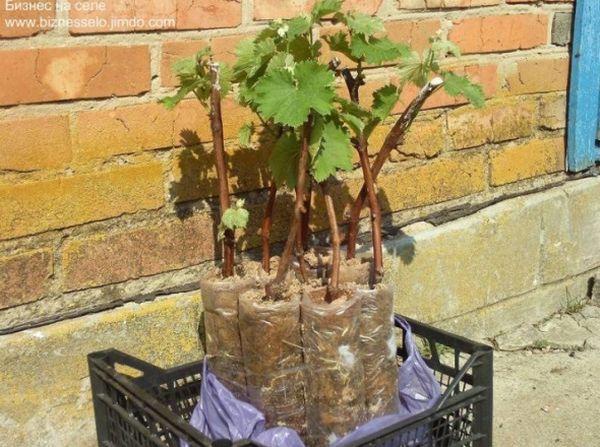
Planting diagram
The hybrid variety Dolgozhdanny is planted in the usual manner:
- dig holes at intervals of 1.5-2 meters;
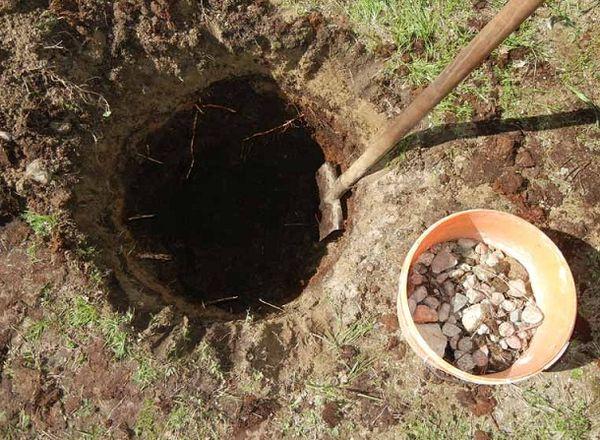
- the dimensions of the planting holes are 1 meter wide and 80 centimeters deep, with a 3-meter gap between rows;
- lay drainage - crushed stone, pebbles;
- the soil from the hole is mixed with humus and phosphate fertilizer and placed on top of the drainage;
- the thin roots of the seedlings are carefully straightened;
- the plant is placed in a hole and gradually sprinkled with a nutritious soil mixture;
- 2 buds are left on the surface;
- A support is dug in nearby - a wooden peg or a metal rod.
The soil is compacted, watered and mulched.
Care instructions
Watering is key in growing grapes. The Dolgozhdanny variety should not be overwatered.
Watering mode
Powdery mildew develops on wet grapes. During rainy seasons, cover the bunches with plastic wrap and avoid watering the vines.
With normal watering, one bush of the Dolgozhdanny variety requires 8 liters of water.
Top dressing
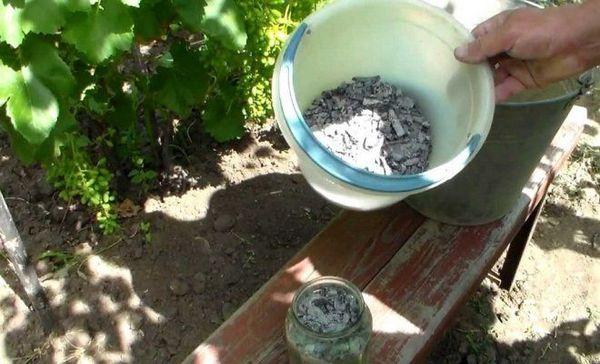
In the spring, after the last frost, the grapes are uncovered, tied up, and fertilized with compost. In early June, wood ash is added to the vines. Phosphorus fertilizer is applied during ripening and after harvest.
Protection from rodents
Voles are drawn to garden plots in search of food. In vineyards, they are attracted to the straw and leaf litter in which they build nests. Plastic sheeting, slate, and wooden decking do not deter the rodents. Control methods:
- kerosene, diesel fuel for repelling;
- mousetraps;
- baits with poison.
The most effective baits are those containing brodifacoum. They contain scents that are attractive to mice, along with flour, sugar, and sunflower oil. Voles die from suffocation, so they don't associate the poisoning with food and don't warn their fellow voles. The bait is placed inside or on top of the grapevines.
Preparing for winter
After the leaves fall, the vines are coated with copper sulfate and earthed up. The branches are then removed from the trellises, laid on the ground or deck, and covered with soil, sawdust, and dry leaves. To prevent the grapes from getting wet and to allow them to breathe, they are covered with agrofibre.
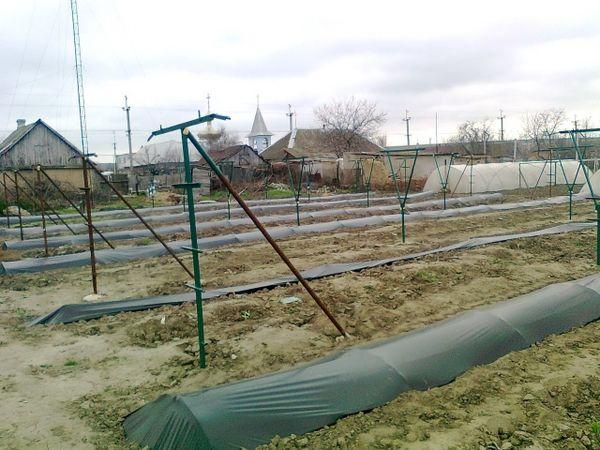
Despite its frost resistance, the Dolgozhdanny grape variety needs to be covered for the winter.
If the temperature drops sharply and there is no snow, the buds freeze, and the berries ripen a month later – in September.
How to protect crops from birds and insects
Jackdaws, sparrows, and tits flock to the grapes. Therefore, bird feeders are not placed near the vineyard. Wasps show little interest in the Long-Awaited variety. The main methods of controlling birds and insects are to isolate the crop or repel them.
Insulation
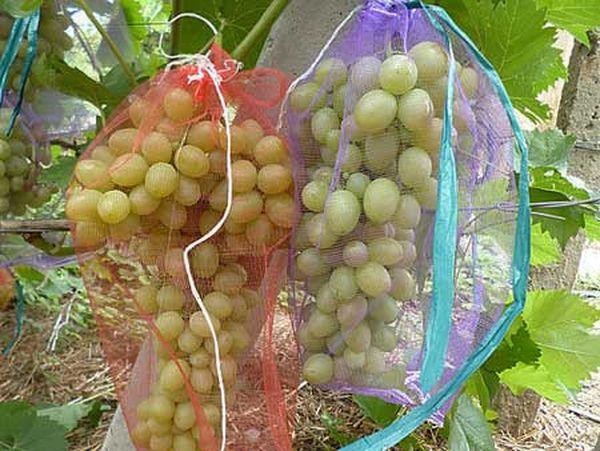
Linen bags are placed over the grape clusters. Plastic and polyethylene are not breathable. It's best to sew bags from double-layered cheesecloth. It dries quickly after rain.
Each bunch is wrapped, making this method suitable for a small vineyard. On larger plantations, the trellises are covered with polypropylene mesh, which is used for several seasons. A similar approach can be used to cover vines in a vineyard with fishing nets. However, birds can become entangled and die in these nets.
A simpler, but also labor-intensive, way to keep birds away from grapes is to string black and white fishing line. Birds will see these as snares and won't fly near the grapes.
Repellers
Birds are frightened by sound and light. Items that can be hung near grapes:
- compact discs - their shiny surface creates a lot of bright reflections;
- rattles;
- pinwheels with shiny blades and rattles hanging at the bottom.
Blue plastic bags are cut into strips and tied to grape trellises. They flutter in the wind, preventing birds from flying close. For added security, this deterrent is combined with rattles and glitter.
Mulching
The grapevine's root system is covered with straw and leaves. Mulch retains moisture and prevents weed growth.
Prevention
Despite its resistance to diseases and pests, Long-Awaited grapes are sprayed preventatively. Fungicides are applied before budding, flowering, and after harvest.
Oidium
To prevent the fruits of the Dolgozhdanny variety from rotting, side shoots are removed and branches are pruned. Ventilating the bushes prevents brown spots from appearing on the berries.
Powdery mildew
In the spring, before bud break, the grapes are sprayed with Bordeaux mixture. During the growing season, the plants are watered moderately, the soil is loosened, and the branches are thinned.
Gray rot
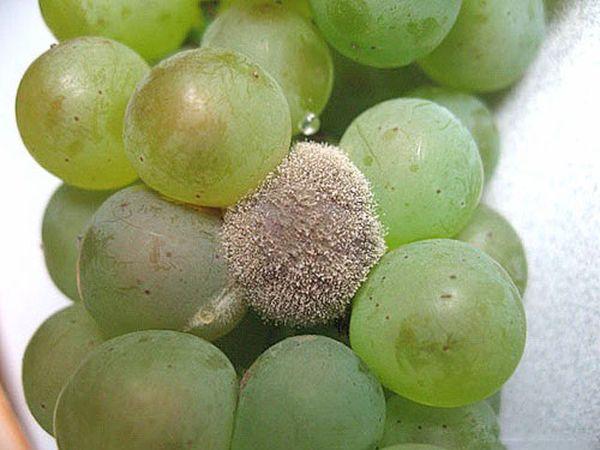
This type of fungus thrives in marshy soil and warm temperatures. Therefore, the Dolgozhdanny grape variety should not be overwatered in hot weather, and the soil should be loosened after watering. A popular method for preventing fungal diseases of grapes is spraying with a baking soda solution.
Trimming
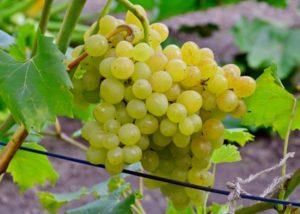
Grapes are pruned in spring and fall. Branches are shortened by 7-10 buds. During ripening, leaves that shade the bunches from the sun are removed. Weak green shoots are also pruned, and ripe bunches are gradually picked. This will ensure the berries retain their sugar content better, and the branches will not break under the weight of the harvest.
Methods of reproduction
The Dolgozhdanny variety is propagated by rooting cuttings and grafting.
The cuttings are taken in the fall, soaked in water for 24 hours, and then in a 5% copper sulfate solution. The dried cuttings are wrapped in cloth and stored in a cool place for the winter.
In the spring, cuttings are germinated in small pots. You can prepare grape seedlings in advance, in February, so that the shoots will take root by April. Once the weather warms up and the soil reaches 10 degrees Celsius, the seedlings are transplanted outdoors.
Grafting is done in the spring, when the scion's buds begin to swell. In the fall, any warm, dry day will do. The most common techniques are full cleft grafting and copulation.
Harvesting and storage
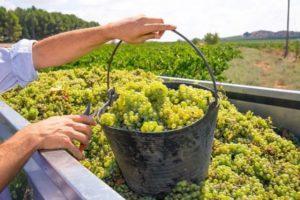
Ripe Dolgozhdanny grapes are easily separated from the stem. Heavy clusters are trimmed with pruning shears and a piece of vine. Damaged berries are removed and the harvest is placed in a cellar, attic, or pantry with a temperature of 0…+7 degrees and air humidity of 80%.
Storage methods:
- hang the bunches of grapes from a taut rope;
- put in boxes lined with paper;
- place in the refrigerator.
In a refrigeration chamber at -1…+2 degrees and 95% humidity, the harvest of fresh berries will be preserved for 4-7 months.
Tips from experienced gardeners
How to get a good harvest of the Dolgozhdanny grape variety:
- on sloping areas, choose a south-west or south-facing slope and direct the beds from south to north;
- on a flat area, in the absence of shelters, in the south, install a fence, a screen up to 2 meters high in the direction from east to west;
- To ensure that young seedlings receive nutrition more quickly, water and feed them through pieces of hose or bottomless plastic bottles inserted into the root circle;
- grapes need support: in the first year - a peg with a horizontal crossbar, in the second year - a multi-tiered trellis;
- old vines should be tied horizontally, young shoots - vertically;
- Sprinkling is contraindicated for grapes;
- To prevent excess moisture from accumulating in the soil, dig drainage channels and install irrigation pipes, keeping a distance of 50 centimeters from the bush;
- in the first year, prune the vines only in the fall, removing unripe shoots;
- In the third year, it is necessary to carry out spring and autumn pruning and pinching out the side shoots in the summer.
The Dolgozhdanny grape variety grows well in both warm and cold climates. Its only detriment is a damp environment, which encourages fungal growth. Annual staking, pruning, and prompt harvesting of ripe bunches will preserve and increase the yield.
Related posts:
 Description of 30 grape varieties for Siberia, planting and care for beginners
 How to grow grapes in the Moscow region in open ground without a greenhouse
 Description of 30 varieties and types of Muscat grapes, planting, cultivation and care
 The ripening time of grape vines by variety, how to speed up the process, and what to treat the plant with
 Description of the Julian grape variety, planting and care instructions
 Beginner's Guide to Growing Grapes in Open Ground in Central Russia
 Description of the Krasotka grape variety, planting and care technology
 The best grape varieties for growing in the Urals, planting and care rules in summer