
- History of origin
- Description and features of Tempranillo
- Bush
- Bunch
- Berry
- Characteristics of the variety
- Frost resistance
- Drought resistance
- Productivity and fruiting
- Acidity
- Disease resistance
- Advantages and disadvantages of the variety
- How to plant correctly
- Recommendations for choosing deadlines
- Site selection and preparation
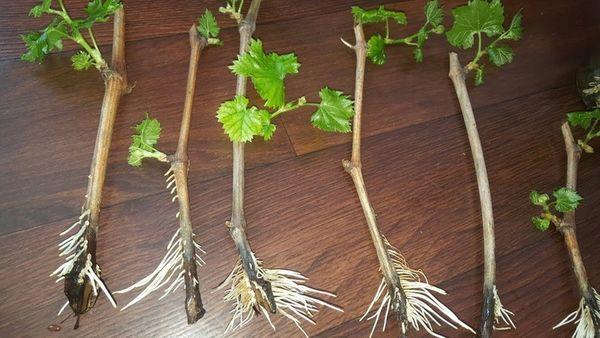
- How to select and prepare planting material
- Planting diagram
- Care instructions
- Watering mode
- Top dressing
- Trimming
- Protection from birds and insects
- Preparing for winter
- Preventive spraying
- Trellis
- Methods of reproduction
- Cuttings
- Graft
- Layers
- Diseases and pests
- Oidium
- Gray rot
- Phylloxera
- Harvesting and storage
- Application in winemaking
- Tips and advice from experienced gardeners
Tempranillo grapes are an early-ripening grape variety, as their name clearly reflects. Translated from Spanish, "tempranillo" means "early" or "premature."
Spain and Portugal are considered the main producers and suppliers of dry wines and ports made from this grape variety. At the end of the last century, winemakers from North and South America, Australia, and Africa showed interest in this fruit variety.
History of origin
Although the Tempranillo grape variety is believed to have originated in Spain, the exact origins of this fruit remain unknown. Supposedly, monks on a pilgrimage to a Spanish monastery in the 13th century brought seedlings to the Iberian Peninsula. Another theory holds that the Phoenicians brought grape seedlings to the peninsula a thousand years before Christ.
Today, the Tempranillo grape variety is cultivated in many countries. In the CIS countries and Russia, vineyards are grown in regions with warm, southern climates.
Description and features of Tempranillo
The fruit crop is demanding of the climatic and weather conditions of the growing region, which is a limiting factor for the spread of the Tempranillo grape variety.
Bush
The growth and development of grape vines depends directly on growing conditions and location. The shoots are strong, vigorous, yellowish-brown, and each contains up to 25 fruiting buds.
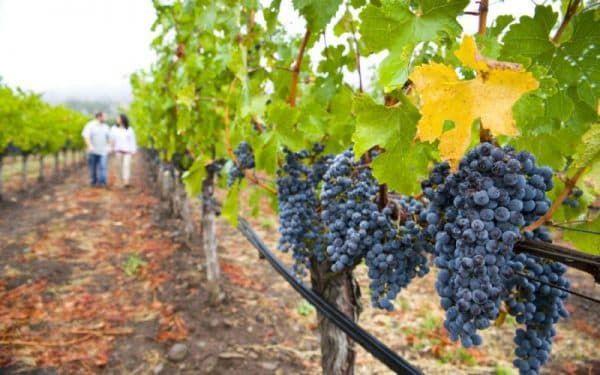
Young leaves are yellowish with a bronze sheen and densely pubescent. Mature leaf blades are large, five-lobed, slightly corrugated, with large serrated edges, and bright green.
Important! During flowering, fruiting vines produce clusters of male and female flowers, indicating the variety's ability to self-pollinate.
Bunch
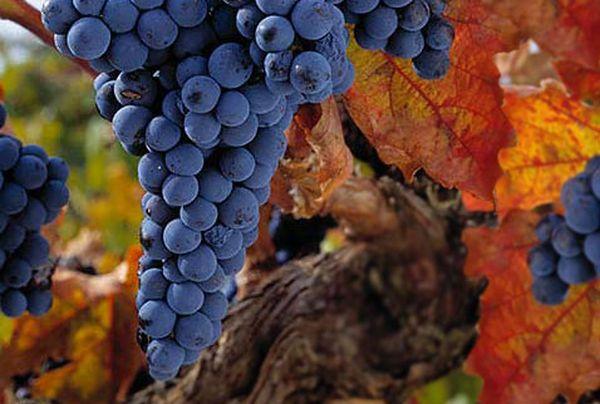
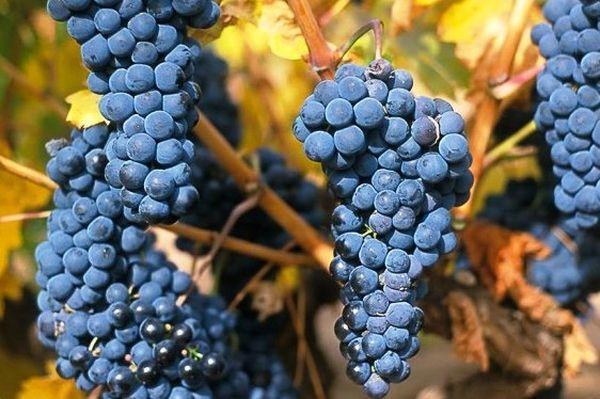
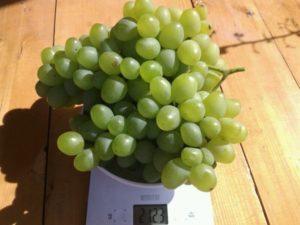
The clusters are large, up to 300 g, cone-shaped or cylindrical, elongated, with round, dark blue berries.
The fruits in the bunch are tightly pressed against each other, which is why they often become deformed.
Berry
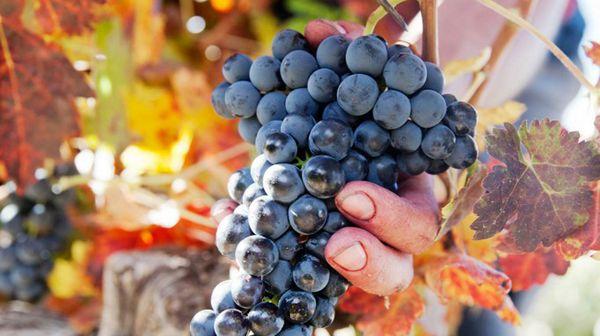
The berries of this wine grape variety are large, weighing up to 1.8 g. As they ripen, they acquire a dark blue color and a protective waxy coating. The skin is tart and rich in pigments, which contributes to the richness of the color of the future wine.
The pulp of the berries is dense, with clear juice, and a sweet and sour taste.
Note: Tempranillo grapes are the only fruit variety in the world whose best flavor develops when exposed to sharp temperature fluctuations between day and night.
Characteristics of the variety
Tempranillo grapes ripen best at high altitudes. A record harvest was collected from a plantation located at 700 meters above sea level.
Frost resistance
This fruit crop is sensitive to both severe frosts and prolonged droughts. The minimum winter frost threshold tolerated by plants is -18°C (-23°F). If temperatures drop further, the berry bushes freeze. Therefore, when growing Tempranillo grapes in temperate climates, the vines require additional insulation before wintering.
Drought resistance
Berry crops have low drought tolerance. To ensure a high-quality and abundant harvest, grape vines require a strict irrigation schedule.
Take a look Also
Productivity and fruiting
Fruiting begins in the third or fourth year of outdoor growth. Fruit ripening depends on the climate and weather conditions of the growing region.
In Spain, the variety is considered early ripening, but in the temperate climate, the berries ripen late.
With proper and timely care, a single grape bush can yield up to 5 kg of fruit. In industrial production, the maximum yield is 10 tons per hectare.
Acidity
The main composition of grapes is sugars and acids.
The Tempranillo variety contains up to 23 g of sugars per 100 ml, and up to 6 g/l of acids.
The average alcohol content in the finished product is up to 14%.
Disease resistance
This unique grape variety requires additional protection from fungal diseases and pests. Berry bushes are treated with chemicals and biological agents in early spring and before winter dormancy.
When diseases and pests spread during the growing season, the bushes are sprayed with fungicides and insecticides.
Important! Timely care and adherence to agricultural practices reduce the risk of fungal and viral diseases in grapes.
Advantages and disadvantages of the variety
Varietal grapes always differ from their peers in their unique properties and characteristics. To grow a fruitful and healthy berry crop, it's essential to understand all the advantages and disadvantages of the variety.
Advantages:
- High yields, with one bush yielding 4 to 5 kg of berries.
- Stable, annual fruiting.
- The seedlings adapt well to regions with warm climates.
- Easy to care for.
- Excellent characteristics for the production of wine and juice products.
Tempranillo grapes are often used to produce non-alcoholic beverages, namely juices and nectars.
Flaws:
- Weak immunity to diseases and pests.
- Geographical limitations for cultivating the variety.
- Low resistance to frost and drought.
- The variety is demanding regarding the planting location, climate and soil composition.
Important! Fruit crops do not tolerate spring frosts and will lose flowers and fruit buds.
How to plant correctly
For the full growth and development of grape crops, proper planting and subsequent care of the plants are required.
Recommendations for choosing deadlines
It's recommended to transplant seedlings into open ground in the fall, 4-6 weeks before the first frost. This will allow the plants time to take root and absorb sufficient nutrients from the soil for the winter.
In temperate climates, berry crops are planted in early spring, before the beginning of the growing season.
Site selection and preparation
The choice of location for planting Tempranillo grapes determines the future yield, ripening, and taste of the berries.
- Fruit crops prefer to grow on sloped plots. On flat lands, the berries don't absorb sugar and remain sour, which negatively impacts the final wine's quality.
- Also important are the climatic features of mountainous regions, where daytime temperatures differ sharply from nighttime ones.
- Berry bushes are planted on southern, well-lit slopes, protected from drafts and gusty winds.
- The soil for fruit crops should preferably be loose, fertile, and containing lime.
- The land is carefully dug up, weeds are removed, and the soil is loosened.
- The soil is mixed with mineral fertilizers and humus and watered generously.
Important! Tempranillo grapes do not tolerate very wet or waterlogged soils.

How to select and prepare planting material
Elite grape seedlings are purchased from trusted nurseries.
- The plant is carefully examined for damage and infection by fungi, viruses and bacteria.
- The trunk of the seedling is straight, uniform in color, and must have fruit buds or leaves.
- The roots are well developed, without any putrefactive plaque or damage, and well moistened.
- The age of the plant does not exceed 2-3 years.
Before planting outdoors, seedlings are dipped in a container of warm water for 10-15 hours. After soaking, the roots are treated with a weak solution of potassium permanganate to protect the plant from harmful diseases.
Planting diagram
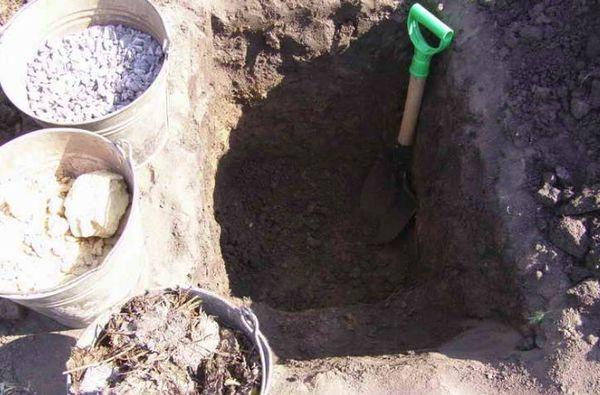
Planting holes are dug on the land plot prepared for planting seedlings.
- The depth and width of the hole is from 70 to 80 cm.
- The distance between plantings is left from 1.5 to 2 m, between rows from 2.5 to 3 m.
- A drainage layer of broken stone or expanded clay is placed at the bottom of the hole.
- A mound of fertile soil mixture is poured on top.
- A support peg is driven into the middle of the hole.
- The seedling is placed on top of the mound.
- The roots are evenly distributed throughout the hole and covered with the remaining soil, trying not to leave any voids between the roots and the soil.
- The soil under the bush is compacted and watered generously.
After completing planting work, the tree trunk circle is mulched with dry grass or peat mixed with sawdust.
Care instructions
The fruiting and taste of berries depend on proper and timely care.
Watering mode
Irrigation measures are an important condition for the formation and ripening of grapes.
- The first watering of fruit bushes is carried out in early spring, after removing the covering materials.
- The next watering is carried out at the beginning of the flowering of the bush.
- The most important thing is considered to be watering during the period of ovary formation.
Further irrigation procedures depend on weather conditions.
Up to 5 liters of settled, warm water is poured under each plant.
Top dressing
Grapes are fed and fertilized with great care. An excess of nutrients can cause the plant to grow and develop improperly, negatively impacting yield and berry composition.
The first organic fertilization is carried out in the spring. As soon as the fruit crop enters the flowering and fruit set phase, it requires additional phosphorus and potassium.
After harvesting, the grapes are fertilized with organic matter and a balanced mineral complex.
Important! Additional fertilizing of berry bushes begins in the 3rd or 4th year of growth.
Trimming
Grapevines are pruned in the fall, leaving 3 to 5 young shoots and removing the rest. Shoots are pruned back to 6-8 buds, and dry, broken, and old branches are completely removed.
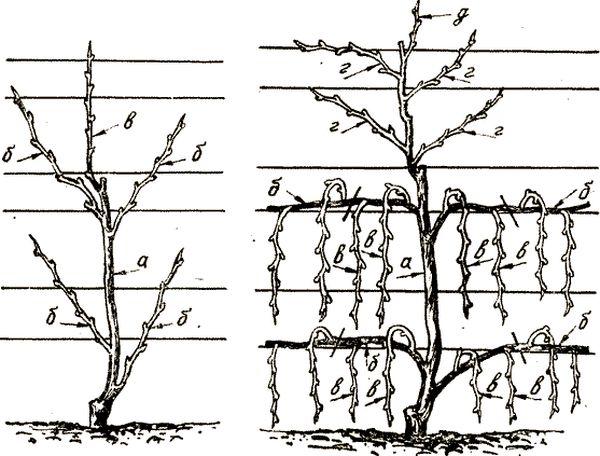
During the process of ovary formation, excess inflorescences and clusters are also trimmed, thus regulating the load on the bush.
Protection from birds and insects
Preventative pest control treatments are carried out in early spring, before the grape vines begin to bloom. Plants are sprayed with insecticides.
During the berry ripening period, the harvest suffers from birds. Bunches are covered with nets, and shiny ribbons or old disks are hung to repel the birds.
Preparing for winter
To preserve the vineyard, preparations for winter begin in late autumn.
The bushes are watered generously, the soil is loosened, and mulched with a thick layer of humus. The plant is bent to the ground and secured, and covered with special fiber or other covering materials.
If snow falls in the region, a large snowdrift will provide ideal cover for berry bushes.
Preventive spraying
Tempranillo grapes are susceptible to fungal and viral diseases, as well as various pests. Therefore, every year, in the spring and fall, the plants are treated with chemical and biological pesticides.
Trellis
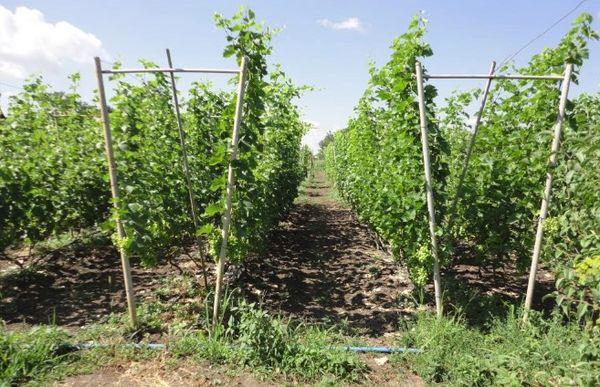
Flexible and thin grapevine branches require additional support. Trellis are installed as support, and rope or wire is strung at various heights to attach the vines.
Methods of reproduction
Varietal grapes are propagated vegetatively by cuttings, grafting and layering.
Cuttings
In the spring, the strongest, most powerful shoot is pruned from a mature bush and divided into several equal parts. Each cutting should have 2 to 4 buds or leaves remaining. The cutting is treated with a growth stimulant and planted in a container with fertile soil. In the fall, the rooted seedling is transplanted into the open ground.
Take a look Also
Graft
Grafting helps to rejuvenate and extend the fruiting period of old plants.
For grafting, select a strong, healthy shoot, trim it and divide it into cuttings 10-12 cm in size.
An incision is made on the trunk of an old bush, into which cuttings are inserted and secured.
Layers
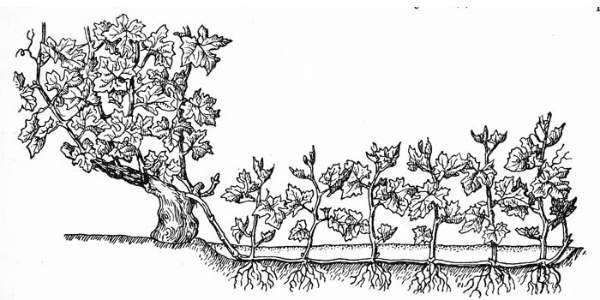
Propagation by layering is the easiest and fastest way to obtain new grape seedlings.
In early summer, select a strong lower shoot from a mature bush, bend it to the ground, and secure it. Cover the layer with soil, leaving the upper portion of the shoot above the soil surface. Water the plant and fertilize it if necessary. In the fall, cut the rooted shoot from the mother bush and plant it separately.
Diseases and pests
Due to its weak natural immunity, Tempranillo grapes are most often susceptible to fungal infections such as powdery mildew and gray mold.
Oidium
Powdery mildew appears on plants as a gray or white coating that can be easily brushed off. This causes the ovaries to die, and the fruits to rot and crack, accompanied by a foul odor.
To combat the disease, preparations based on sulfur or fungicides are used.
Gray rot
Gray mold attacks buds, flowers, fruit buds, leaves, berries, and grape clusters. The main trigger for the disease is high humidity and moisture.
Biological and chemical means of protection are used for treatment.
Phylloxera
The most dangerous grapevine pest, it attacks both the above-ground and underground parts of the plant. It is common in hot southern regions. It manifests itself as swellings on the roots and leaf blades of the shrub.
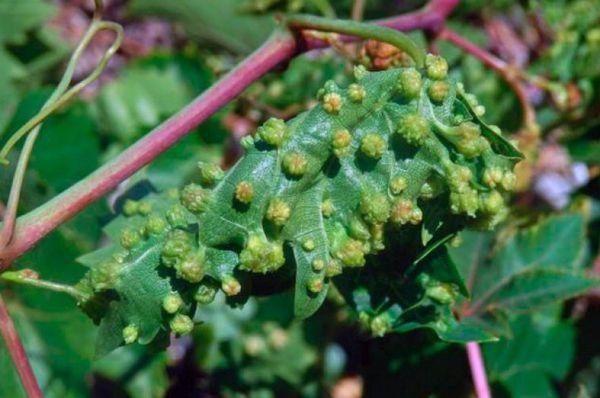
For control and prevention, fungicide-based preparations and biological protection agents are used.
Harvesting and storage
In Spain, the harvest is collected in the second half of August; in our latitudes, the berries ripen in September-October.
The ripeness of the berries determines the acid and sugar content of the fruit. Therefore, to produce dry wines, grapes are not left on the vines for too long to maintain the required acid concentration. Overripe grapes are sweeter and are used for fine wines and ports.
Application in winemaking
The taste, color, and aroma of Tempranillo wine depend directly on climate conditions and the proper care of the grapes. However, the berries will infuse the wine with aromas of fruit, flowers, vanilla, and spices.
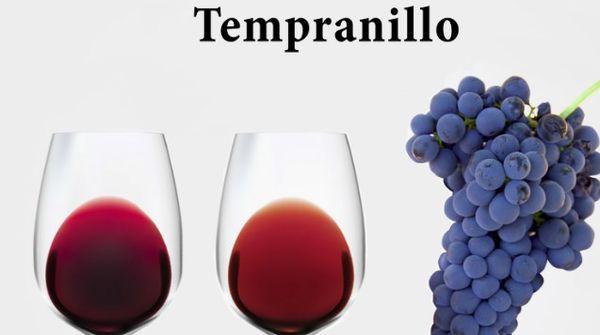
Tempranillo grapes are used to produce dry and dessert wines. In Portugal, the variety is used to produce the signature Port wine. The grape also pairs well with other fruit varieties and is often used in winemaking as a component.
Tips and advice from experienced gardeners
Experienced gardeners and farmers believe that Tempranillo grape care is based on timely fertilization and preventative treatments against diseases and pests. Special attention should also be paid to additional insulation before wintering.
Otherwise, the variety is simple and unpretentious, which makes it possible for inexperienced gardeners and vegetable growers to grow this berry crop.
Related posts:
 Description of 30 grape varieties for Siberia, planting and care for beginners
 The ripening time of grape vines by variety, how to speed up the process, and what to treat the plant with
 How to grow grapes in the Moscow region in open ground without a greenhouse
 Description of 30 varieties and types of Muscat grapes, planting, cultivation and care
 Description of the Julian grape variety, planting and care instructions
 Description of the Krasotka grape variety, planting and care technology
 Description and characteristics of the Laura grape variety, planting and care
 Beginner's Guide to Growing Grapes in Open Ground in Central Russia