
- Chemical composition of black radish
- Calorie content and nutritional value
- Useful properties of the product
- Medicinal properties
- For men
- For women
- For children
- During pregnancy
- The effects of black radish juice
- Folk recipes with black radish for the treatment of diseases
- Mixture for hypertension
- For joint pain
- For diabetes
- Black radish with honey for cough
- Black radish for colds and bronchitis
- Drops for runny nose and sinusitis
- Remedy for constipation
- For uterine tumors and mastopathy
- Black radish for the treatment of osteochondrosis
- Black radish for radiculitis
- For liver cleansing
- Black radish for various skin diseases
- Culinary recipes
- How much can you eat without harming your health?
- How to remove bitterness from black radish
- French Radish Salad
- How to choose and store
- Application in cosmetology
- Hair mask
- Face mask
- What are the harmful effects of black radish?
- Contraindications for use
This root vegetable has been known to humanity for a long time, dating back to ancient times. It's known not only as a simple food but also as an effective medicine, capable of helping overcome many ailments. However, black radish, in addition to its beneficial properties, also has contraindications. All of these factors must be taken into account, and the dosage must be observed to ensure that its benefits don't lead to harm.
Chemical composition of black radish
Despite its low calorie content, it's rich in nutrients and various vitamins. The root vegetable contains beta-carotene, a range of vitamins A, C, and K, choline, and various acids, as well as macro- and micronutrients. These include calcium, phosphorus, magnesium, sodium, zinc, and iron.
Calorie content and nutritional value
Its caloric value is 35 kilocalories per 100 grams of root vegetable. It contains 2.1 grams of fiber, 1.9 grams of protein, 0.2 grams of fat, and 6.7 grams of carbohydrates.
Useful properties of the product
While it may not be a "vitamin bomb," all its ingredients work effectively together. Raw radish offers the greatest benefits. Its pulp contains fiber, which the human stomach cannot digest. This fiber acts as a natural scrub, cleansing the intestines and stomach lining. The fiber promotes detoxification—it absorbs and then naturally eliminates toxins and waste.
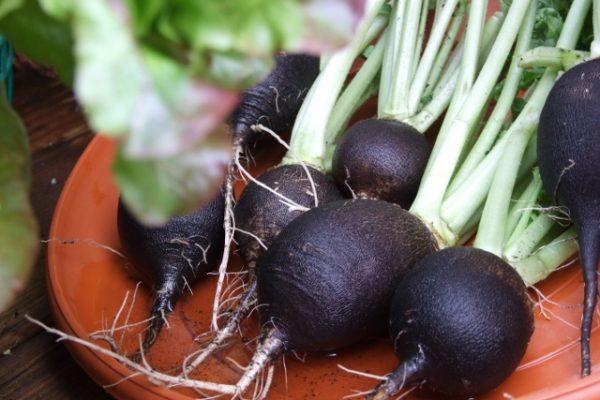
The root vegetable is rich in phytoncides and various essential oils, giving it strong antimicrobial properties and fighting colds. It's used in a proven cough remedy or as a preventative measure for heavy smokers. It also makes a good aperitif—the pungent radish irritates the stomach lining, stimulating the active secretion of gastric juice, thereby increasing appetite.
Medicinal properties
- antispasmodic;
- expectorant;
- pain reliever;
- cleansing;
- antimicrobial;
- choleretic;
- preventive.
For men
Eating radish also has many benefits for the male body. It increases levels of the male hormone testosterone, which makes a man truly a man. Additionally, radish helps treat inflammation of the prostate and urinary tract, and has a general healing effect on the entire genitourinary system.
Recommended for men experiencing heavy physical exertion and stress. It has diuretic properties, reduces swelling in the body, and helps strengthen blood vessels and the heart. It also freshens breath and maintains oral health.
For women
Radish is beneficial for both women's health and beauty. It contains vitamins, microelements, and amino acids essential for the female body.
Radish removes pigment spots and whitens the skin.
It helps with menstrual irregularities, inflammation, and general gynecological problems. The juice is used to treat acne and premature baldness, and is taken to prevent anemia and treat kidney stones.
For children
This root vegetable is also beneficial for children, especially those who suffer from frequent colds and acute respiratory infections. Radish will help enrich a child's body with essential vitamins and boost immunity. It's best to use it with honey, which softens the pungent radish juice. In children, the juice can sometimes cause bloating and cramps, so it should be given with caution and only if there are no contraindications. It should be introduced to children aged 3-4 years, starting with thin slices, soaked first to remove the bitterness.

During pregnancy
During pregnancy, women are advised not to eat radishes, as their chemical composition can cause miscarriage.
The effects of black radish juice
The juice is used for the prevention and treatment of many ailments, both external and internal. The benefits of the juice have long been noted by respected traditional medicine practitioners. It is especially beneficial for the human body during the winter, when the immune system is significantly weakened and susceptible to various infections.
Folk recipes with black radish for the treatment of diseases
The root vegetable has been used since ancient times in folk medicine for the prevention and effective treatment of many diseases, and the recipes have been tested by many generations.
Mixture for hypertension
Mix equal parts of radish juice, horseradish root, carrot juice, and beetroot juice, along with a little lemon juice, and let it steep for a day. Drink in the morning on an empty stomach, half an hour before meals. No more than two servings per day are allowed.
For joint pain
Radish has a positive effect on joints. For pain prevention and treatment, use only freshly squeezed juice. Dosage: 1-2 teaspoons, up to 3 times daily, one hour after meals.
For diabetes
The root's medicinal properties are used in the treatment of diabetes. It is eaten raw, without any heat treatment. The root can be added to salads or consumed as diluted juice. For type 1 diabetes, take 120-130 grams, and for type 2, up to 200 grams, up to four times a week.
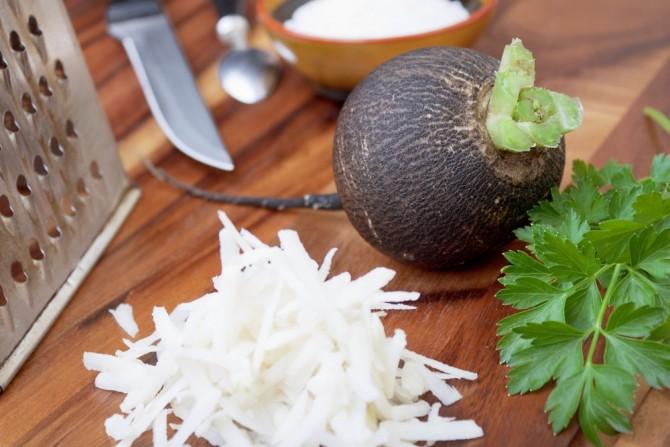
Black radish with honey for cough
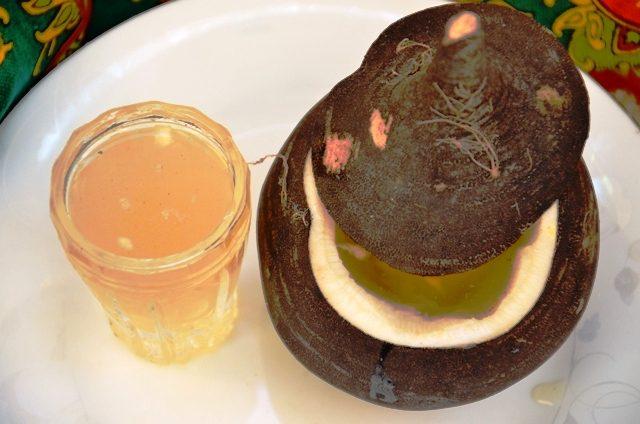
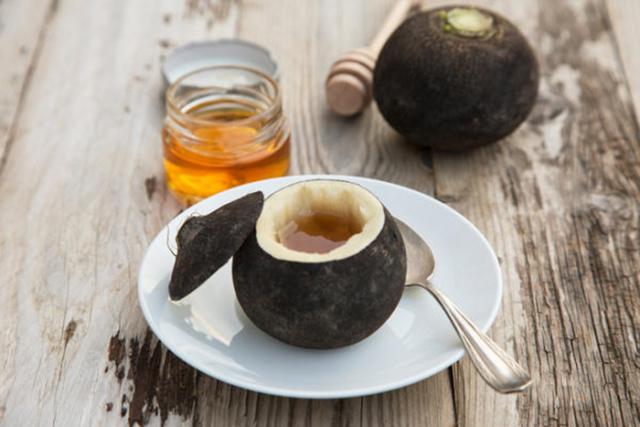
The root vegetable's healing properties are fully realized when used to combat colds. Select the largest ones, wash them thoroughly, and cut off the top. Then, partially scrape out the core with a spoon and partially crush it. Pour honey into the hollow, mix it with the pulp, and, covered with the cut top, let it steep for 5-6 hours.
Take a look Also

Black radish for colds and bronchitis
To treat these conditions, prepare a mixture of grated radish (1 piece) and honey (1 tablespoon). Grate the radish, mix with honey, and let it steep for 3-4 hours. Take 1 teaspoon up to 3-4 times a day after meals.
Drops for runny nose and sinusitis
Only fresh root vegetables are used for treatment. First, grate the root, wrap it in cheesecloth, and squeeze out the pure juice. Apply a few drops to each nostril before bed. The treatment course is 10 days.
Remedy for constipation
Grate one root vegetable and add 2 tablespoons of sunflower oil. Take three times daily to prevent and treat constipation. The course of treatment is one week.
For uterine tumors and mastopathy
Mix equal parts radish, corn oil, and aloe. Add 70% ethyl alcohol to a tenth of the total volume. Let it steep in a dark place for a week. Take 1 tablespoon three times daily, half an hour before meals.
Black radish for the treatment of osteochondrosis
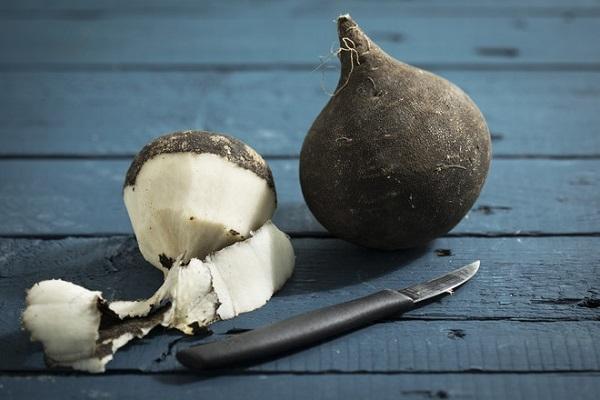
The patient's spine is rubbed with freshly squeezed, undiluted juice. Before rubbing it into the spine, it is heated to a temperature of 35–40°C.
Black radish for radiculitis
Compresses are used to treat radiculitis. To prepare the remedy, wash the root vegetables, grate them, and apply a thin layer to a cloth. Then cover with a second strip of cloth and apply to the inflamed areas, wrapping a scarf or blanket over the top. Keep the compress on for as long as possible.
For liver cleansing
The root vegetable is washed, peeled, grated, and the juice is squeezed through cheesecloth. Then, pour it into a glass jar and seal with a lid. Take the juice three times a day, half an hour after meals, 1 tablespoon for the first week, then 2 tablespoons for the second week. The course lasts up to 2 months.

Black radish for various skin diseases
Mix 100 milliliters of radish juice and red wine. Simmer over low heat until smooth. Cool and apply to the skin.
Culinary recipes
It is used as a base for a wide variety of salads, distinguished by their originality, piquancy, and health benefits.
How much can you eat without harming your health?
For a healthy person who does not suffer from gastrointestinal diseases, eating 100-150 grams of raw radish per day will not create any problems.
How to remove bitterness from black radish
Several methods are used to remove excess bitterness. Grated or sliced radishes are salted and left to stand. Then, they are rinsed with boiled water in a colander and allowed to drain. Another method is to beat the grated or sliced radishes against the sides of the container.
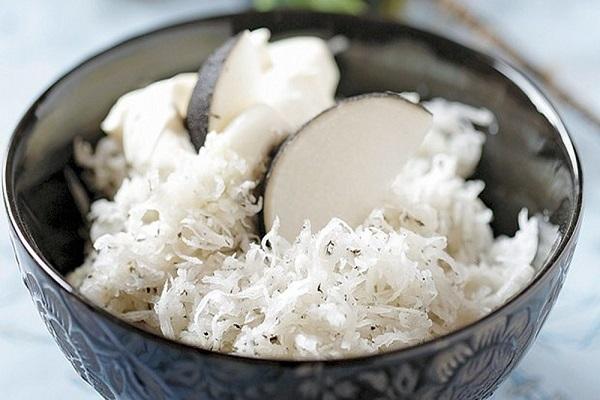
First, salt it, then take a handful and slap it against the sides of the bowl. Repeat this process 10-15 times until the juices appear. Instead of slapping, you can place it in a container, cover it with a lid, and shake it for a few minutes.
Take a look Also

French Radish Salad
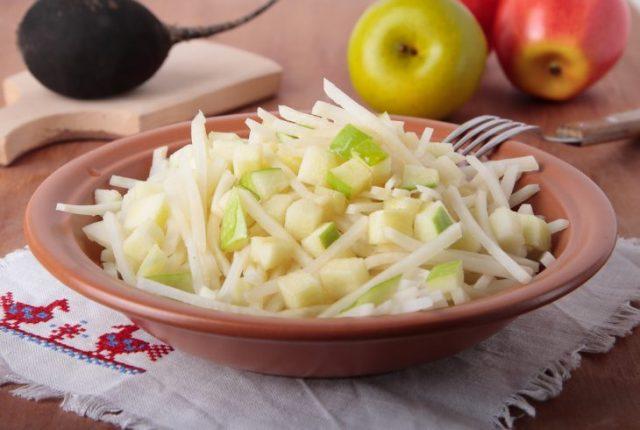
One of the most popular salads. To prepare, you'll need 400 grams of root vegetables (2-3 pieces). Peel and grate them finely, then add salt to remove the bitterness. After 10 minutes, add finely chopped cucumber, pour into the dish, and top with a sauce made from a mixture of 3-4 teaspoons of lemon juice and 2 tablespoons of low-fat mayonnaise. Sprinkle with chopped herbs, toss, and let sit for half an hour. The salad is ready!
How to choose and store
Store on the bottom shelf of the refrigerator for up to a month. Important storage conditions include a temperature of at least 0°C (32°F) and avoiding direct sunlight. Store in a wooden box filled with sand or in open paper bags. Choose firm root vegetables with no cracks in the skin and with the stems intact. Discard any wilted, soft, or spoiled vegetables immediately.

Application in cosmetology
In addition to its widespread use in folk medicine and salads, radish is also used in cosmetology. Specifically, it is used to make various masks.
Hair mask
Finely chop the root vegetable and squeeze the juice through cheesecloth. Rub the juice into the scalp and wrap it in plastic wrap. Leave the mask on for an hour, then rinse with water. A burning sensation may occur during the procedure.
Face mask
To make the mask, use 2 tablespoons of finely grated sea buckthorn, 3 teaspoons of coarse rye flour, and 5 milliliters of sea buckthorn oil. Mix the ingredients thoroughly to prevent the flour from clumping. Then apply a thin layer to the face. Repeat the procedure 5 times a month.

What are the harmful effects of black radish?
Regular consumption of radish juice can erode tooth enamel. It is recommended to brush your teeth or use mouthwash after eating radish. Radish is contraindicated for those who suffer from flatulence, as it can increase gas production.
Contraindications for use
Black radish's pungent juice irritates the gastric mucosa. It is not recommended for those with high acidity, gastritis, colitis, various inflammatory conditions, and stomach and duodenal ulcers. Those with complex heart conditions, liver and kidney disease, and allergic reactions should also avoid its use.
Related posts:
 The health benefits and contraindications of green Margilan radish
 The benefits and harms of Daikon radish for the human body, medicinal properties and contraindications
 Descriptions and names of varieties and the best types of radish, planting and care
 Planting times and care guidelines for black radish in open ground
 Red Meat radish benefits, salad recipes and medicinal uses
 Growing, planting, and caring for Margilan radish in open ground
 Description of the Watermelon radish variety, planting and care, benefits and harms
 Recipes for pickled radishes, with and without sterilization, for winter storage, and how to store salad