
- Description and characteristics of the plant
- Types and varieties
- Beneficial properties
- Growing black radish
- Planting dates
- Preparing for landing
- Sowing in open ground
- Care instructions
- Watering and thinning
- Loosening
- Top dressing
- Protection from diseases and pests
- Harvesting and storage of crops
- How to grow in Siberia and the Urals?
- Possible problems
- Reviews from experienced gardeners
Black radish is a healthy root vegetable with a distinctive, pungent flavor. It is used as a source of vitamins during the winter and spring, and is also used in folk medicine for healing recipes. Planting and caring for black radish outdoors is easy; even a novice gardener can handle it. More information on this topic follows.
Description and characteristics of the plant
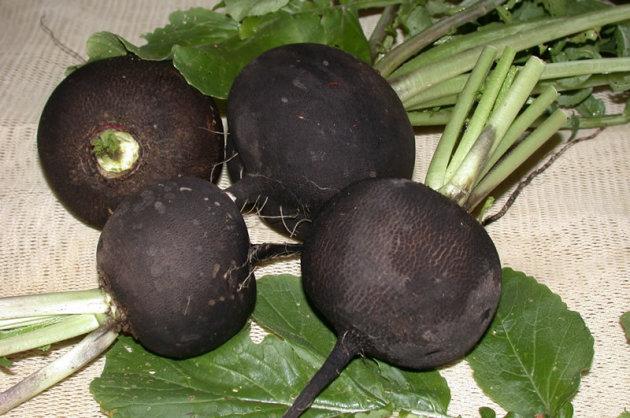
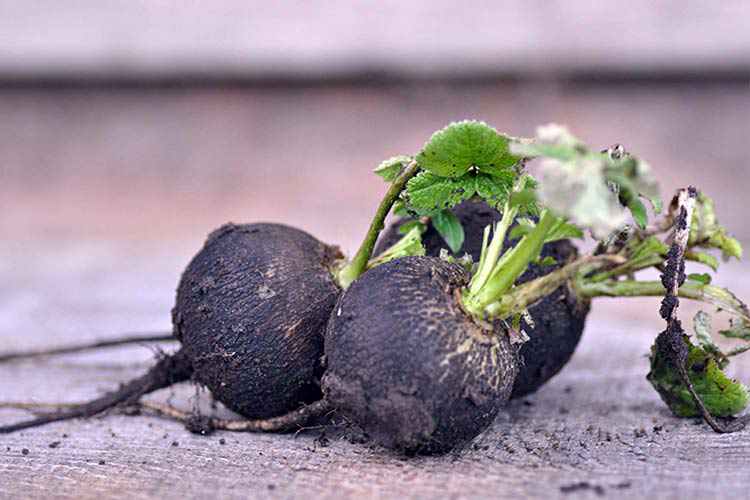
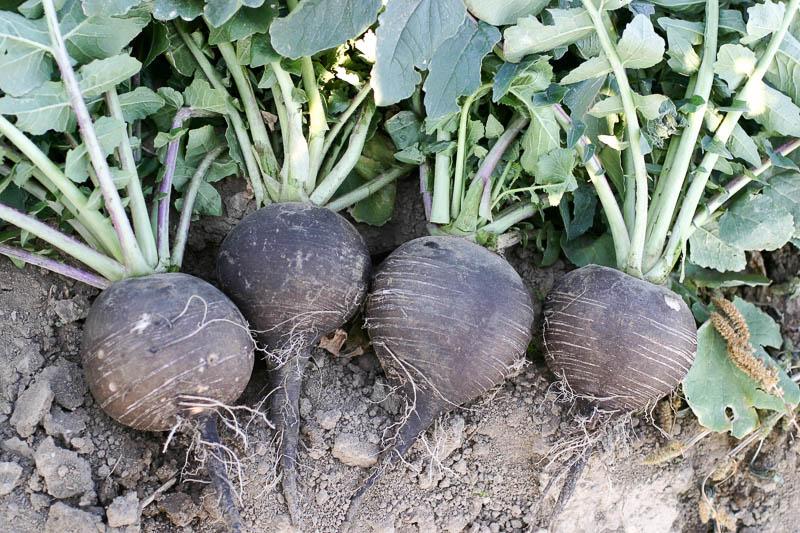
Depending on the species and variety, black radish can be round or oblong in shape. Its leaves are lyrate-shaped and gray-green, and its flowers are clustered in purple inflorescences. The black surface of the radish can be smooth or slightly rough.
The pulp is white, juicy, and bitter. The roots contain vitamins, microelements, and essential oils. It is used in various dishes, including as a healing product for the treatment of colds.
Types and varieties
Black radish belongs to the species Raphanus sativus L (common radish or garden radish). Breeders have developed numerous varieties, with the following names being the most popular:
- Winter. The roots are round and large, weighing up to 500 grams. This mid-late ripening vegetable is suitable for winter storage.
- Negryanka. The fruits of this winter variety are slightly elongated, with cream-colored flesh. The average root weight is 300 grams.
- Chernavka. Another late-ripening winter radish variety. The fruits are round and black; the flesh is white, with a sharp, slightly sweet flavor.
- Black Dragon. A mid-early variety. The radish is ready for consumption 50-65 days after germination. The roots are cylindrical, tapering toward the bottom.
- Nochka. This mid-season variety produces round, deep black roots. The flesh is white, juicy, and has a mildly pungent flavor.
- Healer. This elliptical vegetable matures in 75-85 days. Its medium-spicy flesh is white and crisp.
Please note: The black radish variety and recommended sowing times are indicated on the seed packaging.
Beneficial properties
Due to the fact that, that black radish contains many useful substances substances, it has the following healing qualities:
- destroys pathogenic microflora in the intestines;
- Effective against constipation;
- the juice is used to prevent atherosclerosis;
- counteracts the proliferation of tumor tissue;
- juice mixed with honey promotes expectoration in case of respiratory diseases;
- has a diuretic effect.
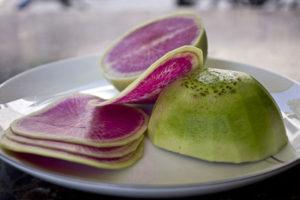
In addition to internal use, black radish is used externally: in the form of poultices it promotes the healing of wounds, in the form of compresses it eliminates dark circles under the eyes, whitens freckles, and helps smooth out wrinkles.
Growing black radish
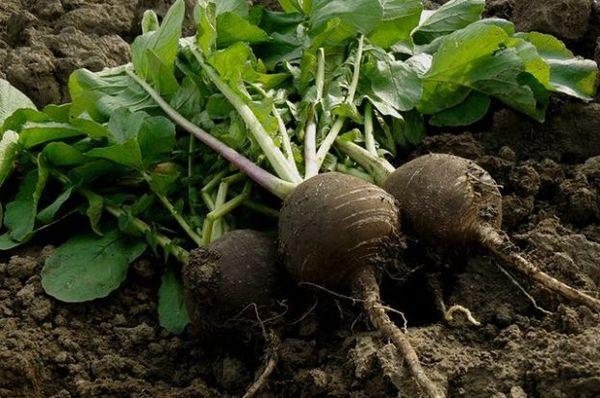
Root crops are easy to grow with proper agricultural practices. The key is finding the right spot and planting the seeds at the right time.
Planting dates
Black radish is a short-day plant. It thrives on 12 hours of intense light per day. Therefore, it should be planted in late June or early July. If sown earlier, it will send up a flower stalk, devoting all its energy to seed production. Another reason why seeds aren't planted early is that the later the radish is sown, the later it's harvested. This ensures that the roots will store well in a cellar over the winter.
Preparing for landing
Black radish prefers to grow in a brightly sunny area. Before planting, the soil is sprinkled with compost and wood ash, dug to a depth of 30-35 centimeters, and leveled with a rake. Legumes, cucurbits, and nightshade crops can be used as predecessors for this vegetable. It is not recommended to sow radish after related plants in the Cruciferae family, as they share the same diseases and pests can stifle the development of radishes.
Sowing in open ground
Before planting black radish seeds, sort them, discard any small or dried ones, and soak them for 24 hours in a weak solution of potassium permanganate. The sowing procedure in open ground is as follows:
- Furrows are made 1.5-2 centimeters deep. The distance between rows is 35-40 centimeters.
- Seeds should be planted in furrows, leaving a distance of 25-30 centimeters between them.
- The plantings are covered with soil and lightly compacted.
- The beds are watered. To speed up germination, they can be covered with plastic.
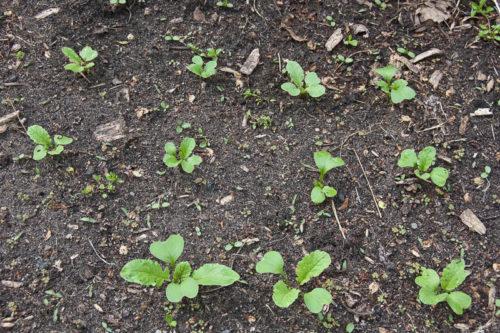
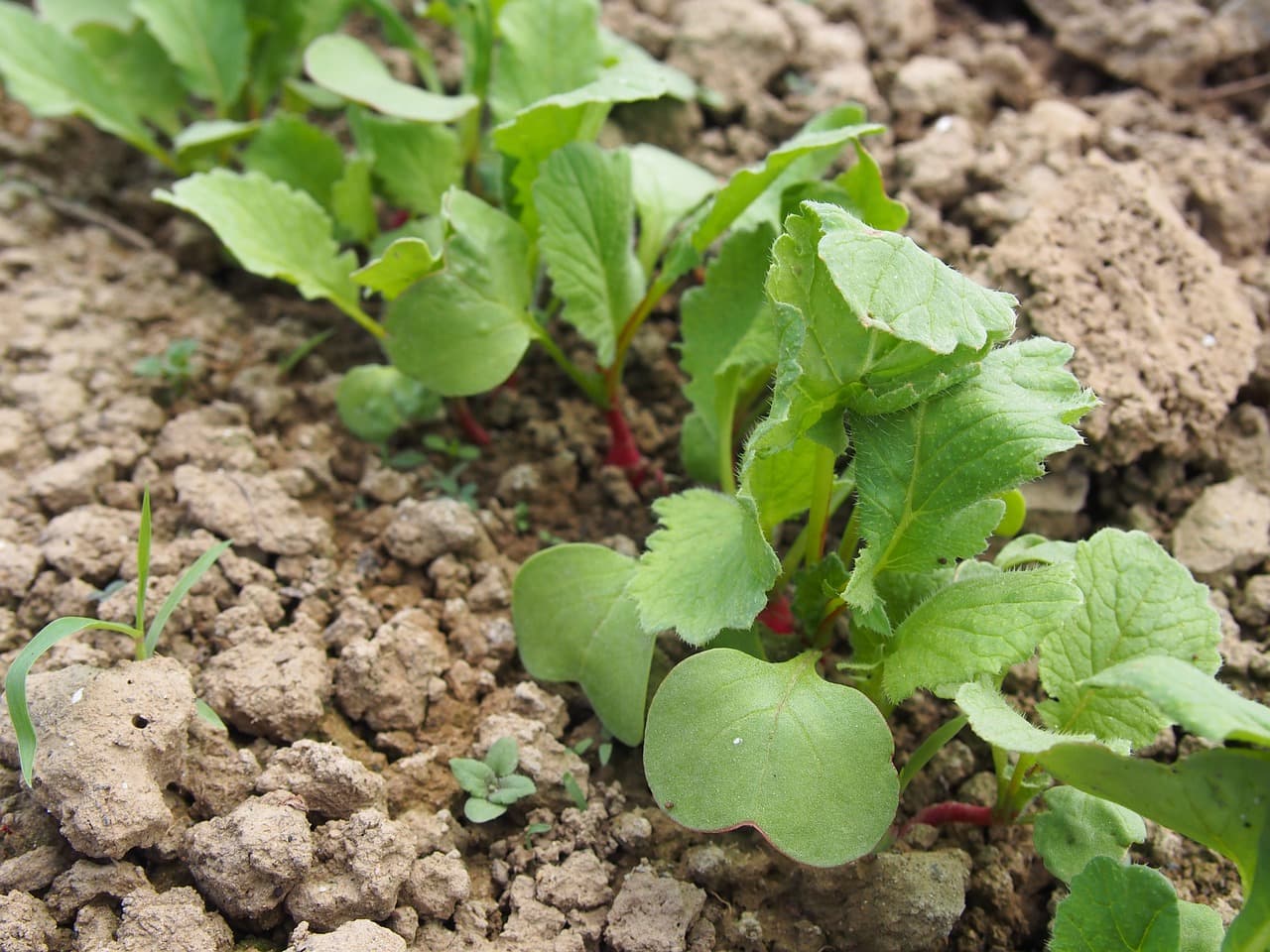
As soon as the sprouts emerge, they should be dusted with wood ash. This is done to prevent the leaves from being destroyed by flea beetles, the main scourge of plants in the cruciferous family.
Tip! Frequently dusting black radish leaves with wood ash will not only eliminate flea beetles but also other pests.
Care instructions
To ensure that black radishes develop large roots, they require proper care, especially when the plants are young. First, they need to be thinned if the seeds were sown densely. Additionally, the plants require watering, loosening, and fertilizing.
Watering and thinning
Black radish is a moisture-loving plant, so it requires generous watering. The size and flavor of the roots depend on the amount of moisture. Water the plant at least once a week. Adjust the soil moisture level according to rainfall.
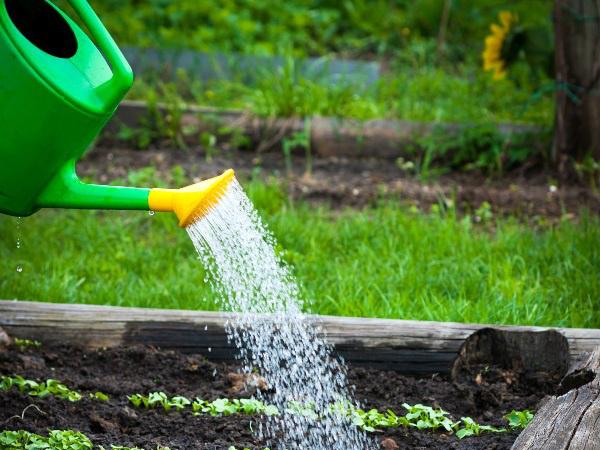
If the seeds weren't initially spaced properly and were planted more than 25-30 centimeters apart, they need to be thinned. Otherwise, the plants won't have enough space to develop and won't be able to produce large roots. This procedure is performed one week after the seeds emerge.
Loosening
After every watering or rain, the soil should be loosened. This procedure breaks up the crust and allows air to reach the root system. Loosening also removes weeds, which are especially dangerous when young plants are just beginning to develop.
Top dressing
When the above-ground portion of the radish reaches a height of 6-8 centimeters, apply the first fertilizer. To do this, prepare a solution of the following composition in a bucket of water:
- 20 grams of urea;
- 16 grams of potassium chloride;
- 60 grams of superphosphate.
After 30 days, the bushes are fertilized again. Before watering the bushes with fertilizer, the soil is moistened.
Protection from diseases and pests
It's easier to prevent diseases and pest infestations than to fight them later. To do this, follow these preventative measures:
- Observe crop rotation: do not plant black radish seeds after other plants of the Cruciferous family.
- Remove weeds in rows and between rows.
- Spray young plants with preparations that prevent the growth of harmful insects and pathogenic microflora. Folk remedies such as wormwood and celandine infusions can be used for this purpose.
- Water your plants properly: it is better to water them generously and infrequently than to water them superficially and every day.
As soon as young shoots emerge, they can be attacked by flea beetles, completely destroying the crops. To prevent this scourge, dust the crops with wood ash as soon as they emerge.
Harvesting and storage of crops
To ensure root vegetables store well over winter, don't rush to dig them up. Harvest them just before the first frost. Clean the roots, remove the tops, and dry them. Avoid washing vegetables intended for winter storage. If you want to harvest seeds, leave the radishes in the ground until next year.
Dried radishes are placed in boxes filled with sand. If you only have a small amount, you can use a refrigerator for storage. Some gardeners recommend dipping the radishes in a clay slurry. This creates a protective layer on the surface of the vegetables, preventing microorganisms from penetrating.
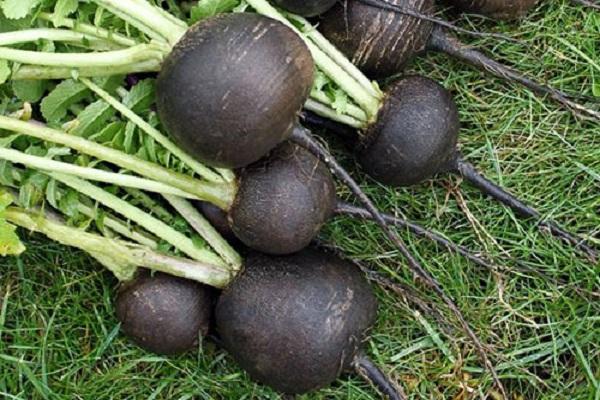 Important! Do not wash black radish roots intended for winter storage.
How to grow in Siberia and the Urals?
In regions with harsher climates, growing black radish presents no problems. The only difference is that in Siberia and the Urals, sowing occurs two weeks earlier. This is necessary because late-planted plants will not be able to develop large roots before the onset of frost. Caring for this vegetable in Siberia and the Urals is the same as in other regions.
Take a look Also
Possible problems
When growing black radish, a gardener may encounter some problems, such as:
- The cruciferous flea beetle destroys the leaves. To eliminate the problem and as a preventative measure, sprinkle the leaves with wood ash several times per season.
- The above-ground part of the plant is growing vigorously, but the underground part is not. This may be due to overfeeding with nitrogen fertilizers. The plant requires a comprehensive mineral fertilizer.
- The plant is bolting. This is due to early sowing of seeds.
- The root vegetables are growing small. This can happen for several reasons: lack of moisture, dense plantings, or insufficient fertilization.
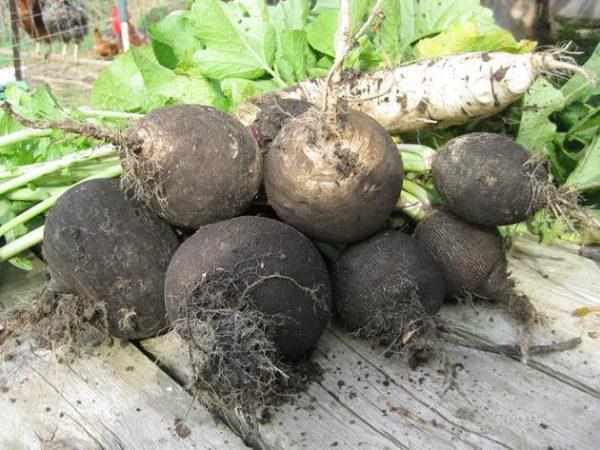
By eliminating the cause of the problem, the gardener will reap a bountiful harvest of root crops in the fall.
Reviews from experienced gardeners
According to gardeners who grow black radish, this vegetable is easy to care for, rarely susceptible to disease, and keeps well throughout the winter. Its juicy flesh is used as a source of vitamins and as a remedy for colds.
Lyudmila, 32 years old, Arkhangelsk region.
"I've been growing black radish in my garden for a long time. It doesn't require any special care. In winter, I treat my whole family like this: I cut off the top, make a hole, and pour honey into it. The next day, the healing liquid is ready. I give a teaspoon on an empty stomach, and within three days, the illness is gone."
Olga Andreevna, 59 years old, Moldova.
"I live in a warm climate, so I sow black radishes in mid-July, after I dig up the garlic. I dig them up before the frost, and they store well until mid-spring. I make various salads with them, as black radishes are a storehouse of nutrients that are essential during the winter and spring."
Related posts:
 The health benefits and contraindications of black radish
 The health benefits and contraindications of green Margilan radish
 Growing, planting, and caring for Margilan radish in open ground
 Descriptions and names of varieties and the best types of radish, planting and care
 The benefits and harms of Daikon radish for the human body, medicinal properties and contraindications
 Description of the Watermelon radish variety, planting and care, benefits and harms
 Red Meat radish benefits, salad recipes and medicinal uses
 Recipes for pickled radishes, with and without sterilization, for winter storage, and how to store salad