
- History of selection
- Description and characteristics of the variety
- The main advantages and disadvantages of watermelon radish
- The benefits and harms of culture
- The nuances of growing plants
- Soil preparation
- Rules for selecting seeds for planting
- The landing process
- Subtleties of care
- Top dressing
- Watering
- The influence of crop rotation
- How to protect watermelon radish from diseases and pests
- Harvesting and storage
- Scope of application
- Reviews
Many have heard of watermelon radish; it's prized in many countries worldwide for its flavor and rich nutritional content. However, in our country, this root vegetable remains a rarity; you won't find it at markets or stores. However, this doesn't stop gardeners from growing this amazing vegetable from seed in their gardens. Watermelon radish (also known as radish) can be used to prepare a variety of healthy dishes.
History of selection
The watermelon radish's native land is Europe, but it never gained popularity there. However, Americans came to appreciate this vegetable. It became ubiquitous in the United States. Even upscale restaurants enjoyed a wide variety of dishes featuring this amazing root vegetable. Watermelon radish was introduced to Russia at the beginning of the 21st century. Along with Europe, China and Japan also bred this vegetable, which is why the most popular varieties today are European, Chinese, and Japanese.
Description and characteristics of the variety
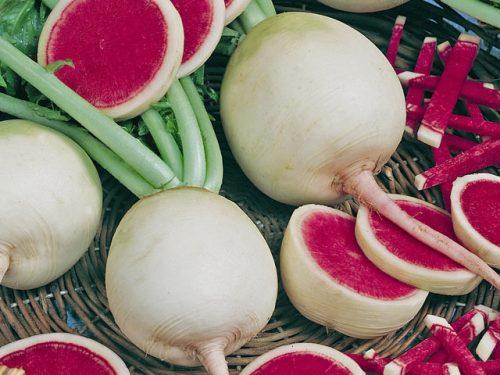
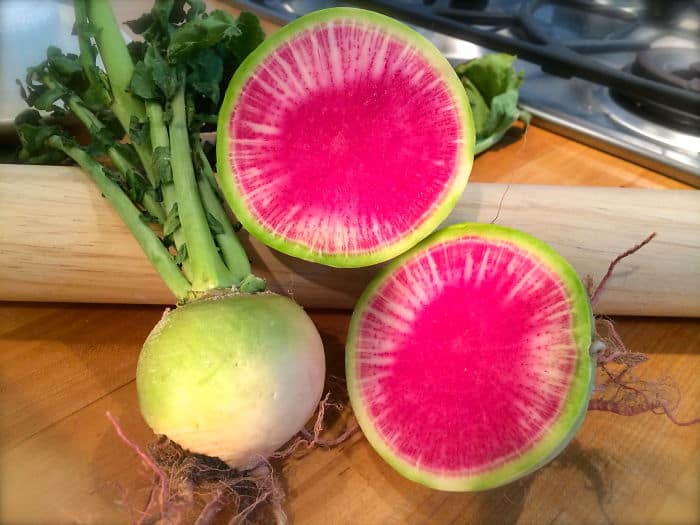
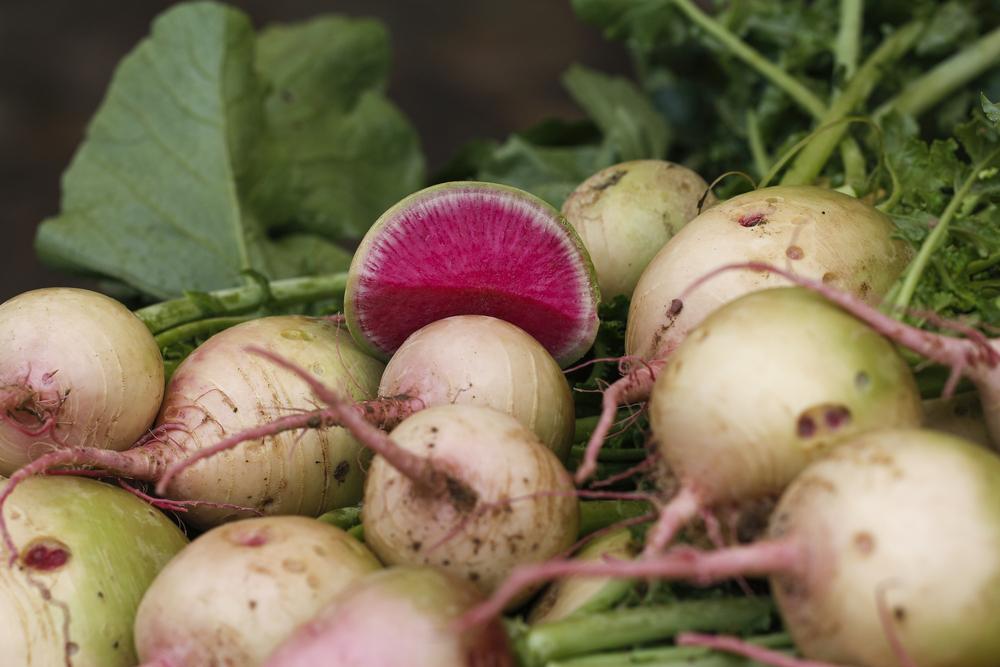
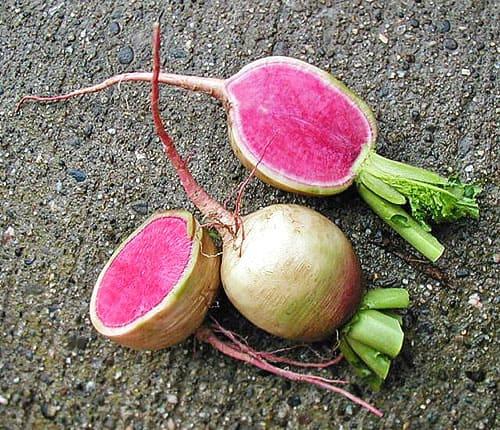
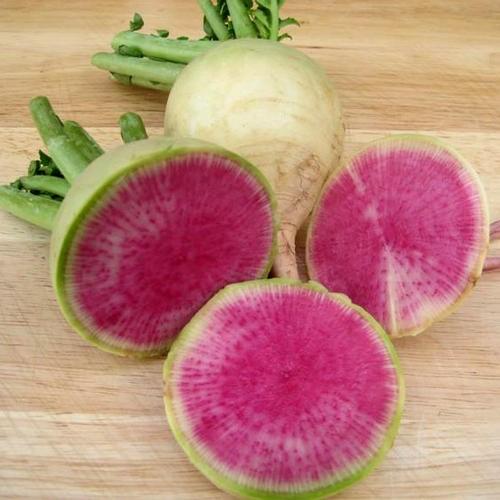
Watermelon radish is a hybrid bred from a natural selection. It differs from other varieties in its high yield and undemanding growing conditions. This plant is quite resistant to diseases and pests. It gets its name from its resemblance to a watermelon: the flesh is a rich red-pink hue, while the rind is white and green. The fruits are round or oblong.
The main characteristics of the variety are:
| Family | Cruciferous vegetables |
| Size | 6-8 cm |
| Form | Round, elongated or spindle-shaped |
| Pulp | Pink, scarlet, purple, yellow |
| Taste | Near the skin it is bitter and spicy, in the center of the pulp it is sweet |
| Skin | Dense, light green |
| Ripening period | 30 days from the moment the first shoots appear |
The main advantages and disadvantages of watermelon radish
Like any other agricultural crop, watermelon radish has a number of obvious advantages and some disadvantages.
| Advantages | Flaws |
| This variety shows consistently high yields. | Has a short shelf life |
| Has a short period of fruit ripening | Loses its taste when grown for a long time |
| Rarely affected by diseases and pests | Loses its appearance at room temperature |
| Suitable for transportation. |
The benefits and harms of culture
The health benefits of watermelon radish are undeniable. This is due to its numerous beneficial substances. These include:
- vitamins – A, B, C;
- acids – folic, nicotinic, salicylic;
- microelements – potassium, calcium, magnesium, iron, sodium, fluorine, phosphorus;
- dietary fiber;
- mustard oil;
- glycosides.
Thanks to such a rich composition, the use of watermelon radish will help:
- strengthen the immune system;
- normalize the functioning of the gastrointestinal tract;
- increase the body's resistance;
- improve appetite;
- lose excess weight;
- strengthen the body's vascular system.
However, people suffering from digestive diseases, especially gastritis and peptic ulcers in the acute stage, should not eat this root vegetable, despite its beneficial properties.
The nuances of growing plants
Soil preparation
To obtain a rich harvest of watermelon radish, it is worth paying close attention to soil preparation.
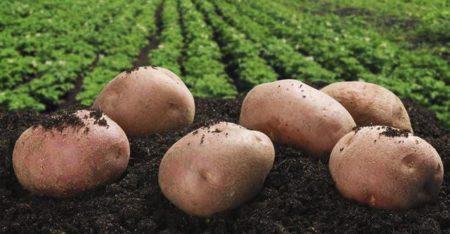
- It is better to plant the crop in places where potatoes, tomatoes or cucumbers were previously grown;
- The planting soil must be loose and nutritious, so immediately before sowing, it is important to dig the bed to the depth of a bayonet shovel, while adding compost fertilizer and a complex of mineral fertilizers consisting of phosphorus and potassium;
- the soil acidity for planting radishes should be at the level of 7 pH;
- The soil must be well warmed up before planting.
Rules for selecting seeds for planting
Selecting high-quality seed is directly related to the crop's yield, so skimping on this is not recommended. It's best to purchase seeds from specialized stores. When choosing seeds, it's recommended to choose large seeds. To promote germination, it's important to soak the seeds in cold water for 24 hours. This will also improve the juiciness of the resulting fruits.
The landing process
Watermelon radish is cold-hardy, so it can be planted as early as April. Sow the seeds in pre-dug holes 3-4 cm deep. Cover them with a layer of soil. Next, water the bed with warm water. You can also plant the seeds in furrows rather than holes; this will not affect the quality of the fruit. The key is to leave some space between the seeds; otherwise, the seedlings will be too dense and the fruit will be small. To speed up germination, you can cover the bed with plastic or a special covering material.
Subtleties of care
Top dressing
The main feeding with mineral fertilizers containing phosphorus and potassium should be carried out 6-7 days after the first shoots appear.Loosening the soil and removing weeds is of great importance in obtaining high-quality fruits.
Watering
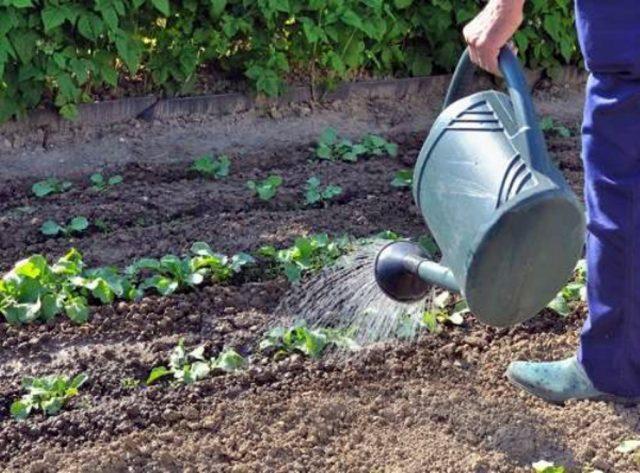
Watermelon radishes are very demanding when it comes to watering. Overdrying the soil leads to bolting, stunted fruit growth, excessive lignification of the root, and a loss of nutritional value and flavor. Therefore, it's essential to water the seedlings promptly but not excessively. Overwatering will also negatively impact the plant's quality, as the fruit may rot. Daily watering is only necessary in hot weather.
The influence of crop rotation
Agronomy experts recommend following crop rotation when planting fruit crops, which requires changing the planting location in the garden each year. Each crop has its own specific rule. Watermelon radishes should not be planted in areas previously occupied by radishes, carrots, cabbage, or beets.
The best place for this root vegetable would be an area where cucumbers, potatoes or legumes grew.
Another characteristic of watermelon radish is that excessive sunlight will promote excessive growth of the plant's stems, and the fruit will lag in development. Therefore, a shaded area of the garden should be chosen for planting.
How to protect watermelon radish from diseases and pests
If proper care is followed, problems usually don't arise. However, there are cases where the gardener's attentiveness and timely treatment can help avoid crop losses. Watermelon radishes can be affected by pests and certain diseases, including:
| Problem | Cause | How to determine | Prevention and treatment |
| Clubroot infection | Increased soil acidity | Deformation of fruits, the appearance of growths on them, hard pulp | Reduce soil acidity using slaked lime and dolomite flour. |
| Fungal diseases | Excess moisture in the soil | The appearance of rot on fruits | Reduce watering, regularly loosen the soil to improve the process of water evaporation. |
| Damage by cabbage fly and cruciferous flea beetles | Damaged foliage, drying out of the plant | Water the radish and spray the leaves with an infusion of water with garlic or onion peel. Use wood ash or tobacco dust. |
Harvesting and storage
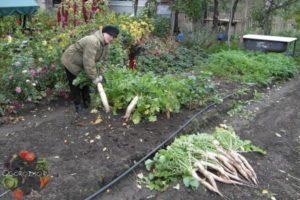
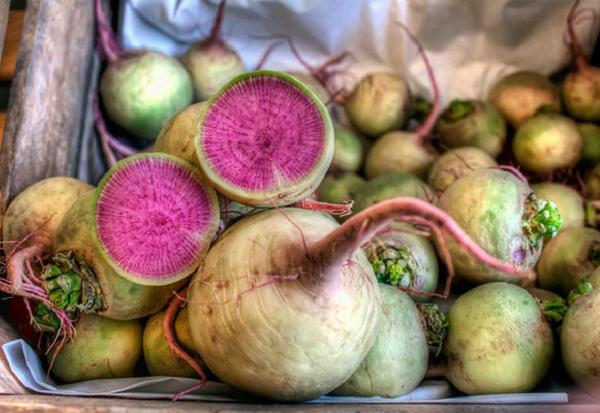
Since watermelon radishes can be harvested up to four times in a single season, only the last one should be used for storage. Although the root vegetable is resistant to low temperatures, it must be harvested before frost sets in. Dry weather will make digging the radishes much easier, and you'll be able to dry them immediately in the shade.
Damaged root vegetables are not suitable for storage, so the harvested crop must be carefully sorted. The tops should be trimmed off, leaving 2 cm before storing. radishes in storage boxesIt is recommended to treat root vegetables with ash or chalk. This will protect the crop from rot and bacteria.
Scope of application
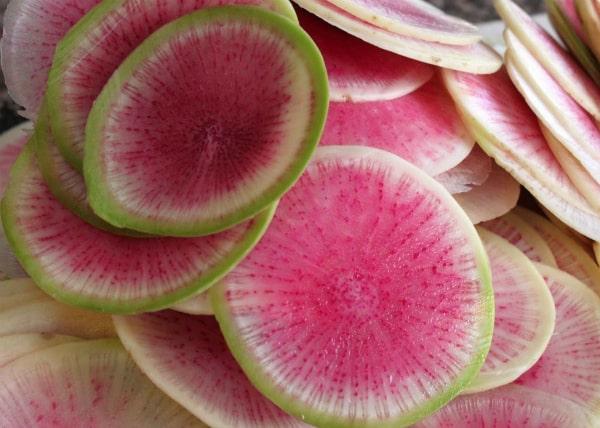
Watermelon radish is widely used in a wide variety of dishes. It's excellent as a side dish, and can be baked, stewed, or fried. A salad made with fresh radish is packed with vitamins. The unique appearance of thin radish slices makes it a great garnish for cocktails or other dishes.
The leaves of the plant are also used to prepare soups, okroshka or salads.
Reviews
Margarita Enova, 42 years old, Minsk.
I've been growing watermelon radish for many years. The seeds aren't sold everywhere, but you can find them if you want. I manage to harvest three times during the summer. I haven't had any problems growing them. The only thing is to water them regularly, otherwise the radish dries out inside or sprouts. The distinctive color attracts children. You can't get them to eat regular radishes, but this variety is a hit. I often prepare it in salads.
Ekaterina Orlova, 58 years old, Balakovo.
I value watermelon radish for its beneficial properties. It helps me improve my gastrointestinal tract. I recommend planting this wonderful plant in your garden. It's tasty, juicy, and stores well in the cellar.
Related posts:
 The benefits and harms of Daikon radish for the human body, medicinal properties and contraindications
 Growing, planting, and caring for Margilan radish in open ground
 The health benefits and contraindications of green Margilan radish
 How to store radishes for the winter in a cellar and refrigerator at home
 The health benefits and contraindications of black radish
 Descriptions and names of varieties and the best types of radish, planting and care
 Agricultural technology for growing and caring for radishes in open ground, when to plant
 Red Meat radish benefits, salad recipes and medicinal uses