
Radishes have been a staple vegetable for our people since time immemorial. They provide vitamins in early spring and winter. They boost immunity and enhance the flavor of dishes. Growing any radish is within the reach of any gardener; the key is to know how to care for it properly.
What types and varieties of radish are there?
There are many species and varieties of this healthy vegetable. They differ in appearance, taste, and some cultivation techniques. The choice of a particular species or variety will depend on both personal preference and soil conditions. However, all of them are relatively easy to grow.
The main varieties of radish found in domestic gardens and fields are:
- black;
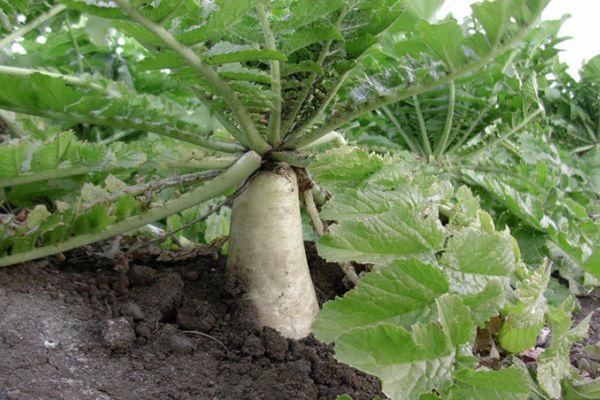
- white (Japanese);
- pink;
- green or Chinese.
Each of them is divided into varieties that differ in ripening time, yield and root size.
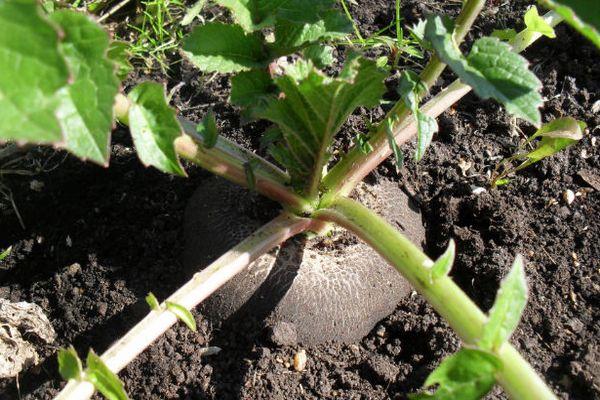
Varieties that are particularly popular:
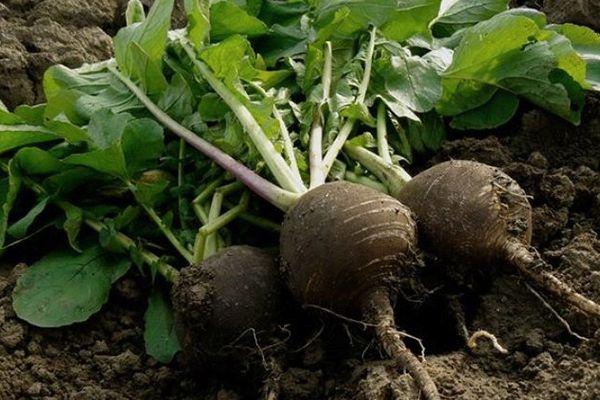
- Black radish: Winter round, Healer, Black radish, Winter.
- White or daikon: Autumn giant, Sudarushka, Winter round, May, Dragon, Elephant tusk, Minowase.
- Pink: Raspberry Moon.
- Green: Margilanskaya, Yuzhanka, Green goddess.
Winter varieties of this vegetable are grown primarily for winter storage and are harvested (especially black ones) just before frost sets in. At the same time, early varieties are an important source of vitamins in spring and early summer.
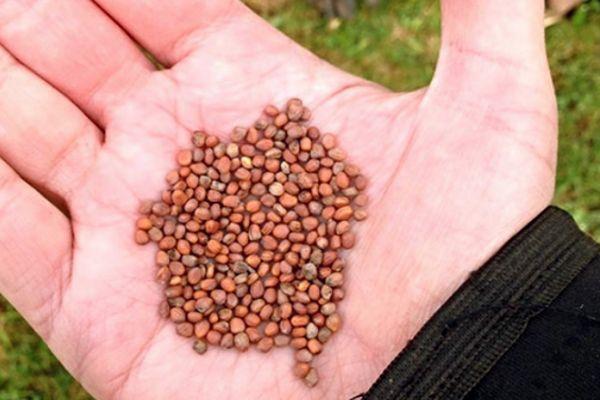
Preparing seeds for growing
Radish seeds have a fairly good germination rate. However, it's advisable to prepare them for sowing. The main method is soaking. It's best to soak them for a day or two in a mild (pink) solution of potassium permanganate.
What time is best to plant?
To determine the best time to plant radishes, it's important to consider some of this vegetable's characteristics. For example, in warm, dry weather combined with long daylight hours, radishes tend to flower and produce stems, resulting in a poor harvest. However, this perennial plant has typical brassica characteristics.

It is necessary to plant and sow radishes either in early spring, if we are talking about getting an early harvest, or closer to the end of summer, if we are planning save radishes for the winterIn some regions with unique climate conditions, different sowing times may be necessary. Therefore, the most favorable time for black radish in the central zone is between the third ten days of June and the third ten days of July.
Preparing the soil for planting
Despite the ease of this crop, its cultivation requires careful selection of the planting site and soil. The location should be well-lit—radishes dislike shade.
It's one of those crops that prefers fertile loam soils. It produces the highest yields in such soils. Therefore, the site should be well-lit, with a noticeable humus layer, or well (but not excessively) fertilized. The soil pH should be 6-7.
When preparing the site for planting, the soil is dug to a depth of one spade (30-3 cm) and fertilizer is added. Compost and wood ash are used as fertilizer. A couple of buckets of compost and a bucket of wood ash are sufficient. The fertilizer is mixed with the soil and the site is leveled.
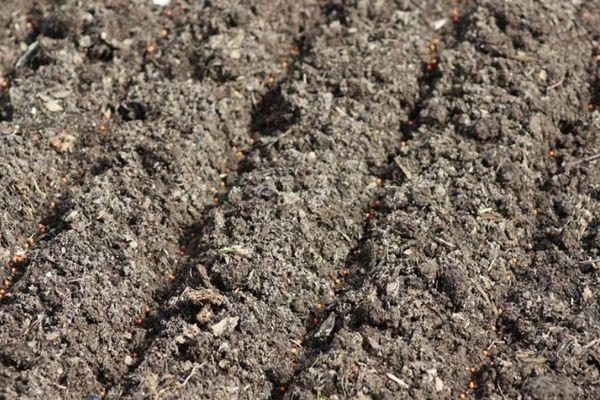
Immediately before sowing, the prepared plot is divided into rows. Rows are no more than 2 centimeters deep, and the distance between them is no less than 23 centimeters but no more than 40 centimeters.
Landing
As already noted, radishes are sown in open ground either in late summer or early spring. They can be grown from either seeds or seedlings. Seeds are sown in specially created furrows, spaced up to 10 centimeters apart. This spacing is then reduced to a minimum, and the seedlings are then thinned out if necessary.
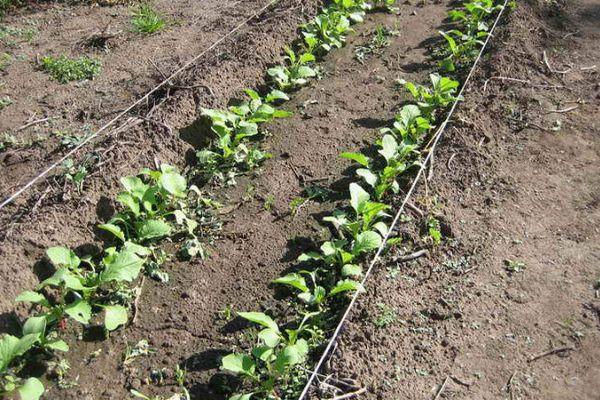
In more detail, the landing procedure looks like this:
- Before planting radishes, you need to make furrows of extremely shallow depth in the prepared area - no more than 2 centimeters.
- The distance between furrows varies from 10 to 20 centimeters, depending on whether thinning is planned.
- Seeds are also laid out more frequently if the seedlings are to be thinned.
- The filled furrows are watered generously.
- To prevent seedlings from being damaged by cruciferous flea beetles, the beds are sprinkled with ash.
Take a look Also
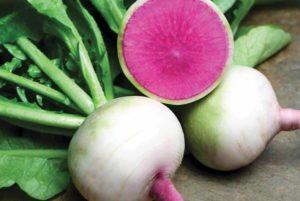
If radishes are planted early, the beds are additionally covered with film. This method will both protect the seedlings from frost and speed up the harvest.
How to care properly
Harvesting requires not only proper planting but also ongoing care until harvest. Specific agricultural practices apply to both seedlings and mature plants.
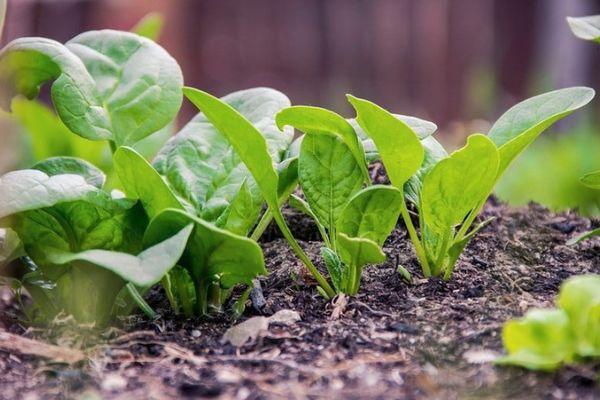
Thus, at the initial stage, before seedlings emerge, it is crucial to maintain high humidity in the bed. This promotes uniform sprouting within five days of sowing. High humidity is then maintained for another two weeks. Film is used to retain moisture.
The main agricultural techniques used in growing radishes:
- thinning;
- watering;
- top dressing;
- protection from pests and diseases.
The peculiarity of radish is that, compared to other crops, it requires less care.
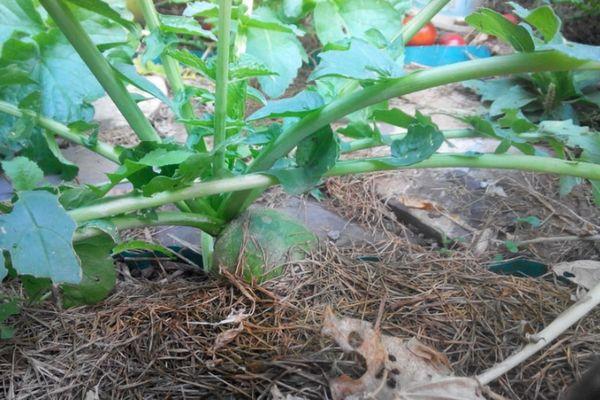
Thinning
Depending on the situation, thinning can be done once or several times during the period from germination to harvest. Most often, radishes are thinned twice.
The first time this happens is a week after the crop sprouts. The weakest and slowest-growing plants are selected and removed. This will create space for the stronger plants.
If the radishes are growing quite densely even after the first thinning, it's worth thinning them again before the roots begin to form. At this point, weaker plants are again identified. Thinning will allow the radishes to grow larger. Otherwise, if the bed is too dense, the harvest will consist of many very small roots.
Watering
The frequency of watering depends on the age of the plant. During the first period after sprouting, which lasts up to two weeks, the bed is watered almost daily, as the plant develops properly only in a high-humidity atmosphere.
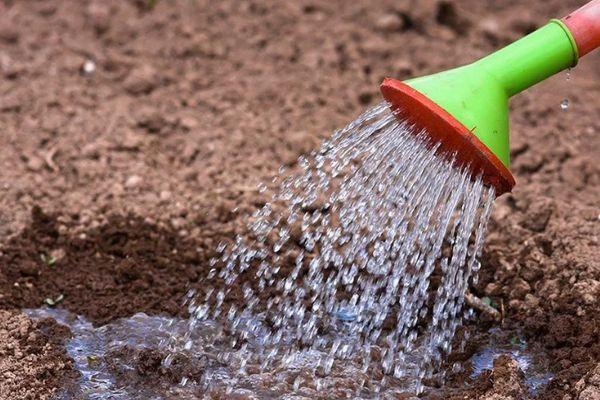
Later, the frequency of watering is reduced. But even when the plant reaches maturity, the soil should not be allowed to dry out. Therefore, watering is usually done up to once a week.
Dryness interferes with both the proper development of the plant, which begins to grow foliage and bloom, and the taste of the root vegetables. In dry soil, they become tough and bitter.
Top dressing
Radish must be fed twice per season:
- when the third leaf appears;
- at the beginning of crop formation.
Take a look Also

Nitrogen fertilizers are added to stimulate plant growth. The most common nitrogen fertilizer is ammonium nitrate, diluted with water at a ratio of 1 tablespoon per 10 liters. Ammonia and special mixtures are also used.
Protection
Main radish pest — a black cruciferous flea beetle that feeds on close relatives of this crop (for example, cabbage). To control it, wood and tobacco ash are sprinkled on the plant. Birch tar is another pest control method—it is effective against both fleas and slugs.
To combat certain diseases, infusions of specially selected herbs are used, which do not negatively impact the crop. These infusions are used in combination with fertilizing and watering.
Conclusion
Successfully growing radishes is within the reach of any gardener or farmer. The key is to sow them at the right time and correctly, and then remember to water them. Adequate moisture and the right planting timing are crucial for a successful harvest.
Radishes are planted either towards the end of summer or in early spring. Care should be taken to ensure the soil does not dry out. This allows for the growth of tasty, large root vegetables.
Related posts:
 Growing, planting, and caring for Margilan radish in open ground
 The benefits and harms of Daikon radish for the human body, medicinal properties and contraindications
 How to store radishes for the winter in a cellar and refrigerator at home
 The health benefits and contraindications of green Margilan radish
 Planting times and care guidelines for black radish in open ground
 Description of the Watermelon radish variety, planting and care, benefits and harms
 The health benefits and contraindications of black radish
 Red Meat radish benefits, salad recipes and medicinal uses