
- Composition and nutritional value
- Useful properties of Daikon
- General benefit
- How is it useful for women?
- How is it useful for men?
- Using Daikon
- In folk medicine
- In cosmetology
- In cooking
- In dietary nutrition
- Harmful effects of Daikon
- How to choose Japanese radish
- Growing Daikon in the Garden
- Collection and storage
Japanese white radish is no longer an exotic item on our shelves and has quickly become a favorite among healthy eaters. Why has the demand for daikon radish increased so much, and what are its health benefits and potential risks? Let's find out.
Composition and nutritional value
Japanese radish is highly prized by nutritionists for its high nutritional value, pleasant taste, and minimal calorie content. While fat-free, it provides a full supply of protein and carbohydrates for an adult.
In percentage terms, daikon pulp contains 22.6% protein and 77.4% carbohydrates. Per 100 grams, it contains 21 kcal.
Composition of white radish:
- vitamins A, E, PP, C, all B vitamins;
- pectin;
- carotene;
- fiber;
- enzymes;
- mineral substances;
- antioxidants.
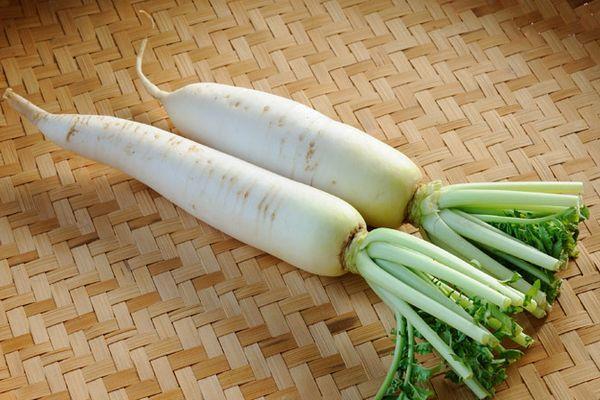 The advantage of this root vegetable is that it doesn't absorb hazardous substances from the soil. Regardless of where it's planted, radishes will remain environmentally friendly and safe for human health after harvesting.
Daikon's versatility is astonishing. It's used in salads, stews, soups, and much more. It's considered best eaten raw. The fruit is delicate and doesn't have a bitter aftertaste. Both the flesh and the tops are used for cooking. They're often used in salads, and can even be stewed or fried.
Useful properties of Daikon
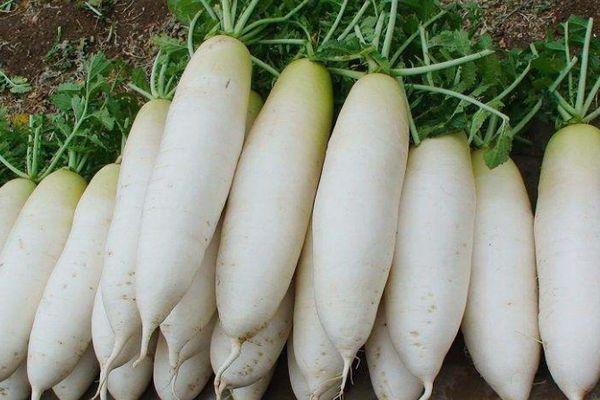
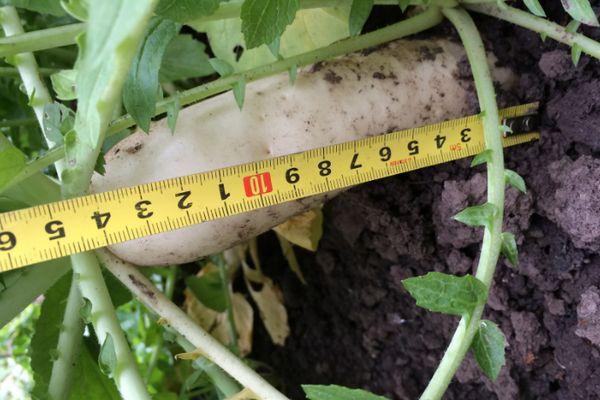
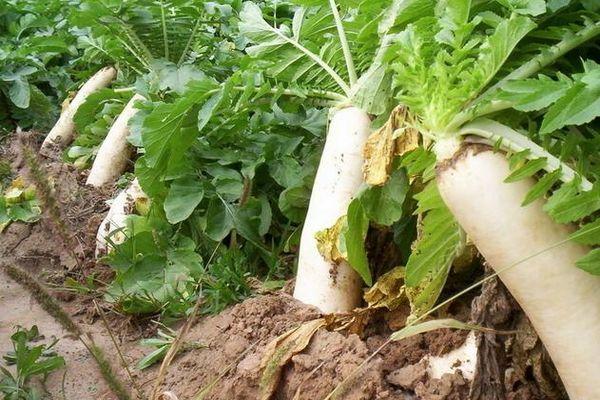
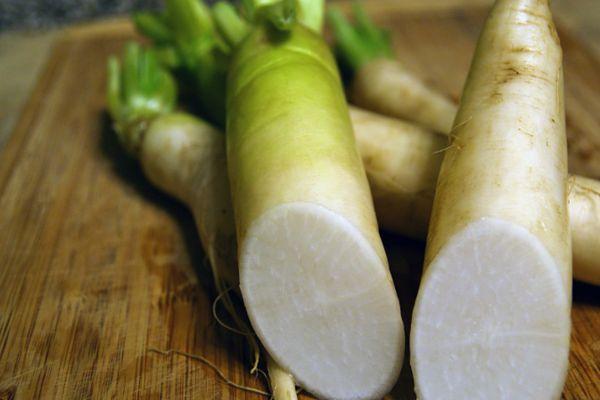
Daikon was developed in Japan from the common radish. Translated, the word means "big root," which isn't far from the truth, as radishes can reach 40 centimeters in length.
Daikon is extremely beneficial for health. Regular consumption helps cleanse the body and restore the functioning of internal systems. There is no age limit for consuming this vegetable.
General benefit
This vegetable is not only beneficial for human health, it also has a number of medicinal properties. What are the health benefits of radish?
- improves the functioning of the cardiovascular system and reduces swelling;
- due to the content of pectin, it reduces the level of glucose and cholesterol in the blood;
- increases brain activity, promotes proper formation of teeth and bones;
- has an antiseptic effect on the human body.
- thanks to the content of B vitamins, it stabilizes insulin production and normalizes the nervous and endocrine systems;
- prevents anemia;
- strengthens the immune system;
- normalizes the functioning of the gastrointestinal tract;
- helps fight excess weight;
- helps cleanse the liver and kidneys;
- helps cleanse the body of waste and toxins.
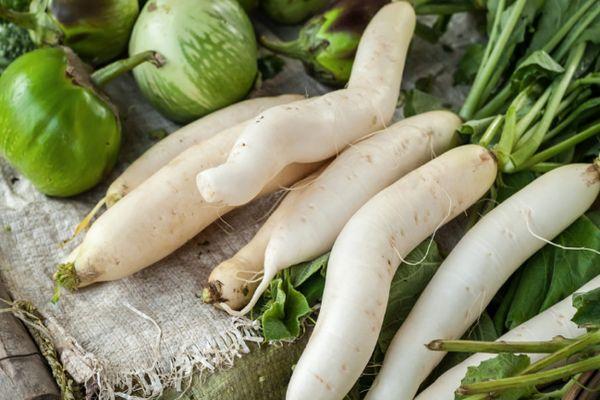
Daikon radish is recommended for older adults. It helps strengthen blood vessels, lower cholesterol levels, and promotes more effective treatment of atherosclerosis. Regular consumption of daikon radish can reduce the risk of cancer.
How is it useful for women?
For women, not only the root vegetable's health benefits are important, but also its impact on appearance. Regular consumption of radish helps relieve skin conditions such as acne, pustules, and blackheads, and promotes skin whitening.
For those looking to lose weight, white radish juice can help cleanse the body of toxins and improve metabolism. Furthermore, daikon's low calorie content allows for unlimited consumption without significant impact on your figure.
The large root is beneficial for women during pregnancy. It will help relieve swelling, restore calcium balance, and alleviate morning sickness. Pregnant women should consume the vegetable raw.
How is it useful for men?
Residents of the East have long discovered medicinal properties of white radish, which relate to men's health. Its use improves potency, prevents genitourinary diseases, and improves blood circulation in the genital area.
Daikon is also beneficial for men prone to obesity. It accelerates fat burning and helps men maintain their shape even with a sedentary lifestyle. It's ideal for those committed to a healthy lifestyle.
Using Daikon
White radish's uses aren't limited to cooking. The root vegetable is beneficial for the human body and offers even more benefits when eaten fresh. It's used in cosmetology and traditional medicine.
In folk medicine
For medicinal purposes, daikon should be consumed exclusively raw. Cooking the vegetable causes it to lose a significant portion of its beneficial properties, reducing its effectiveness.
The purposes of using Daikon can be the following:
- Daikon tops and juice are used as a laxative. To do this, pour about 20 grams of tops into a glass of boiling water. Let it steep for 40 minutes, covered. To treat constipation, take three times a day, 20 minutes after meals. Continue for up to three days. Strain before use. Overall, radish is a good remedy for normalizing bowel function.
- Grated pulp can be used to treat festering wounds. A poultice is made for this purpose. The grated pulp is applied to the affected area and secured with a bandage. The bandage is changed every 2-3 hours.
- Used to treat and prevent arrhythmia. The pulp is cut into pieces and sprinkled with sugar. The resulting juice should be drunk 1 tablespoon three times a day.
- Radish and honey salad can be used as a cold remedy. It has antibacterial and antiviral properties.
- To prevent and treat atherosclerosis, it is enough to add 150 g of radish to your diet per day.
- It is used to treat and prevent diabetes. Regardless of the recipe, eating fresh radish helps lower blood sugar levels thanks to its fructose content.
Take a look Also
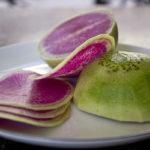
<img class="aligncenter size-full wp-image-26859" src="https://harvesthub.decorexpro.com/wp-content/uploads/2018/09/redka-dajkon-polza-i-vred-2.jpg" alt="Growing daikon» width=»600″ height=»400″ />
In cosmetology
Japanese radish is no less effective in cosmetology. Women use daikon for skin treatment, rejuvenation, and strengthening of nails and hair.
- Strengthening hair. Simply massage daikon juice into your scalp. This will help make your hair strong and healthy. After 6-7 treatments, your hair will acquire a healthy, natural shine and will begin to grow faster. This method also helps combat dandruff.
- Strengthening nails. Daikon contains a large amount of calcium, so even simply eating it will strengthen the nail plate and eliminate brittle and peeling nails.
- Acne and pimple treatment. To treat acne, simply wipe your face with a cloth soaked in Japanese radish juice. This remedy also helps remove age spots and lighten freckles. Daikon juice is considered one of the most effective remedies, helping to combat even the most severe cases.
In cooking
In recent years, daikon radish has become extremely popular worldwide, and healthy lifestyle enthusiasts especially love various dishes featuring this vegetable. They are distinguished by their pleasant taste and high energy value, especially when it comes to vitamin-rich salads. When preparing daikon radish, it's important to keep in mind that the bitterness is distributed unevenly throughout the root: the part near the top is more bitter.
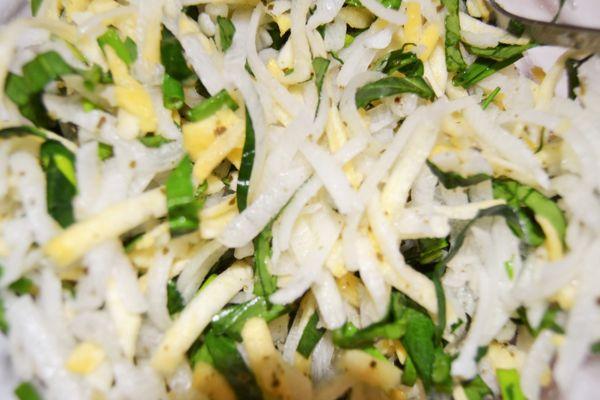
A simple recipe for a salad made with daikon and boiled chicken puree:
- 200 grams of Japanese radish;
- 150 grams of chicken fillet;
- 2 tomatoes;
- 2 cucumbers;
- mint, cilantro and basil.
Chop the greens. Cut the cucumbers, Japanese radish, and cucumbers into strips, and slice the tomatoes into thin wedges. Separate the chicken into strips. Use unsweetened yogurt for the dressing. After cooking, the salad retains its beneficial properties for only 40 minutes.
A wonderful side dish for a dietary holiday table:
- 350 g rare;
- 100 g bacon;
- 20 g olive oil for frying;
- spices and seasonings as desired;
- parsley.
Cut the radish into strips and fry over medium heat for 10 minutes, until translucent. Finally, add the diced bacon and sprinkle with parsley and spices. Serve hot.
In dietary nutrition
Japanese radish is a must-have when dieting. It's low in calories and high in fiber, and its high vitamin and mineral content makes it a healthy vegetable.
To cleanse the body of waste and toxins, experts recommend drinking half a glass of freshly squeezed daikon radish juice daily. This produces the following results:
- gastrointestinal tract cleansing;
- weight loss;
- removal of excess fluid from the body;
- lowering bad cholesterol levels.
Dietary use of daikon isn't limited to juices alone. You can also make vitamin-rich smoothies from daikon, cucumbers, and parsley, blended together.
Harmful effects of Daikon
Despite the extensive list of beneficial properties of oriental radish, daikon also has its own contraindications. Its fiber is quite dense and can irritate inflamed gastrointestinal tract walls. Therefore, radish should not be consumed if you have the following conditions:
- colitis;
- gastritis;
- flatulence;
- stomach ulcer.

Also, people with bile duct stones, individual intolerance, or thyroid dysfunction should not use it.
However, even a healthy person should know the limits when consuming Daikon, otherwise it can provoke the following symptoms:
- vomit;
- diarrhea;
- stomach pain;
- abdominal pain.
Several or even all of the symptoms may appear at once. Overeating doesn't require long to resolve; negative consequences become apparent almost immediately.
How to choose Japanese radish
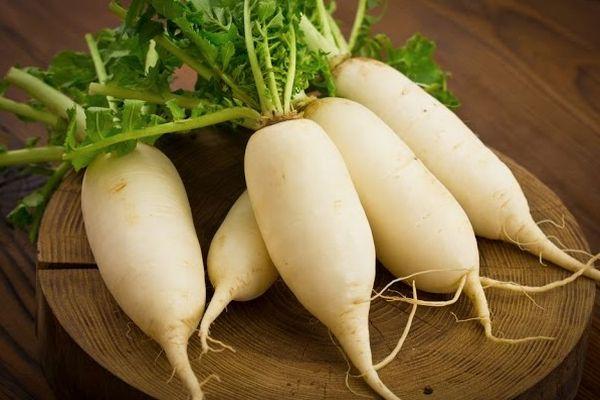
When purchasing Daikon, it is important to pay attention to the following details:
- the tops should be fresh and green;
- smooth surface without dents or damage;
- the radish should be heavy;
- dense and elastic pulp.
Growing Daikon in the Garden
While Daikon is grown on an industrial scale in Japan, there are a few rules to follow in your own garden:
- Dig up the area where you plan to plant Japanese radish—the root crop prefers loose soil.
- Planting daikon after cabbage is strictly prohibited. The crops may fail to germinate.
- The ideal time for planting is the end of June, beginning of July.
- All root vegetables love water, and the more abundant and regular the watering, the better the vegetable grows.
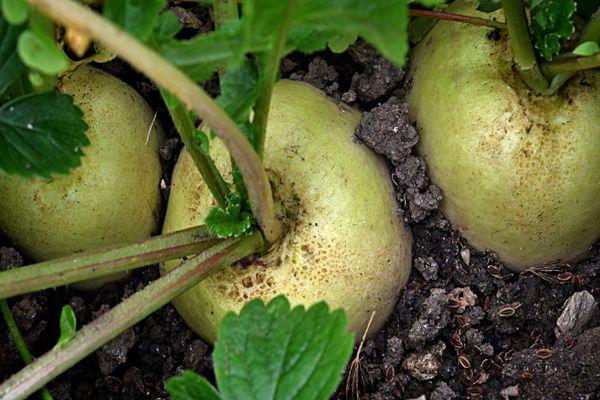 Daikon grows best in temperate climates. In such conditions, the root can reach 30-40 centimeters in size.
Collection and storage
Storing radishes Daikon can be stored in a basement or refrigerator. Maintaining the correct temperature is crucial; the optimal temperature for daikon is 5°C (41°F). Storage life depends largely on the variety of the root vegetable. On average, it's 1.5-2 months after harvest. Only whole, healthy daikon should be stored in the basement.
Radish is a tasty and healthy vegetable for people of all ages and sizes. It can be consumed for a variety of purposes: health, weight loss, cleansing, or simply for pleasure. Choose the most delicious daikon recipe and treat yourself to this delicious and healthy vegetable.
Related posts:
 TOP 10 recipes for preparing pickled daikon for the winter at home, storing the prepared ingredients
 The best varieties of daikon radish for winter storage and open ground, choosing seeds
 Timing of planting daikon in open ground, care and growing methods, after which to plant
 The health benefits and contraindications of green Margilan radish
 The health benefits and contraindications of black radish
 Descriptions and names of varieties and the best types of radish, planting and care
 Top 10 tips on how to grow and when to plant daikon in open ground in the Moscow region
 How to Grow Pink Daikon Radish: Its Health Benefits and Culinary Uses