
Growing daikon outdoors in the Moscow region presents a number of challenges due to the region's weather conditions. The Moscow region's climate differs from Japan, the vegetable's native land, so gardeners will face certain challenges. The keys to a great harvest include: consistent plant care, proper seed selection, soil preparation, and proper sowing times.
When to plant: daikon sowing dates in the Moscow region
There are two types of vegetable sowing in open ground: spring and summer. Experienced gardeners know when and how to plant to ensure long-lasting root vegetables. Late March to early April is the spring sowing period, while mid-July to early August is the summer time for planting daikon.
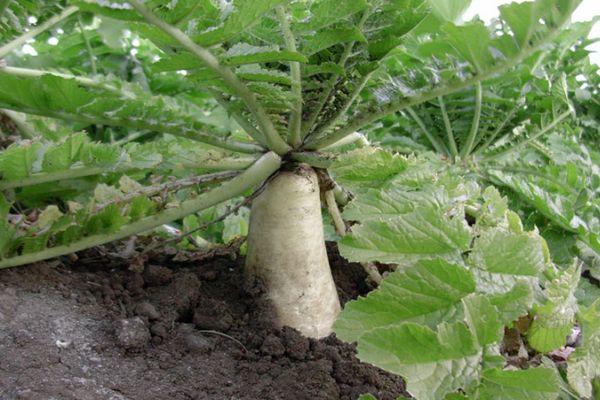
If planted in the spring, Japanese radishes will be ripe by May. The Moscow region's climate is characterized by late spring frosts. When temperatures drop to -10°C (14°F), cover the soil with agrofibre or protective film.
Important! Root vegetables planted in spring are not suitable for long-term storage. They should be eaten immediately after harvesting.
Summer is the best time to sow daikon. Daikon is a sun-loving plant. Increased daylight hours (more than 15 hours) will positively influence bolting. The first half of summer is the optimal time to sow the plant for seed. For a fall harvest, sow the vegetables in mid-July to early August. During this period, daylight hours are within the acceptable range. The root crop grows well, and flower stalks do not form. Daikon grown in summer can be stored for up to 5 months.
Selecting and preparing a site for sowing
Japanese radish prefers loose, light soil with a neutral pH. In shaded or partial shade areas, or in drafts, the plant grows poorly, and root formation is poor. The soil is prepared in the fall by digging it in and adding the following fertilizers:
- humus or compost (calculation - 1 kilogram of raw material per 1 square meter of area);
- ammonium sulfate – 10 grams – 1 square meter;
- potassium sulfide – 10 grams – 1 square meter;
- superphosphate – 40 grams respectively.
Take a look Also

Chalk, lime, and ash are substances that reduce soil acidity. They are scattered over the soil two weeks before applying the main fertilizers.
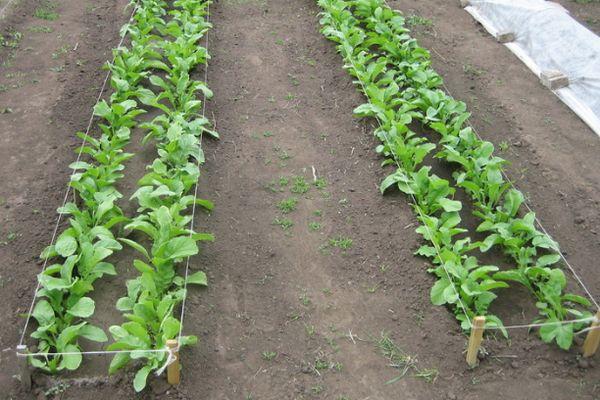
The soil is loosened to a depth of 1-2 spades. In a well-dug area, the daikon root is pushed deeper into the soil.
Summer sowing of daikon should be done away from cruciferous plants, as it belongs to that family. Optimal predecessors for daikon include:
- potato;
- zucchini and squash;
- greens (dill, sorrel, lettuce);
- onion;
- garlic;
- tomatoes;
- cucumbers;
- pumpkin.
Selecting seeds
There are different varieties of the plant: early, mid-season and late-ripening.
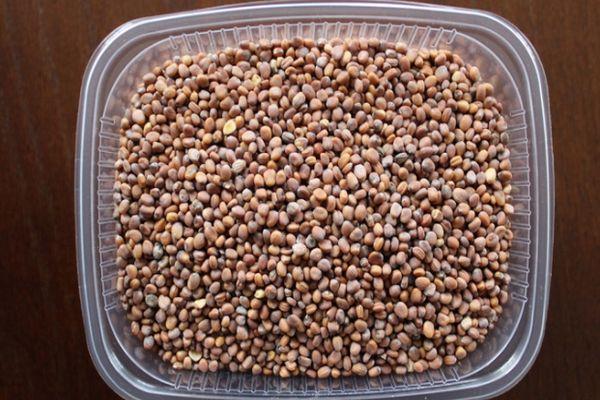
For the Moscow region, a suitable choice is varieties with a shorter growing season:
- Minovase is drought-resistant and not susceptible to temperature fluctuations. The growing season is 60 days. The root vegetable measures 40-50 centimeters in length;
- Big Bull is cold-resistant and moisture-tolerant. Its maturity period is identical to that of Minowase;
- Nerima – intended for canning. The crop can be harvested 65 days after germination;
- Ninengo – tolerates temperature drops well and is resistant to fungal diseases;
- Russian Size – This variety ranks second in early maturity, maturing in 50 days. It's moderately spicy, not crumbly, and juicy, producing a good yield.
- Miyashige has a vegetation period of 70 days;
- Minowase Summercross is the leader in terms of maturity time and root weight, with 40 days and 4 kilograms, respectively. The hybrid is drought-resistant and tolerates changing weather conditions.
Planting daikon in open ground
A contrast bath will increase the seed germination rate. It's recommended to first soak the daikon in hot water (up to 55 degrees Celsius) for a few minutes, then in ice water. Refrigerate the seeds for several hours. Specialty stores sell pre-treated, dyed seeds. These seeds don't require disinfection.
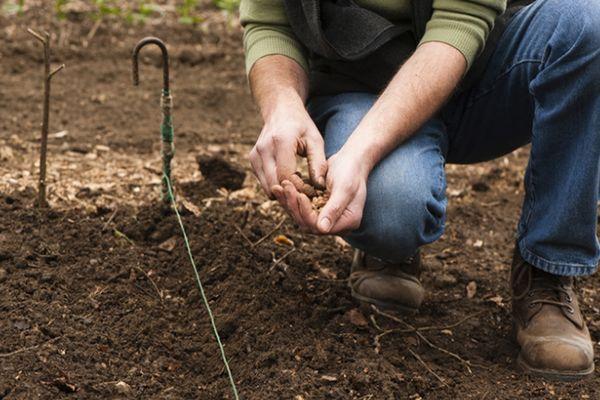
The plant is planted in open ground in two ways:
- Make furrows 3-4 centimeters deep and moisten them. The distance between them is 60 centimeters, and between plants – 20 centimeters;
- Using a hoe or auger, make holes 3-4 centimeters deep, spaced 25 centimeters apart, and add compost to the bottom of the hole.
Sprinkle the seeds with soil combined with ash and mulch with peat.
Daikon care instructions
If you follow basic vegetable care guidelines, including regular watering, constant weeding, fertilization, and pest and disease control, you'll reap a bountiful harvest. Japanese radish is easy to grow and doesn't require excessive care.
Watering
Vegetables should be watered moderately, not with cold water. Insufficient moisture will negatively impact the taste of the root vegetables, causing the skin to become rough and cracked. Overwatering can lead to diseases such as gray mold and bacterial slime. Water the plant every 5 days. After each watering, loosen the soil and apply mulch.
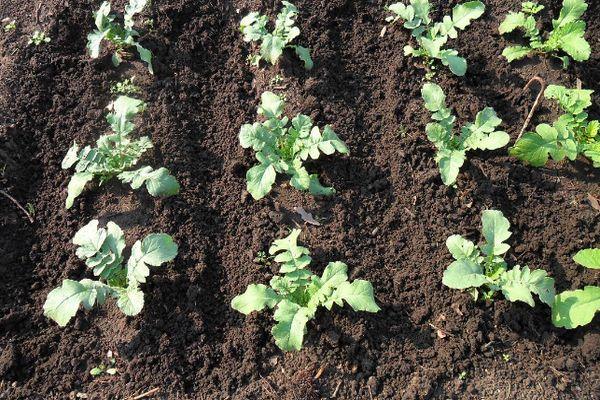
During rainy periods, stop watering. During dry periods, resume watering and increase the frequency (every other day). Water in the evening. The following morning, mulch and loosen the soil.
Weeding
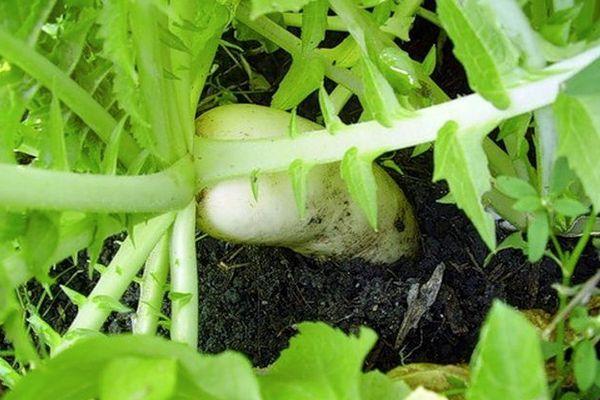
Weeding should be done as needed to remove weeds and loosen the soil. Daikon requires regular hilling. This prevents bitterness in the root vegetable. Weeds inhibit the growth of Japanese radishes and encourage the spread of diseases. Weeding should be done both within the rows and between them.
Fertilizers
Garden crops don't require fertilizer if the soil is fertile. Poor soil is enriched in three stages:
- first, urea is added (calculation per 1 bucket of water – 25 grams of fertilizer);
- the second - complex fertilizer is added to the soil in the middle of the daikon growing season;
- final - at the end of root crop formation, enrich with potassium-phosphorus composition.
Diseases
The occurrence of diseases is associated with irregular or abundant watering, and unsystematic care of plants.
Daikon is susceptible to the following types of diseases:
- gray mold;
- mucous bacteriosis;
- blackleg;
- mosaic;
- keel;
- vascular bacteriosis.
Take a look Also
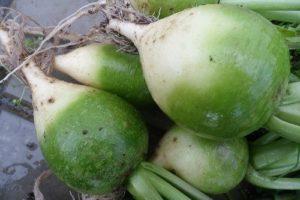
Taking measures, such as adding certain preparations, helps eliminate the source of the disease. Wood ash is effective in reducing the incidence of gray mold and blackleg.
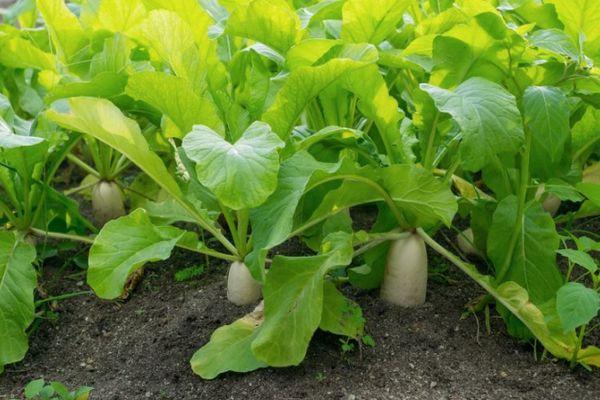
Pests
The main pests that damage crops and eat roots and leaves are:
- garden moth;
- rape blossom beetle and mite;
- cruciferous flea beetle, aphid;
- slugs;
- cabbage bug and fly.
To combat insects, it is recommended to use insecticides and folk remedies, such as ash and red pepper infusion. Hot weather encourages the proliferation of flea beetles, which disappear with the onset of autumn.
Harvesting and storage
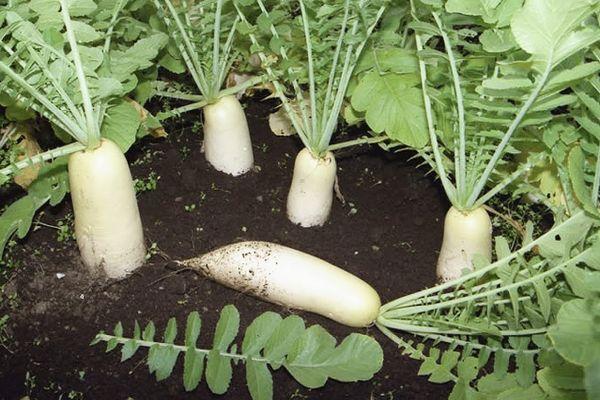
Depending on the plant variety chosen, harvesting time varies between 40 and 70 days. If the soil is loose, Japanese radishes can be easily pulled by hand. If difficulties arise in removing the vegetable, you can use available gardening tools.
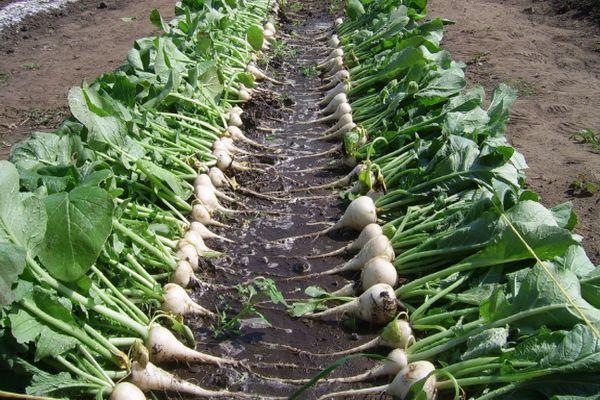 Important! To avoid damaging the root vegetable, use a pitchfork or shovel when digging! The daikon will remain intact and maintain its marketable appearance.
At a temperature of +5°C, the plant can be stored for 5 months. Boxes of Japanese radishes, sprinkled with sand, are placed in a basement or cellar.
The vegetable is eaten fresh, in salads, and used for drying and canning. With proper cultivation practices, daikon will reward you with an excellent autumn harvest.
Related posts:
 TOP 10 recipes for preparing pickled daikon for the winter at home, storing the prepared ingredients
 Timing of planting daikon in open ground, care and growing methods, after which to plant
 The benefits and harms of Daikon radish for the human body, medicinal properties and contraindications
 Tips on when to harvest daikon radish for winter storage
 How to Grow Pink Daikon Radish: Its Health Benefits and Culinary Uses
 Description of daikon Sasha, care instructions, planting time, and yield
 The best varieties of daikon radish for winter storage and open ground, choosing seeds
 How to propagate and grow peas, cultivation technology, and care in open ground