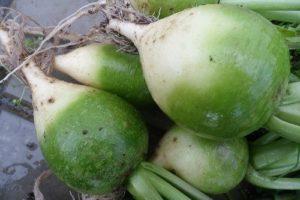
Daikon radish is a fairly popular vegetable in Japan, eaten there like potatoes in Russia. In Russia, this root vegetable has only recently gained popularity; it's rich in vitamins and nutrients. Learn about the health benefits of radish and which varieties of daikon radish are grown in Russia in this article.
Classification of varieties
Radish is classified according to the following principles:
- Depending on how deep the vegetable is buried in the ground, some radish varieties are buried one-third of the way, while others are fully or half-buried.
- By the shape and size of the radish.
- Based on harvesting time and duration of the crop's growing season.
- Based on soil characteristics. There are varieties of daikon that are picky about soil, and others that grow even in clay.
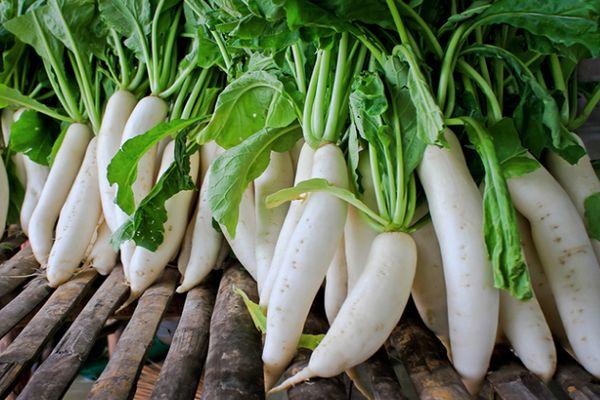
Be aware that digging soft soil for planting root vegetables can be quite difficult. Experienced gardeners recommend using a soil auger for this purpose, as hard soil can slow down plant growth.
Daikon varieties according to soil classification
To grow a high-quality harvest, you need to consider the main types and characteristics of radishes:
- Kameido. Root vegetables of this group thrive in sandy soil. Kameido radishes are fifteen centimeters long and five centimeters in diameter. Their small size allows them to absorb sufficient nutrients. Both the fruits and leaves of Kameido radishes are edible.
- Shogoin. This species has a round shape and is twenty centimeters long. This group of radishes takes about three months to mature. If your garden has heavy soil, then I need to plant daikon seeds, such as Snow White, Sasha, Pink Glitter.
- Nerima. This radish is shaped like a white pear. It takes 100 days to mature.
- Shiroagari. Grown exclusively in clay soils. The vegetable is cylindrical in shape, with the fruit rising two-thirds above the ground. The root is thicker at the base, which helps the fruit break through the soil.
- Miyashige. This variety is suitable for open, fertile soil. The root of this group grows up to sixty centimeters long, with the lower part half buried in the ground.
- Ninengo. This vegetable is white and green. The radish grows to sixty centimeters in length and seven centimeters in diameter. The best varieties are considered to be Omni and Dragon's Tooth, which are frost-resistant.
- Minowasi. This group of radishes is distinguished by its size: with a length of sixty centimeters, the root girth is ten centimeters. Minowasi ripens quickly, but does not tolerate low temperatures.

Groups of daikon varieties by climate type
Daikon radish thrives in a humid, warm climate. The vegetable's native land is Japan, whose climate differs significantly from temperate latitudes. Let's look at several varieties, each with its own distinct ripening time.
- Hatsu. This variety is an early-ripening one. The plant tolerates hot weather well and is sown in summer. Ripening takes two months.
- Fiyu. This variety isn't particularly popular in Russia, as it's only suitable for warm climates without any frost.
- Haru. This variety should be sown in spring, but is suitable for year-round planting. It is resistant to stemming. It is best suited for temperate climates; if Haru is planted in early spring, the harvest can be harvested by mid-May. Subsequent sowing can be repeated in August and again when warmer weather returns in winter.
- Aki. Vegetables in this group are planted in late summer. It is considered a late-season crop. It is large in size and produces an impressive harvest.
Keep in mind that daikon is best planted after radishes, greens, onions, and lettuce.
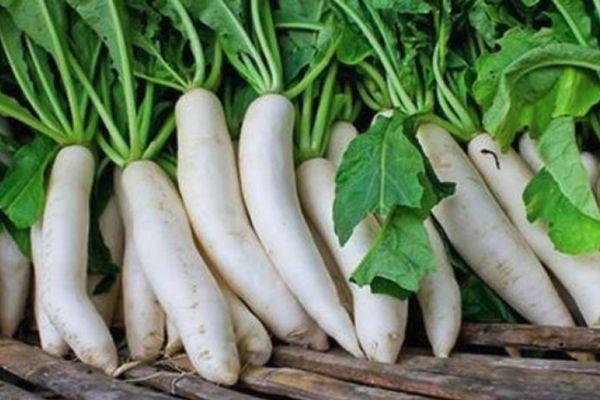
The best varieties from domestic breeders by ripening time
To obtain a high-quality radish harvest, it's important to consider the climate of our diverse country. Varieties suitable for Siberia don't grow well in the Moscow region, and vice versa. A special daikon variety has also been developed for temperate climates, which thrive in a moderate climate without extreme temperature fluctuations.
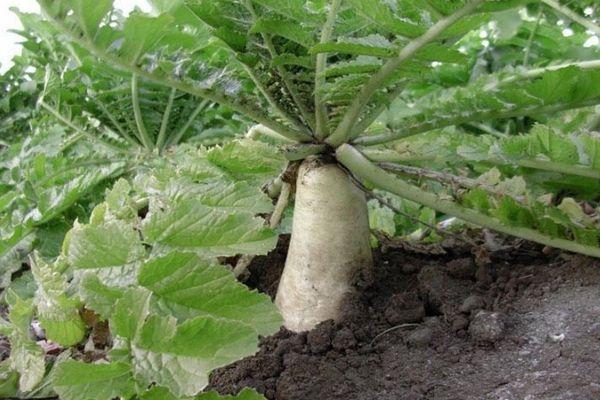
Early maturing
Early radish varieties mature on average 45 days after planting. These include the following varieties:
- Minovasi. A juicy, dense, sweet root vegetable that ripens in two and a half months and stores well in the pantry. Its shape resembles a cylinder.
- Misato Green. This variety has a greenish-white color, with roots measuring twelve centimeters long. This vegetable is often grown for salads, as it doesn't have a long shelf life.
- Danish Prince. It's distinguished by its high yield. The fruit has pink skin, is ten centimeters long, and has white, sweet flesh. This variety's advantage is its disease resistance.
- Red Samurai. Each fruit reaches a third of a meter in length, but weighs an astonishing four kilograms. This variety has pinkish-white flesh and white skin.
- Sasha. This is the most popular type of plant. It is resistant to temperature fluctuations, has a sweet-spicy flavor, and thin skin. The vegetable is considered a hybrid.
- Snow White. Can be stored for a long time – about six months. This radish has a greenish color, and the flesh is soft and juicy.
- Russian size. The vegetable is juicy and crispy, distinguished by its thin white skin. It's half a meter long and twelve centimeters in diameter. This hybrid weighs up to two kilograms.
Take a look Also

Early maturing varieties are best grown in warm climates and planted in mid-spring.
Mid-season
There are four varieties, the ripening period of which is seventy days:
- Dubinushka. It's not particularly long, but the weight of a single root is a pleasant surprise: it can reach up to one and a half kilograms. It has a pleasant, slightly sweet flavor.
- A large bull. Each vegetable weighs up to three kilograms. The fruits are resistant to temperature fluctuations and have a long shelf life.
- Dragon. The plant is cylindrical, half a meter long, and weighs one kilogram. It has a sweet taste and can be combined with other ingredients in salads.
- Emperor. Renowned for its disease resistance, it has an icicle shape and a sweet flavor.
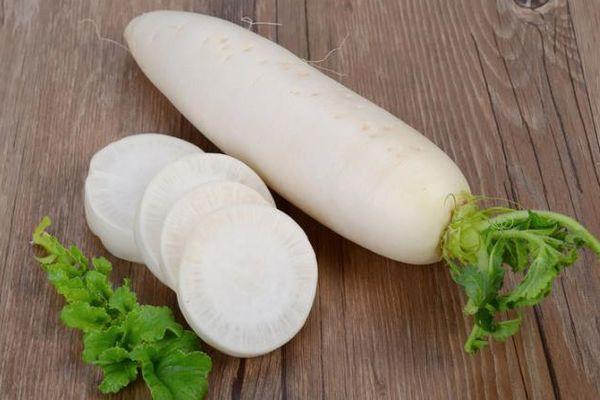
Late-ripening
If you grow radishes For long-term winter storage, varieties with a 100-day ripening period are best. These radishes are large and prefer a moderate climate to thrive. These varieties include:
- Elephant tusk. It is very long, no more than 50 centimeters, and weighs only 500 grams.
- Japanese long. It has a long shelf life, and the fruit weighs up to three kilograms.
- Nerima. The root vegetable is white and reaches 65 centimeters in length.
These varieties are planted in early spring, otherwise the vegetable will not delight you with a high yield.
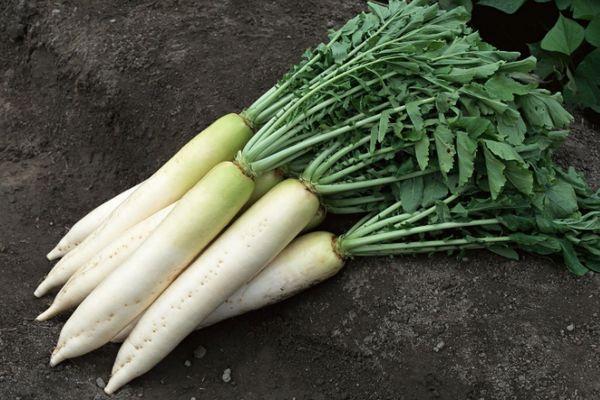
How to properly store daikon
The harvested crop must be stored under specific conditions. The first step to proper preservation is drying the vegetables. To do this, the harvested roots are laid out in the sun, spaced slightly apart. After this, any dirt and dust is removed, and the side roots are trimmed. The lower roots are then trimmed back by three centimeters, and the fruits are packaged in boxes.
The boxes are best stored in a dark, dry cellar. Daikon radishes don't like excessive moisture, as this will cause them to spoil. storing radishes in the freezer, but to do this, the vegetable must be completely peeled.
Related posts:
 The benefits and harms of Daikon radish for the human body, medicinal properties and contraindications
 Descriptions and names of varieties and the best types of radish, planting and care
 Growing, planting, and caring for Margilan radish in open ground
 The health benefits and contraindications of green Margilan radish
 The health benefits and contraindications of black radish
 Description of the best pepper varieties for greenhouses and open ground in 2025
 Description of the Watermelon radish variety, planting and care, benefits and harms
 50 Best Carrot Varieties with Descriptions and Characteristics
Take a look Also