
Since there are so many varieties and types of radishes available today, the question of when to harvest this crop is a pressing one. When harvested early, the roots are not yet ripe and large enough. If harvested late, they become tough and hollow. While carrots and beets can remain ripe in the soil for quite a long time, radishes require a limited harvest time. So when should you harvest radishes to ensure they retain all their valuable qualities?
When to harvest black, white, and red radishes
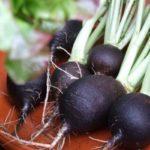
Black radish is a favorite and not grown by all vegetable growers due to its pungent, bitter taste. However, it is used as a folk remedy for upper respiratory tract infections. Some grow it for this purpose, which is why questions arise about the sowing and harvesting times for this seemingly unassuming crop.
Harvesting time is directly related to the variety and sowing time. Early varieties are used for summer salads, while mid-season and late varieties, also known as winter varieties, are used for storage. The average growing season is 60 to 90 days.
When sown in late June, early and mid-season varieties are harvested in September, while late varieties are harvested in early October, before frost. Early and mid-season varieties include summer radish, which boasts a rainbow of colors, producing red, purple, and white roots. Late varieties are traditionally black, have dense skin and flesh, and store well.
It's important to harvest ripe root vegetables before frost sets in. When the soil freezes, radishes lose their flavor, become limp, and spoil.
Take a look Also
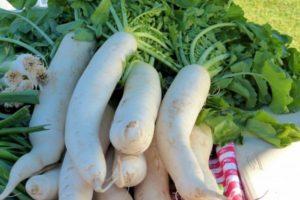
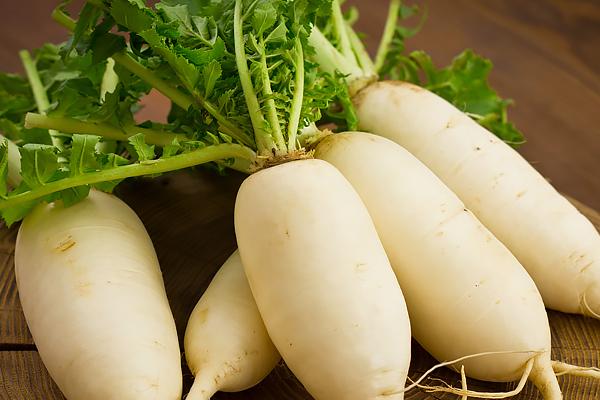
Summer harvest
Summer varieties are distinguished by their juiciness, tender flesh, and slightly spicy flavor. They are healthy and in demand. That's why vegetable growers, eager for an early harvest, sow seeds in greenhouses as early as late April. By the end of May, white, green, or red root vegetables are ready to eat.
They are harvested in several stages, as they ripen and are needed. In dry weather, the radishes are simply pulled out. In rainy weather, they are dug up to protect the skin. Then the tops and roots are trimmed and used for salads.
Summer varieties aren't designed for storage, so they retain their nutritional value for about a week at room temperature, and can last up to a month in the refrigerator, wrapped in plastic wrap. However, when growing them in your own garden, this isn't necessary; it's much easier to pick the root vegetables straight from the garden.
Harvesting autumn varieties
Mid-season varieties are suitable for salads and short-term storage. They are generally not as tender as early varieties, but their pungency and bitterness give them a piquant flavor. These varieties are planted in late June, and the harvest ripens in September, as the growing season averages 80 days.
The root vegetables are dug up in one go, one at a time. The tops and leaves are cut off, the soil is removed, and they are used for their intended purpose or stored. Before storing them in a storage cellar, they are lightly dried in the shade to prevent them from rotting.
The shelf life is limited to 1.5 months.
Autumn varieties are layered in boxes, sprinkled with sand, and stored in the cellar. They are used as needed, and their condition is checked periodically, as mid-season varieties won't keep until spring due to their poor shelf life.
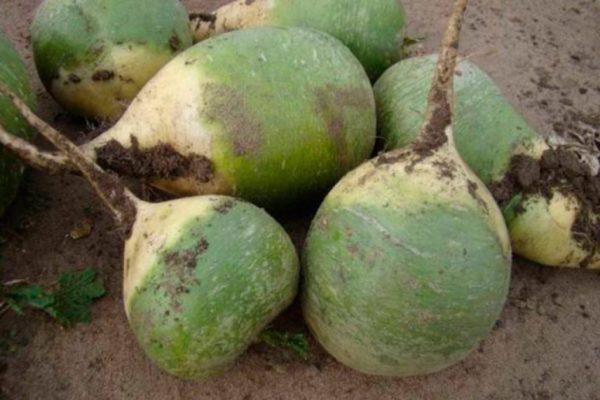 Radish is sown in early spring or midsummer, as roots can develop with 10-12 hours of daylight. If daylight hours are longer, the plant begins to flower, producing a flower stalk.
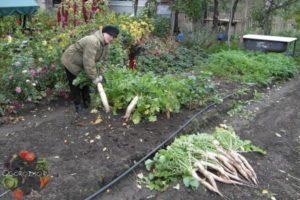
Harvesting winter varieties
Late-season black radishes, as well as daikon, are sown in late June and harvested in early October, as they require up to 100 days to ripen. It's important to time the harvest correctly. Based on planting dates and weather conditions, radishes are harvested:
- in the northern regions - from mid-September to early November;
- in the middle zone - in mid-October;
- in southern latitudes - in the last days of October.
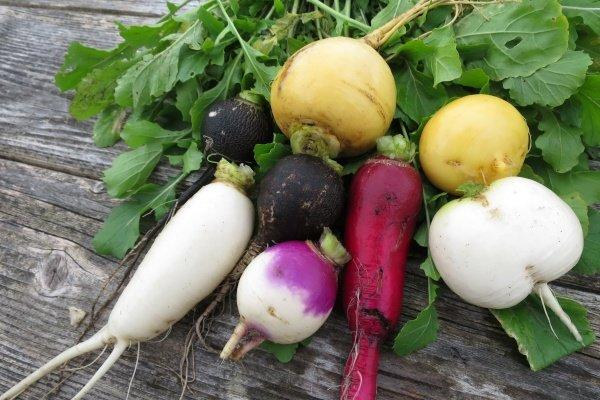
Don't rush to harvest unripe root vegetables. They are smaller and store less well. Over time, they become limp and flabby. Avoid storing damaged or ripening root vegetables.
The later the harvest, the higher the nutrient concentration in the root crop, increasing its shelf life and disease resistance.
Preparation for storage
During harvest, you can sort large, high-quality fruits immediately, discarding any that are small, damaged, or frost-damaged. When removing the tops and long roots, it's important not to damage the root vegetables, as they rot and spoil quickly in this condition.
Before storing in the cellar, the harvest can be covered with soil and left as is until the storage area is prepared. The day before, a second sorting is performed to ensure that no damaged or diseased radishes end up in storage, otherwise the entire harvest could be damaged.
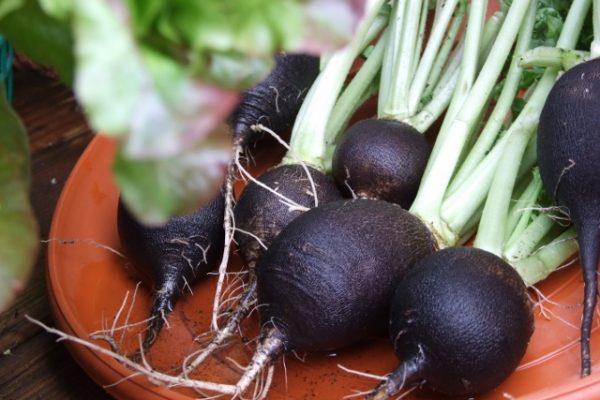
Storage in the autumn-winter period
The basic rules for storing hot vegetables are as follows:
- For the winter, radishes are placed in rows in boxes with holes and sprinkled with damp sand to maintain juiciness.
- Storage conditions include 85% humidity and a temperature of +3, +4 C.
- The shelf life is 9 months if all sanitary standards are observed.
- Radishes also thrive with other vegetables, coexisting well with carrots and potatoes. They are stored in bins one meter high in a single pile or laid out in rows in boxes.
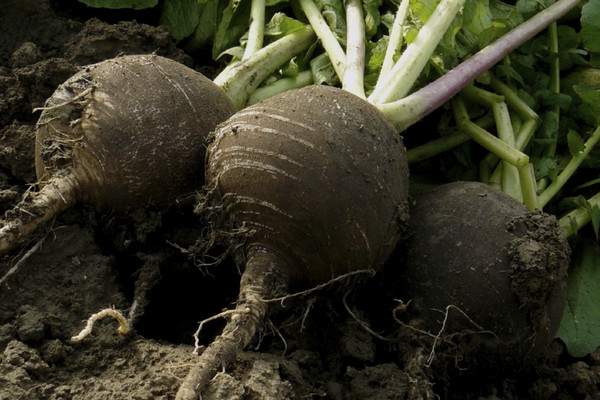
The method of joint storage is convenient because different vegetables are stored in small areas. radish is stored Round white radish and round black radish. These are proven varieties that truly have a long shelf life.
Proper and timely harvesting of root vegetables and proper storage ensures the preservation of the harvest, which is important for lovers of this vegetable who prefer spicy dishes.
Related posts:
 How to store radishes for the winter in a cellar and refrigerator at home
 Tips on when to harvest daikon radish for winter storage
 The best eggplant varieties for growing in a polycarbonate greenhouse: planting and care
 Agricultural technology for growing and caring for radishes in open ground, when to plant
 Description of the Watermelon radish variety, planting and care, benefits and harms
 When to harvest leeks from the garden for storage, ripening times
 When can spring garlic be harvested in 2025? Harvesting from the garden and storage
 Descriptions and names of varieties and the best types of radish, planting and care