
- General description of the plant
- What factors determine the choice of root crop type for cultivation?
- From the climate
- From the purpose of cultivation
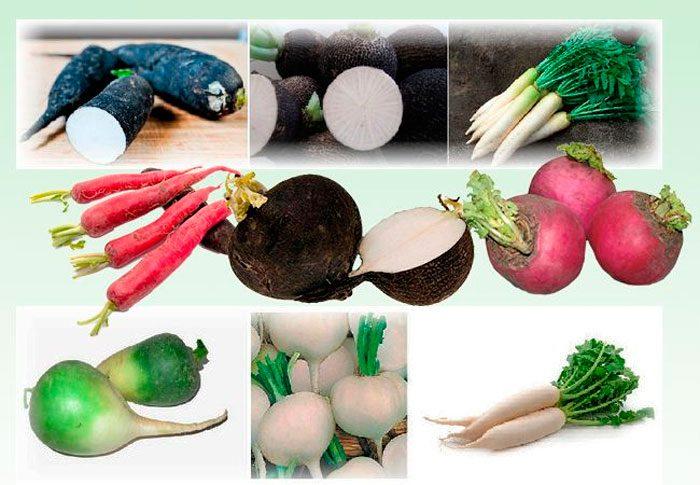
- Varieties of radish
- Lady
- White
- Vakula
- Dragon
- Uncle Chernomor
- Green
- Green Goddess
- Dragon's Tooth
- Watchtower
- Red
- Red Long
- Doctor
- Manthang Hong
- Margilanskaya
- Minovasi
- Moscow bogatyr
- Murzilka
- Rhinoceros
- Sasha
- Chernavka
- Black
- Black healing
- Chernomorochka
- Southerner
- Types of vegetables for different climate zones
- For the Middle Belt
- Winter round white
- Winter round black
- Red Winter and Loba
- May summer
- Margelan summer
- For Siberia and the Urals
- Gaivoronskaya
- Munich Beer
- Night
- Sudarushka
- Cylinder
- How to choose seeds?
- For the greenhouse
- For open ground
- For the room
There are many known varieties of radish today. They all vary in size and shape. They can also come in different colors. When choosing a specific variety, consider the climate and soil composition. Hybrids, created through selective breeding, have additional properties, including resistance to diseases and pests. These varieties also produce a good harvest. Radishes grown from varietal seeds have a more pleasant flavor but require careful care.
General description of the plant
Radish belongs to the Brassicaceae family. Both biennial and annual plants can be grown outdoors. Early planting encourages flowering in summer. Winter crops take longer to develop because they don't have enough warmth to form seeds.
The root vegetable is characterized by the following features:
- resistance to frost and temperature drops;
- high requirements for lighting and soil composition;
- undemanding to care;
- the need for sufficient moisture;
- high yield when implementing agricultural practices.
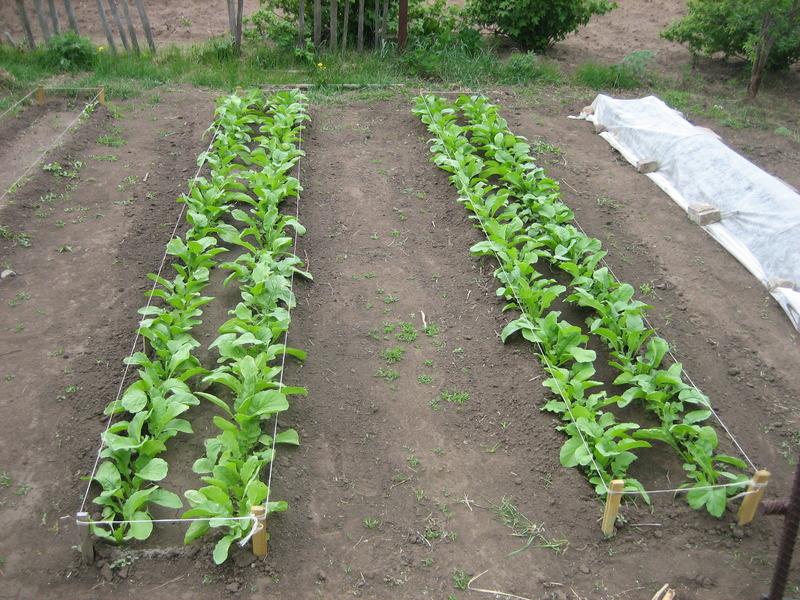
It's not recommended to plant the vegetable too densely. To ensure the full development of large root vegetables, plant the seeds 30-45 centimeters apart. They should be planted 2-3 centimeters deep. To store radishes for the winter, plant the seeds no earlier than mid-June. This can also be done in the first half of July. If you want to harvest fruit in the summer and fall, plant the plants in mid-April.
The plant requires timely fertilization. For this, mineral fertilizers containing potassium chloride are used. Superphosphate should also be included. It is recommended to add humus or compost before planting. Use 3-4 kilograms per square meter. In summer, the plant needs to be loosened, watered, and weeded.
What factors determine the choice of root crop type for cultivation?
When choosing a type of radish for cultivation, you need to consider its purpose and the climate of the region.
From the climate
Radishes are easy-to-grow crops, so they can be grown anywhere. The plant is known for its cold tolerance. However, this tolerance does have its limits.
Loose soil is ideal for growing the plant. When choosing a plant, consider the region's weather conditions. In cold regions, the soil warms up only in late May. Therefore, planting is not recommended before early June. This will help protect the plant from frost.
From the purpose of cultivation
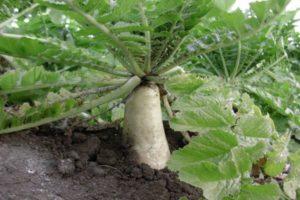
If radishes are to be consumed throughout the season, early varieties should be used. These are characterized by their small size. This category includes Mayskaya, Sudarushka, and Daikon.
Mid-season and late-season varieties are suitable for winter storage. They can be planted in late July. Mid-season varieties include Divnaya and Margelanskaya. Late-season varieties include Lekar and Gaivoronskaya.
Varieties of radish
Today, there are quite a few varieties of this crop, each with its own distinctive characteristics.
Lady
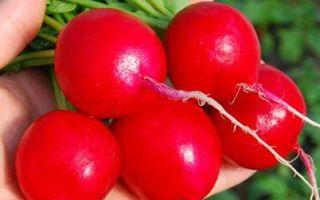
The cultivar's advantages include tolerance to rising temperatures and short daylight hours. It develops over a period of 68 days. The fruit is red and round. The average weight is 100 grams. The fruit has white, juicy flesh.
White
This variety is less pungent than black radishes. It can be eaten raw. Its flavor is similar to that of radishes. The fruits are usually elongated. This radish is suitable for those with digestive problems, which is not the case with other varieties.
Vakula
This crop can be grown outdoors. The plant produces white, juicy fruits. The harvest is ready in 50-60 days. The vegetable can be eaten fresh or stored over the winter. The fruits have tender flesh, making them suitable for children.
Dragon
This mid-season variety is characterized by cylindrical roots, which can weigh up to 1 kilogram. The plant is highly productive and stores well throughout the winter.
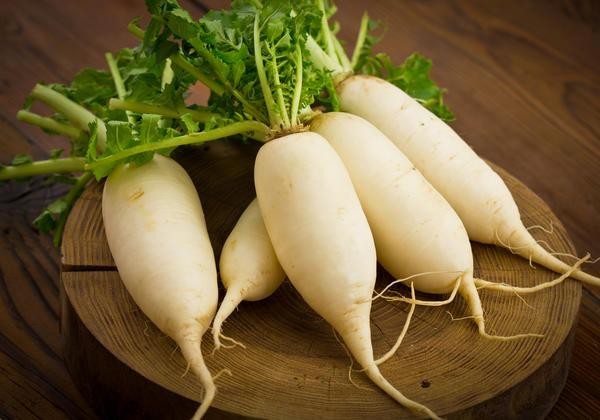
Uncle Chernomor
The fruit ripens in 75-90 days. The root vegetable is round and has a sharp flavor. The skin is smooth and dark in color, with grooves. It can be eaten all winter.
Green
This vegetable contains many minerals. This undemanding plant produces very tender fruits.
Green Goddess
Radish is distinguished by its perfectly rounded shape and green hue. The fruits reach 400 grams and have a slight bitterness. The roots ripen in 60-63 days. This radish is considered a versatile variety.
Dragon's Tooth
The fruit is distinguished by its elongated conical shape, reaching 60 centimeters in length. It is frost-resistant and ripens in 70-75 days.
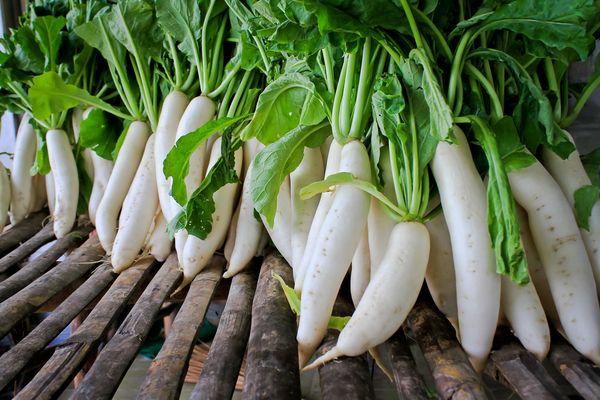
Watchtower
The plant takes approximately 70 days to ripen. The fruits are characterized by excellent taste, with a delicate flavor and a slight bitterness. The vegetable is widely used in salads and stores well.
Red
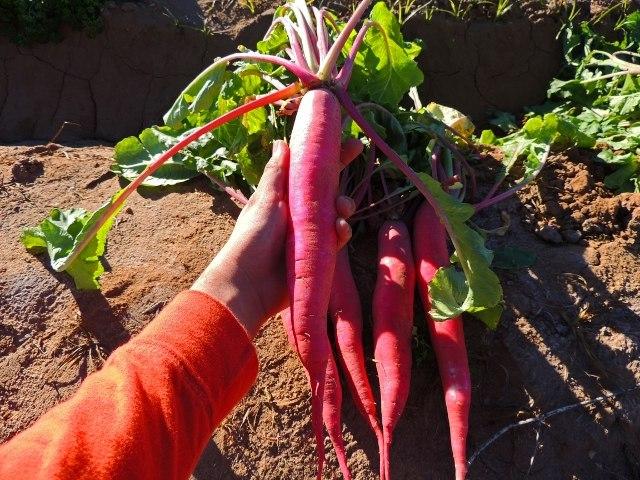
This vegetable was bred through selective breeding. It has a sweet taste and white flesh. There are also varieties with white skin and pink flesh.
Red Long
This summer variety is characterized by an elongated fruit, weighing 150 grams and reaching 14 centimeters in length. It has thin red skin and juicy flesh. It is low in calories, making it a suitable dietary ingredient.
Doctor
This winter variety stores well. The vegetables are characterized by tender flesh with a slight bitterness. The fruits weigh up to 250 grams.
Manthang Hong
The plant is characterized by its beautiful appearance and vigorous growth. The fruits are smooth and covered with white-green skin. Inside, the radish has rich red flesh. Its flavor is reminiscent of radishes.
Take a look Also
Margilanskaya
The first harvest can be collected after 60-65 days. Up to 6 kilograms of fruit can be harvested from each square meter. They are characterized by a small diameter and a green tint both inside and out.
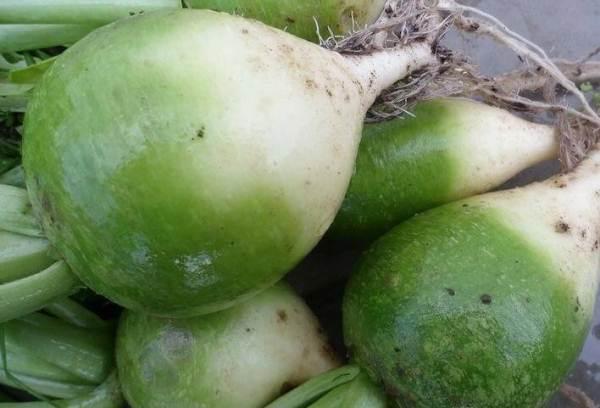
Minovasi
This variety is a type of Japanese daikon. It has a delicate flavor and is a high-yielding radish. Up to 12 kilograms can be harvested per meter. Each vegetable weighs 1.5 kilograms.
It is worth considering that the vegetable is not frost-resistant.
Moscow bogatyr
This is a mid-season vegetable that matures in 80-85 days. It is characterized by cylindrical fruits, reaching 75 centimeters in length. Each vegetable weighs 1-2 kilograms.
Murzilka
This radish is a late-ripening variety. It is distinguished by its round fruits, 10 centimeters in diameter. Each one weighs 300 grams. It can be stored in a cellar until spring.
Rhinoceros
This vegetable is characterized by rapid ripening, taking about 55 days. It features elongated roots and juicy white flesh. Radishes have a sweet, non-bitter flavor. Up to 7 kilograms of vegetables can be harvested from each meter.
Sasha
This is one of the most common varieties. It is considered early maturing. The harvest can be completed in just 35-45 days. The root vegetable has juicy flesh with a characteristically sweet and tangy flavor. The fruits weigh 200-400 grams and can be stored for two months.
Chernavka
This vegetable is designed for winter storage. It has white flesh and weighs up to 260 grams. Its diameter is 10 centimeters.
Black
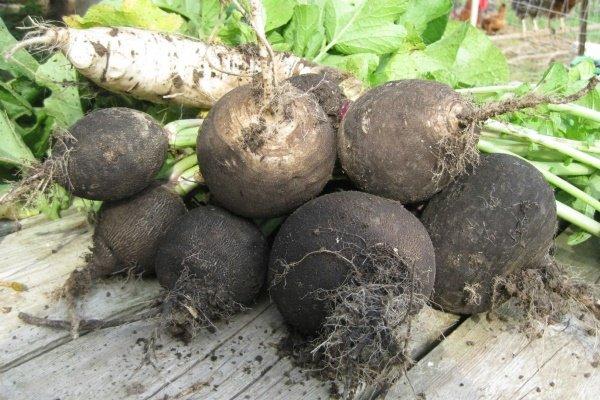
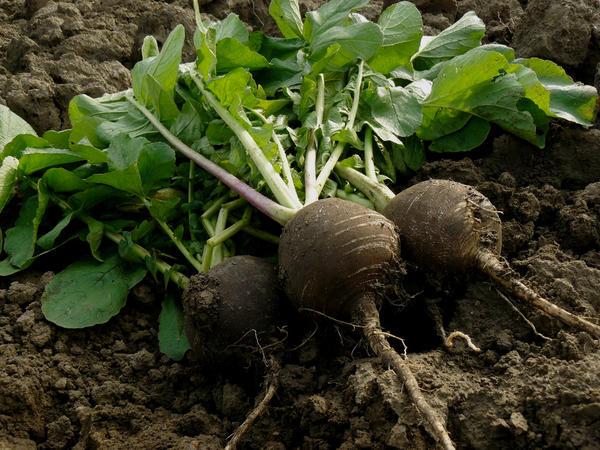
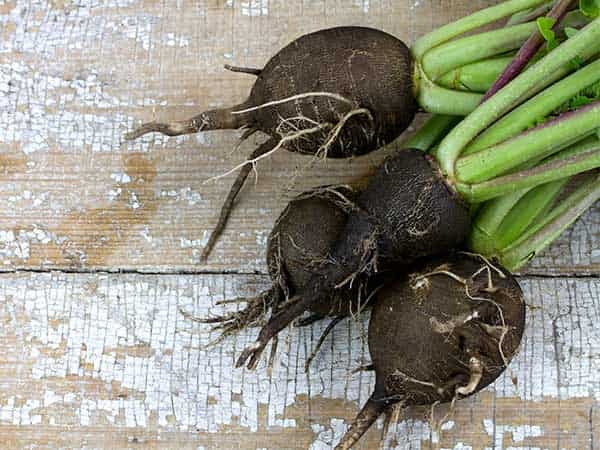
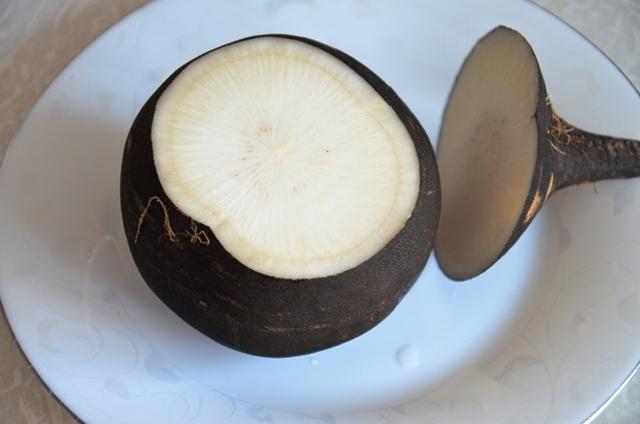
The roots of this variety can be round or conical. The weight of the fruit varies depending on the variety. Black radish has a thick skin that can be smooth or rough. Inside is a white, juicy pulp. The radish has a pungent flavor. The fruits contain vitamin C and essential oils.
Black healing
This variety is characterized by flat-round fruits. They ripen in 70-90 days. The fruits have smooth skin and white flesh. Each fruit weighs 200-500 grams and reaches 10 centimeters in length. The vegetable can be used for medicinal purposes and stores well over winter.
Chernomorochka
This variety was developed relatively recently. It is characterized by large fruits, reaching 500 grams. It can be added to salads. It survives the winter well, retaining its beneficial properties.
Southerner
This early-ripening vegetable is characterized by excellent yields. It has excellent flavor and medicinal properties. The fruits are oval in shape and weigh up to 250 grams. The vegetable has a rough, green skin on top. It also has juicy white flesh.
Types of vegetables for different climate zones
When choosing a variety for cultivation, it is important to take into account the climatic features of the region.
For the Middle Belt
Various varieties are grown in the central part of Russia. The most popular radish varieties are listed below.
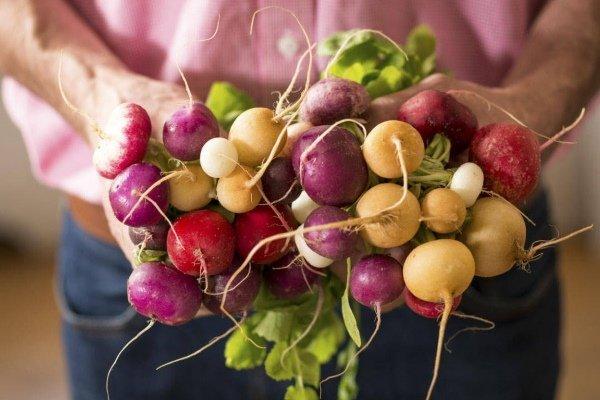
Winter round white
This variety is characterized by white, green-tinged fruits. They are round and reach 7-8 centimeters in size. The flesh is juicy and sweet. Each fruit weighs 200-500 grams.
Winter round black
This variety is considered late-ripening, ripening in 110-120 days. The plant is characterized by black, grooved skin. Inside lies sharp, white flesh. It stores well throughout the winter.
Red Winter and Loba
This radish resembles a radish. It weighs 150-200 grams. The plant is known for its resistance to external factors.
Loba has juicy flesh and a non-bitter taste. The plant is considered mid-season. Harvesting begins in 50-70 days. The berries are oval and weigh up to 400 grams.
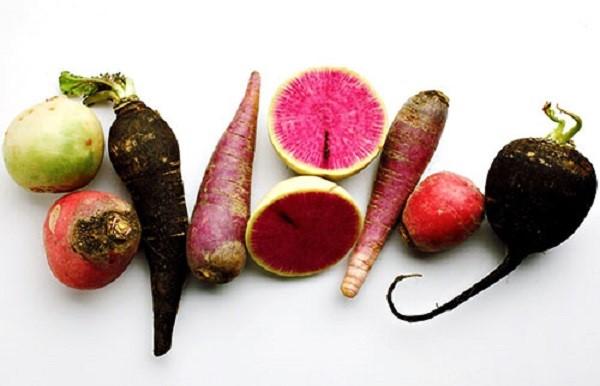
May summer
The harvest can be completed in 70-95 days. The plant produces cylindrical fruits weighing 130-150 grams. They have juicy white flesh.
Margelan summer
This early variety is characterized by cylindrical fruits, 9-16 centimeters long. The skin is green with a white tip. The flesh is light green.
For Siberia and the Urals
If you want to harvest twice, early varieties can be planted in the first half of May. For winter storage, planting should be done until the end of June. Below are the names of varieties suitable for these regions.
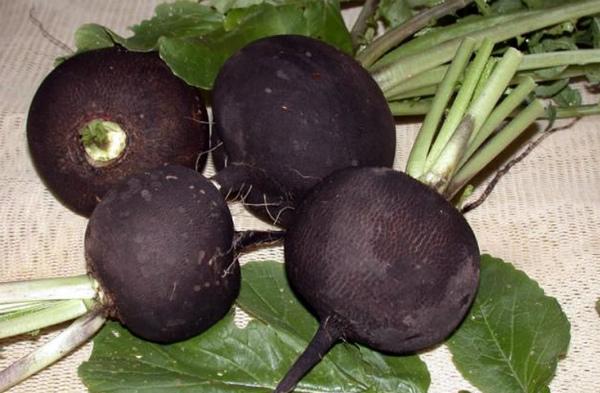
Gaivoronskaya
This is a late-ripening variety. Harvesting begins after 110-120 days. The vegetables store well. They have an elongated shape and a sharp flavor.
Munich Beer
Radishes have a delicious flavor and are eaten fresh. The fruits are white, oval-shaped, and weigh 300-400 grams.
Night
This mid-season variety is characterized by black skin and a tangy flavor.
Sudarushka
This is an early variety that has a round or oval shape.
Cylinder
This mid-season variety produces cylindrical fruits weighing 200 grams.
How to choose seeds?
When choosing seeds, it is worth considering their purpose.
For the greenhouse
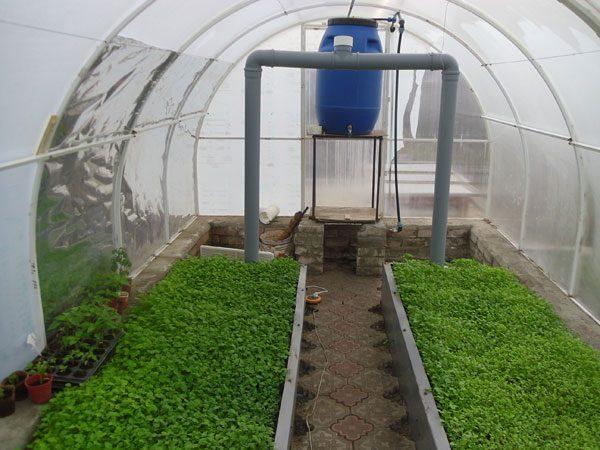
Varieties such as Beauty Heart and Mantangong are suitable for these purposes. They are characterized by large, generously sized fruits and a rounded shape.
For open ground
You can use any variety suitable for the central part of the country. Odesskaya-5 is a particularly good option.
For the room
Radishes are rarely grown at home. More commonly, they are cultivated as radishes. Carmen or White Fang can be grown on a windowsill.
Radish has many varieties and cultivars. To ensure a full harvest, it's important to choose the right seeds and consider the plant's key growing requirements.
Related posts:
 The best grape varieties for growing in the Urals, planting and care rules in summer
 Descriptions of the 20 best cherry varieties for the Moscow region, their planting and care
 Description of the best pepper varieties for greenhouses and open ground in 2025
 Description and characteristics of the 27 best plum varieties for the Urals, planting and care
 80 Best Eggplant Varieties for Different Regions with Descriptions and Characteristics
 Description and characteristics of the 45 best types of peaches, growing rules
 The health benefits and contraindications of green Margilan radish
 Description and cultivation of the 15 best cherry plum varieties for the Moscow region, planting and care rules