
Daikon radish variety It is distinguished by its sweet taste, juiciness, and rich vitamin content. Compared to classic varieties, this variety has several unique features, so when growing this crop, gardeners ask themselves: When to harvest Daikon radish for storage, and under what conditions the vegetable will not lose its characteristics.
Harvesting Daikon for Storage
Harvest timing depends on the specific variety, planting time, soil conditions, weather conditions, and growing region. Average ripening time is 40 to 70 days from the first shoots. Daikon radishes should be harvested before the onset of sustained frost, as exposure to cold will damage the vegetable. If growing conditions and recommended planting times are followed, harvesting should begin in late October.
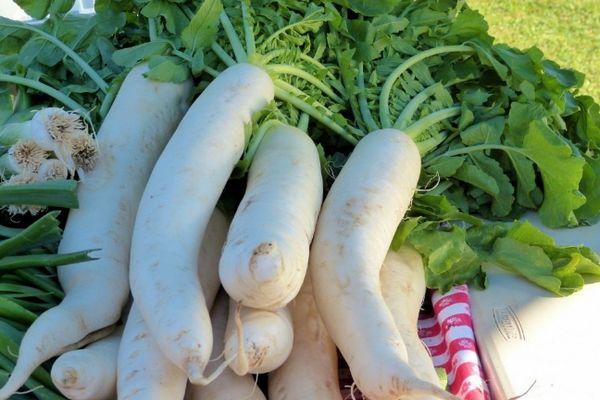
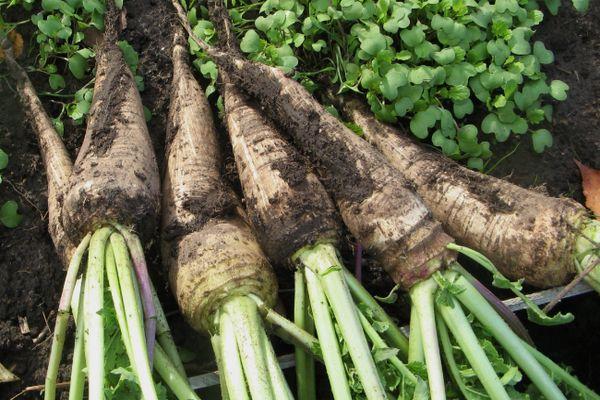
Since the root crops grow at a depth of about 50 centimeters and have a brittle structure, the harvest must be dug up carefully, avoiding mechanical damage. If the root crop shell is damaged, it is better to eat them without storing them.There's no need to wash off any remaining soil from the radish; simply leave it out in the open air to dry completely. For this reason, it's best to dig up daikon radishes in hot, dry weather.
If you want to obtain new seeds for planting next season, you can dig up the fruits and replant them a few days later for bolting. Some varieties can be left in the ground without digging, allowing them to germinate and form seeds.
Storing Daikon
After sorting the whole fruits from the harvest, they can be stored for a long time. Under proper storage conditions, the harvest can last all winter without losing its nutritional value or flavor.
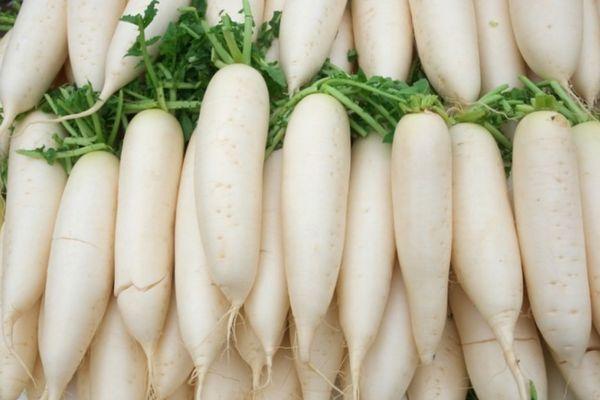
The list of basic storage rules includes the following:
- Suitable temperature for preservation of radishes Daikon variety varies between 0-7 degrees.
- The harvest can be packaged in plastic bags. Seal the bags loosely to allow air circulation.
- Rotting fruits must be destroyed immediately so that they do not contaminate a good harvest.
- During storage, root vegetables should be checked periodically to promptly detect the development of mold or the appearance of pests.
Knowing how to store your harvest will help you have fresh radishes throughout the winter. By following the above guidelines, you can preserve your harvest until spring.
In the cellar
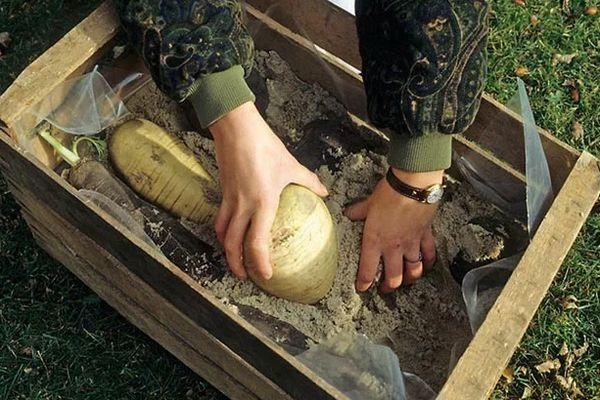
The longest shelf life can be achieved by storing the harvested crop in a cellar. However, the storage space must meet a number of requirements, including:
- the air temperature in winter should not fall below zero;
- the appropriate humidity level is 85-90%;
- melted snow and groundwater are not allowed to penetrate into the cellar;
- To preserve root vegetables, care should be taken to protect them from pests and mold.
Daikon radishes can be stored on wooden shelves in the cellar or in boxes. Before storing the harvest indoors, conduct a visual inspection. If mold is detected, coat the walls with antifungal paint, and if insects are present, treat the cellar with insecticides.
In the refrigerator
While a cellar is more suitable for storing larger radishes, it's best to store smaller harvests in the refrigerator. This will ensure you always have fresh radishes in the kitchen for use in various dishes or for eating fresh. For root vegetables that you plan to refrigerate, don't trim the tops completely—leave about 3 centimeters. It's best to place the harvest in perforated bags.
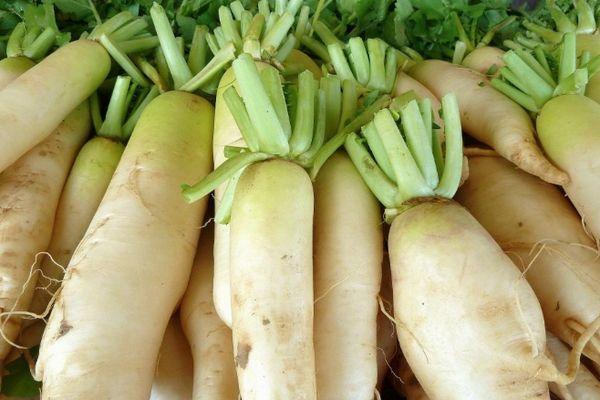
Daikon has a maximum shelf life of 1 month in the refrigerator, so it's important to estimate the required harvest quantity. During this period, it's recommended to visually inspect the vegetable for any plaque, spots, or bruises.
Freezing
To freeze the harvest, you can cut the root vegetables into small pieces or grate them, then divide them into small portions. It's important not to let all the juice escape during preparation, as the chopped radish may freeze into a lump. Place the individual portions of the root vegetables in a plastic container or bag and then place them in the freezer.
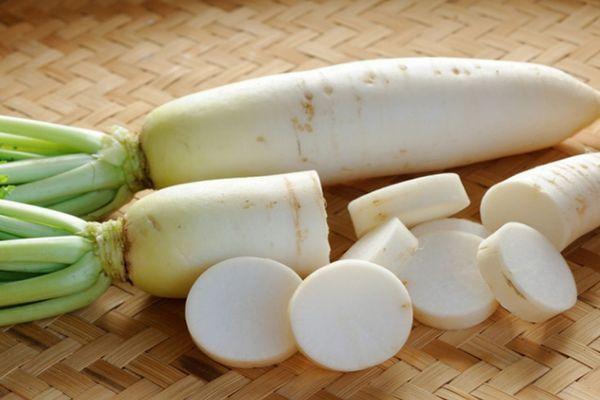
If you want to use frozen food for cooking, remove it and thaw it at room temperature. This method preserves most of the nutritional properties, but only if frozen once. If you freeze the food repeatedly, it will not only lose its vitamin content but also become tasteless.
Conservation
After slicing or grating fresh radishes, you can preserve them by mixing them with carrots or other vegetables and marinating them. To prepare the marinade, bring a solution of water, salt, sugar, vinegar, herbs, and pepper to a boil. The preserved root vegetable is perfect for use as a salad base, a side dish, or as a standalone snack. Store the preserved radishes in a cool place, tightly sealed.
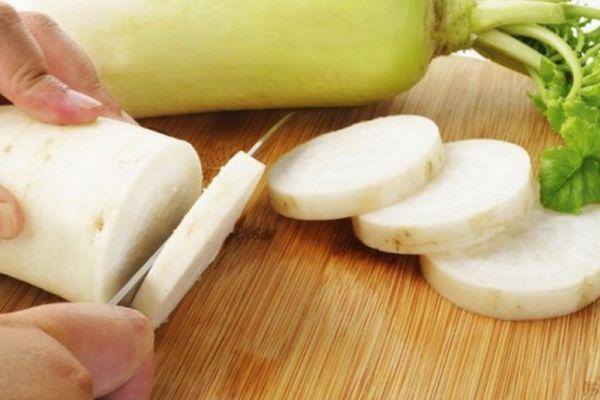
Radish juice
Juice squeezed from the variety Daikon has many beneficial properties., as it contains the bulk of the vitamins. This drink is recommended for regular consumption by people with digestive problems. It can be prepared in large quantities and stored for the winter if the harvest exceeds expectations or if there is no way to preserve the whole root vegetables.
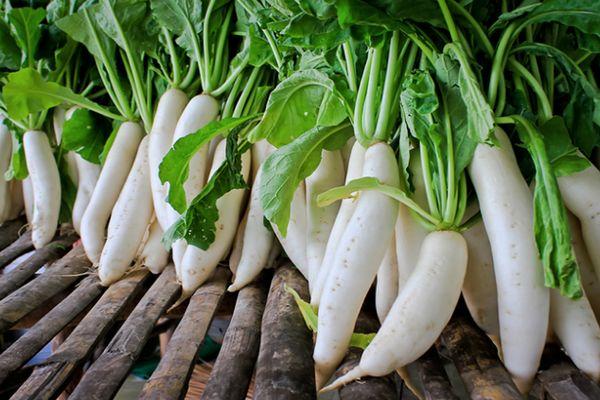
A standard juicer is suitable for making juice. After peeling and squeezing the fruit, pour the liquid into sterilized glass containers and pasteurize in a double boiler for half an hour. Then, seal the containers tightly, ensuring they are airtight, and store them in a cool, dark place.

The juice recipe allows for the use of root crops damaged during digging, which makes it possible to avoid destroying the portion of the harvest that has minor defects.
Related posts:
 TOP 10 recipes for preparing pickled daikon for the winter at home, storing the prepared ingredients
 Timing of planting daikon in open ground, care and growing methods, after which to plant
 The benefits and harms of Daikon radish for the human body, medicinal properties and contraindications
 Top 10 tips on how to grow and when to plant daikon in open ground in the Moscow region
 How to Grow Pink Daikon Radish: Its Health Benefits and Culinary Uses
 Description of daikon Sasha, care instructions, planting time, and yield
 The best varieties of daikon radish for winter storage and open ground, choosing seeds
 The best eggplant varieties for growing in a polycarbonate greenhouse: planting and care