
Every gardener who grows radish encounters pests. Therefore, it's important to know the characteristic symptoms of the disease and be able to identify the problem. In the early stages, folk remedies are usually sufficient; however, if the gardener neglects the plant, chemicals will have to be used.
General signs of radish pest damage
Gardeners need to regularly inspect their beds to identify the first signs of pest infestation.

The main symptoms that can be identified are:
- ulcers on the tops;
- inhibition of germination;
- black dots on stems;
- damage to growth levels in young plants;
- holes in root vegetables;
- slow germination of tops.
If you notice any of the above signs on your radish, you should take immediate precautions to prevent further infestation. If the infestation is widespread, the plant will stunt growth and may die.
The main pests of radishes and methods of control
Pests can be underground or aboveground, and are common to turnips, cabbage, and rutabagas. Therefore, if related crops are infested, it's important to inspect the plant's condition. There are many different insect control methods that will help you address the problem early.
Cruciferous flea beetle
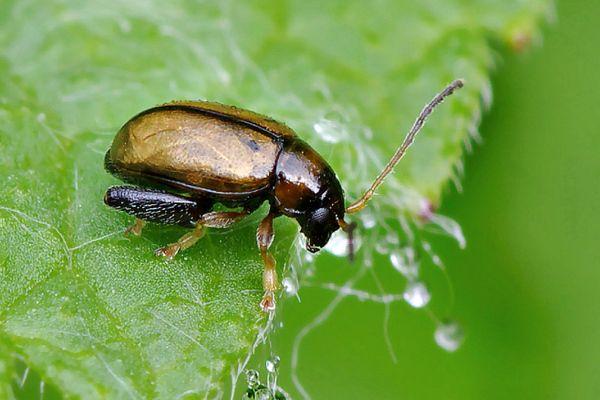
This insect is the most dangerous pest. It has a small, 3-millimeter-long, dark metallic body and damages root crop leaves very quickly, jumping from one plant to another and eating holes in them.
This pest is especially dangerous during the first 14 days after root crops emerge, as it can completely kill them. The hot summer is the most favorable time for cruciferous flea beetle attacks.
Before resorting to chemical pest control, you can try folk remedies. The most effective is a wood resin solution. It is prepared from the following ingredients:
- two glasses of resin;
- 50 grams of laundry soap.
Grate the soap and dilute it with a tablespoon of boiled water. Mix the ingredients. Let the mixture steep overnight and strain. Spray the radishes with the mixture immediately after watering. Repeat the procedure every four days.
You can also treat the plant with tansy powder, tobacco dust, celandine, ash, or garlic infusion. Be sure to repeat the procedure after rain or watering.

Important! When using traditional flea beetle control methods, use drip irrigation. Otherwise, the treatment will wash away, and the pest will spread.
If folk remedies fail to combat insect attacks, chemical treatments such as Actellic, Inta-Vir, and Fufanon can be used. These treatments are only used in the early stages of root growth.
Caterpillars of the white butterfly
The cabbage white butterfly is dangerous to plants because it lays its eggs in the soil. This produces caterpillars, which easily climb onto the leaves and consume them. The first sign of caterpillar infestation is curled leaves with elongated holes.
These parasites are repelled by the smell of mustard, so to exterminate them, you can prepare a solution from the following ingredients:
- 30 grams of dry mustard;
- 30 grams of salt;
- 5 grams of ground red pepper;
- a bucket of water.

The ingredients are mixed and left to infuse for two days.
For these purposes, you can also dust the soil with tree resin and one of the spices: cinnamon, ginger, saffron, or mustard.
The chemicals used are Sumi-Alpha and Kinmix.
Spring cabbage fly
The cabbage fly has a small gray body with transparent wings. The most favorable time for its attacks is when bird cherry trees are in bloom. The insect's larvae are white and damage stems and roots by chewing passages through them.

You can fight the parasite with tobacco dust. To prepare it, you will need:
- tobacco dust;
- lime.
Mix the ingredients in a 1:1 ratio, and sprinkle the resulting mixture onto the beds at the base of the plant. This procedure should be repeated weekly.
You can also use ammonia or vinegar essence. Dilute five milliliters of one of these solutions in ten liters of water and apply the solution.
The most effective chemicals for these purposes are Antio, Rovikurt, Karate, and Iskra-Bio.
Cruciferous bug
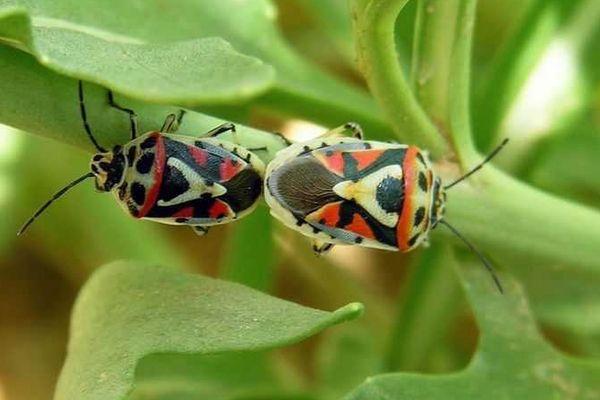
Cruciferous bugs are small in appearance, with orange stripes on their bodies. They suck the sap from the root crop, causing the plant to dry out completely.
You can fight them with datura and henbane. To do this, you will need:
- a bucket of water;
- 500 grams of datura leaves (henbane).
The leaves are steeped in a bucket for 12 hours, then 30 grams of grated laundry soap is added. Onion peel or chamomile infusions are also used for the same purpose. Chemicals used include Aktara, Fosbecid, and Belofos.
Cabbage moth
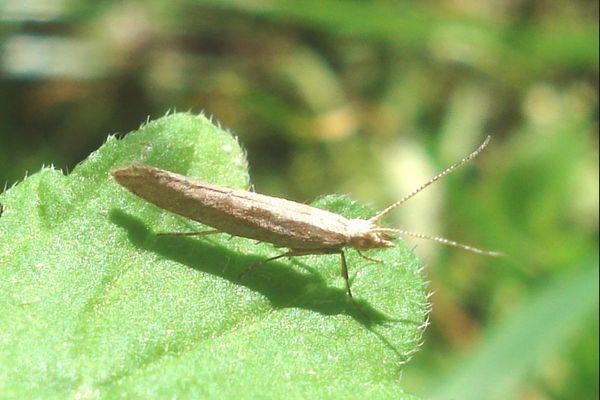
The moth is light brown in color. It doesn't feed on radishes, but its caterpillars are very harmful to the entire crop. The parasite lays eggs on the leaves, which feed on the sap. However, the main danger this insect poses to the plant is the transmission of numerous diseases.

When you first spot moths, pay attention to the underside of the leaf. The larvae should be collected, and the eggs washed off with green soap. In case of large infestations, insecticides should be used.
Another effective method is to use a trap. Glue or resin is applied to a yellow surface, and the insect simply sticks to it.
Cabbage moth
The caterpillars of the cabbage moth pose a threat to radishes. They are yellowish in color with light stripes on their sides.
You can get rid of the parasite by foliar or root feeding the plant with potassium and phosphorus. Ripcord, Bitoxybacillin, Sumicidin, Dendrobacillin, Gomelin, and Anometrin are also effective.

Rape sawfly
The pest's ovipositor is shaped like a serrated saw. The eggs hatch into caterpillars that feed on the plant's leaves.
To control sawflies, beneficial insects such as parasitoid wasps are recruited. Caterpillars can also be collected and destroyed during rainy weather.
Traditional remedies include infusions of tansy, chamomile, aconite, and pine needles. The most effective chemical remedies include Kinmix, Fury, Mospilan, and Arrivo.
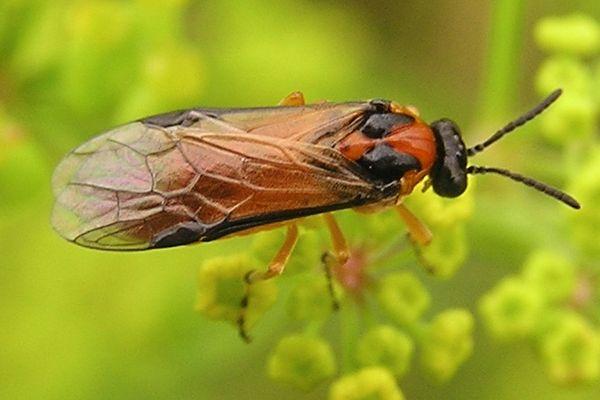
At the initial stage of the spread of the pest on radishes, you can use the following recipe:
- 50 grams of dry mustard (baking soda);
- 10 liters of water.
The ingredients are mixed and the plant is sprayed weekly.
Rapeseed blossom weevil
The insect is black and has brown legs. Its larvae feed on the plant's flowers, peaking in late May and early June. Folk remedies are ineffective in controlling the pest. Only insecticides such as Kinmix, Karate, Fastak, and Zeon are effective.

Slugs
Slugs are grayish-beige in color, feed at night, and hide during the day. They damage the tops and above-ground portions of root crops and can completely destroy a young crop. Controlling them is quite difficult.
Pests are afraid of frogs, hedgehogs, and birds. Dry mustard diluted in water or chili pepper infusion are also effective against insects. Chemicals such as Groza, Metu, and Slizneed are recommended.
Aphid
Aphids are small, yellow-green insects. The pests themselves are immobile and are carried to crops by garden ants. They suck the sap from radish leaves, completely weakening the plant.

To combat aphids, use garlic, calendula, herbs, lavender, onions, and marigolds. You can also spray radish tops with an infusion of tobacco, pine needles, orange or lemon peels, and mustard powder. The most effective insecticides for this purpose include Confidor-Maxi, Admiral, Inta-Vir, Iskra-Bio, and Tanrek.

Babanuha
The babanukha has a small, dark blue body. Females damage the plant's leaves and lay their eggs there. The insect's larvae are dirty yellow.
Folk remedies for combating the parasite are ineffective; the most effective method of exterminating the pest is removing weeds and spraying the crop with the chemical Akpellik.

Preventive methods of protection
Pest control is quite difficult and time-consuming, requiring considerable resources and effort. Therefore, to prevent insect infestations on radishes, follow these guidelines:
- dust the plant with a mixture of road dust and naphthalene in a 1:1 ratio;
- destroy weeds in the beds;
- spray wood ash, tobacco dust, and lime slaked with water on the area;
- attract beneficial insects to the garden bed;
- fertilize radishes with minerals;
- remove infected plants from the garden bed;
- friendly plants should be planted next to radishes;
- spray young radish leaves with a vinegar solution;
- it is necessary to adhere to sowing dates;
- periodically spray the radish with a wormwood decoction;
- do not store straw and manure piles in the garden;
- carry out preventive treatments of radishes.

The plant should also be treated weekly for two months. It is recommended to plant caraway, tomatoes, potatoes, and dill near radishes, as their scent repels pests.
After the season ends, the bed should be thoroughly cleaned, cleared of plant debris and weeds. It should then be dug over to destroy the larvae that overwinter in the soil.
Radishes are one of the few plants that are easy to grow and require little care. However, even they require periodic inspection to prevent pest infestations. After all, eliminating pests at an early stage is much easier than eliminating them once the situation has become advanced.
Also, one should not forget about preventive measures; sometimes they are quite sufficient to protect the plant from pests.
Related posts:
 The best eggplant varieties for growing in a polycarbonate greenhouse: planting and care
 Causes and treatment of eggplant pests and diseases, how to combat them at home
 Growing and caring for hazelnuts in open ground, rules for planting hazelnuts
 Description of varieties of sowing peas and cultivation, to which family they belong
 Descriptions and names of varieties and the best types of radish, planting and care
 Descriptions of the 20 best cherry varieties for the Moscow region, their planting and care
 The best grape varieties for growing in the Urals, planting and care rules in summer
 The benefits and contraindications of lentils for the human body