
Red radish is much less familiar to gardeners and homemakers than the widely grown black, green, or white daikon. This vegetable is similar in appearance to a radish; some botanists consider it a variety of radish or a hybrid resulting from crossing it with a common radish. However, this unusual variety has some unique characteristics. Let's explore what makes red radish unique, its benefits, and its potential downsides.
Description of the variety
Red radish resembles a very large radish in appearance. The fruits are round or elongated, sometimes cylindrical. Depending on the variety, each radish can weigh between 200 and 800 grams. The average weight is 400 grams.
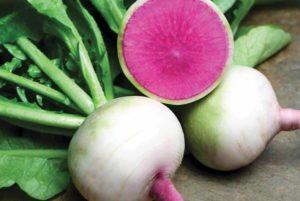
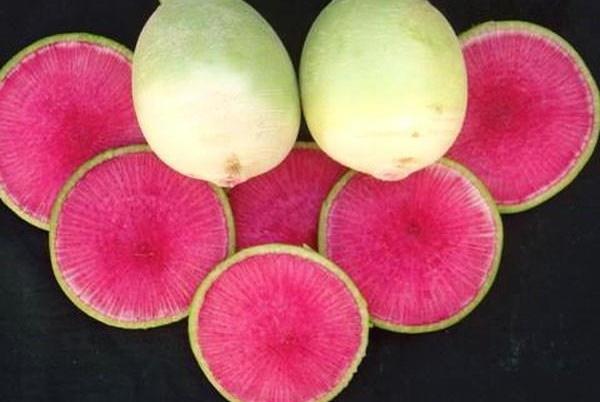
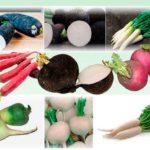
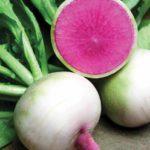
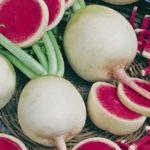
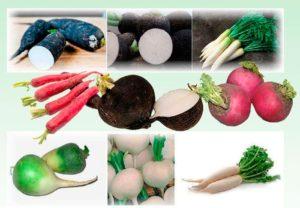
Most varieties have reddish-pink skin and white flesh. However, there are others that are white on the outside and red on the inside—for example, the Japanese radish. These fruits look beautiful and unusual; they can't be confused with an overgrown radish.
The vegetable has a bitter taste, milder than the black variety, but still a little spicy, not harsh. radishes with pink flesh bitterness may be absent altogether.
It's eaten fresh, which makes it tastier and healthier, but it can also be cooked, such as stewed with other root vegetables. It keeps well in winter.
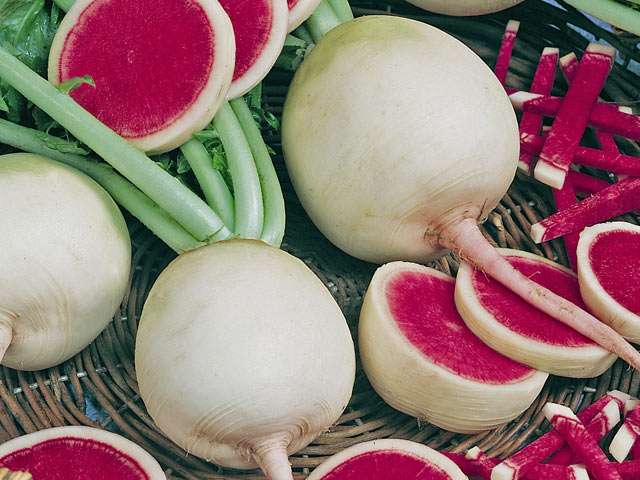
Young radish leaves are also eaten, possessing a pungent flavor and antimicrobial properties. The crisp, fresh greens are perfect for salads and soups.
The plant itself is biennial; in the first year it produces only root crops, and in the second year – seeds.
Caloric content
Like most vegetables, red root vegetables are low in calories and are a perfect addition to the diet of those watching their weight and trying to lose weight. 100 grams of the product contains only 20 kilocalories, including:
- proteins – 1.2 grams;
- fats – 0.1 grams;
- carbohydrates – 3.5 grams.
Compound
The vegetable contains a lot of plant fiber, which is necessary for intestinal function, and roughage. Any varieties of radish contains mustard oil, essential oils and phytoncides.
Also worthy of attention is the rich vitamin and mineral complex - these are vitamins A and B, C - ascorbic acid, H. Among the mineral salts it contains potassium, phosphorus, copper, magnesium, sodium, calcium, iron, sulfur, iodine.
Beneficial properties
The rich composition of red radish provides it with a number of health-promoting properties, among which the following stand out:
- Effect on the gastrointestinal tract: fiber stimulates digestion and helps combat constipation, while amino acids and salts have antibacterial and anti-inflammatory effects in many digestive diseases.
- Helps both lose and gain weight.

- Combating vitamin deficiency, this quality is especially useful in late winter and early spring, when many suffer from a lack of fresh vegetables.
- Strengthens the immune system; makes it easier to fight colds.
- Treatment of the bronchi and lungs can be noted separately, since for such ailments, red radish is used not only as food, but also in the form of juice and inhalations.
- For joint diseases, rheumatism, and arthritis, radish juice is also used externally for rubbing.
- Relieving swelling – the vegetable has a diuretic and choleretic effect.
Traditional medicine recipes
Important: If you have a tendency to allergies or any illnesses, especially chronic ones, consult a doctor before using alternative medicines!
A common and safe cough remedy, when used correctly, is radish juice with honey. The root vegetable's vitamin content enhances the body's ability to fight viruses, while the sulfur promotes easy mucus removal.
You'll need a medium-sized radish. First, cut off the top and then scrape out the pulp, leaving walls no thinner than 2 centimeters. Fill half the cavity with high-quality natural honey of any kind. After 10-12 hours, the radish will release juice. This mixture with honey is used to treat a cough.
Take a look Also
Adults take one tablespoon of the juice 4-5 times a day, while children take one teaspoon 3-4 times a day. This remedy is not recommended for children under 3 years of age.
Those looking to lose weight and maintain a healthy digestive tract are advised to eat a salad with fresh red radish 3-4 times a week. Grate the peeled radish on a coarse grater, add fresh cucumbers, carrots, cabbage, toasted sesame seeds, and dress with oil or unsweetened yogurt. For added filling and protein, add a chopped hard-boiled egg to the salad.
Root vegetable juice, as well as a mixture with other vegetable juices—beetroot, carrot, and onion—can help prevent and treat anemia. To obtain the juice, use the method from the cough remedy recipe or finely grate the vegetable using a grater or in a food processor and press through cheesecloth.
Harmful effects of red radish
The vegetable itself doesn't contain any unequivocally harmful components. However, in certain conditions, some of its components can be detrimental to health. These include coarse dietary fiber and essential oils.
Red radish can cause allergic reactions, especially in small children!
Contraindications
Since this root vegetable speeds up intestinal function and promotes gastric acid production, it should not be consumed in large quantities by people with high stomach acidity, gastroesophageal reflux disease, or a tendency toward heartburn. Radishes are also contraindicated during ulcer flare-ups and colitis.

It should also not be used in case of heart defects and inflammatory kidney diseases.
This vegetable is not recommended for pregnant women, as it may cause excessive uterine tone, as well as for nursing mothers and children under 5 years of age due to possible gastrointestinal problems.
Try growing one of the red radish varieties in your garden to see for yourself the benefits and excellent taste of this unusual root vegetable!
Related posts:
 The health benefits and contraindications of green Margilan radish
 Descriptions and names of varieties and the best types of radish, planting and care
 The health benefits and contraindications of black radish
 The benefits and harms of Daikon radish for the human body, medicinal properties and contraindications
 Planting times and care guidelines for black radish in open ground
 Red Meat radish benefits, salad recipes and medicinal uses
 Description of the Watermelon radish variety, planting and care, benefits and harms
 Growing, planting, and caring for Margilan radish in open ground
Beautiful and very tasty