
There are many varieties and cultivars of garden radish, each with its own distinct flavor and appearance. Along with the familiar black and white varieties, red radishes deserve special mention. One such variety is the Japanese radish Red Meat, which resembles a radish in shape but has distinct characteristics and beneficial properties.
Description of the variety
Red Meat is considered an exotic radish variety from the cabbage family, native to Japan. In Russia, it is primarily grown in the Far East. It is gradually gaining popularity for its high yield and juicy fruit.
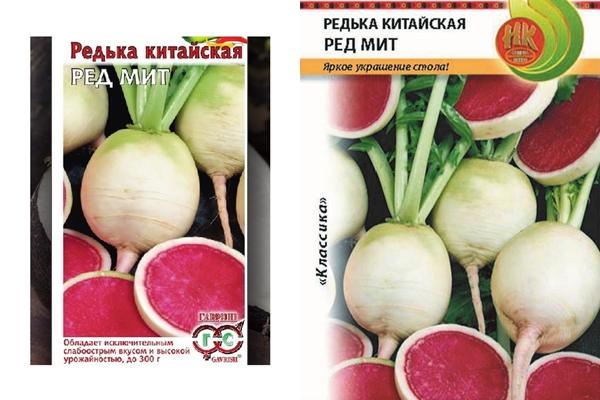
This mid-season variety is suitable for fresh consumption. It ripens within two months of sowing. Harvesting occurs in mid-September. It does not store well.
Appearance
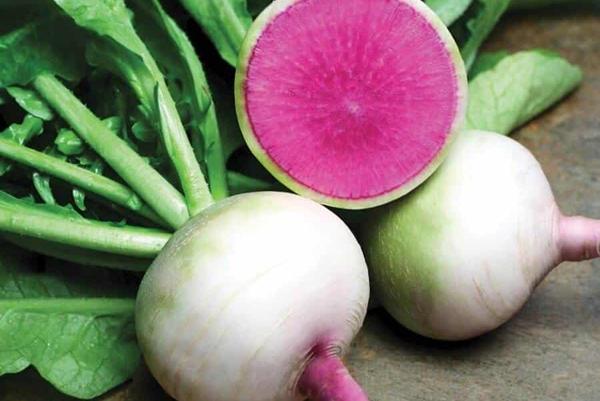
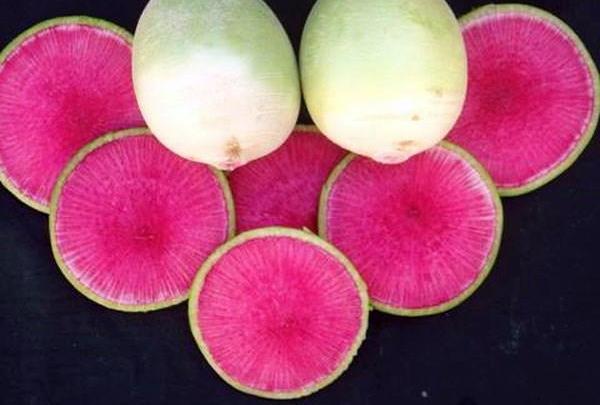
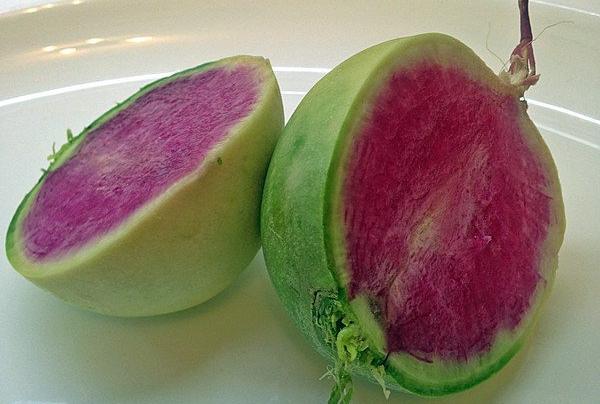
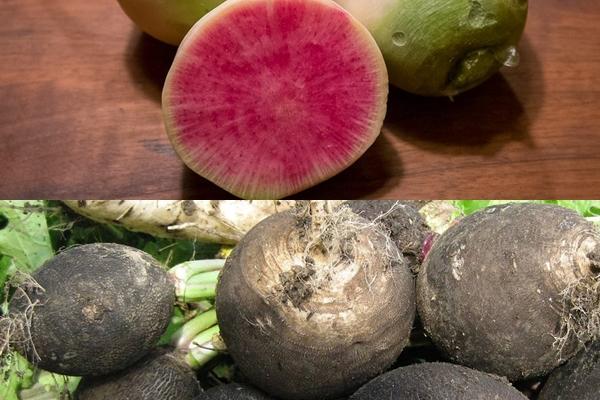
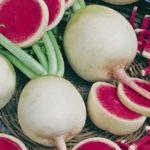
The Red Meat variety has a round root with whitish-green skin. The flesh is a rich scarlet color with a pinkish tint and moderate density. The flavor is sweet, completely free of bitterness.
A fairly productive variety, with large root crops weighing up to 700 grams.
Compound
Sweet radish's beneficial properties are due to its unique biochemical composition. It contains:
- mustard oil;
- fiber;
- glycosides;
- phytoncides;
- lysozyme;
- essential oils;
- micro- and macroelements;
- vitamins: A, B, E, PP;
- ascorbic acid;
- amino acids.
Beneficial properties
The root vegetable has the following medicinal properties:
- antiseptic;
- antimicrobial;
- antibacterial;
- immunostimulating;
- anti-inflammatory;
- pain reliever;
- sedative;
- diuretic.
It has an expectorant effect, which helps to better remove phlegm from the lungs during colds.
Benefits and contraindications
Sweet radish is recommended for regular preventative use, especially during cold and flu season. It is effective in treating coughs, bronchitis, whooping cough, pneumonia, tracheitis, radiculitis, and neuritis.
Radish improves appetite as it stimulates the production of gastric juice.
Radishes have a positive effect on kidney and heart function, thanks to their rich potassium content. Including them in your daily diet reduces the risk of vitamin deficiency, anemia, and cardiovascular and genitourinary disorders. Japanese radish boosts energy and vitality, and improves mood.


Thanks to its dietary fiber, radish normalizes digestion and cleanses the intestines. It is beneficial for obesity, as it promotes metabolism and fat breakdown.
Despite the vegetable's many benefits, there are a number of contraindications. These include:
- heart failure;
- pregnancy and breastfeeding;
- allergy and individual intolerance to individual components in the composition;
- ulcers, gastritis, enterocolitis.
Do not overuse the product, as it may cause bloating and flatulence.

Growing and care
Red Meat radish is a frost-resistant crop, so it's grown outdoors. The seeds germinate successfully even at low temperatures. They are sown from early spring until midsummer. The seeding area is fertilized with nitrophoska beforehand.
It's not recommended to plant red radishes after brassicas. This leads to clubroot and other diseases common to this family. The best predecessors are radishes, garlic, and onions.
The seeds are distributed at a distance of 15-20 cm, with a 40-45 cm gap between rows. First, make deep furrows in the soil and plant the seeds 2.5-3 cm deep. Cover the spaces between the rows with soil and mulch to prevent weed growth.
Further care is not complicated and includes:
- Regular watering.
- Loosening and removing weeds.
- Hilling, in case of root crops protruding outward.
- Organic fertilizing.
The plant loves moisture but does not tolerate dampness. Moderate watering 2-3 times a week is sufficient. Roots grown in dry soil become bitter and tough. Add humus or ash once or twice a season. The plant reacts negatively to manure: it cracks, often gets sick, and rots.
Pests and diseases
Exotic radishes, like all cruciferous plants, are susceptible to the same diseases and pests. The most common are:
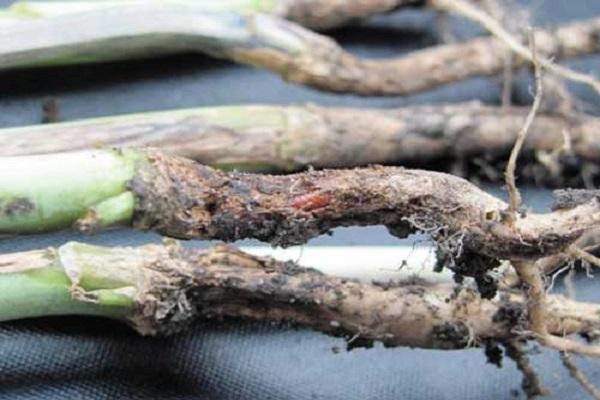
- Blackleg affects both adult plants and seeds. Symptoms include thinning of the stem with constrictions. It is caused by excess moisture and sudden temperature fluctuations. A lime solution helps combat it.
- Fusarium wilt causes darkening of shoots and foliage, followed by wilting. Fruit deformation is possible. To preserve the harvest, maintain a proper watering regime.
Among insects, the cabbage white butterfly, leaf beetle, and red flea beetle pose a particular threat. Ready-to-use insecticides are used to control them.
Harvesting and storage
The harvest is collected as it ripens, typically in September. The key is to do this before the first frost. If left in frozen ground for a long time, vegetables lose their original flavor, become soft, and unfit for consumption.
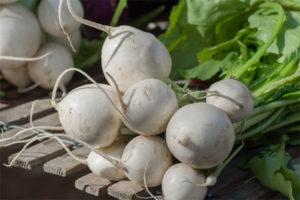
Fresh radish keeps well for no more than one and a half months, provided it is stored in a cool place.
For long-term storage, vegetables are cleaned of soil, lightly dried in the fresh air and placed in wooden boxes with sand.
Culinary uses
Due to its pleasant flavor, red radish is often used fresh in cooking, often in salads. However, even when cooked, the vegetable retains its beneficial properties and flavor.
Red radish salad - the easiest recipe
Ingredients:
- radish - 1 root vegetable;
- carrot - 1 pc.;
- vegetable oil;
- salt.
The vegetables are grated and mixed. Salt to taste and seasoned with oil.
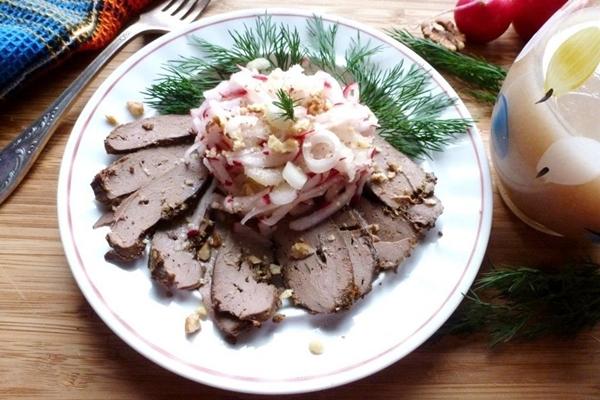
Salad with chicken liver
Grocery set:
- chicken liver - 170 g;
- eggs - 2 pcs.;
- unrefined oil - 2-3 tbsp;
- grated radish - 100 g;
- red onion - 1 pc.;
- boiled chickpeas - 80 g;
- pomegranate seeds, green onions - for decoration;
- salt, ground pepper.
Cooking:
- Liver and eggs are boiled and cut into cubes.
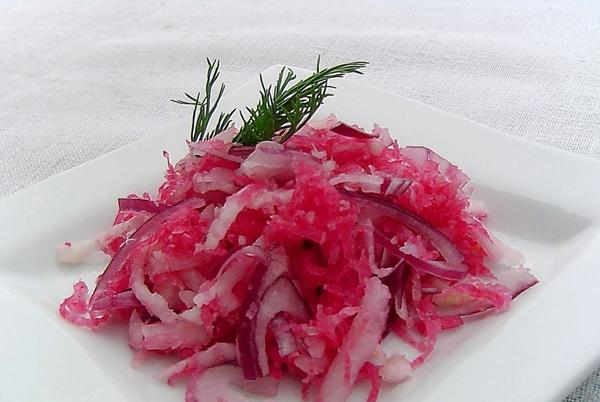
- The onion is chopped into half rings, the radish is grated.
- Mix all ingredients, add salt and season with oil.
- Place in the refrigerator for 30 minutes.
Before serving, garnish with pomegranate seeds and chopped herbs.
Salad with grapes
Compound:
- grapes (green) - 120 g;
- red radish - 1 pc.;
- lettuce leaves - 30 g;
- bell pepper and tomatoes - 1 each;
- lemon juice - 15-20 ml;
- olive oil - 1 tbsp;
- salt.
Cut the vegetables into random shapes and grate the radish. Cut the grapes into several pieces. Mix all the ingredients, season with salt, and dress with an olive-lemon sauce. Spread the mixture in a mound on the salad leaves. Garnish with a lemon wedge.
Pea salad
Necessary components:
- Japanese root vegetable and carrot - 1 piece each;
- pea blades - 120 g;
- odorless vegetable oil - 2 tbsp;
- balsamic vinegar - 1 dessert spoon;
- granulated sugar, fine salt - to taste.
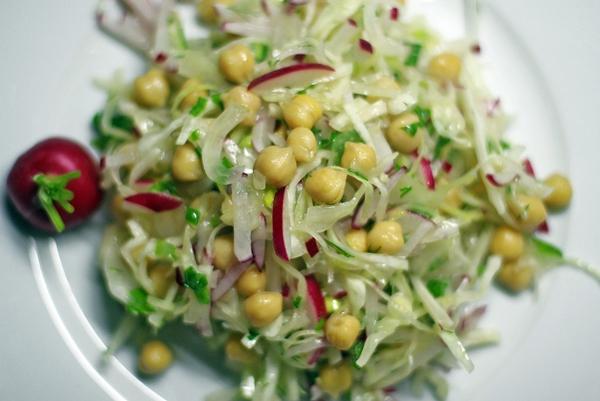
Process:
- Root vegetables are grated into strips using a special grater.
- Boil the peas for 2-3 minutes in salted water. Then drain, immediately add cold water, and discard immediately. Cut the peas into small pieces.
- All ingredients are mixed and seasoned with a mixture of sugar, salt, vinegar and oil.
Salad with rice
Ingredients:
- Red Meat radish - 1 pc.;
- boiled eggs - 3-4 pcs.;
- lettuce leaves - 4-5 pcs.;
- carrots - 1 pc.;
- green onions - 3-4 feathers;
- dill, parsley - 1 small bunch;
- canned peas - 100 grams;
- rice - 50 g;
- green apple - 1 pc.;
- paprika, salt, olive oil.
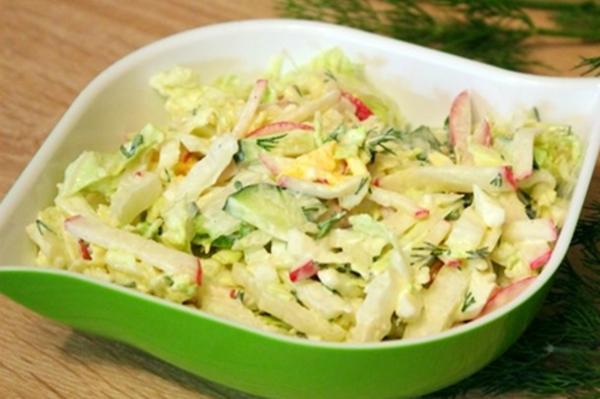
Sequence of actions:
- Grate the radish and after a few minutes drain the released juice.
- The same is done with carrots and apples.
- Lettuce leaves and onions are chopped.
- Rice cereal is boiled and cooled.
- The eggs are cut into cubes.
- Combine everything and add spices. Drizzle with oil.
Sprinkle with chopped herbs on top.
Any salad made with this vegetable is delicious, healthy, and nutritious. It can be enjoyed as a standalone appetizer or paired with main dishes.
Folk recipes
Red root vegetables are widely used in folk medicine as a universal remedy for a variety of ailments. The most effective recipes:
- Severe cough, sore throat and nose: drink radish juice 1 tablespoon three times a day or mix with honey in equal proportions.
- Cardiovascular disorders: Combine root vegetable and apple juice in a 1:1 ratio. Take 30-40 ml 3 times daily before meals.

For children with colds and sore throats, cut out the core of the vegetable, pour honey into it, and let the infused liquid sit for 4-5 hours. Rub the freshly squeezed juice onto sore joints, which improves mobility and relieves pain.
Related posts:
 The health benefits and contraindications of green Margilan radish
 The health benefits and contraindications of black radish
 The benefits and harms of Daikon radish for the human body, medicinal properties and contraindications
 Descriptions and names of varieties and the best types of radish, planting and care
 Planting times and care guidelines for black radish in open ground
 Growing, planting, and caring for Margilan radish in open ground
 Description of the Watermelon radish variety, planting and care, benefits and harms
 Recipes for pickled radishes, with and without sterilization, for winter storage, and how to store salad