Gardeners often face challenges when storing their harvest. If some vegetables are canned, it seems like there's nowhere to put the rest. However, in practice, this isn't the case. For example, it's possible to freeze some produce. In this case, it's important to consider whether ripe radishes can be frozen for the winter, as well as how to do so. Storing vegetables ensures that their nutritional value and vitamins are preserved.
Is freezing allowed?
Ripe radishes, like many other vegetables, can be easily frozen, preserving their flavor and essential vitamins. This requires following the proper freezing procedures and following a number of recommendations from more experienced gardeners. Radishes have a distinctive flavor and are rich in beneficial components. To preserve their nutritional value, the freezing process must be approached with due care.
Radishes can be stored for a long time without freezing, but this is often not enough. To preserve a ripe harvest until late winter, proper storage conditions must be maintained after freezing.
Selection and preparation of fruits
To preserve the nutritional value of vegetables, as well as their beneficial properties, it is necessary to properly select and then prepare the fruits.
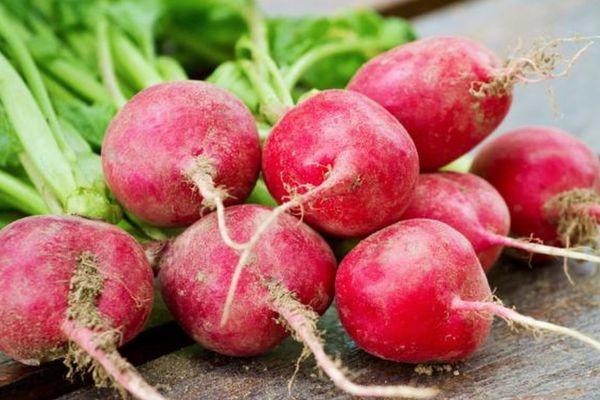
To do this, it is recommended to follow the following recommendations:
- Use only whole, undamaged specimens.
- Choose a variety that stores best for a long time.
- Before freezing, specimens are thoroughly cleaned of dirt.
- There is no need to wash radishes selected for storage.
- Choose the right option for storing frozen vegetables.
- Create the necessary conditions for freezing fruits.
- If necessary, move vegetables to a special storage facility.

Preparing ripe radishes for freezing involves harvesting or purchasing the ingredients. This requires choosing radishes that haven't been trimmed of their tops. Furthermore, for this type of storage, it's recommended to harvest unripe radishes, which are about a week away from full maturity.
Radish is a healthy and nutritious vegetable that retains most of its vitamins and flavor even after being thoroughly dried and juiced.
How to freeze
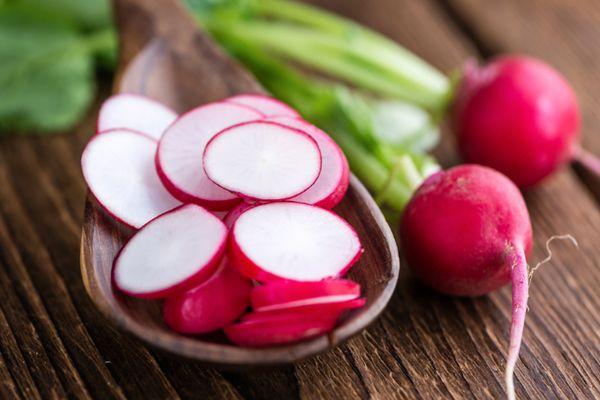
Various freezing techniques can be used to preserve food during the winter. Let's look at the most popular freezing methods. radishes for the winter:
- preparation in bags;
- preparing vegetables in glass jars with water;
- freezing unripe radishes with tops;
- drying vegetables and subsequent storage.
In each individual case, a special technique is used that ensures long-term preservation of the fruit.
Whole fruits are selected for freezing for the winter, as damaged vegetables have a significantly shorter shelf life.
In the package
This option for storing fruits involves the following algorithm of actions:
- ripe heads are freed from tops;
- the rhizomes are also cleared of soil, but not cut off;
- if necessary, damage to the skin is repaired;
- leave a small tail (2-3 centimeters);
- Afterwards the vegetables are placed in a bag.
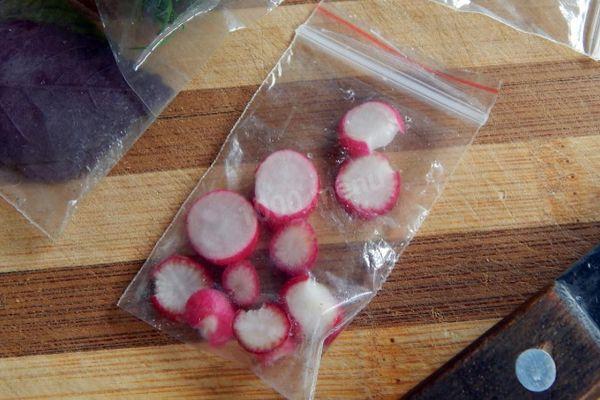
Freezing the prepared fruit is not necessary, as this method allows you to store the fruit in the refrigerator for up to 10 days. This method preserves the vitamins and nutrients from the root vegetables. You can also freeze the prepared fruit for 2-3 months.
With water in a jar
To store radishes using this method, the following algorithm of actions is performed:
- cooled boiled water is poured into the jar;
- turnips are wiped with a rag to remove dirt (not washed);
- the tops are cut off completely;
- The fruits are placed in a jar, which is covered with a lid.
The preparation is then stored for one or two months.
Take a look Also

It is essential to change the water regularly (optimally, for storage, change the liquid in the jar every five days).
With tops
When harvesting fresh radishes, the tops are not removed. Washing the harvest is not necessary. Simply remove any soil or dirt. The radishes are then bunched. The radishes are then placed in a moistened bag or container of water. To extend shelf life, periodically spraying the tops with water is acceptable. For long-term storage, freeze the radishes and then store them at subzero temperatures.
Fresh radishes will keep for about a week. Frozen radishes will keep for several months.
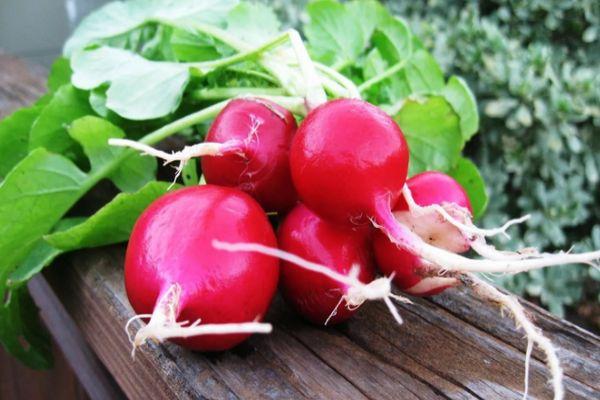
Dried radish
The following technology for preparing fruits for storage is provided here:
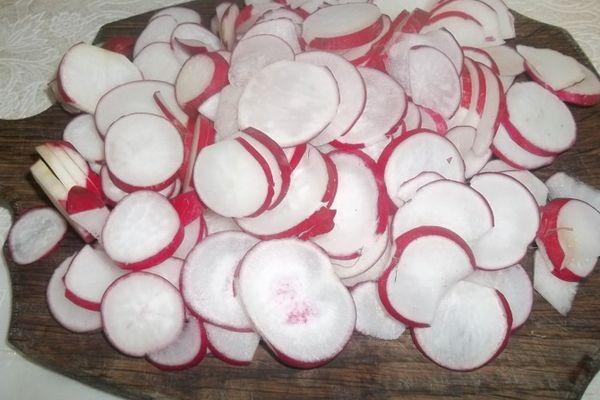
- the ripe vegetable is cut into slices;
- boiling is carried out in boiling and salted water (for several minutes);
- the workpiece is then dried in the oven;
- The dried slices are packed into cellophane bags or cloth sacks.
The workpiece is stored in a dry place for up to several months.
How long can radishes be stored?
To ensure ripe radishes are stored for a long time (until February), follow these recommendations:
- For storage, you need to have a cellar with sufficient humidity and air temperature.
- The right variety of radish is selected, resistant to long-term storage in cellars and basements.
- For storage, a regular box is prepared, into which sand or wood sawdust is placed.
- The radishes are cleaned of their tops, leaving small stems (there is no need to wash the fruit).
- The sand or sawdust used is moistened and then poured into the bottom of the box.
- Afterwards, radish roots are laid out.
- Then add sand (sawdust) and radish in layers.
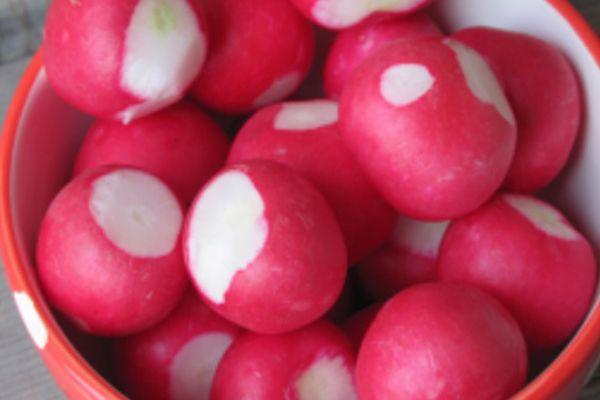
For long-term storage, the last layer must be left sandy.
Here, special attention is paid to selecting fruits that can be stored for a long time and ripen late. Under cellar conditions, the prepared fruit can be stored for several months to six months.
Related posts:
 TOP 11 Best Recipes for Canned Radishes for Winter and Storage
 The best eggplant varieties for growing in a polycarbonate greenhouse: planting and care
 Is it possible to soak treated cucumber seeds before planting and how to do it correctly?
 How to properly freeze ginger at home in the freezer for the winter and is it possible
 How to properly plant peas in a greenhouse and open ground
 Simple recipes for pickling milk mushrooms at home using cold and hot methods for the winter, and storage rules
 Methods for planting and propagating cherries at home
 How to quickly prepare pickled eggplant in jars for the winter, the most delicious recipes and storage conditions for the preparations