
- Features of the variety
- Breeding history
- Description
- Ripening period
- Nutritional value
- Landing
- Soil preparation
- Selection and processing of seedlings
- How to plant
- Growing and care
- Watering
- Top dressing
- Mulching
- Formation
- Schemes
- Trimming
- Garter
- Pinching out stepsons
- Coinage
- Topping
- Fragment
- Diseases and pests
- Prevention
- Treatment
- How to propagate by cuttings at home
- Advice from the pros
Breeders are constantly cultivating new grape varieties, varying in flavor, berry color, and ripening time. Despite this, the Isabella grape, discovered in the 19th century, remains extremely popular among gardeners. It is prized for its unique Muscat aroma and ease of care. Below is information on planting and caring for Isabella grapes, propagation, and expert advice on growing this variety.
Features of the variety
Isabella grapes are a table grape variety. They have a wide range of uses: the berries are used to make wine, juice, preserves, and are also eaten fresh.
Breeding history
The ancient Isabella grape variety was discovered in North America in 1816. It was discovered by breeder William Prince in the Gibbs family garden. The grape was named after Isabella, the owner of the house.
The variety was formed naturally by cross-pollination of the local grape Vitis Labrusca and the European variety Vitis Vinifera.
It immediately spread to many countries around the world. In the 20th century, the Isabella grape was widely used in the Soviet Union: it was grown in summer cottages and used to decorate gazebos and arches. Although breeders have since developed numerous varieties, it continues to be cultivated in various climates.
Description
The grapevine forms long, fast-growing vines. At three to four years of age, the variety produces shoots up to four meters long. The leaves are large and trilobed. They are silvery-green and heavily pubescent on the underside, while smooth and dark green on the upper surface.
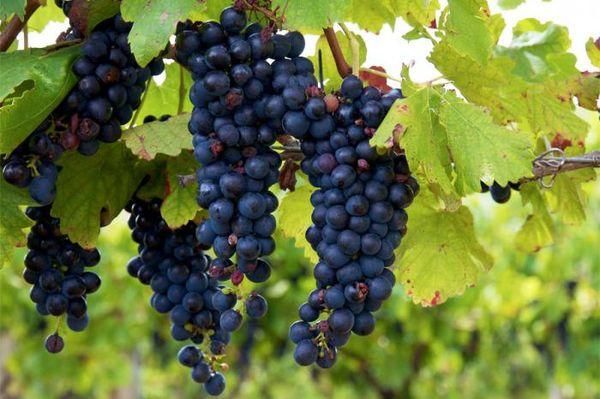
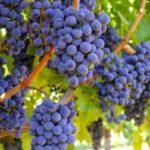
Two to five large-fruited clusters form on a shoot. The clusters weigh 200-250 grams, but some can reach up to 1.5 kilograms. They are shaped like an inverted cone. The berries are round and dark blue, almost purple. The skin is thick and covered with a bluish bloom.
Ripening period
This late-ripening variety has a growing season of 5-6 months. The grapes ripen in October. The scent of Muscat wafting through the garden plot signals the time to harvest. The first harvest occurs 3-4 years after planting.
Nutritional value
The berries have a sweet and sour flavor. The skin easily separates from the pulp, which contains a small number of seeds. The fruit's sugar content reaches 16-18 percent, and the calorie content per 100 grams is 65 kcal. They contain a large number of nutrients essential for the human body.
 Additional information: In some European countries, Isabella grape wine is prohibited from production and import due to its high menthol content.
Landing
For planting the Isabella grape, choose a sunny location. It can be planted at least 1 meter from the wall of a building. Avoid tall trees near the grape.
Soil preparation
Grapes prefer to grow in slightly acidic, fertile soil. Groundwater at the planting site should not be closer than 1.5 meters to the soil surface; excess moisture will damage the root system.
If the soil is clayey, add sand to loosen it, and add drainage to the bottom of the planting hole. Lime is added to acidic soil.
Place for planting grapes The area is cleared and a trench 80 centimeters in diameter and depth is dug in advance. The soil from this trench is mixed with rotted manure and compost, and potassium-phosphorus fertilizers are added.
Selection and processing of seedlings
Plant one-year-old bushes with a well-developed root system. The vines should have 3-5 healthy buds. If the vines have dried out during transport, place the seedling in a bucket of water overnight. To disinfect the roots, you can add potassium permanganate to the solution. An hour before planting, dip the seedlings in a clay slurry.
How to plant
Isabella grapes grow strong vines, so they are planted 1.5 meters apart. Row spacing is 2-2.5 meters. Planting is as follows:
- dig a hole measuring 80×80×80 centimeters;
- drainage is laid in a 10 cm layer;
- then a 20-centimeter-thick substrate of soil, rotted manure and compost is sprinkled;
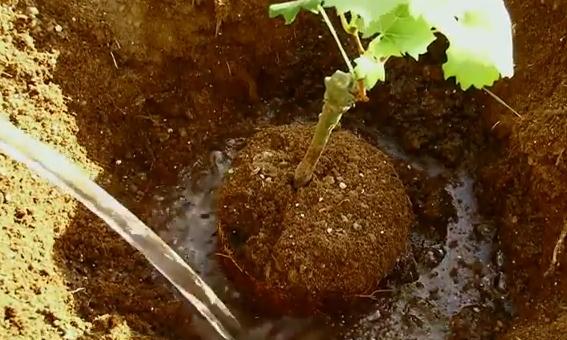
- garden soil is poured on top in a mound, a seedling is placed in the center of it, and the roots are spread out to the sides;
- a support peg is installed nearby;
- The hole is filled to the top with soil, lightly compacted, and 30-40 liters of water are poured under the bush.
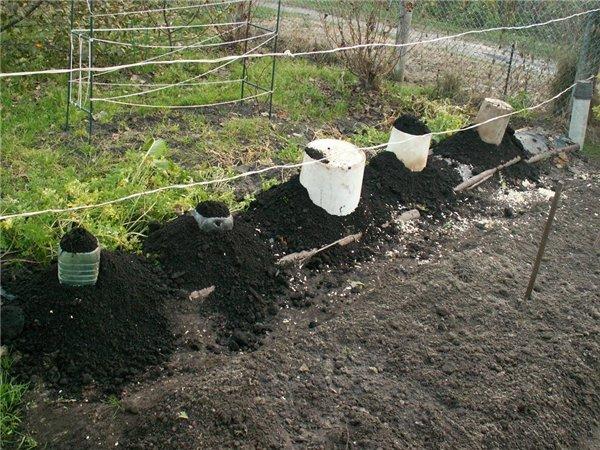
The tree trunk circle is mulched with peat or humus.
Please note! In southern regions, grapes are usually planted in the fall, while in northern regions, they are planted in the spring. This is necessary to ensure the seedlings have time to root well before the onset of frost.
Growing and care
Grapes require constant care: watering, fertilizing, mulching, crown shaping, protection from diseases and pests.
Watering
If the weather is dry, Isabella grapes should be watered generously several times during the season. If there's rainfall in the summer, additional watering will only harm the plant. Watering during the grape ripening period is especially harmful: the berries will burst, significantly reducing their quality.
Top dressing
When planting grapes in fertilized soil, fertilizing begins after two years. Without proper care and nutrients, the plants become vulnerable to diseases and pests, and the quality and quantity of berries decreases. Grapevines need to be fertilized several times a year.
In mid-spring, a suspension consisting of 1 tablespoon of ammonium nitrate, 2 tablespoons of superphosphate, and 1 teaspoon of potassium sulfate, dissolved in a bucket of water, is added to the trunk circle. This solution is enough to water one grape bush.
The second feeding of grapes is done two weeks before flowering with a potassium-phosphorus solution. Nitrogen is avoided at this time, as it promotes the growth of green mass and is only necessary in early spring. The third feeding is done after fruit set, using the same solution.

Mulching
The tree trunk area is sprinkled with rotted manure, wood shavings, humus, and dried grass. Mulch serves the following purposes:
- helps retain moisture in the soil;
- serves as an additional fertilizer;
- suppresses the growth of weeds;
- protects the root system of Isabella grapes from freezing.
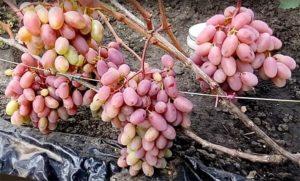
The covering material can be homogeneous or combined.
Formation
If a gardener wants a bountiful and high-quality harvest, they must train their grapevines throughout the spring and fall season. This process begins in the first year after planting.
Schemes
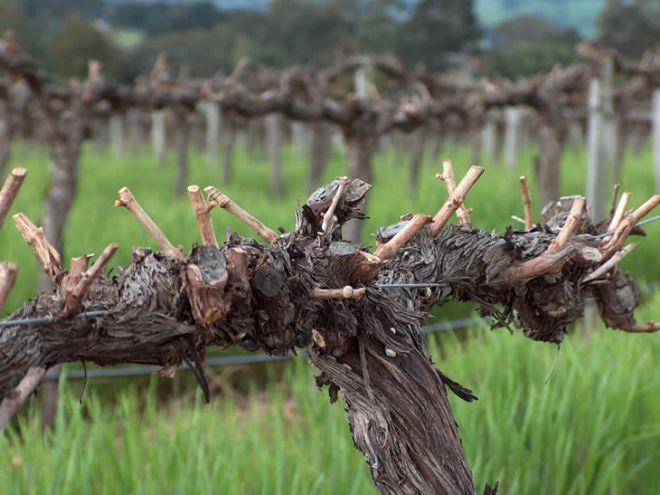
Depending on the region where Isabella grapes are grown, the soil type, and the rate of branch formation, the following crop formation schemes are used:
- sleeve;
- fan-shaped;
- cordon;
- standard;
- by bowl type.
Trimming
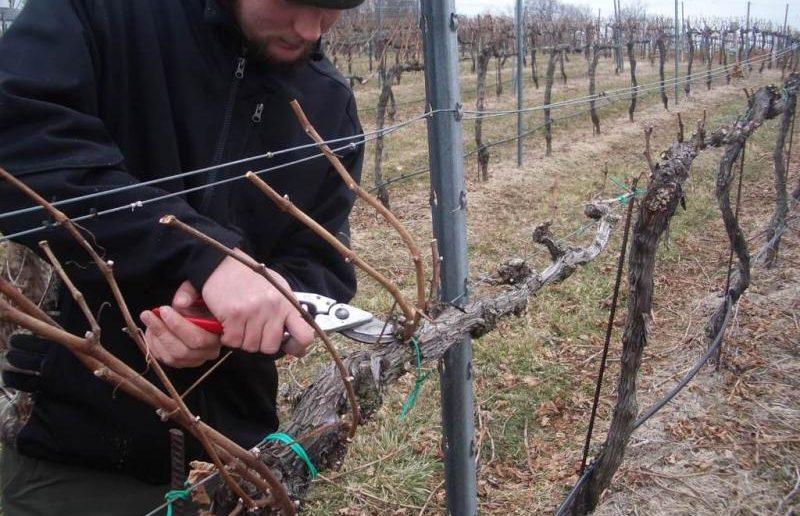
The procedure begins in the fall, well before frost sets in. Dry, diseased, and damaged branches should be trimmed. Approximately 12 buds should remain per meter of vine. If branches are frostbitten in the winter, they are pruned further in the spring.
Garter
Young vines are tied up in the year they're planted, otherwise they risk breaking in the wind. As the vines grow, they're stretched along a trellis. The canes, tied up in this way, will receive sufficient air and sunlight.
Pinching out stepsons
Side shoots are additional branches that form in the leaf axils. When there are too many of them, they begin to thicken the bunches and deprive them of nutrients. Therefore, throughout the spring and fall, excess side shoots are removed from the grapevine with pruning shears, scissors, or by pinching them off by hand.

Coinage
This procedure involves removing the shoot tip with 6-8 internodes. This procedure is performed on well-developed vines at 3-4 day intervals from mid- to late July. This procedure promotes more complete shoot nutrition, accumulation of nutrients, ventilation, and exposure to sunlight.
Topping
Pinching or pruning promotes rapid crown formation in Isabella grapes. To do this, pinch off the tops when three leaves have appeared on the shoot. Another option is to pinch off the strongest branches above the tenth internode before flowering.
Fragment
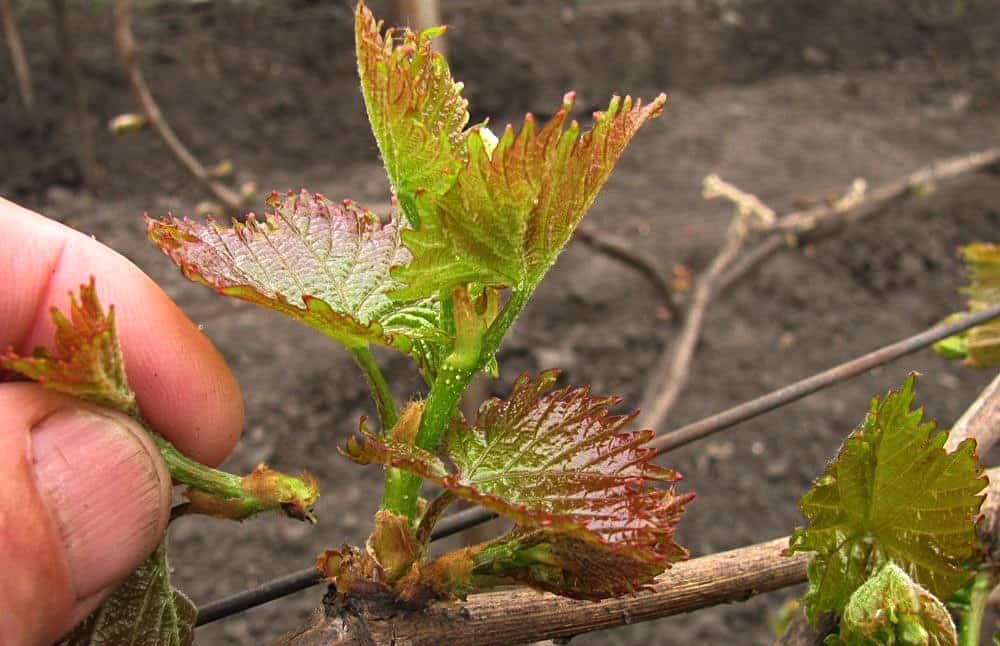
During the spring pruning process, suckers growing from the ground and water sprouts forming on the branches are removed. This is monitored throughout the season, as they can regrow several times. In addition, clusters of small grapes are removed, as well as if too many have formed on the bush.
Diseases and pests
Isabella grapes have good immunity, but still, like any planting, they can be infected with certain diseases and pests.

Prevention
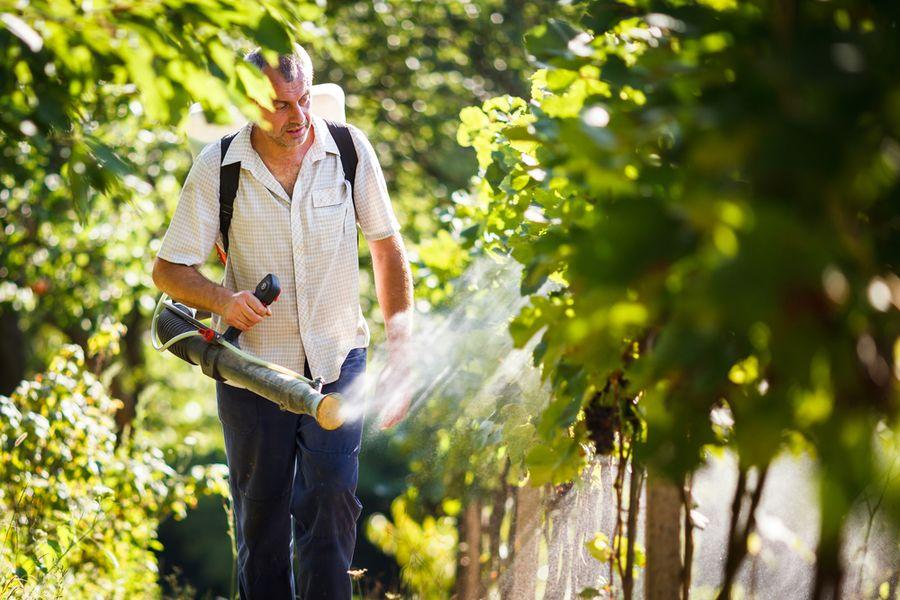
To prevent fungal diseases, spray bare vines with a 3% ferrous sulfate solution in the spring. Then, when the 5th or 6th leaf opens, apply any copper- and sulfur-containing products. This will protect the grapes from powdery mildew, downy mildew, anthracnose, and spider mites. In the fall, spray the vines with Nitrofen to control overwintering pathogens and pests.
Treatment
If the grapes are affected by diseases, various fungicides are used. Insecticides are used for attacks by harmful insects. If diseases and pests attack during the ripening of the grape bunches, the plants can be sprayed with traditional remedies.
How to propagate by cuttings at home
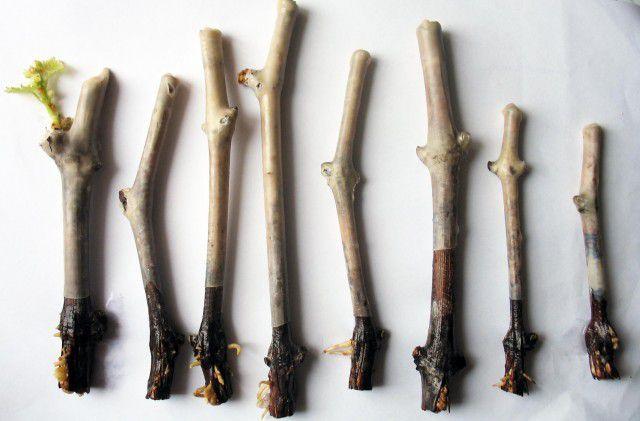
To propagate the Isabella variety, take cuttings 50-70 centimeters long and no more than 1 centimeter thick in the fall. Each cutting should have 3-4 living buds.
The cuttings (saplings) are disinfected for 30 minutes in a 5% copper sulfate solution and tied into bundles of 8-10. They are then buried in damp sand in the cellar.
In the spring, check the viability of the cuttings by cutting off a few centimeters from the top. Healthy cuttings should have a green cut. If the cut is yellow or brown, discard the planting material. Then, proceed to planting the grapes in 2-liter plastic bottles as follows:
- cut off the necks of the bottles and make drainage holes in the bottom;
- drainage is placed at the bottom of the containers, then a small layer of substrate;
- place the cutting at a slight angle, add some soil, and water;
- then steamed sawdust or coconut substrate is laid out;
- The top of the container is covered with plastic film or cups to create greenhouse conditions.
Place the seedling containers in a well-lit area and water them as needed through the tray. When the sprouts appear, remove the plastic wrap. Before transplanting the young plants into the ground, harden them off for 10 days. Each seedling should have 3-4 well-developed roots and a growth length of 8-10 centimeters.
Important! For propagation, select healthy cuttings without signs of disease.
Advice from the pros
Experienced winegrowers offer the following advice on growing Isabella grapes:
- To prevent diseases, remove plant debris from the tree trunk circle.
- Conduct preventive spraying of bushes with various preparations.
- Young seedlings should be hilled and covered with spruce branches for the winter.
- Fertilize the soil under the bushes at least three times per season. Avoid nitrogen in the summer, as it only promotes foliage growth, not fruit clusters.
- Shaping the Isabella grapevine's crown begins the first year after planting. This procedure promotes healthy growth and a high-quality harvest.
- Don't prune all the shoots in the fall, otherwise the frosty winter will leave you without a harvest next year.
- Plant grapes away from tall plants.
After studying information on planting, caring for, and propagating the Isabella grape, a gardener can easily grow this variety in their own garden. It has a variety of table and industrial uses: fresh consumption, wine, juice, and vinegar. Grapes contain a large number of beneficial substances essential for healthy living.
Related posts:
 Description of 30 grape varieties for Siberia, planting and care for beginners
 The ripening time of grape vines by variety, how to speed up the process, and what to treat the plant with
 How to grow grapes in the Moscow region in open ground without a greenhouse
 Description of the Julian grape variety, planting and care instructions
 Description of 30 varieties and types of Muscat grapes, planting, cultivation and care
 Description of the Krasotka grape variety, planting and care technology
 Beginner's Guide to Growing Grapes in Open Ground in Central Russia
 Description and characteristics of the Alpha grape variety, the subtleties of cultivation