
- The history of the selection of the Champion of the North apricot
- Advantages and disadvantages
- Description and characteristics of apricot
- Tree dimensions
- Pollinators and flowering
- Productivity
- Fruit characteristics
- Frost resistance
- Resistance to pests and diseases
- Planting apricot Champion of the North
- Selecting a suitable site
- Required soil composition
- Preparing the seedling
- Step-by-step landing algorithm
- What can be planted nearby?
- How to care for the Champion of the North variety
- Irrigation
- Fertilization
- Pruning and crown shaping
- Prevention and control of diseases
- Protection from pests and insects
- Preparing for winter
- Reproduction
- Gardeners' reviews
Not all fruit trees bear fruit in regions with cold winters. It's no wonder that apricots, peaches, and grapes are imported from the south. But breeding advances, and apricot varieties such as the Northern Champion have been developed, which are successfully grown in central Russia.
The history of the selection of the Champion of the North apricot
Russian scientists from Voronezh have developed a new apricot variety, which has become popular in regions with cold winters and unstable weather conditions. The breeding work was carried out using the Triumph Severny variety. By crossing it with various seedlings, A. Venyaminov and L. Dolmatova created a tree capable of growing and developing successfully in central Russia.
Advantages and disadvantages
Gardeners are advised to pay attention to this apricot variety because it:
- bears fruit quickly and abundantly;
- tolerates spring frosts and temperature drops in winter;
- high-yielding;
- with a compact and sparse crown;
- produces fruits of excellent quality.
While diseases bypass the tree, pests frequently attack the variety. A disadvantage of the apricot is its need for pollinators. Sometimes, during severe spring frosts, the tree's buds may freeze.
Description and characteristics of apricot
This variety has proven itself to be excellent, possessing excellent qualities and characteristics. The tree not only produces delicious apricots but also becomes a beautiful addition to your garden.
Tree dimensions
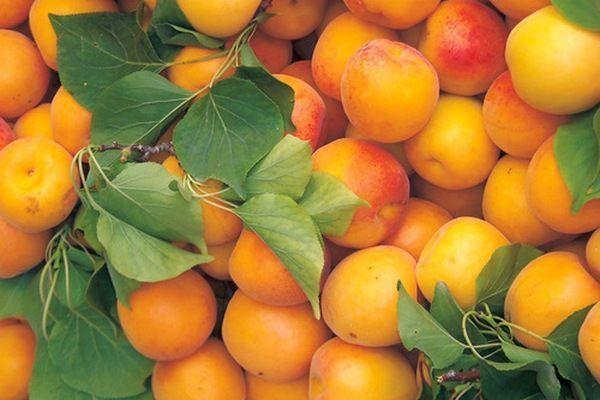
The apricot tree grows up to 5 meters in height. The tree's crown is spherical and sparse. The branches are thick and covered with smooth, brown bark.
Pollinators and flowering
The apricot tree blooms in late May. Both male and female flowers form on the branches. However, for better fruiting and fruit set, pollinators can be planted nearby. The best varieties are Triumph Severny or Lel.
Productivity
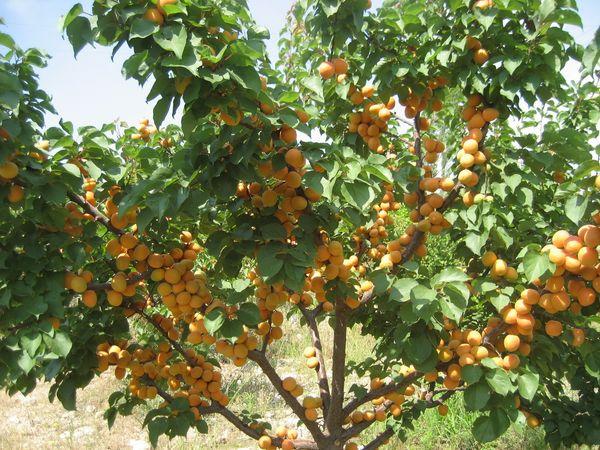
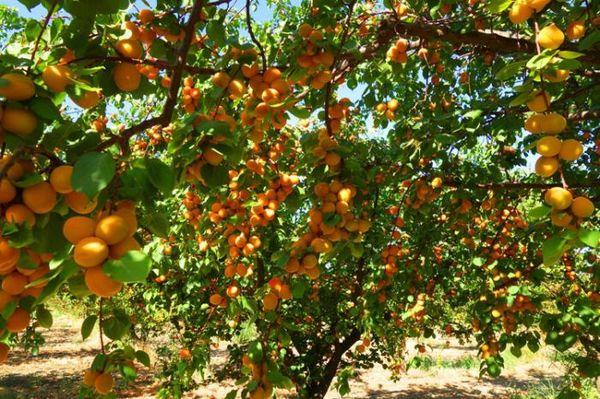
Apricots can be harvested from the tree as early as the fourth year of cultivation. Within a year or two, yields reach 25 kilograms. However, the plant does not bear fruit every year.
Fruit characteristics
The Northern Champion's apricots are distinguished by:
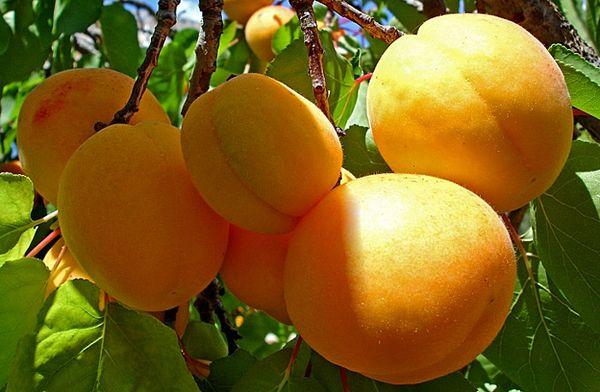
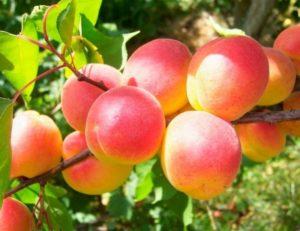
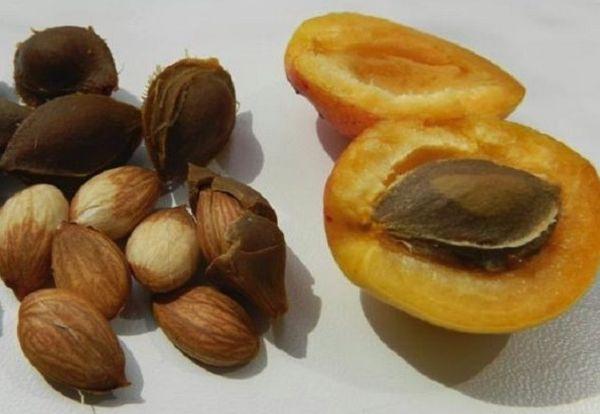
- weighing 60-70 grams;
- orange skin color, delicate blush;
- dense, slightly dry pulp;
- harmonious taste.
The fruit's flavor is rated at 4.6 points. Inside the pulp is a seed that is easily separated.
Frost resistance
Apricot wood is not damaged by winter frosts. However, flower buds often freeze during spring frosts.
Resistance to pests and diseases
Breeders have created a plant that not only withstands temperatures down to -30°C but is also immune to many fungal infections. The tree can be susceptible to clasterosporium leaf spot, or holey spot, and moniliosis.
Among the insects that attack the plant are aphids and occasionally codling moths.
Planting apricot Champion of the North
Apricot seedlings are planted in the fall, before October 10th. However, if the planting material was purchased in the spring, planting should take place before the buds open.
Selecting a suitable site
For best growth, a sunny spot in the garden should be prepared. Avoid planting apricots in the shade, as this will delay ripening of the fruit. Their flavor will be tart and low in sugars.
It's important to keep groundwater away from the site. It should be at least 2 meters below the surface.
Required soil composition
Apricot grows well in soils with neutral acidity. Loamy or black soil is suitable. Pay attention to the looseness of the soil. It should allow water and air to reach the tree's roots.
Preparing the seedling
When choosing an apricot seedling, pay attention to the plant's root system. It should be well-developed and strong. One- or two-year-old trees are used. During storage and transportation to the planting site, ensure the roots do not dry out. Before planting, the root system is dipped in a mixture of black soil and cow manure.
Step-by-step landing algorithm
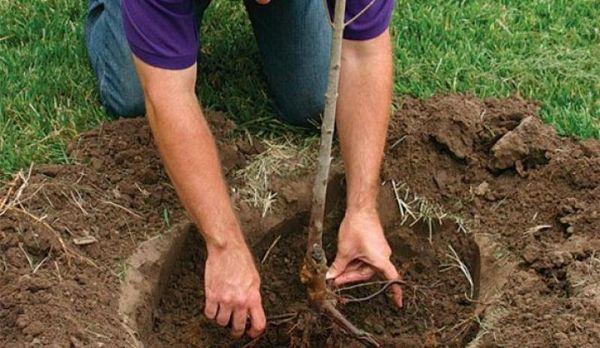
Prepare the apricot planting hole 2-3 weeks in advance. Each tree needs a hole 50 centimeters deep and 70-80 centimeters wide. Place a drainage layer at the bottom of the hole. Then mix 2-3 buckets of compost, superphosphate, and potassium salt with soil and fill the hole three-quarters full. After creating a mound of compost in the center, stand the tree upright, spreading its roots.
Cover the apricot tree with soil, shaking it occasionally. Leave the root collar 2-3 centimeters above the soil surface. Then compact the soil around the apricot tree and water thoroughly. Cover the area around the trunk with a layer of peat and humus.
You can plant apricot trees at a 45-degree angle. This will help the young tree survive the winter better and protect it from freezing.
What can be planted nearby?
Neighboring trees should be at least 5 meters away from the apricot tree.. Other varieties are planted nearby to accelerate fruit set and development. Late-season varieties, such as Champion of the North, are selected.
How to care for the Champion of the North variety
The plant will thrive if properly cared for. It requires adequate moisture and fertilization. This southern tree requires careful preparation for winter.
Irrigation
Apricot requires a lot of moisture when the tree:
- blooms;
- produces additional shoots;
- prepares for fruit ripening.
In the fall, the tree's trunk area should also be watered. However, if the fall was rainy, watering should be avoided: the roots will not get enough air due to the increased soil moisture.
Fertilization
Fertilizer added to the planting hole will nourish the seedling during the first year. Then, apply nitrogen fertilizer in the spring, and spray with a 3% nitrogen solution in the fall before leaf fall. To encourage fruit formation, a wood ash solution is needed. Water with it after flowering.
Pruning and crown shaping
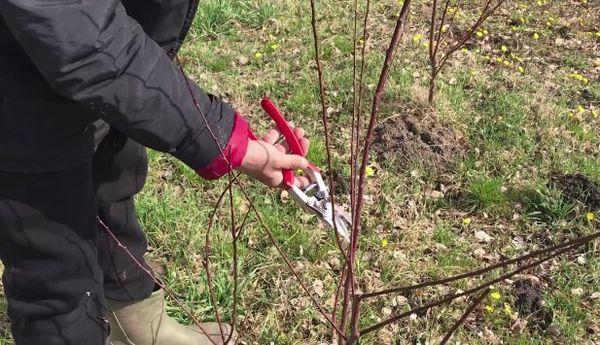
Every year before fruiting, the apricot tree's crown is pruned, shortening the skeletal branches by a third. Sanitary pruning is performed in the spring, in April. Additional lateral shoots are removed at a height of 70-80 centimeters from the ground. If branches are growing from a single point, they should be removed.
Use a sharp knife or pruning shears to shape the tree.
Prevention and control of diseases
One of the most common diseases affecting apricots is moniliosis, or gray mold. The disease can be identified by a grayish coating on branches, leaves, and the trunk. A diseased tree will not produce fruit. While moniliosis is difficult to control, it is easier to prevent. To prevent this, spray the trees with Bordeaux mixture in the spring. After flowering, treatment with Abiga Peak or Gamair is necessary.
Clasterosporium leaf spot is characterized by the appearance of gray spots surrounded by a rim on the leaves. These spots then develop holes, and the leaves dry out and fall off. The pathogen should be controlled with fungicides such as Zineb.
For preventive purposes, treatment with a 1% Bordeaux mixture solution is necessary.
Protection from pests and insects
The Champion Severa variety is most often attacked by aphids. However, the sticky secretions of these pests attract sooty mold pathogens. Therefore, it's important to treat the crop promptly against aphids using a solution made from wood ash (1.5 kilograms) and laundry soap (80 grams) per bucket of water.
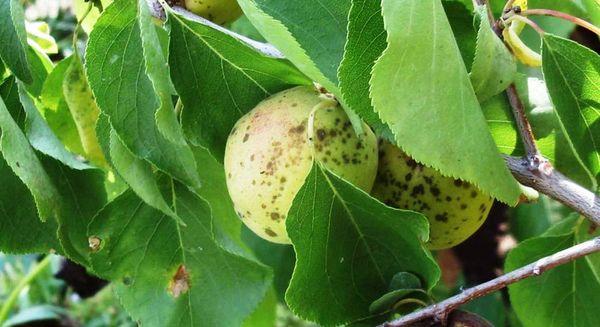
Leaf rollers and codling moths are controlled with insecticidal agents: "Karbofos", "Iskra".
Preventive measures include timely digging of the soil, loosening of the tree trunk circle, removal and burning of fallen leaves, and sanitary pruning of branches.
Preparing for winter
Despite its winter hardiness, this variety requires protection. This is especially true for young trees. They should be wrapped in matting or several layers of non-woven material.
To protect apricot trees from the scorching sun, which is most intense in January and February, whitewash their trunks in October. This is done using slaked lime mixed with copper sulfate. This will protect the trees from pests and diseases.
Reproduction
There are several methods for propagating garden plants, but cuttings are the most common. Green cuttings are taken in the spring or early summer morning. It's important that the cut branch has three leaves. Dip the end of the cutting in a growth stimulator and plant it in the garden. When callus appears at the end after two weeks, the cutting has taken root, and within a month, a root system will form.
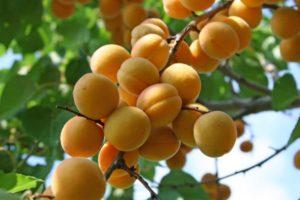
Woody shoots are harvested after the leaves have fallen. They are kept in the ground in a cool place until spring, and then planted in the chosen location.
The variety can also be propagated by seed, but this method is labor-intensive and not always successful. Before planting, the seeds are soaked in cool water for a long time. The soil for planting the seeds consists of damp moss, sawdust, or sand. The seeds are placed in a bag or container in a cool place for up to 2-3 months. The seeds are then planted in nutritious soil to a depth of 10 centimeters. They are then kept at a temperature of 10-15 degrees Celsius. Seedlings may appear in 3-4 months.
The method of propagation by grafting is the most appropriate, but it must be carried out skillfully, with the necessary skills to carry out the operation.
Gardeners' reviews
Alexander, Tambov: "I tried growing apricots in the garden, but it never worked. Only the Northern Champion took root and started bearing fruit. The tree requires little effort, just watering and feeding it regularly. The first time, I harvested two buckets of delicious fruit. We didn't even have time to make compote—they were all eaten."
Marina, Moscow Region: "Apricots take up a lot of space in my garden. At first, I had a Triumph Severny, but it froze frequently. Then someone recommended buying some Champion Severny seedlings. It's an excellent variety. The trees are disease-resistant and frost-tolerant. I only protect them from spring frosts. The fruits are delicious and sweet, perfect for compotes and jams."
Olga, Voronezh: "Many people grow the Champion Severa variety in their gardens, as it was developed here. But my relatives grow it in Siberia, near Omsk. The apricot survives winters well, bears fruit, and produces abundant harvests."
Related posts:
 Description of the Melitopol apricot variety and cultivation technology
 Description and characteristics of the Lel apricot, planting technology and care
 Is it possible to grow an apricot tree from a seed in your garden? How to plant and care for it?
 Description of the best columnar apricot varieties, planting and care
 Reasons why apricot trees may not bear fruit and what to do about it
 How and whether it is possible to graft an apricot, the choice of rootstock, timing and methods of budding
 Causes and treatment of apricot diseases, what to do, and how to get rid of pests
 Description and technology of growing the Tsarsky apricot variety