
- When does a planted tree begin to bear fruit?
- What factors influence the onset of fruiting?
- Reasons for lack of color on apricots
- The tree is too young
- Harsh winter
- Landing errors
- Rare watering
- Untimely feeding
- Diseases of various types
- Insect pest damage
- If the tree blooms, but there is no ovary
- The variety is self-sterile
- Lack of pollinators
- How to restore fruiting
- Soil analysis
- Pest control
- Protecting apricots from frost and bad weather
- Sanitary pruning
- Watering rules
- We organize tree feeding
- Stimulating pollination
- Radical methods
- How to bend branches
- Features of banding
The breeding of new stone fruit varieties has significantly expanded the apricot-growing region. At the same time, the number of issues related to achieving a high yield has also increased. When problems arise, it's important to quickly understand why an apricot isn't bearing fruit and address the cause. Apricot yield depends on both external environmental factors and proper agricultural practices.
When does a planted tree begin to bear fruit?
Apricots won't appear on seedlings in the first year after planting; the plant needs to gain strength and become well-established. On average, the first flowers appear on the tree within 3-5 years, with the exact time frame varying depending on the variety. If the apricot tree is suitable for the region and planted correctly, the fruiting period will match the nursery's estimate.
Fruiting of popular varieties occurs after:
- 3 years for apricots Honey, Pinsky, Laureate, Frost-resistant;
- 4 years for Sayan and Mountain Abakan;
- 5 years for the Chelyabinsky Ranniy and Kichiginsky varieties.
What factors influence the onset of fruiting?
The onset of the first apricot fruits depends on the type of propagation:
- Vegetative propagation. When propagated by grafting, the first harvest can be obtained in 2-3 years. Wild trees, blackthorn, and even plums are suitable as rootstocks. Using 1-2 year-old cuttings that have already passed the juvenile stage will significantly accelerate fruiting.
- Seed. Growing apricots from a seed is a longer process, with fruiting occurring much later. The first fruits will not appear on seedlings younger than five years old, and sometimes flowering does not occur until the seventh year of growth.
Flowering and fruiting may occur later if the root collar is too deep and the planting location is chosen incorrectly.
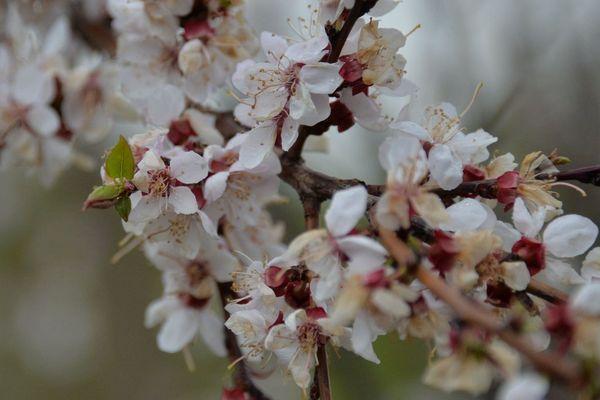
Reasons for lack of color on apricots
Most often, apricot trees fail to produce a bountiful harvest due to insufficient flowering or a complete lack of it. This may be due to:
- insufficient age;
- poorly endured wintering;
- incorrect landing;
- lack of moisture;
- poor nutrition;
- diseases;
- pests.
The tree is too young
Don't worry if after 1-2 years the first flowers haven't appeared on your apricot sapling. Expect cultivar trees to bloom in their 3rd, 4th, or 5th year. Stone fruits zoned for southern regions bloom earlier than their northern counterparts. Early fruiting is typical for hybrids of the following genetic groups:
- Manchu;
- Central Asian;
- Iranian-Caucasian.
Harsh winter
Climate conditions in the growing region can significantly impact apricot blossoming. After a cold or snowless winter, the plant primarily needs to recuperate; fruiting is not a priority. To stimulate blossoming and fruit set, a combination of weather conditions is necessary:
- air temperature not lower than 10 °C;
- absence of recurrent frosts;
- sufficient humidity.
Freezing of buds disrupts fruiting, and the tree directs its energy toward wood growth and repairing damage. Even a minimal temperature drop of 1-2°C is dangerous for flowers, so an early warming period followed by a return to normal may result in poor flowering.
Landing errors
When planting apricots in your garden, it's important to strictly follow the proper agricultural practices. The following may be the reasons for a lack of flowering:
- Inappropriate planting time. In northern and central Russia, it's best to plant apricots in the spring, as fall planting significantly slows the tree's development and delays its first flowering.
- Bad location. Growing apricots in poor soil prevents the plant from developing normally, while too much organic matter in the soil enhances foliage growth but hinders flower formation and fruiting.
- Incorrect planting height. Unlike other garden trees, it's best to plant apricots not in depressions, but rather in a mound about half a meter high. It's important to keep the grafting site above snow level.
Rare watering
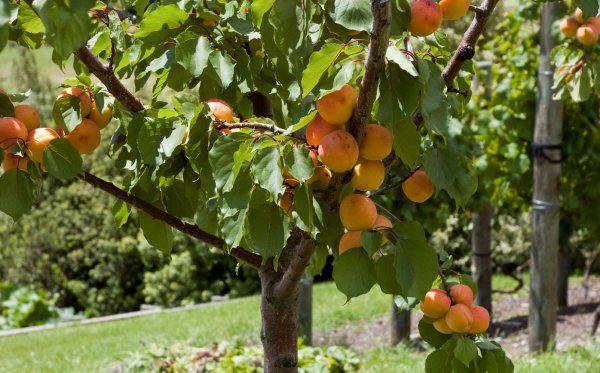
Plants obtain nutrients from the soil along with moisture, so if underwatered, the apricot tree will not bloom even with adequate nutrition. The taproot of a seedling extends up to 2 meters deep, while the main mass is very close to the surface. Frequent, small amounts of water are necessary for normal development.
Untimely feeding
Poor nutrition weakens the plant and delays flowering. Maintain a balanced nitrogen and micronutrient balance in the soil by adding potassium, calcium, and iron regularly.
Violation of the fertilization regime leads to the activation of vegetative shoots instead of fruit shoots.
Diseases of various types
The absence of apricot flowers can be caused by diseases of garden crops, including:
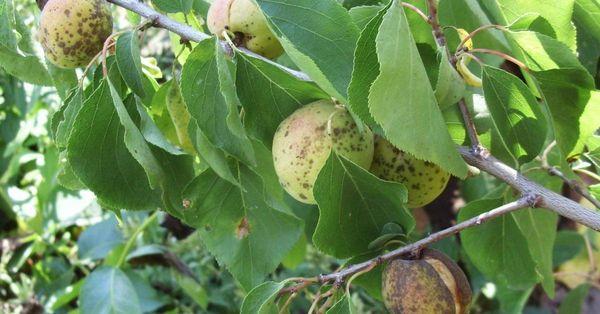
- Gum wilt caused by improper pruning, exposure to high and low temperatures, and fungal infections.
- Moniliosis. This fungus causes flowers to wilt and fall off at the bud stage.
- Clasterosporium. This fungal infection damages buds, ovaries, and young shoots entirely, destroying them early in the growing season.
Insect pest damage
Insects damage buds and ovaries, leading to loss of color and future fruit yield. Pests that pose a threat to flowering apricots include:
- aphid;
- flower beetles;
- peach and plum codling moths.
If the tree blooms, but there is no ovary
Under favorable conditions, apricot trees undergo pollination during flowering to form ovaries, and then gradually develop fruit. However, it also happens that a tree blooms profusely, but after the petals fall, there are almost no ovaries. This may be due to the following:
- Night frosts caused flowers to freeze;
- Pollination did not occur due to self-infertility of the seedling or the absence of suitable pollinators.
The variety is self-sterile
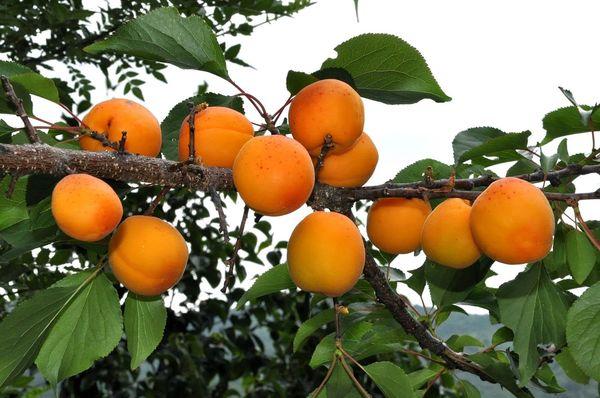
Some varieties of apricot cannot be pollinated by their own pollen, among the most well-known are:
- Kichiginovsky;
- Arzami;
- Babai;
- The best Michurinsky;
- Mirsanjdali;
- Shiraz.

These plants require companion trees with similar flowering periods. Simple solutions for pollinating self-sterile apricots:
- graft a cutting of another variety onto a tree;
- pollinate flowers by hand;
- Plant a tree nearby that is suitable for cross-pollination.
Lack of pollinators
Poor fruit set in self-fertile apricot varieties can be caused by a lack of pollinator interest. During flowering, attract bees and bumblebees to the trees to create favorable conditions for pollination. Flowers and unopened buds can be sprayed with a honey solution. Planting lemon balm, catnip, phacelia, or buckwheat bushes under the canopy will also attract pollinators.
How to restore fruiting
Most apricot fruiting problems are solvable, and the plant's yield can be restored next season if the cause of the problem is correctly identified. To do this, it is necessary to carefully examine the plant, change the care regimen and monitor changes in the tree’s development.
Soil analysis
To obtain a high yield, apricots should be planted in light, permeable soils, such as loamy soils with a neutral pH. Acidic soils should be neutralized by adding lime during autumn tilling.
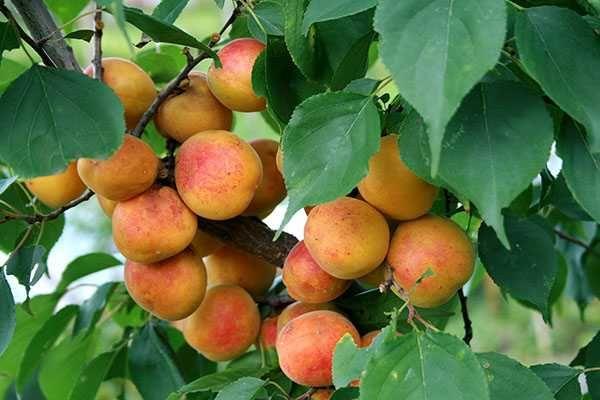
If the soil is heavy, dense and clayey, it is recommended to improve its qualities using the following measures:
- Dig up the soil around the tree trunks and mix it with chopped green grass.
- Add rotted manure, compost, sand and wood chips to the soil.
- Loosen the soil after each watering.
- In autumn, dig up the soil to a depth of 0.15 m, and in spring – to a depth of 0.1 m.
Pest control
To protect against insects during the flowering period, spray the crown with insecticides. Spraying schedule:
- At the pink bud stage.
- 15-20 days after flowering ends.
- During the period of excess ovary shedding.
- In 2 weeks.
The main danger is plum codling moth, which is effectively destroyed by drugs:
- Confidor;
- "Aktara";
- Intavir;
- "Coragen".
To prevent insects from becoming accustomed to pest control agents, it is recommended to alternate chemicals annually.
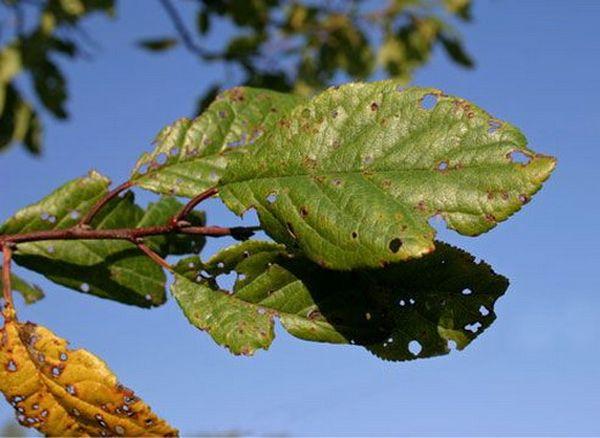
Protecting apricots from frost and bad weather
With the arrival of spring warmth, it's important to prevent early bud break, as nighttime temperatures are still dangerous for plants. A number of measures can help preserve apricots:
- When frost sets in, fumigation will help protect trees.
- In autumn, you can spray the trees with Auxin, and at the end of February - with a solution of urea or copper sulfate.
- With the arrival of spring, you can remove excess snow to avoid steaming the root system.
- Pinching young shoots stimulates the growth of new fruit buds with later flowering.
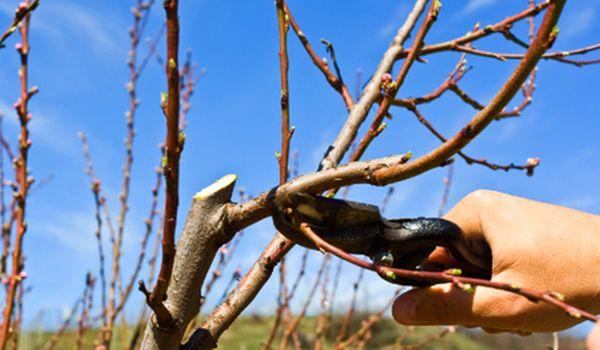
Sanitary pruning
The apricot tree crown grows vigorously upward but produces few lateral shoots, resulting in fruit growing at the ends of the main branches. In the spring, before the sap begins to flow, it is recommended to shorten the lateral shoots to 0.4-0.5 m. It is advisable to completely remove upward-growing branches that thicken the crown. Main branches should be pruned every 3-4 years.
Watering rules
The irrigation regime for apricots is carried out according to the following scheme:
- Abundant moisture supply during the period of preparation for winter.
- Before flowering.
- During the formation of ovaries, approximately in May.
- During the ripening of fruits and the formation of future buds.
Apricot does not tolerate stagnant moisture, so trees should not be watered in rainy weather and should not be planted in holes.
We organize tree feeding
For proper development and active growth, it is necessary to apply appropriate fertilizers on time:
- In spring, organic fertilizers rich in nitrogen, such as manure or compost, are added to the soil.
- In summer, it's a good idea to enrich the soil with phosphorus and potassium. They boost apricots' immunity and improve their flavor. For a greener environment, you can replace mineral fertilizers with wood ash and chicken manure.
Take a look Also
Stimulating pollination
Rain and fog can weaken the volatility of apricot pollen, reducing fertilization. In calm weather, pollen can be promoted by fanning the crown. Active pollination can be achieved by planting two different apricot varieties in close proximity or in the same planting hole. Even self-fertile varieties yield significantly higher when pollinated by another apricot variety.
Radical methods
If changes to agricultural practices are ineffective, more drastic measures can be tried. Drastic methods for stimulating flowering are aimed at altering the flow of sap within the tree. These methods must be applied with extreme caution to avoid completely disrupting the apricot tree's nutritional system. Physical impacts on the tree include:
- bending branches;
- hauling;
- ringing.
How to bend branches
To stimulate fruiting on empty branches, it is necessary to perform the bending procedure correctly:
- The time for work falls in early spring, before the buds begin to swell, or in August.
- The branch should be bent away from the trunk at an angle of 50-60°, tied to a peg or hung with a weight.
- At the end of the season, you need to check for changes in growth direction.
It is important to remember that the branches should not form an arc, and the rope must be moved to avoid growing into the bark of the apricot.
Features of banding
Ringing of apricots is carried out as follows:
- It is necessary to identify non-fruit-bearing skeletal branches.
- A month after flowering, remove strips of bark up to 20 mm from the base of the branches.
- Cover the cut area tightly with film for 2 months or return the inverted bark to its place.
During this time, the branch will recover, and the reduced nutrient supply will encourage the formation of new flower buds. Fruiting will resume within two years. It's important not to make wide cuts or repeat the procedure on all branches in one year.
Related posts:
 Is it possible to grow an apricot tree from a seed in your garden? How to plant and care for it?
 Description and characteristics of the Lel apricot, planting technology and care
 Description of the Melitopol apricot variety and cultivation technology
 How and whether it is possible to graft an apricot, the choice of rootstock, timing and methods of budding
 Causes and treatment of apricot diseases, what to do, and how to get rid of pests
 Description and subtleties of growing the Champion of the North apricot variety
 Description of the best columnar apricot varieties, planting and care
 How to propagate apricots: cuttings and planting at home