
- Criteria for choosing a variety
- The best apricot varieties for Siberia
- Siberian Baikalova
- Seraphim
- Khabarovsk
- Anniversary
- Amur
- Academician
- Bullfinch
- East Siberian
- Winter-hardy varieties
- Columnar apricots
- Self-fertile
- Low-growing and dwarf varieties
- How to plant and grow apricots in Siberia
- Choosing a landing site
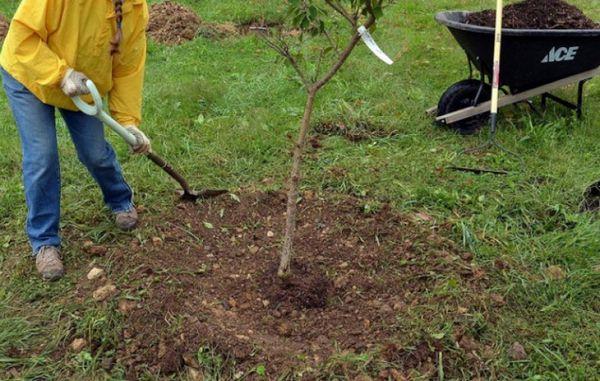
- Planting process technology
- Further care of the tree
- Watering
- Fertilizer
- Loosening and mulching the soil
- Pruning and crown shaping
- Seasonal pruning
- Shelter for the winter
- The specifics of growing a fertile crop from a seed
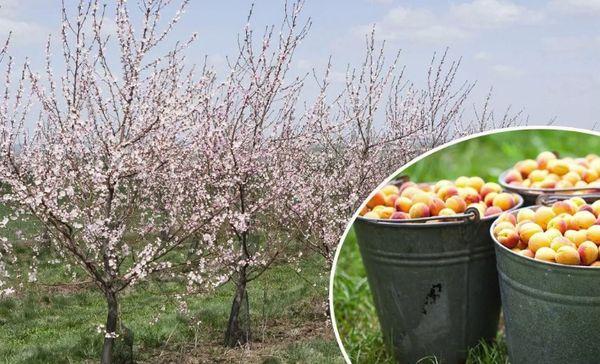
Growing apricots is easy in the southern regions, but challenging in Siberia. It's important to know frost-resistant varieties, choose the right location, and care for them. Siberian wild apricots were once characterized by small fruits, hard and inedible, but resistant to low temperatures. Breeders have successfully crossed them with common varieties, creating new, sweet, and juicy fruits suitable for growing in cold climates.
Criteria for choosing a variety
When choosing an apricot variety, consider the wood's ability to survive significant temperature drops, its resistance to fluctuations, and recurrent frosts. Furthermore, the plants should tolerate excess moisture and be resistant to sunburn.
The best apricot varieties for Siberia
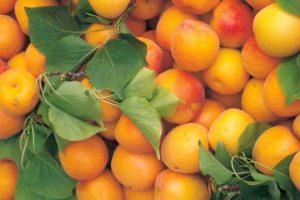
Through selective breeding, many varieties of apricot trees have been developed that are adapted to cold climates and produce a good harvest.
Siberian Baikalova
Bred in the late 1970s, it can withstand temperatures down to -40°C. C. Grows up to 3.5 m, spreading and wide crown is not very dense.
Fruit appears in the third year after planting. They have aromatic, juicy, and sweet orange flesh. It blooms in May and ripens in late July. A single tree can yield 20 kg of fruit. It requires pollination from other varieties.
Seraphim
Medium-sized, with a semi-spreading crown, it blooms from late May. It rots in heavy snow and is susceptible to sunburn. This early-ripening variety is noted for its high yields. Its sweet and sour flavor and fruit are spotted and pitted, and the flesh is difficult to separate from the pit.
Khabarovsk
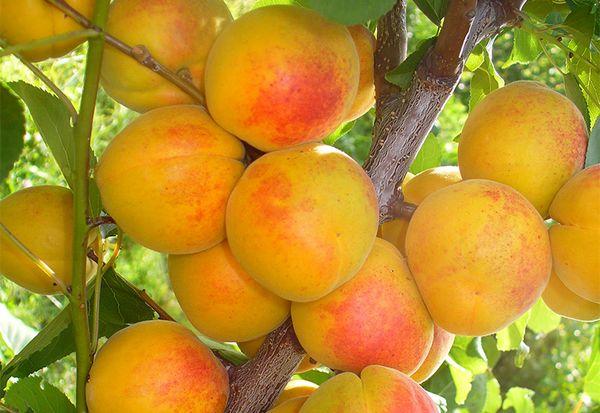
Bred last century, it reaches 4-5 m in height by the age of ten, with a loose crown and fruiting in 2-3 years. It blooms in May and early June and ripens in late July. It tolerates severe frosts and drought, producing medium-sized, orange-colored fruits with a blush and firm, sweet flesh.
Anniversary
The tree reaches a height of 6 m, has a rounded crown, and can withstand frosts down to -34 C. Blooms in March-April and ripens in July. The fruits are large and sweet, appearing in the 3rd or 4th year. The tree is drought-resistant and long-lived.
Amur
The apricot tree grows no taller than 3 meters, with a dense, leafy crown. It blooms in mid-May, and fruits appear in early August, 3-4 years after planting. It produces a good harvest, is highly winter-hardy, immune, and tolerates temperatures down to -38°C. C. The fruits are medium-sized with juicy pulp, easily separated from the stone.
Academician
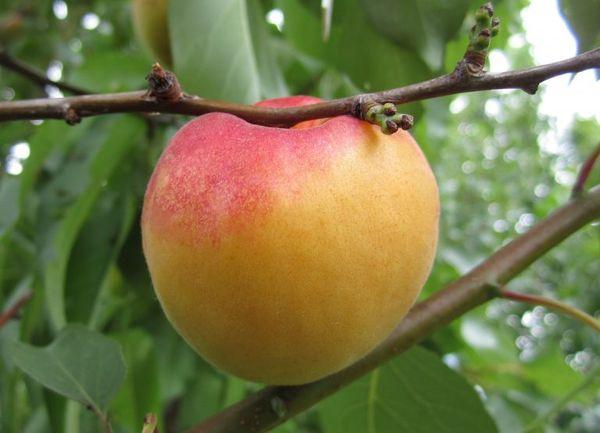
It was bred over 20 years ago. The tree reaches 5 m in height and begins bearing fruit in the 5th or 6th year, yielding 17-19 kg of fruit per season. It blooms in early May and ripens in late July. The fruit flesh is juicy and sweet-sour. It is cold-hardy, tolerating temperatures as low as -40°C. In rainy weather, it has strong immunity.
Bullfinch
Does not exceed 1.5 m, the tree bark is thick, it can withstand temperatures down to -42 C, but is not drought-tolerant and is not resistant to fungal diseases. The variety is self-pollinating. It blooms late, and the fruits are harvested in August. They are small, but sweet and juicy, with a firm texture. One tree produces 10-15 kg of apricots. It is not resistant to fungal diseases or pests.
East Siberian
This variety was included in the State Register in 2001. It grows up to 2-3 meters tall, with a sparse crown. It blooms in May, and the fruits ripen in the second ten days of July. They are large, yellow-green, and sweet. The yield is 14-17 kg of fruit per tree. This variety is susceptible to damping-off and freezes in extremely cold winters.
Winter-hardy varieties
Trees can withstand low temperatures, especially frost-hardy buds, as well as thaws, spring frosts, and temperature fluctuations. These include 'Bay,' 'Kirov,' 'Laureat,' 'Krasavchik,' 'Sayansky,' 'Vynoslivy,' 'Krasnoshchyok,' 'Mountain Abakan,' 'Golden Stone,' 'Medovy,' 'Monastyrsky,' 'Spassky,' and 'Ussuriysky.'
Columnar apricots
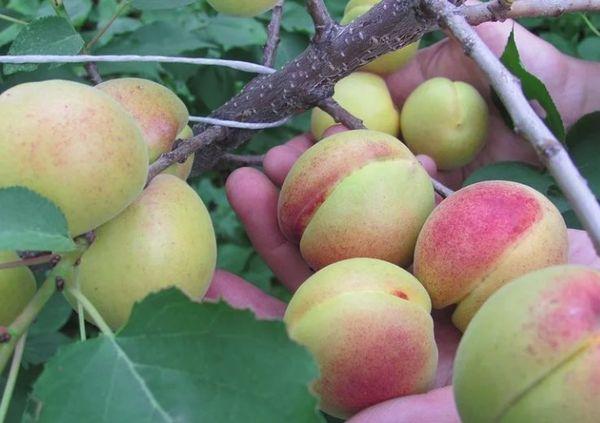
These varieties were recently developed by breeders. They are distinguished by a compact crown, up to 3 m tall and 0.5 m wide, resembling a column. They are easy to care for, prune, and process. The yield is high, and the fruits are tasty and juicy. The best known are Sunny, Gold, Star, and Prince.
Self-fertile
Self-pollinating apricot trees are highly prized. These include the Dessert, Rattle, Sardonyx, and Tsar's Apricots. However, they cannot pollinate all the flowers, so pollinator trees are planted nearby to increase the yield.
Low-growing and dwarf varieties
Trees don't exceed 2.5 meters. The harvest can be done without a stepladder. Another advantage is that these varieties can be completely covered for the winter. Popular ones include 'Cashechka' and 'Cherny Myshenok'.
How to plant and grow apricots in Siberia
Certain varieties are suitable for growing in the Siberian region, but cultivation techniques and planting also require their own unique characteristics. Fruit trees have a short dormancy period, buds awakened by thaws can be damaged, and the bark of the lower parts, where there is a lot of snow, can rot. In winter and summer, trees are exposed to strong winds.
Choosing a landing site
It is recommended to plant apricots on southern slopes, in urban areas, where the air temperature is slightly higher. In winter, heavy snowfall is undesirable in this area. The groundwater level should not be higher than 2.5 meters. The site should be well-lit.
Apricot trees require light, slightly alkaline soil, such as sandy loam or light loam. Planting in the same area as nightshade crops is not recommended. For heavy clay soil, add peat and sand.
Plant the seedling on a slope rather than on a flat surface. It's best to purchase grafted seedlings that are 1-2 years old, with smooth, thornless branches, and a strong, healthy root system.
Planting process technology
The best time to plant in this region is spring, after the threat of frost has passed. Apricots should not be planted in the fall, as the tree will not take root.
For cross-pollination, it is recommended to plant several varieties in one area.
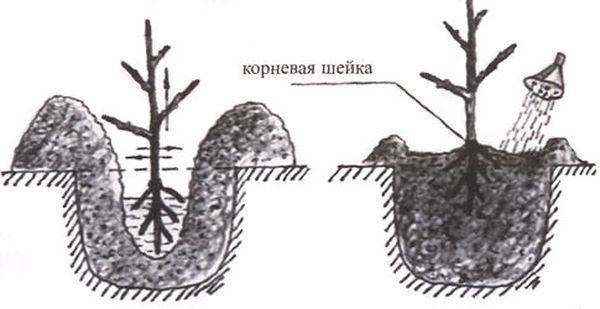
If the roots are dry, they are placed in water for 12 hours, then:
- The planting hole is dug to a depth of at least 50 cm, width - 80 cm, distance - from 5 m.
- Place a drainage layer (brick, shards).
- Then add manure, superphosphate, and potassium sulfate. Mix the fertilizers with the soil.
- It is permissible to add nutrients in the fall: manure, compost, superphosphate, potassium salt.
- After 2-3 weeks, after the soil is saturated with nutrients, young trees are planted.
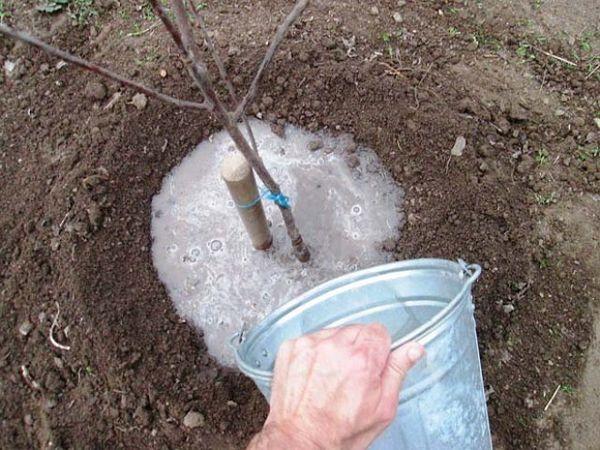
- Place the seedling in the hole, spread the roots, and cover with soil. Leave the root collar 5 cm above the soil. Compact the soil and water.
The trunk of the seedling is tied to a peg installed nearby to guide growth.
Further care of the tree
In the spring and fall, trees should be whitewashed with copper sulfate. Frost damage and wounds should be sealed with garden pitch. From fall to April, it is recommended to wrap the bases of skeletal branches with fiberglass. This is necessary to protect against rodents, the spring sun, and frost.
To prevent fungal diseases, in the fall, all plant debris is removed, burned, and trees are treated with Bordeaux mixture.
Watering
Saplings are watered every 1.5-2 weeks, and young trees throughout the summer. The first watering is needed from the beginning of flowering until the end. The next watering is a few weeks before the fruit ripens. In the fall, water in October, and the following spring, two weeks after flowering.
Biennials: Water as the soil dries out. Mature trees don't require frequent watering unless the summer is very dry. Watering is combined with liquid fertilizer. Watering methods include furrow, well, drip, and flood irrigation. Watering is stopped in the fall. Monitor the soil moisture level by digging in the soil to determine the correct timing for watering.
Fertilizer
Plants require potassium fertilizers to boost their immunity, and nitrogen fertilizers to stimulate growth. Phosphorus promotes flowering and fruiting.
In the spring, after the snow melts, add fertilizer containing urea, and the second time, when the temperature rises above zero, add organic mixtures.
During flowering, fruit trees need phosphorus and potassium; after flowering, you can add superphosphate and potassium sulfate. urea, nitrogen is not needed yet.
In summer, feed twice with a nitrogen-potassium mixture; foliar feeding is also possible. In autumn, apply potassium-phosphorus fertilizers.
In this case, they begin to fertilize trees from the 2nd year of life until the 3rd-5th year, when they do not yet bear fruit - less potassium and phosphorus are required.
Fruit trees older than 3-4 years need nitrogen fertilization, but little by little.
Loosening and mulching the soil
The soil should be loosened to a depth of 7-9 cm to allow air to reach the root system. Weeds should be removed regularly. Before wintering, the soil should be mulched with humus.
Pruning and crown shaping
Until the tree reaches 5 years of age, it is pruned regularly.
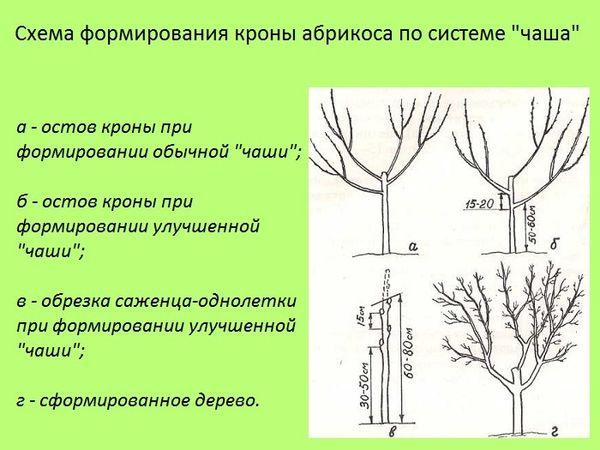
The crown is formed using a sparsely layered method. It should consist of 5-6 main branches, spaced 30-40 cm apart.
The following season, after planting, the top of the tree is removed by ¼ of its length. The remaining few shoots on the trunk are shortened so that it is taller than 30 cm. In the second year, two more branches are shortened, leaving a distance of 40 cm between the pruned shoots. In subsequent seasons, shoots on the main branches are thinned and pruned, leaving a greater distance between them.
Weak, short tree branches are pruned to encourage horizontal growth. Use a sharp, disinfected tool. The pruning tool is positioned so that the top cut is above the bud, and the bottom cut is at the base. Leaving stumps is not recommended.
Rejuvenation pruning is performed if the tree has grown 20 cm in a year. This is done gradually to avoid weakening the plant.
Seasonal pruning
Pruning is done in the fall to increase the tree's fertility. In colder regions, fruit trees are often pruned twice in the spring to allow the plant to recover from the procedure. If pruning is done in the fall, it should be done in September, with the air temperature being above 8°C. WITH.
Sanitary pruning is done before the sap begins to flow, in March or early April. Pruning to the ring is not recommended. Remove old, frozen, and dried branches. Treat the cuts with garden pitch.
In summer in cold climate regions rejuvenating pruning of apricots they don't tolerate it well.
Shelter for the winter
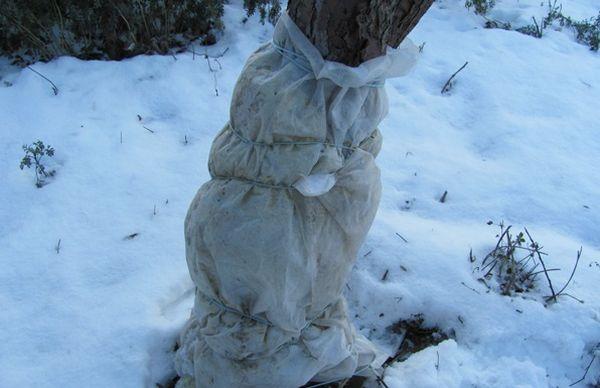
In the fall, after applying fertilizer, mulch the tree trunk to a depth of 20 cm. Use dry leaves, wood shavings, pine branches, and straw. Cover the root collar and trunk of mature fruit trees with agrofibre or burlap.
Young trees require careful shelter. To do this, construct a protective frame and cover the trees. Leave openings for air circulation. Before covering, prune the trees to a height of 2.5 m. Snow around the trunk circle should be removed if there is a risk of rot.
The specifics of growing a fertile crop from a seed
The varietal qualities of fruits grown from seed vary slightly, but the advantage of this method is their resistance to environmental conditions. Moreover:
- The seeds are taken from overripe fruits grown specifically in Siberia.
- They are washed, dried in the sun, then lowered into water, and those that float to the surface are thrown away.
- Place several pieces in the ground or in cups, deepening them by 1 cm. This is done in spring or autumn.
- When the seedlings reach 20 cm, only those with strong shoots, a dark green crown, and thick bark are left.
Choose a site sheltered from the wind and well-lit. Water and weed the soil regularly. For the winter, young seedlings are carefully bent down or dug in and covered with a special material. After reaching two years of age, the plants are replanted. Fruiting will occur in five to six years.
Related posts:
 Descriptions of the 20 best cherry varieties for the Moscow region, their planting and care
 The best grape varieties for growing in the Urals, planting and care rules in summer
 Description of the 30 best plum varieties for the Moscow region, planting and care
 Description and cultivation of the 15 best cherry plum varieties for the Moscow region, planting and care rules
 Description and characteristics of 14 varieties of the Bere pear variety, planting and care
 Description of the 23 best pear varieties for the middle zone, planting and care rules
 Description and characteristics of the 27 best plum varieties for the Urals, planting and care
 How to plant walnuts, care for them, and grow them at home