
- Causes of color loss
- Spring frosts
- Lack of pollinators
- Why do unripe fruits fall off?
- Moisture deficiency
- Nutrient deficiencies
- Lack of sunlight
- A large number of ovaries
- Old age of a tree
- Diseases and pests: treatment and prevention
- Scab
- Gray mold or moniliosis
- Cytosporosis
- Leaf curl
- Shot hole or clasterosporium
- Apoplexy or desiccation
- Fire blight
- Powdery mildew
- Prevention and recommendations for gardeners
Growing apricots is a complex and exciting process that can be challenging. To achieve good results, it's essential to strictly follow all agricultural recommendations. At the same time, gardeners often wonder why apricots shed their green fruit. There could be several possible causes, so it's crucial to determine the exact trigger.
Causes of color loss
Bud and flower drop is usually caused by unfavorable climatic conditions. Insufficient pollination is also a contributing factor.
Spring frosts
Apricot blossoms occur in the second half of spring. During this period, there is a high risk of recurrent frosts. This causes the sap of the plant to freeze, rupturing cell membranes, and killing flowers and young leaves.
A plant that has suffered severe damage from a significant drop in temperature may drop its flowers. Temperatures below 0 degrees Celsius (32 degrees Fahrenheit) pose a risk to the plant.
If there is a risk of spring frosts, it is necessary to take measures in a timely manner:
- Build a smoky fire in the garden. It's best to start it in the evening, when the temperature is approaching freezing. You can use tree tops, sawdust, or leaves as fuel. Straw and branches will also work. The trees will be warmed by the smoldering material, which produces a lot of smoke. It's recommended to slightly moisten the fuel.
- Treat the crop with a solution containing potassium and phosphorus. This will help increase the apricot's resistance to adverse weather conditions. Special products such as Zircon or Epin are suitable for this purpose. Apply the fertilizer 12 hours before the onset of cold weather.
- If the seedling is small in size, it is worth covering it with spunbond.
Lack of pollinators
Failure to pollinate the crop in a timely manner will result in the flowers falling off without setting fruit. The following factors may trigger this:
- Planting a single tree. In this case, the apricot tree blooms but produces no fruit. This is because many crops require other varieties as pollinators. If this rule is violated, a good harvest cannot be expected. When planting a self-fertile variety that does not require a partner, some of the flowers may die. However, this is considered a characteristic of the variety.
- Lack of pollinating insects. Low temperatures and unfavorable weather conditions prevent bumblebees or honeybees from flying out. As a result, flowers are not pollinated, which prevents ovary formation. In this situation, hand pollination can be used. However, this is a very labor-intensive process.
Why do unripe fruits fall off?
The appearance of ovaries does not guarantee a bountiful harvest. The plant may shed a certain number of fruits throughout the season. There can be many reasons for these problems.
Moisture deficiency
A lack of moisture causes the ovaries to die. The tree struggles to survive and therefore cannot produce fruit. During dry weather, apricots require adequate water. A mature tree requires 50-60 liters of liquid.
Nutrient deficiencies
Shedding of green fruits and ovaries is often the result of a nutrient deficiency. Fertilizing the crop requires several times during the season. This involves using substances that are essential for the crop at a specific time:
- Before flowering, the plant can be fed with fertilizers containing potassium and phosphorus. These enhance flowering.
- Immediately after the formation of ovaries, it is recommended to apply similar fertilizers again.
- To prevent fruit from falling, summer feeding is essential, using complex fertilizers.
Once fruit has formed, avoid applying nitrogen-containing fertilizers. This will cause ovary drop and delay vegetative development.
Lack of sunlight
Apricot is considered a heat-loving plant that requires adequate light. When planting, it's crucial to choose the right site. It's crucial that it's not shaded. The plant could subsequently be damaged by the spread of other fruit crops.
Insufficient sunlight negatively impacts tree yield, resulting in fewer fruits and a deterioration in their flavor.
A large number of ovaries
If a tree produces too many fruits, there's a risk that some will fall off. This is the apricot tree's way of relieving itself of the increased load. The weakest fruits fall off in windy weather. This causes the remaining apricots to grow larger.
Don't try to save an excessively abundant harvest. The tree isn't ready for the increased stress. After abundant fruiting, the plant won't have time to prepare for winter. This will lead to weakening and freezing.
Old age of a tree
Old trees suffer the most from adverse weather conditions. They are highly susceptible to diseases and pests. Even minor care errors can lead to fruit loss or shedding.
To avoid such problems, it is recommended to perform rejuvenating pruning of the crop.
It is essential to feed it and treat it in a timely manner against diseases and harmful insects.
Diseases and pests: treatment and prevention
Common causes of problems include the development of dangerous diseases and attacks by harmful insects.
Scab
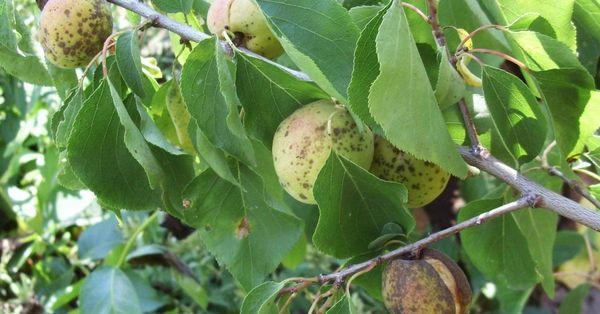
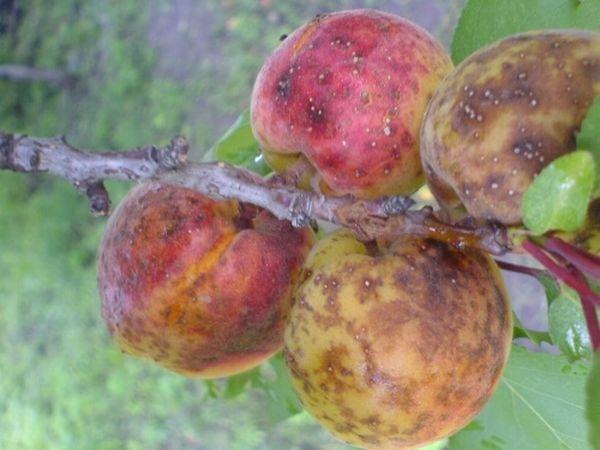
As this disease progresses, brown spots appear on the leaves, branches, and green apricot fruits. Mustard powder can help combat this problem. To do this, add two tablespoons of the powder to half a bucket of water. This substance has strong disinfectant properties.
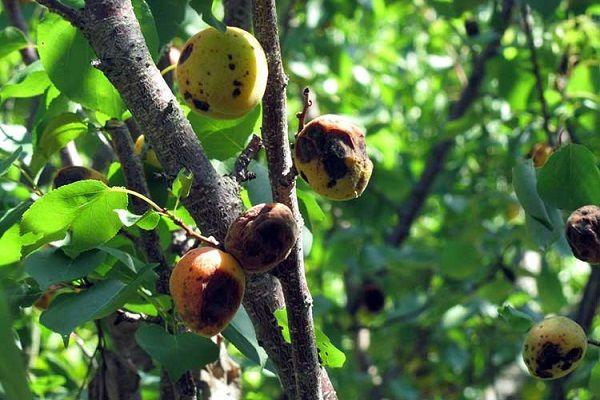
Chemical treatments can also be used. The most effective include Captan-50 and Topsin-M. It is recommended to treat trees before flowering. Afterward, spray at two-week intervals until the symptoms of the disease have completely disappeared.
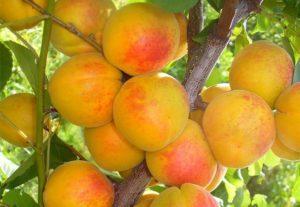
Some gardeners use a potassium permanganate solution to combat scab. It's important to remember that it should be in a minimal concentration. This will help prevent damage to the delicate leaves of the plant.
Gray mold or moniliosis
As this disease progresses, green fruits rot. Young shoots also dry out. Copper-containing products are used to combat this problem. These include Horus and Mikosan-V. Bordeaux mixture is also highly effective. Trees should be treated before flowering.
Using treatments against scab and other fungal infections helps prevent fruit rot. The primary method of disease control is harvesting and destroying infected fruit.
Cytosporosis
This disease is accompanied by the appearance of brown stains, ulcerated lesions on the trunk, wilting leaves, and drying of the bark. Various treatments can help combat Cytosporosis.
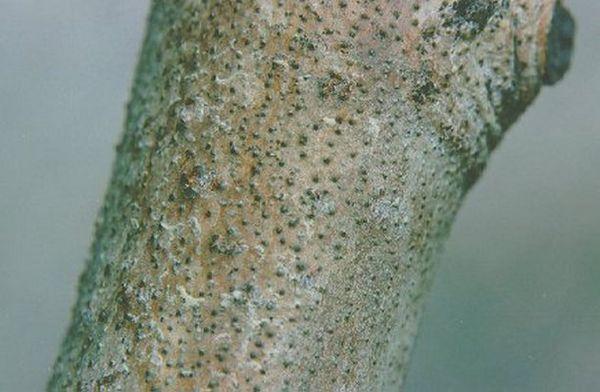
The first method is as follows:
- It is recommended to remove damaged fragments from the bark, capturing 2-3 centimeters of healthy bark;
- disinfect the wound;
- burn the bark.
To implement the second method, perform the following steps:
- outline the affected area with chalk, capturing 2-3 centimeters of healthy bark;
- Soak the outlined segment with a 20% copper naphthenate emulsion – it is recommended to rub the substance in with a stiff brush.
It's important to remember that it's recommended to prepare the mixture immediately before use. Only disinfected tools should be used when treating wood.
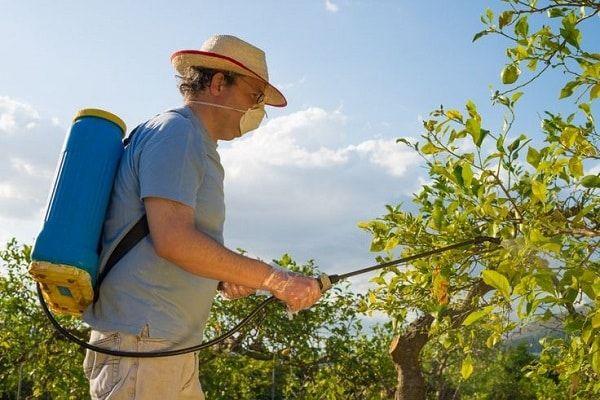
The third way is as follows:
- treat the crown with a 0.5% solution of zinc sulfate;
- Add zinc and boron to the soil - use 50-60 grams of the product per tree.
The fourth method involves performing the following steps:
- make a hole in the trunk or large branches - its diameter should be 1-1.5 centimeters, depth - 3-4;
- Place one end of the wick into the hole in the bark and the other end into a container with a solution of microelements.
It's worth noting that it's recommended to place the wick in a rubber or other tube. This will help prevent significant evaporation.
Leaf curl
As the disease progresses, the fruits and leaves of the plant become affected. They become covered with growths resembling burns. Spraying with a 2% solution of Nitrofen can help combat the problem. This treatment is performed before bud swelling. During bud break, apply a 4% solution of Bordeaux mixture.
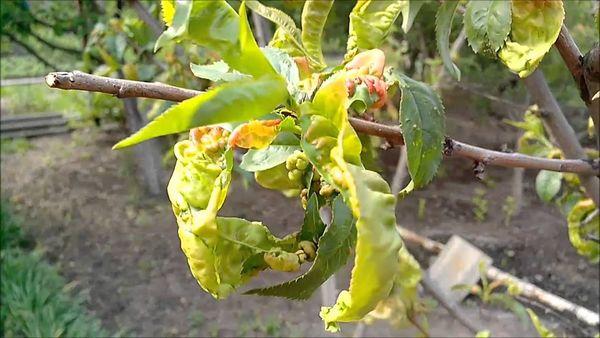
However, it's best to prune away affected shoots. This is recommended in May, as this is when damaged areas are most visible.
Shot hole or clasterosporium
This disease affects shoots and fruits, causing brown spots and wart-like swellings to appear. To combat this problem, spray with 4% Bordeaux mixture or 2% Nitrofen. This procedure is performed in spring or fall.
Apoplexy or desiccation
As the disease progresses, the tree's branches, bark, and foliage dry out. This condition has many causes, including fungal infections, non-compliance with agricultural practices, and climatic conditions.
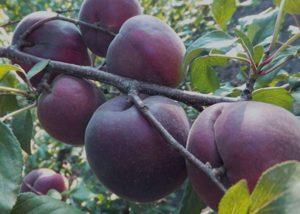
Methods for combating sudden plant decline include the direct-planting method. Potassium nutrition is also crucial.
Fire blight
As the disease progresses, flowers are the first to be affected. Subsequently, branches dry up. A whitish liquid begins to ooze from cracks in the bark.
To combat this damage, it's necessary to immediately remove and burn the affected area. Before applying garden pitch, treat the damaged area with a 1% Bordeaux mixture solution.
If the damage is severe, the plant will have to be uprooted and burned. The soil should be treated with bleach. 150 grams of bleach per square meter is recommended. The soil should also be dug over to the depth of a full shovel.
Powdery mildew
As the disease progresses, leaves, branches, and fruits become affected. They become covered with a grayish-white coating. Several treatments with 1% colloidal sulfur can help control the disease. This treatment is performed at the first signs of the disease. Subsequently, it is repeated every 10-12 days until complete recovery.
Prevention and recommendations for gardeners
To avoid common problems, it is necessary to follow basic agricultural recommendations:
- Choose the right location for planting. The area should be well-lit. The groundwater level should be no more than 1.8-2 meters.
- Choose the right soil. The optimal pH should be 7.0-8.5. Light loams with good aeration and permeability are recommended.
- Water the plant properly. The plant doesn't like overly wet soil. However, dry weather disrupts the growing process, leading to fruit drop.
- Carry out pruning on time. If done incorrectly, the number of new shoots decreases and fruiting branches die off.
- Apply organic and mineral fertilizers. This should be done according to the growing season.
- Conduct preventative treatments against fungal infections and pest attacks in a timely manner. It's important to remember that with strict adherence to agricultural practices, the risk of negative consequences is minimized.
Apricot is a rather demanding plant that requires comprehensive and high-quality care. Failure to follow key recommendations can lead to various problems. One of these problems is ovary drop and a significant reduction in yield. To prevent this, proper care is recommended.
Related posts:
 Methods for planting and propagating cherries at home
 The best methods for growing grapes from seeds at home
 Peach tree care and agricultural secrets, pest control
 Growing and caring for hazelnuts in open ground, rules for planting hazelnuts
 Conditions for growing mandarin at home and rules for caring for the tree
 Description and rules for growing Solaris grapes
 Rules for planting and caring for pears in open ground, how to grow them correctly
 The best grape varieties for growing in the Urals, planting and care rules in summer