
- Features of kiwi cultivation in Siberia
- Climate characteristics of the region
- Criteria for choosing a variety
- Actinidia varieties for Siberia
- Kolomikta
- Polygamous
- Arguta
- Giraldi
- Chinese
- Planting and caring for the crop
- Choosing a landing site
- Preparing the soil and planting hole
- When and how to plant
- Watering and fertilizing
- Installation of the support
- Loosening and mulching the soil
- Trimming
- Preparing for winter
- Transfer
- Methods of reproduction
- Peculiarities of kiwi flowering and fruiting in the region
- Harvesting
- Mistakes and problems of beginning gardeners
Growing actinidia in Siberia is entirely possible. Despite the region's harsh climate, this Asian plant thrives. However, choosing the right variety and cultivar is essential. Strict adherence to proper agricultural practices is also crucial. To achieve good results, it is recommended to water, fertilize, and prune the plant regularly.
Features of kiwi cultivation in Siberia
This is a fairly heat-loving plant. Therefore, many people believe that growing actinidia in Siberian or Ural conditions is impossible. However, this is not true.
Climate characteristics of the region
The Siberian region is characterized by a very harsh climate. It is characterized by frosty winters and spring temperature fluctuations. However, in summer, the air can warm up to almost 30 degrees Celsius. This is due to the strong sun rays. Therefore, it is recommended to plant actinidia in the shade.
Criteria for choosing a variety
Frost-resistant varieties adapted to harsh climate conditions are suitable for growing in Siberia. These are the types of actinidia that should be selected. It is crucial to follow the cultivation guidelines specific to the climate.
Actinidia varieties for Siberia
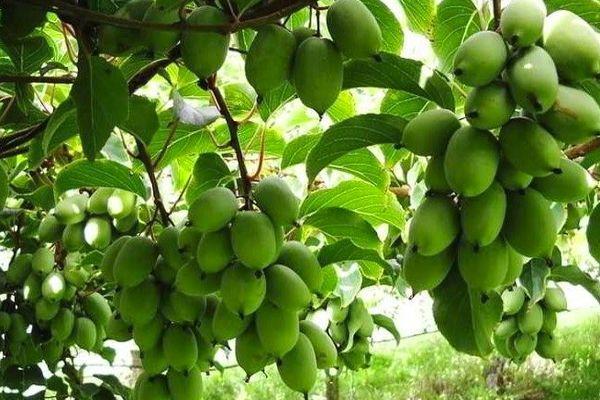
Today, many species of actinidia are known to grow in Siberia, making it easy to select the optimal variety.
Kolomikta
This plant is a fruiting and ornamental vine that reaches 15 meters. This variety thrives in shade but grows more slowly. It is characterized by large, wrinkled leaves and a variable hue.
The berries reach 2.5 centimeters in length and weigh 3.5-6 grams. They are characterized by soft, tender flesh, rich in vitamins. The average yield is 5-7 kilograms.
Polygamous
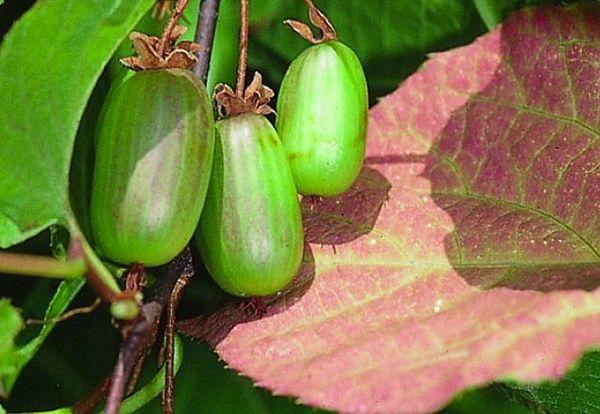
This plant resembles kolomikta in appearance, but grows to a maximum height of 5 meters. It is characterized by weak branching. It is considered less hardy, but has excellent ornamental qualities. This is due to the brightly colored fruits.
The plant is characterized by variegated leaves and orange berries with a pointed tip. The fruits are not edible due to their pungent taste.
Arguta
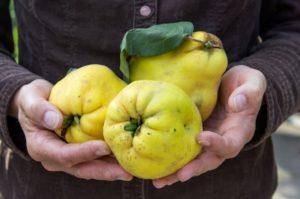
This is the largest vine, growing up to 30 meters. A single bush can yield up to 30 kilograms of berries. The plant has a long growing season and requires winter protection. In Siberia, it is grown as an ornamental plant.
Giraldi
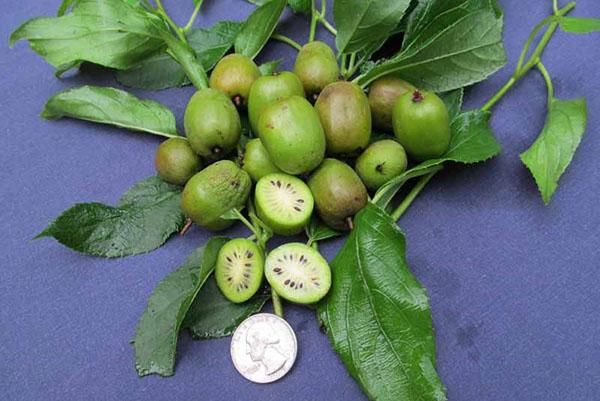
This variety has the following properties: Actinidia is close to ArgutaIt is characterized by rapid growth and is most often used for vertical gardening.
Chinese
This is the most common type of actinidia. It is heat-loving and can withstand short-term temperature drops to 2 degrees Celsius. It has a long growing season—up to 245 days. The fruits weigh 50-100 grams. This type of actinidia is not grown outdoors in Russia.
Planting and caring for the crop
To achieve good results in growing this crop, it is necessary to ensure proper planting and proper care.
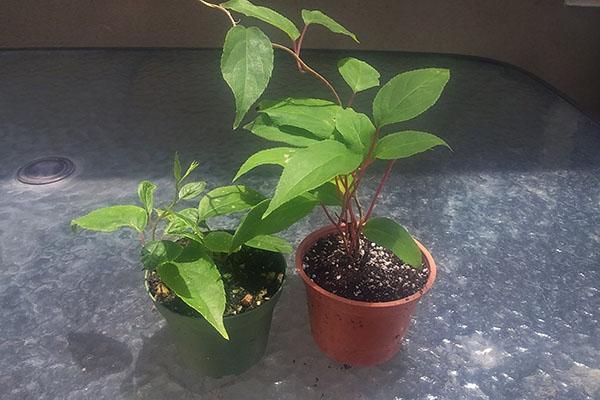
Choosing a landing site
This perennial plant requires careful soil selection. Otherwise, the plant risks dying. The soil should be neutral in pH. It's best to plant actinidia in fertile loamy soil.
Excess moisture can cause root rot. When choosing a planting site, choose sunny, elevated locations.
The bushes resemble vines, so they need a fence to allow for branching. The plant requires a lot of space, so the site shouldn't have many trees.
Preparing the soil and planting hole
Before planting, it's important to choose the right layout for your crops. Rows are best, with a 1.5-2 meter gap between plants. The planting hole should be 50x50 centimeters.
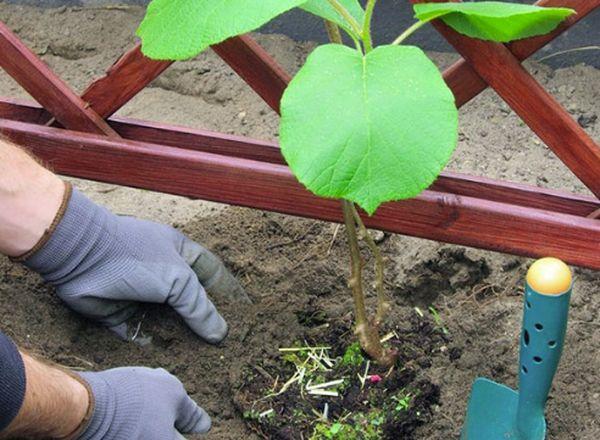
It's recommended to place a drainage layer at the bottom of the hole, including pebbles, crushed brick, and small stones. Preparing the nutrient-rich soil is also crucial. To do this, add 200 grams of superphosphate, 80 grams of potassium salt, and 9-10 kilograms of compost to the excavated soil.
When and how to plant
Actinidia should be planted in Siberia in the spring. If planted in the fall, the plant doesn't have time to establish itself before the first frost. In spring, it's recommended to plant actinidia in early May, when the weather has warmed up. Even if there are light frosts, the plant will survive on its own, without harming its branches or roots.
When planting bare-root crops, gently spread them out. If the root system is closed, moisten the root ball, then compact some of the soil.
Watering and fertilizing
The plant dislikes overly wet soil, which encourages disease. Therefore, water only when necessary. On average, water every three days. Drainage should be provided at the planting site to remove excess water.

Fertilize twice a year – in spring and fall. Before the onset of cold weather, add potassium salt and organic fertilizer to the soil. Actinidia is sensitive to chlorine, which is present in potassium fertilizer, so reduce the dosage. Use 10-20 grams per square meter.
In spring, complex fertilizers containing nitrogen and phosphorus are applied. These include Ammophos, Flower Happiness, and others.
Installation of the support
To ensure proper growth of the bush, it's worth creating a special support—a trellis. It's made according to the following scheme:
- prepare 20-30 branches with a diameter of 1 centimeter;
- dig them in at the same distance;
- tie the branches of the plant horizontally to form a net;
- in the area of the diamonds, fix the wire to strengthen the structure;
- Cut off protruding branches to create a section.
Trellis can be made from any material. To avoid the need for support, actinidia can be planted near a building. Wire mesh is attached to the building beforehand.
Loosening and mulching the soil
When weeding garden beds, it's important to consider the shallow location of the roots. Therefore, loosening the soil is done on the surface. This helps provide the roots with air and prevents soil cracking. Mulching is also important. This procedure helps retain moisture in the soil and prevents weed growth.
Trimming
Pruning should begin in the second year of plant development. The first time, remove all shoots, excluding two or three strong vines. The following year, leave a few branches to help shape the plant. It's recommended to tie the shoots to a support.
Every year, it is recommended to remove diseased branches and the tops of the vines by a few buds. In the third year, thin the plant, remove broken branches, and shorten fruiting shoots.
Preparing for winter
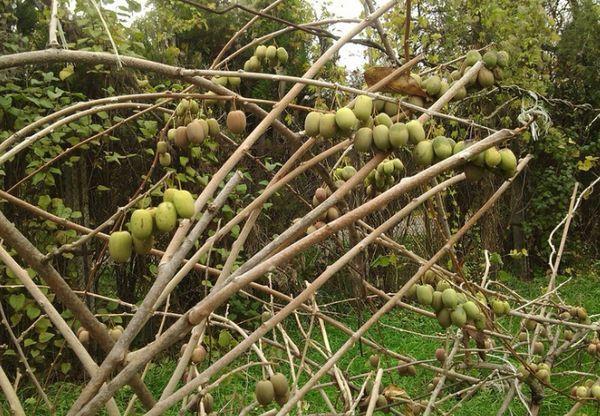
When growing actinidia in Siberia, it needs to be completely covered. The plant's roots are quite high, and if the temperature drops significantly, they can freeze. Actinidia should be covered in early November, when the temperature drops to 5-7 degrees Celsius. Shredded bark, straw, and sawdust can be used for this purpose. Grass scraps and pine needles can also be used.
Transfer
Only young plants 2-3 years old, before the roots have had time to grow significantly, should be replanted. Otherwise, the plant will not take root. Young plants must be handled very carefully. The fine roots dry out quickly. Therefore, it is recommended to prepare the planting hole in advance. Water the plant thoroughly the day before replanting.

Methods of reproduction
The culture can be propagated using the following methods:
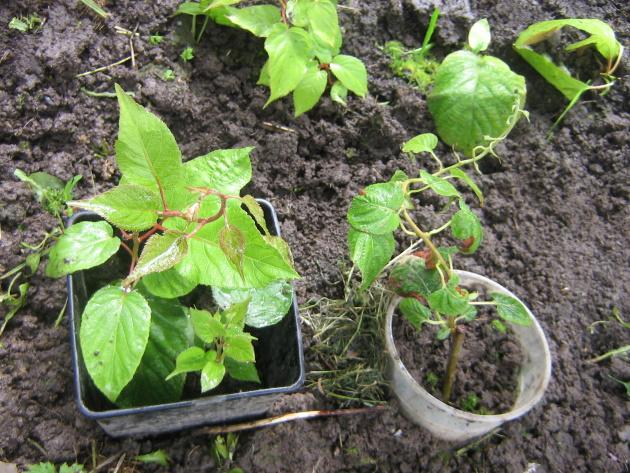
- Layering is done in the spring. To do this, select a young shoot, cover it with soil, and wait for roots to appear.
- Cuttings – for this, take a one-year-old shoot and place it in water. Then transplant it into the ground.
- Seeds – take a ripe fruit and crush it thoroughly. Rinse the pulp and dry the resulting seeds. It is recommended to plant seedlings in February.
Peculiarities of kiwi flowering and fruiting in the region
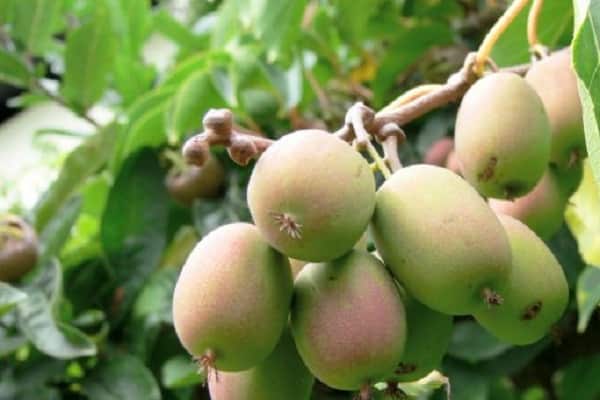
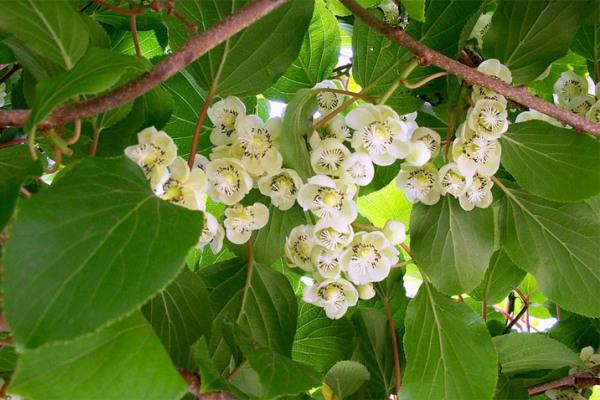
During flowering, the vine is covered in white, pleasantly fragrant flowers. Then, downy fruits appear. They also produce berries with a smooth surface and a sweet and sour taste. Harvesting should take place in late summer.
Harvesting
Early varieties ripen in early August, while late varieties ripen in late August. Don't expect Siberian kiwis to be fully ripe. They can be left indoors to ripen. Firm, green fruits should be placed in paper bags and left at room temperature. They are ready to eat in 2-4 days. Actinidia fruits are sweet, so you won't be able to eat a large quantity at once.
Mistakes and problems of beginning gardeners
When growing actinidia in Siberia, inexperienced gardeners make common mistakes:
- choose the wrong variety;
- the plant is planted in autumn;
- the crop is not watered in a timely manner;
- neglect fertilization;
- they loosen the soil too deeply.
Actinidia is a popular plant that can be grown in Siberia. To achieve good results, it's important to carefully select the variety and provide it with high-quality, comprehensive care.
Related posts:
 Methods for planting and propagating cherries at home
 The best grape varieties for growing in the Urals, planting and care rules in summer
 Conditions for growing mandarin at home and rules for caring for the tree
 Description of 30 grape varieties for Siberia, planting and care for beginners
 Growing and caring for hazelnuts in open ground, rules for planting hazelnuts
 Planting and caring for plums in Siberia, description of the best regionalized varieties
 Description and characteristics of the 50 best raspberry varieties for Siberia
 Description and cultivation of the 15 best cherry plum varieties for the Moscow region, planting and care rules