
- Biological description
- Frost-resistant varieties
- Yalita
- Tsukerkovy
- Sinite
- Plodivsky
- Koktebel
- Health benefits of dates
- Requirements for conditions
- Climate and growing area of Chinese dates
- Illumination of the area
- Suitable soil composition for jujube
- Growing methods
- Graft
- Root cuttings
- Layering
- Undergrowth
- Seed
- Technology and timing of planting
- Caring for the crop
- Crown formation
- Watering
- Top dressing
- Loosening, mulching
- Pruning rules
- Diseases and pests: treatment and prevention
- Preparing for winter
- Collection and preparation of fruits
- Propagation of fruit tree
Useful properties of dates Humanity has known about jujubes for centuries. Unfortunately, until recently, it was believed that this subtropical tree could not be grown in temperate climates. But thanks to the development of frost-resistant varieties of this fruit, jujubes, or ziziphus, have begun to appear in gardens. This heat-loving plant is also known as jujube, or unabi.
Biological description
The unabi, or Chinese date, is believed to have originated in northern China. This is where the fruit trees grow in their natural habitat.
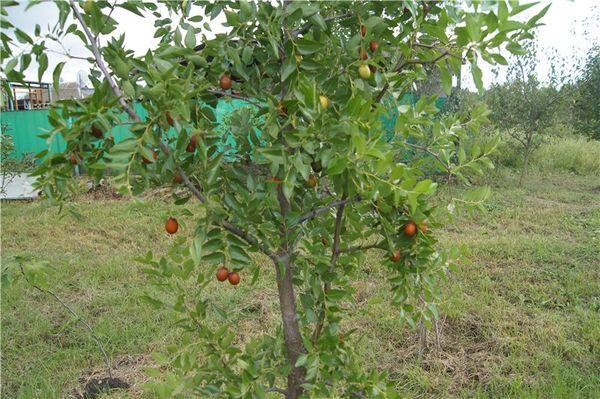
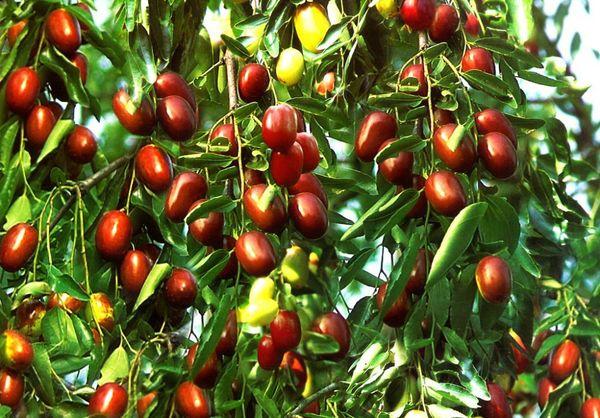
The Chinese date palm is a large, spreading bush or tree. Depending on climate conditions, it grows from 5 to 10 meters. In temperate climates, Chinese dates rarely exceed 3 meters, but this size does not affect the fruit trees' productivity.
The plant's crown is spherical or elongated, spreading. Young shoots grow from the very base of the plant. One of the plant's characteristic features is the shedding of annual shoots. The following season, new, fruit-bearing branches grow in their place.
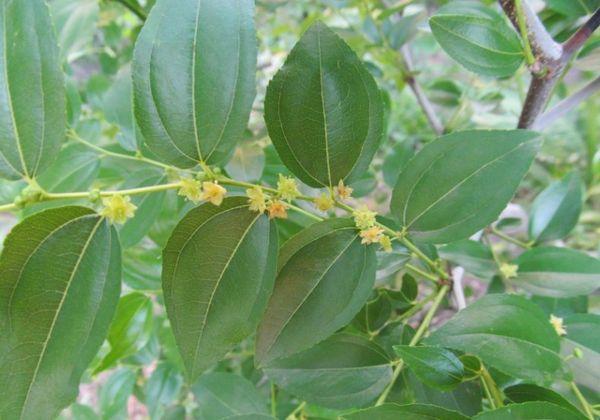
The date palm leaves are small, oval-shaped, with serrated edges and rich green hues.
The growing season for Chinese dates begins in late spring, which helps avoid the threat of spring frosts.
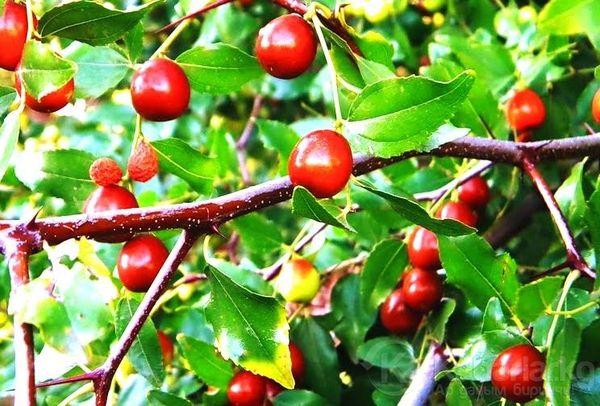
The tree enters flowering in early summer. Small, star-shaped, yellow-green flowers (up to 5 mm) bloom on the plant, producing a pleasant, rich aroma.
Unabi is capable of self-pollination. However, to produce a large harvest of healthy and tasty fruits, low humidity and high temperatures are essential. Otherwise, the pollen becomes heavy and cannot be transferred from flower to flower. Therefore, it is recommended to plant several plants of this variety at once.
The Chinese date palm is a long-lived tree. With proper care, trees can live up to 100 years without losing their ability to bear fruit.
Frost-resistant varieties
To grow jujube in temperate climates and northern latitudes, select varieties of the fruit crop that are adapted to extreme temperature fluctuations and spring frosts.
Yalita
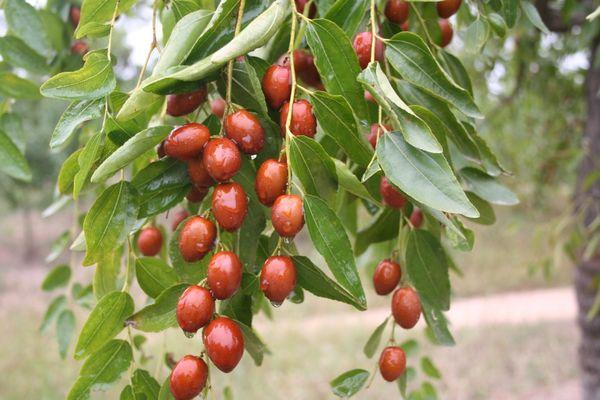
A high-yielding, frost-resistant variety of Chinese date. Ripe fruits are large, oval-shaped, with firm, light-brown skin and fleshy, sweet-tart, yellowish flesh. The fruit ripens in mid-autumn.
Tsukerkovy
This high-yielding jujube variety ripens in the second half of September. Small trees with a spreading, spherical crown bear so many ripening fruits that the foliage and branches beneath are obscured. The fruits are small, weighing 6 to 8 grams, with a dense, thin skin with reddish hues and sweet, fleshy pulp.
Sinite
The Sinit Chinese date cultivar was bred by botanists at the Nikitsky Botanical Garden. A distinctive feature of this fruit is its early ripening. Small, ripe fruits are harvested from the trees as early as the first half of September. The plant is suitable for cultivation in temperate regions.
Plodivsky
A popular variety of Chinese date that ripens in early October was developed by Ukrainian breeders.
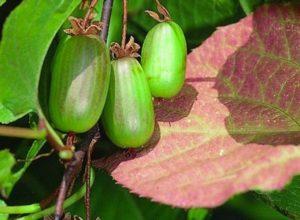
The fruits are medium-sized, with fleshy, sweet flesh in shades of white and green. This variety is characterized by increased resistance to frost and drought, and high yields.
Koktebel
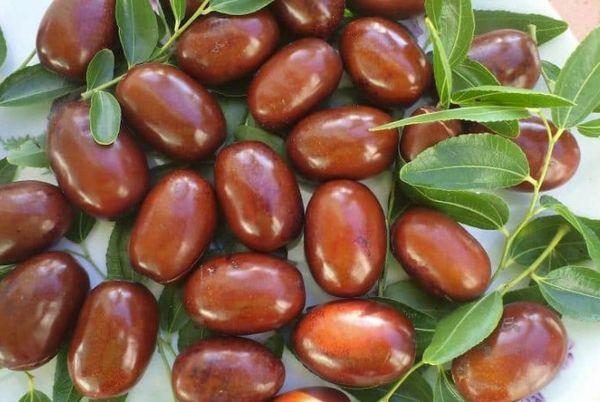
This variety was developed by Crimean breeders at the Nikitsky Botanical Garden and is considered the largest-fruited date palm. A single tree can yield up to 80 kg of ripe fruit.
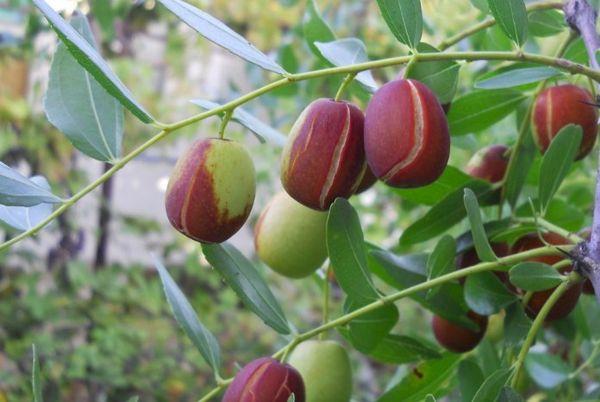
Ripening occurs in the second half of autumn. The fruits are large, up to 50 g, round, with fleshy, sweet, white-greenish flesh. The skin is thick, orange and brown in color.
Health benefits of dates
The beneficial properties of date palms have been appreciated by humanity for centuries. Valuable substances are found not only in the fruit, but also in the leaves and wood.
- Dates lower blood pressure.
- They are used in the complex treatment of skin and allergic diseases.
- Decoctions of jujube are used in the treatment of bronchial and pulmonary diseases.
- Improves the functioning of the cardiovascular system.
- Infusions of dates are used in dentistry.
- The fruits help the functioning of the gastrointestinal tract.
- Essential oils contained in the leaves of the plant are used in the cosmetic and perfume industries.
The bark and roots of these trees contain substances used to dye fabrics and leather. The wood of Chinese dates is used to make elite musical instruments and carved figurines.
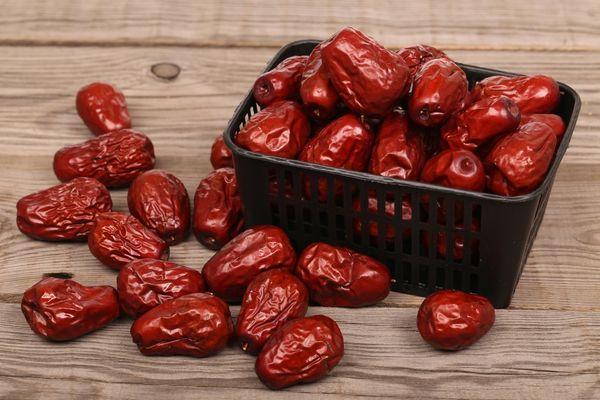 Important! The cosmetic and perfume oil known as jojoba is extracted from the seeds of the Chinese date palm.
Requirements for conditions
To grow jujube in your garden, it's important to remember that date palm trees and shrubs are accustomed to the warm, comfortable conditions of a subtropical climate.
In the southern regions of Crimea and the Caucasus, fruit crops easily survive short-term frosts and temperature drops, and even if they do freeze, they quickly recover and bear fruit in the spring.
In regions with moderate and cold climates, it is recommended to grow small fruit bushes that can be easily insulated before winter dormancy.
It's also worth calculating the ripening time of the fruit and choosing a Chinese date variety suited to the climate. While warm weather in southern latitudes typically occurs in November, in temperate regions, the harvest ends in September.
Climate and growing area of Chinese dates
In its natural environment, Chinese dates grow in mountainous areas, on rocky, poor soils.
Ziziphus is cultivated commercially in South America, Africa, Asia, and southern Europe. It has also become established in the Caucasus, Crimea, Azerbaijan, and Tajikistan.
Hot and dry climate are the main conditions for growing a subtropical plant.
After years of trying to grow fruit trees in temperate climates, gardeners and vegetable growers have come to the conclusion that only frost-hardy varieties thrive and bear fruit. And now, the Chinese date palm has become a common fixture in gardens in temperate climates.
Illumination of the area
Jujube requires plenty of sunlight to grow and develop properly. Even a slightly shaded area will prevent fruiting.
For planting dates, choose the sunniest area of the garden, protected from gusty winds and drafts.
Suitable soil composition for jujube
Chinese dates are undemanding when it comes to soil conditions, as in their natural habitat, trees grow in mountainous areas on rocky soil. However, to increase fruit yields, fertile soils with moderate amounts of fertilizer and nutrients are used.
Important! Too much fertilizer in the soil will promote rapid plant growth and development, but will significantly reduce its yield.
Growing methods
Chinese dates are grown and propagated in several ways. Even the most inexperienced gardener can find a simple and quick way to grow this exotic crop.
Graft
To graft a Chinese date, a small-fruited, frost-resistant tree variety is purchased or grown from seed as a rootstock. The heat-loving, large-fruited date tree is then grafted onto this rootstock.
Root cuttings
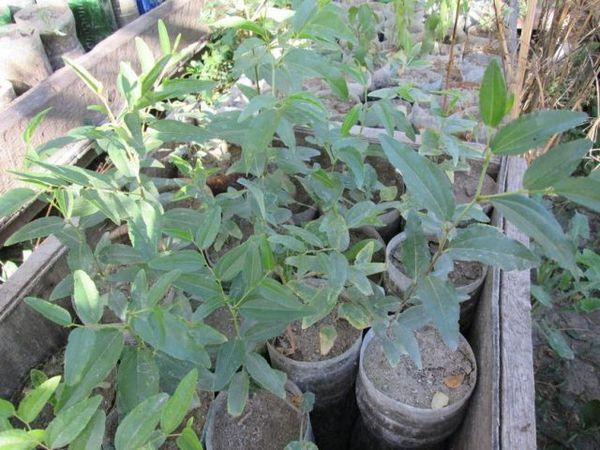
In early spring, strong roots are selected from the mother plant and pruned. The prepared cuttings are planted in containers with fertile soil, watered generously, and covered with plastic wrap or a jar. As soon as new shoots appear, the plastic wrap is removed, and the pots with the seedlings are left indoors until spring. In the spring, the seedlings are planted outdoors.
Layering
Ziziphus propagates by layering, only if the fruit tree is bush-shaped. In the fall, trenches are dug in the soil and the shoots are placed in them, leaving the upper portion of the branches above the soil surface. The layers are thoroughly moistened and left until spring. When spring arrives, the branches are cut from the mother plant, along with any emerging roots, and planted separately.
Undergrowth
Young shoots of ficus are carefully separated from the root system of the mother plant and planted as independent seedlings.
Important! Growing Chinese dates from cuttings is considered the easiest and simplest method for cultivating this garden plant.
Seed
Growing jujube from seeds is the most difficult and time-consuming way to get an exotic crop in your garden.
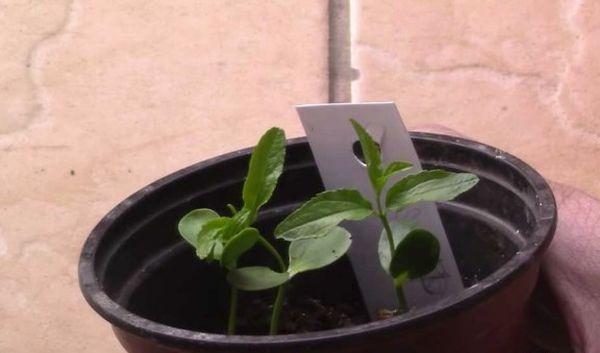
In late autumn, freshly harvested seeds are sown in containers with fertile soil. In the spring, the seedlings are thinned, leaving only strong, viable saplings. Trees are planted in the open ground after 3-4 years of growth.
Technology and timing of planting
In southern regions, jujube can be planted in the fall. In temperate climates, dates are planted outdoors in the spring.
Before planting, fruit seedlings are soaked in water and treated with special growth stimulants and antibacterial agents.
- In a plot of prepared soil, dig a hole 50 cm wide and deep.
- Humus and fertile soil are poured into the bottom of the hole.
- A support peg is driven into the hole.
- The seedling is placed into the hole, the rhizomes are evenly distributed throughout the hole and covered with soil.
- The root collar of the plant is located at soil level.
- The planted tree is watered generously.
Important! Areas with high groundwater levels are not suitable for planting Chinese dates.
Caring for the crop
To obtain a high-quality and abundant harvest, timely and proper care of the date tree is required.
Crown formation
Formation of the crown of a fruit tree begins 2-3 years after planting in open ground.
- Every year, tiers are formed on the main trunk of the tree.
- In each tier, 4 to 6 strong branches are left.
- The conductor is cut to 15-20 cm.
- The branches are not cut in length, which allows the formation of a dense bush shape.
Tip! If the crown is too dense, the sun doesn't reach the tree, and the fruit doesn't ripen. Therefore, trim the crown of your Chinese date palm annually.
Watering
Ziziphus is an unpretentious fruit crop and adapts to different climatic conditions.
Mature plants easily tolerate drought and lack of moisture. Trees only need one heavy watering per month. Watering should also be limited during the fruit formation and ripening period. Dates will fall off if the humidity is too high.
Young plants, however, require frequent watering. During the first year after planting outdoors, the seedling should be watered weekly.
Top dressing
If the soil was properly prepared when planting the seedlings, then the trees do not need to be fed further.
Soil with minimal nutrient levels is fertilized with humus and a mineral complex once a year.
Loosening, mulching
Chinese dates do not like wet soil.
Loosening and mulching the soil is only done for young seedlings. Subsequently, such procedures are not carried out.
Pruning rules
In the fall and spring, jujubes undergo sanitary pruning. Before winter, broken, weak, and diseased shoots are trimmed. To prevent the spread of bacteria, the pruned areas are treated with garden pitch.
In spring, frozen, broken and damaged branches are pruned from the tree, and the dense crown is thinned out.
Diseases and pests: treatment and prevention
Pests and diseases affect fruit crops in very rare cases, so additional preventative treatment of trees is not required.
Ripe fruits are popular with birds, and this is the only serious threat to the crop.
Preparing for winter
In southern regions, fruit trees require no additional preparation for winter dormancy. Trees easily withstand short-term frosts down to -25 degrees Celsius. During the first two years of growth, before wintering, seedlings are watered and earthed up.
In regions with a temperate climate, Chinese dates are prepared thoroughly for winter.
- In autumn, the tree trunk circle is loosened and completely covered with a thick layer of humus.
- The crown of the tree is covered with special fiber or burlap.
- As soon as the first snow falls, a large snowdrift is created, covering not only the rhizome, but also the trunk of the tree.
In spring, cut off all frozen shoots of the jujube, and the tree will quickly recover.
Collection and preparation of fruits
- Date palms begin to bear fruit in the 3rd-4th year of growth in open ground.
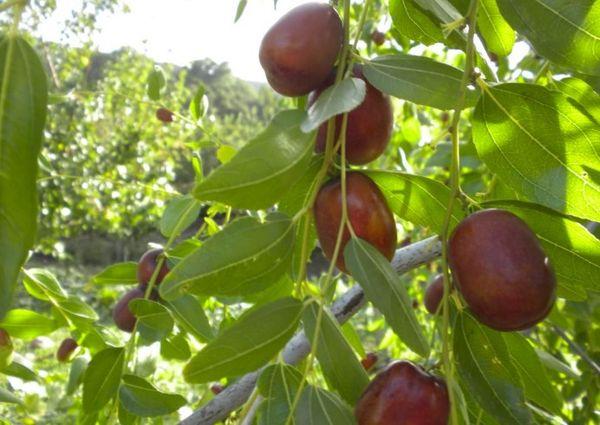
- The fruits ripen around mid-autumn. The small, shiny, brown fruits have a sweet flavor and dense, fleshy pulp with two seeds.
- The tree blooms for a long time, so the ripening of the fruits is uneven.
- The fruits, picked from the tree unripe, are used raw or processed.
- The fruits that remain on the tree until late autumn ripen completely and gain sweetness.
- To harvest the date fruit, special combs are used to comb it onto a sheet of plastic. They are then separated from the twigs and leaves.
- Ripe dates are dried, cured, and made into jam and compotes.
Propagation of fruit tree
Ziziphus is propagated vegetatively or by seed.
- By layering from the mother plant.
- By grafting onto a frost-resistant standard.
- A shoot that is separated from an adult tree along with the rhizome.
- By root cuttings.
- Seeds.
Growing Chinese dates in the mild southern climate requires little extra care. In temperate regions, these heat-loving trees require additional insulation during the winter.
Related posts:
 Description of the Canary date palm variety, growing from seeds at home
 Growing a date palm from a seed at home, planting and care
 Description and rules for eating royal dates, benefits and harms
 How to plant walnuts, care for them, and grow them at home
 Description of the tomato Finik Red F1 and other varieties in this series
 Descriptions of the 20 best cherry varieties for the Moscow region, their planting and care
 Peach tree care and agricultural secrets, pest control
 Description and characteristics of the Tyutchevka cherry variety, planting and care