
- Characteristic features of kolomikta
- Growing area
- History of selection
- Botanical description
- Flowering and fruiting
- Taste and scope of application of berries
- Male and female actinidia: differences
- The best varieties and cultivars
- Adam
- September
- Pineapple
- Fragrant
- Vitacola
- Methods of planting and propagation
- Arc branches
- Cuttings
- Lignified cuttings
- Seeds
- Site selection and preparation
- Step-by-step planting instructions
- Specifics of care in open ground
- Irrigation and fertilizing
- Mulching the soil
- Installation of the support
- Trimming
- Shelter for the winter
- Diseases and pests: treatment and prevention
- Reviews of the variety
Actinidia kolomikta is a deciduous vine that is completely resistant to Siberian frosts. This plant has recently appeared in gardens. Actinidia berries taste like kiwi, but are only 3 centimeters in size. The plant bears fruit when both male and female plants are present in the same garden plot. Fruiting begins as early as the vine's third year and lasts for 30 years.
Characteristic features of kolomikta
Actinidia kolomikta is a perennial shrubby climbing plant. It is grown as an ornamental and fruit crop. It belongs to the genus Actinidia. This plant is from the same family as kiwi. Although its fruits are not as large, they are sweet and rich in vitamin C, and they have a smooth skin. In the Far East, the berries are called kishmish (after the grape variety).
Growing area
The plant is native to the Far East. It is found in China, Korea, Japan, the southern Khabarovsk Krai and Sakhalin, the Amur and Primorsky regions, and the southern islands of the Kuril Islands. In the early 20th century, Ivan Michurin began breeding actinidia native to the Far East. His idea of cultivating the plant in central Russia was adopted by many Soviet scientists. Actinidia has appeared in the Urals, the Moscow region, central Russia, and even in the northern regions. It has been cultivated as a fruit and berry crop in home gardens since the end of the last century.
History of selection
Scientist Ivan Michurin was fascinated by the cultivation of actinidia. He was convinced that the fruits of this plant were in no way inferior in taste to grapes. Soviet breeders developed new varieties of actinidia for many years, mostly on an optional basis.
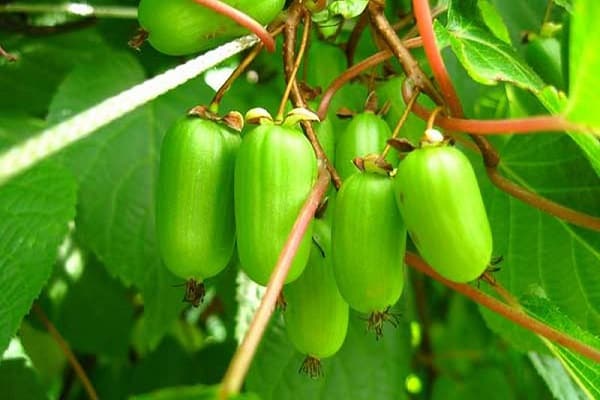
This crop received official recognition in the late 20th century. By 2012, 28 varieties of actinidia kolomikta had been developed. Breeding work was conducted at the Far Eastern, Zhiguli, and Moscow Experimental Plant Growing Stations.
Botanical description
This woody vine grows to a height of 3-9 meters or more, with a trunk 5 centimeters in diameter. Its twining shoots twine counterclockwise around any support they encounter. The plant grows very quickly, reaching 1.45 meters in a single season.
Kolomikta is the most winter-hardy of all actinidia crops.
It can withstand temperatures down to -46-50 degrees Celsius. The plant can be grown in cold climates where the frost-free period lasts 3-5 months.
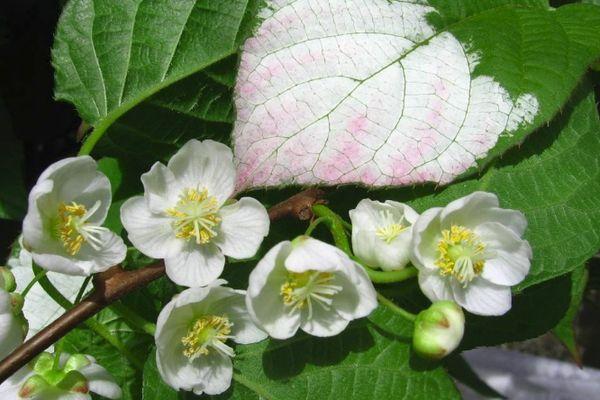
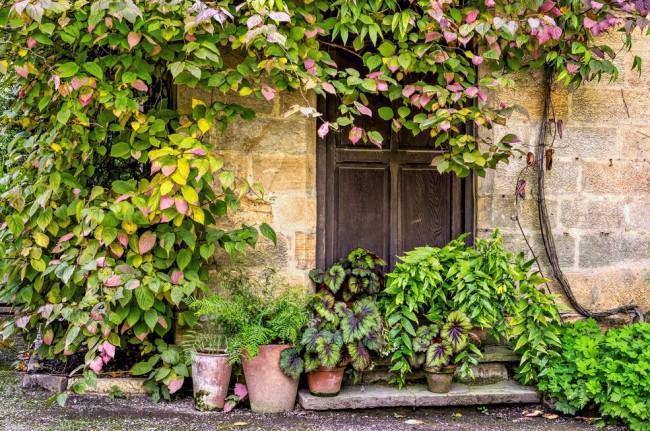
Leaves can change color. Young plants are bronze, then turn greenish, and in the third year, bright pink or white spots appear. In autumn, the foliage turns yellowish, crimson, and purple-red. The leaf blade is ovoid with a pointed tip and serrated edges. Variegation is clearly visible in vines growing in sunny areas.
Flowering and fruiting
Actinidia kolomikta begins to bloom in its third to fifth year. Flowers open in May and June, lasting approximately 19 days. The flowers are small, with five white petals and a rich lemon scent. This dioecious plant can have both male and female flowers. The staminate flowers are clustered in inflorescences of three each. The pistillate flowers are arranged singly on a long stalk, with an ovary and a multi-rayed stigma visible in the center.
To ensure fertilization, you need both male and female shrubs in the garden. Female flowers have sterile stamens, while male flowers don't produce ovaries. If you grow a vine of one gender in the garden, you won't be able to get fruit. The plant requires cross-pollination.
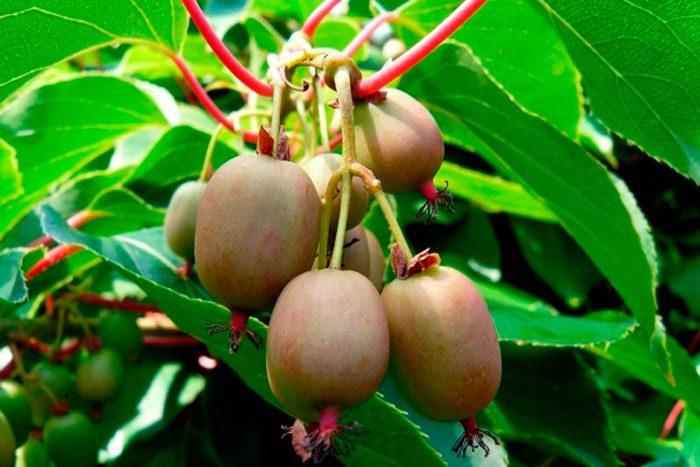
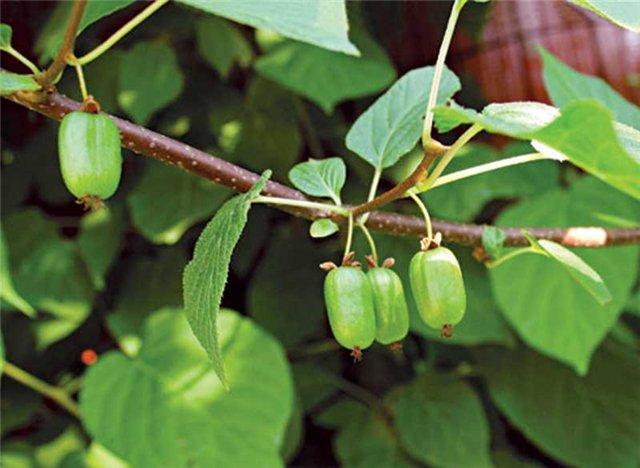
The fruits are edible cylindrical berries, greenish, reddish, or yellowish in color, with vertical stripes on the skin. They are approximately 3 centimeters in size. The fruits form only on female vines; male plants are needed as pollinators.
The berries ripen gradually, from August to early September. They contain numerous small, dark seeds. The skin is smooth, and the berries can be eaten whole. A single mature plant can yield up to 30 kilograms of berries.
Taste and scope of application of berries
Unripe fruits are sour and firm. Ripe berries are soft, aromatic, and slightly sweet, similar in flavor to pineapple or apple. Ripe fruits fall to the ground. Berries contain more vitamin C than lemons or oranges. Ripe fruits are picked and eaten fresh. They are used to make jams, juices, liqueurs, compotes, and desserts. The fruits can also be dried and cured.
Male and female actinidia: differences
The plant will bear fruit if you plant both male and female shrubs in the garden. For every 4-5 female vines, you need one male. It's only possible to determine the type of plant during flowering.
Male cultivars produce flowers in clusters of three, with no bud in the center but numerous tall stamens. Female cultivars produce solitary flowers, with a visible ovary in the center, a large, ray-shaped stigma, and short, few stamens.
Most actinidia varieties are unisexual, but there are also self-pollinating varieties. Before purchasing a seedling, ask the seller whether the plant requires a pollinator.
The best varieties and cultivars
Many interesting actinidia varieties have been developed. All are divided into male and female. When purchasing a seedling, it's important to understand its characteristics and flowering pattern.
Adam
This male form is suitable for all female varieties. This decorative climbing vine grows up to 3.95 meters tall and requires support. In its 3rd or 4th year, the greenish leaves turn white in late May and turn pinkish in summer. The older the plant grows and the more sunlight it receives, the more frequently the leaves turn pink. The flowers are collected in corymbs, three in each, and do not produce fruit. This vine is used to decorate arches, walls, and arbors.
September
A female variety. A pollinator is required for fruit development. The vine grows up to 3.95 meters tall and requires support. The greenish leaves change color, turning white and, after flowering, crimson. The fruits are yellowish-green, resembling gooseberries. They ripen in late summer.
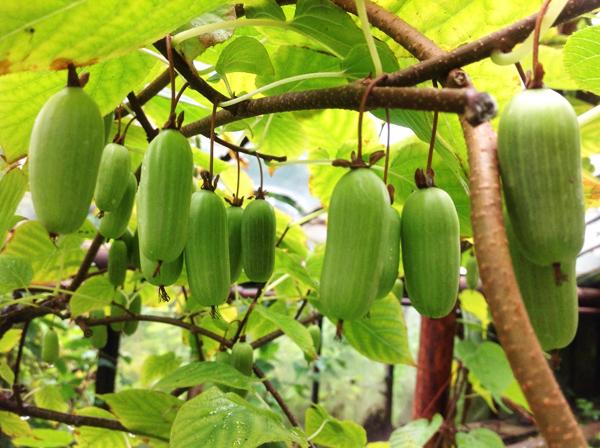
The berries have a sweet and sour taste, reminiscent of pineapple and apple. Ripe fruits fall off on their own. Fruiting begins in the third year and lasts for 30 years.
Pineapple
A female plant. The vine grows up to 6 meters tall. It blooms in June, in its third year. The berries are greenish with a red blush, 2.5-3 centimeters in size. The taste is somewhat reminiscent of pineapple. They ripen in August.
Fragrant
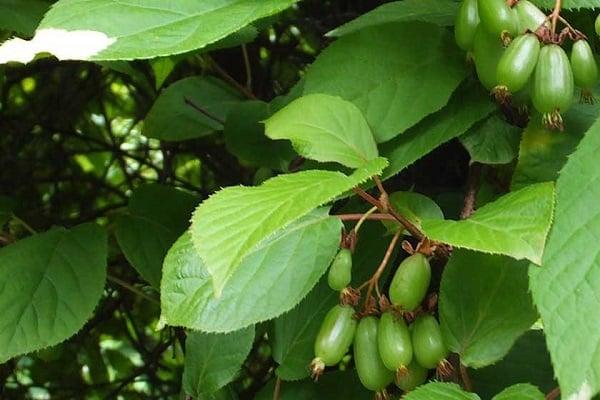
Female cultivar. Begins bearing fruit in the 3rd or 4th year of life. The fruits ripen in August. The yellowish berries are cylindrical in shape and have light vertical stripes on the smooth skin. The fruits have a sweet taste and a muscat aroma.
Vitacola
A female plant. A Czech variety. The vine grows to 2.9-4 meters in height. The shoots grow by 1 meter per year. Actinidia blooms in May, and the fruits ripen in August. The berries are large, 4.5 centimeters in size, oblong, yellowish, and sweetish. Fruiting begins as early as the third year. The leaves have decorative colors; white and pink spots begin to appear in the third year of the plant's life.
Methods of planting and propagation
Actinidia kolomikta is propagated by seeds, cuttings, and layering. You can purchase a ready-made 1-2 year-old seedling and plant it in the spring (April-May) in your garden.
Arc branches
In the spring, when the leaves appear, the lower lateral shoot is bent toward the ground and covered with a thick layer of soil. The top should be exposed. The following season, the rooted shoot is cut from the mother vine and planted in its permanent location.
Cuttings
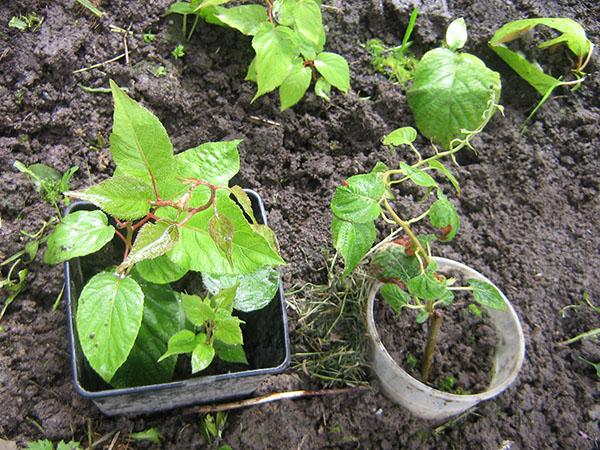
Young green cuttings, 12 centimeters long, are taken in June. Each should have about three buds, and the leaves are removed. The cuttings are soaked in water with Kornevin for several days, then inserted into a moist container and covered with a bottomless plastic bottle. The cuttings are aired and watered daily. Once they have rooted, they are transplanted, along with the soil, into a prepared hole in their permanent location. Before wintering, the seedlings are insulated with a thick layer of mulch.
Lignified cuttings
Cuttings from last year's shoots are taken in spring or early summer. Cuttings 12-15 centimeters long are placed in water with a growth stimulant, then planted in a moist peat-sand substrate. The container with the cuttings should be kept in a warm room or covered with a bottomless plastic bottle. The soil should be watered periodically. Once the cuttings have rooted, they should be transplanted to their permanent location.
Seeds
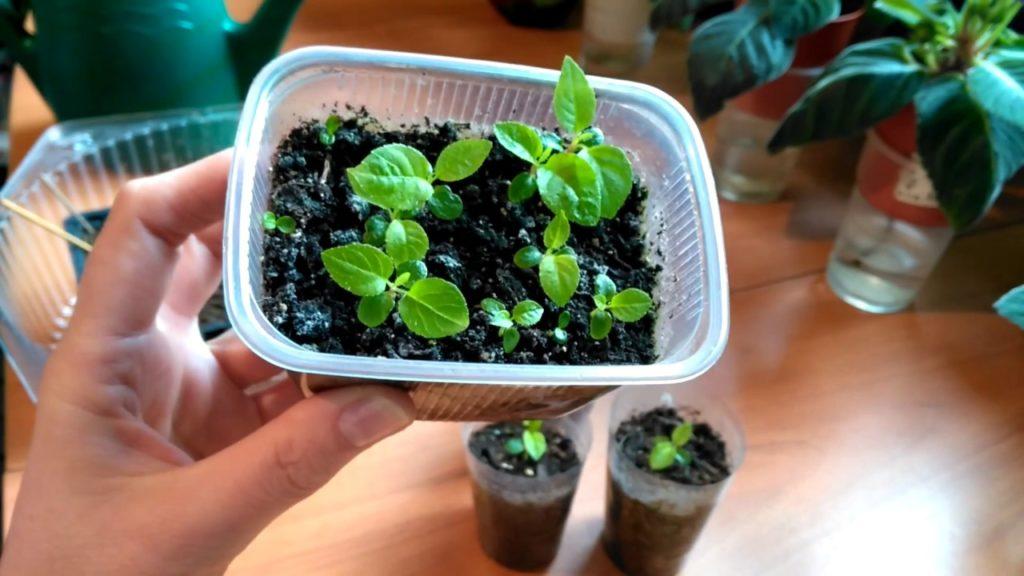
Vines grown from seed do not inherit their parent's characteristics. It is impossible to determine the type of future plant in advance. Freshly collected seeds are used for planting. Sowing is done in the spring, after stratifying the seeds in damp sand throughout the winter. Seedlings can be grown in pots and then transferred outdoors in May.
Site selection and preparation
When choosing a planting site, it's important to remember that the shrub will grow in the same spot for several decades. Actinidia is shade-tolerant, but will thrive only in full sun. Scorching sun can scorch the vine's leaves, so it's recommended to shade the foliage during hot weather.
Actinidia does not thrive in clay, alkaline, or excessively waterlogged soils. The vine grows well in loam and sandy loam soils.
The soil should be fertile, neutral acidity, and loose.
To plant a seedling, dig a hole 50 centimeters deep and wide. Mix the excavated soil with half a bucket of compost, mineral supplements (superphosphate, potassium sulfate, ammonium nitrate), peat, and sand. Use 50 grams of each fertilizer. Avoid using lime or chlorine-containing substances when planting. Leave 1.5-2 meters of clear space between the next plant.
Step-by-step planting instructions
How to plant a kolomikta actinidia seedling:
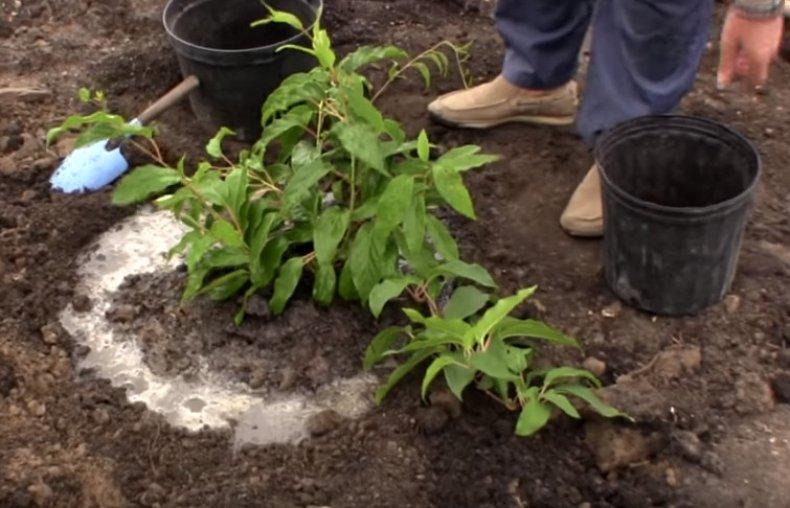
- Two weeks before planting, dig a hole 50 centimeters deep and wide, mix the soil with fertilizer.
- Pour a small layer of small pebbles into the bottom of the hole, then add a mound of fertile soil.
- Place the seedling on the mound and cover the roots with soil. The root collar should be above ground level.
- After planting, lightly compact the soil around the seedling. Pour 2 buckets of water under the roots.
Specifics of care in open ground
Like any garden plant, actinidia kolomikta requires regular care. During drought, the plant should be watered and protected before frosty winter weather. For better fruiting, it should be fed with organic and mineral fertilizers.

Irrigation and fertilizing
Actinidia is a moisture-loving plant. If there's been a long period of dry weather, the shrub needs to be watered at least once a week. If the water level is low, the vine will drop its leaves. Apply 2-5 buckets of water under the roots.
For normal growth and good fruiting, the plant requires fertilization. In the spring and during the fruiting period, actinidia is fed with nitrogen, potassium, and phosphorus.
In the fall, after the berries are harvested, potassium and phosphorus are added to the soil to ensure the crop survives the winter well. Apply 35 grams of each fertilizer per 12 liters of water.
Mulching the soil
The soil around the plant can be mulched with agrofibre, dry grass, or sawdust. Mulch will reduce moisture evaporation and prevent weeds from growing.
Installation of the support
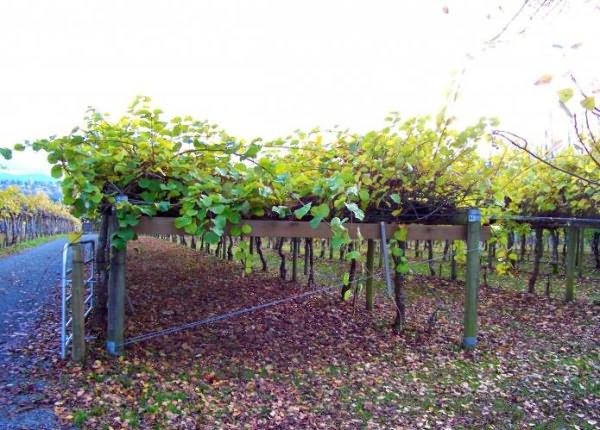
Actinidia is planted immediately near a support (an arch or arbor) that it will climb, or a special trellis is installed later, in the plant's second year. During the first few years, shoots are trained and tied to the support. The plant then climbs on its own. The optimal support height is 1.9-2.45 meters.
Trimming
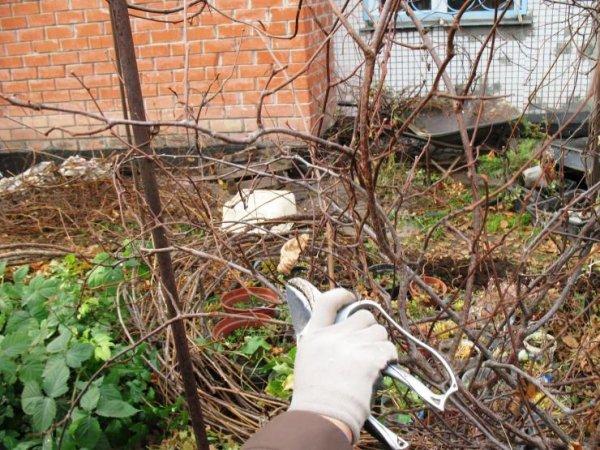
In the second year of the plant's life, in early spring, before the sap begins to flow, the first pruning should be performed: leave two main shoots and cut back all the others. In other years, in late autumn, after the leaves have fallen, thin the crown. Formative pruning is not recommended in the spring, as this is when the vines experience strong sap flow. In the 7th to 9th year, the old vine is cut back and growth is transferred to the young shoot.
Shelter for the winter
The need for careful shelter before winter depends on the type of actinidia and the severity of the winter. Hardy varieties and plants growing in temperate climates do not require insulation. A thick layer of peat or dried leaves mulches the soil before winter. In northern latitudes, shoots are removed from their supports, wrapped in burlap or agrofibre, and laid on the ground. In winter, more snow is added to the soil.
Diseases and pests: treatment and prevention
The plant rarely gets sick. Weakened shrubs are susceptible to fungal attacks during rainy and warm weather. The most common diseases are powdery mildew (a white coating on the leaves) and phyllostictosis (dark spots and holes on the leaf blades). For prevention, spray the foliage with fungicides (Fitosporin-M, Gamair, Topaz, Skor) in early spring.
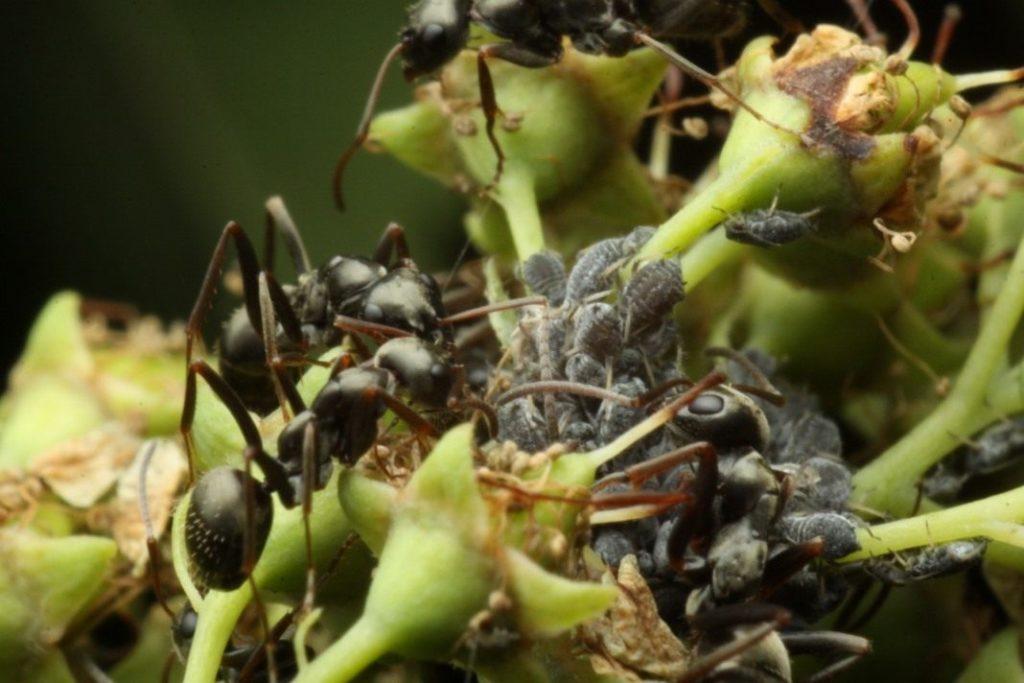 In hot weather, plant leaves suffer from aphids, caterpillars, and spider mites. Spraying with a soap-ash solution and insecticides (Fitoverm, Actellic) helps repel insects. Cats enjoy feeding on vine sap and ripe berries.
Reviews of the variety
Valeria Antonovna, 48 years old.
"The first time, instead of two female and one male seedling, I bought three male plants. They bloomed beautifully and were fragrant, but they didn't produce any berries. The next time, in the spring, I bought a three-year-old flowering seedling and identified the plant's type by its flowers. Now, in August, my garden produces sweet berries that resemble both gooseberries and kiwis."
Related posts:
 Description of the actinidia variety Doctor Shimanovsky, planting and care instructions
 Description and varieties of actinidia of the Arguta variety, planting and care
 Descriptions of the 20 best cherry varieties for the Moscow region, their planting and care
 The best grape varieties for growing in the Urals, planting and care rules in summer
 The best varieties of actinidia for growing in the Moscow region, planting and care
 Description of 36 of the best sweet and large varieties of gooseberries
 Planting and caring for actinidia in open ground, growing and propagating
 Which tomato varieties are best for open ground?