
- General description and characteristics of the nut
- Popular varieties
- Trebizond
- Caucasus
- Masterpiece
- Moscow Ruby
- Academician Yablokov
- Garden
- Warsaw Red
- Firstborn
- Barcelona
- Anapa
- Isaevsky
- American hazel
- Masha
- Catherine
- Circassian
- Chocolate
- Kuban
- Common Siren
- Adyghe
- Lambert white
- Cosford
- Victoria
- North 42
- Roman
- Curly
- Catalan
- Sugar
- Tambov early
- Purple
- How to choose the right variety
- Regional cultivation features
- Tips and advice from experienced gardeners
Nuts are very healthy, containing a wealth of nutrients. One well-known variety is the hazelnut. It is used in baked goods and many other culinary dishes. There are many varieties of hazelnuts. They are a relatively undemanding and frost-resistant plant, making them very easy to grow.
General description and characteristics of the nut
Hazelnut is a domesticated species of the hazelnut (filbert). It belongs to the walnut family. The plant is a tall perennial shrub, reaching almost 7 meters in height. The branches are long, and the leaves can be rounded or elongated, depending on the variety. The tip is pointed, and the edges are serrated.
Hazelnuts have a flowering period that's unusual for most plants—from December to March. The flowers are frost-hardy and can withstand temperatures as low as -30 degrees Celsius. Male flowers—catkins—and female inflorescences form on the tree. The plant does not require insects for pollination; the process occurs with the help of the wind.
Hazelnuts are large, with a thick shell. Inside is the nut itself. The nuts ripen in late summer to early fall.
Popular varieties
There are many varieties of hazelnuts, which differ in the characteristics of the fruit and the appearance of the tree.
Trebizond
This variety grows as a spreading, vigorous bush, reaching a height of 3 meters. The plant diameter is 2.5 meters. It is highly frost-resistant, with hazelnuts surviving temperatures as low as -33 degrees Celsius. The yield is high, with the fruits beginning to ripen closer to August. Ripening is uneven, finishing by the end of September.

The nuts are elongated, with a shiny, dark-brown shell. The average fruit weight is 2.6 to 3 g. A single cluster can contain 2 to 4 nuts. The shrub is undemanding in terms of growing conditions.
Caucasus
This variety is suitable for cultivation in the North Caucasus latitudes. This versatile hybrid is easy to grow. The bush reaches 3 m in height, with a spreading crown and medium density. The leaves are dark emerald in color and matte. The leaf surface is wrinkled and pubescent. The nuts are large when fully ripe, weighing up to 2.7 g. The shell surface is ribbed to the touch. The yield is high.
Masterpiece
This variety is characterized by a mid-early ripening period. The hazelnut yield is high, and the hybrid is frost-resistant. The Shedevr hybrid boasts excellent flavor. The bush is not prone to overgrowth, with spreading branches and medium density. A single cluster can produce 6 to 8 nuts, weighing up to 3 g. The fruit is rounded, with a pointed tip. Stripes can be seen at the base of the shell. The shell is dark brown and strong. The nuts ripen by the end of August.

Moscow Ruby
The ripening period is mid-late, with the first fully ripe fruits ready to be picked in late September to early October. The bush is multi-stemmed, with a spreading, fan-shaped crown. The plant reaches 4 meters in height. The foliage is an unusual shade: in early summer, the leaves are purple, turning a brownish-purple by midsummer, and by autumn, they acquire a dark brown hue with a burgundy tint. The fruits of this hybrid are large, weighing 3.2 to 4 grams.
The nuts are broadly elongated, with a flattened tip. Six to eight nuts form per inflorescence, though in some cases there may be as many as 15. The shell is thin, and the surface is smooth, matte, and light brown. The bush begins to bear fruit in the fourth year after planting.
Academician Yablokov
One of the most popular and promising hazelnut varieties. Fruiting shoots form abundantly, practically covering the entire bush. The crown is cup-shaped, with spreading branches. The mature plant reaches 3.5-3.8 m in height. The nut harvest ripens late, in September-October.
The inflorescences typically contain 7-13 nuts. The fruits are large, resembling acorns. The shell is thin, and the average nut weight is 2.5 to 3.2 g. This variety produces a good yield, with up to 10 kg of nuts per bush per season. One of the characteristics of the Academician Sakharov hybrid is that the bush produces a good harvest even at a young age.

Garden
The shrub reaches 5 meters in height, with a spreading crown and medium branching. The lanceolate leaves are light green in color, with serrated edges. The shrub's root system is unique in that it is located on the soil surface, so it is not recommended to remove fallen leaves in the fall, especially when grown in climates with cold winters. Also, avoid digging the soil to avoid damaging the roots.
Hazelnut trees bloom in early May. The harvest ripens in the second half of August. The yield is good, with an average of 14 kg of nuts per bush.
Take a look Also

Warsaw Red
This hybrid was bred in Warsaw, hence its name. The mature shrub is vigorous, with an oval crown and a loosely dense habit. In spring, the foliage is reddish-brown, turning greenish as summer approaches. Before the harvest, the foliage takes on a yellowish tint. Warsaw Red is characterized by poor frost resistance and does not tolerate spring frosts well. Pollination may be an issue in unfavorable climates.
The fruit's husk is slightly longer than the nuts themselves, a rich burgundy hue. Once fully ripe, some of the nuts may fall off, while others easily separate from the husk. The shell is dark brown. The harvest ripens in the second half of September. The kernel is large, almost completely filling the shell.

Firstborn
The harvest ripens mid-early, with the first fully ripe nuts appearing on the bush in the first half of September. Among its advantages, the hazelnut is highly frost-resistant; it can survive temperatures as low as -40°C. The plant is spreading, reaching a height of 3.5 m. The nut's husk is serrated, light green, and 1.5 times longer than the nut itself.
A single cluster typically contains 2-5 nuts. A fully ripe nut weighs 2.7 g. The shell is medium thick and light brown. The kernel inside is covered with a dense film. The kernel's tasting score is 4.6 out of 5.
A characteristic feature of the Pervenets hybrid is that it can be planted as a pollinator for other hazelnut varieties.
Barcelona
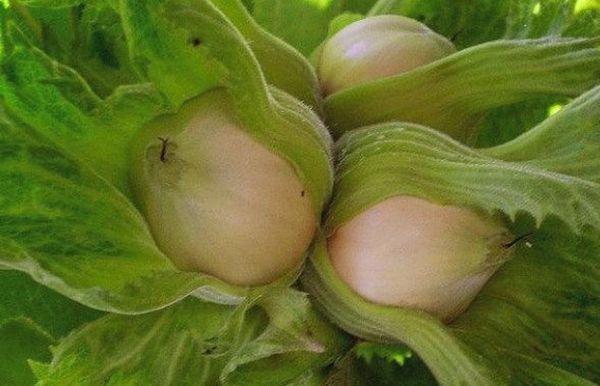
A fast-growing, spreading variety with a dense crown. The bush can reach a height of 5.5 m. It is resistant to sudden temperature drops. The harvest is mid-early and can be picked in the first half of September. When the fruit shell is fully ripe, the nuts fall off.
Anapa
This hybrid was developed by Russian breeders. It was a cross between the Tambovsky and Akademik Yablokov varieties. The nuts are large and suitable for desserts. They are highly frost-resistant, surviving temperatures as low as -42°C. The bushes are tall, with a spreading, oval-shaped, and wide crown. The yield is high, with a single bush yielding up to 6 kg of nuts.
Isaevsky
This hybrid is a mid-early ripening variety. The bush grows multi-stemmed, reaching a height of 3 meters. The crown is spherical. The leaves are large, oval, with serrated edges and a light green hue. This hybrid is partially self-fertile; for successful pollination, other hazelnut varieties should be planted nearby. The nut harvest ripens by September, yielding up to 4 kg per bush. The harvest has a long shelf life; the nuts can be stored without spoiling for 3-4 years.
American hazel
The foliage is light green in summer, turning purple-brown in autumn. The height of a mature bush ranges from 1.5 to 3 meters. Fruits are produced in groups of 4-7, with a light brown shell of medium thickness. Hazelnuts bloom in March-April. The first harvest can be collected towards the end of August.
Masha
This variety is a cultivated variety of hazel. It has a spreading, spherical crown and burgundy-colored foliage. This characteristic also makes it suitable for growing as an ornamental shrub. Ripe nuts are medium-sized, weighing up to 2 g. The shape is elongated, and the shell is thin and golden. This hybrid is noted for its winter hardiness and productivity.
Catherine
The Ekaterina hybrid was obtained through crossing common hazel of Tambov and Krasnolistny Hazelnut No. 236. Mature bushes are tall, the crown is spreading, the branches are of medium density.
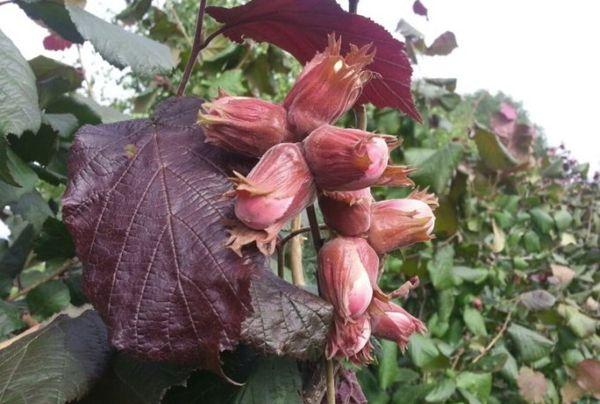
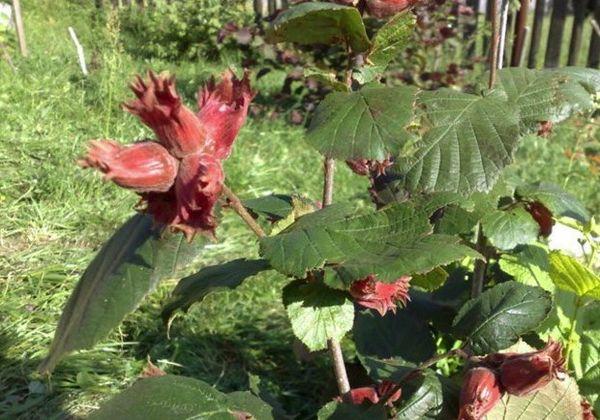
The red leaves give the shrub a very decorative appearance. The nuts are dark crimson, elongated, and can weigh up to 5 grams. The shell is thin, and eight nuts form per stalk. The harvest ripens around the middle of September.
Circassian
A mid-early hybrid, the first ripe nuts begin to appear on the bush around the first ten days of August. The bush is vigorous, with a spherical crown, stems reaching 6 m in height and 7 m in width. The nuts are small, weighing up to 1.7 g. The nuts are flattened and pointed at the tip. Disease resistance is average.
Chocolate
A hybrid of Ukrainian origin. The bushes are tall, with stems reaching 4 m in length and 3 m in width. The shrub blooms in February-April. The harvest ripens mid-early. Each fruit cluster produces 4-6 nuts. The nuts are elongated, with a dark brown shell. They weigh from 1.9 to 2.4 g. The yield is high, with up to 6 kg of nuts being harvested from a single bush.
Kuban
One of the largest-fruited hazelnut varieties, the nut averages 5 grams. Its advantages include resistance to most plant diseases and frost hardiness. The bushes are medium-sized, with stems reaching a maximum height of 3 meters.
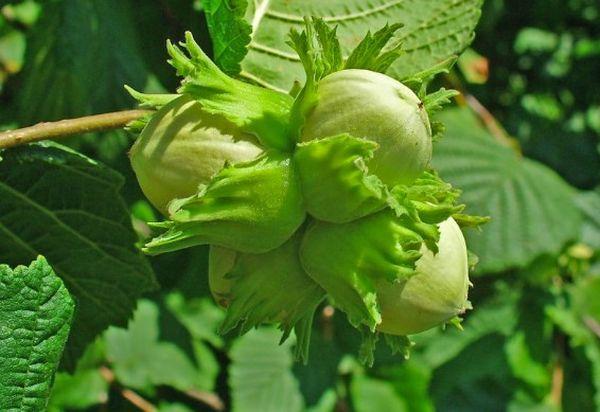
The harvest ripens early, with the nuts reaching technical maturity by early August. The Kuban hybrid is not grafted. The nuts are round, slightly flattened on the sides. The shell surface is matte, bumpy, golden in color, and covered with a thin waxy coating. The North Caucasus regions are preferred for cultivation.
Take a look Also

Common Siren
An ornamental variety of hazelnut, the plant is also planted to decorate garden plots. The crown is broad and densely foliated, with purple-brown leaves in spring that turn green as summer approaches. The plant grows up to 3.5 m tall. The flowers bloom in early April. The harvest ripens in mid-September.
A single fruit cluster produces 3 to 6 nuts. The kernel is large, completely filling the shell. Fruiting is regular. Saplings grow slowly, while mature trees exhibit rapid annual growth. It is recommended to grow in full sun, but tolerates partial shade well. It is resistant to diseases, especially fruit rot.
Adyghe
The hybrid was developed by Kuban breeders. The harvest ripens early, with the nuts reaching maturity by early August. The shrub is frost-hardy, surviving temperatures down to -30°C. The plant is moderately dense, leafy, and reaches a maximum height of approximately 3.5 m.

The nuts are broadly rounded, usually clustered in groups of 3-4. Rarely, 6-7 nuts form in a single cluster. The husk is solid, slightly longer than the nut itself. The yield is good, with a mature bush producing up to 6 kg of fruit during the growing season.
Lambert white
The bush is medium-sized, reaching a mature height of no more than 3 meters. The crown is rounded. This variety is prized for the excellent taste of its fruit. It is distinguished by good disease resistance, frost resistance, and undemanding nature. It can grow in virtually any climate.
White Lambert is also often used as a pollinator for other hazelnut varieties. Fruit clusters typically produce 3-6 nuts. The nuts are cylindrical in shape and completely wrapped in a shell. The kernel is large, occupying the entire shell. The bush is best planted in open, sunny areas. Growing in shade can significantly reduce yield.
Cosford
A tall shrub, a mature plant can reach up to 7 m in height under favorable growing conditions. The crown is dense and foliated. The branches are spreading, strong, and thick. The inflorescences begin to bloom between December and the first ten days of March. The inflorescences are small, almost invisible.
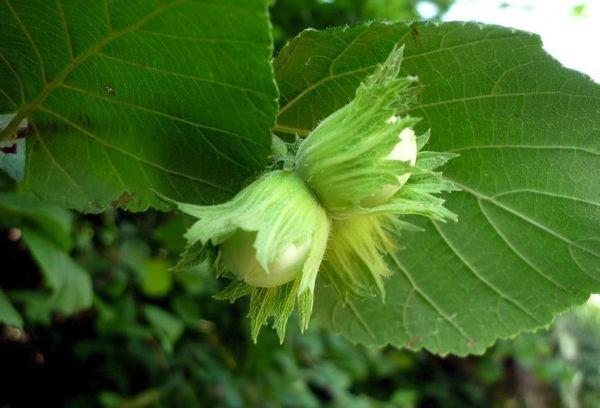
Ripe nuts are large, weighing up to 5 g. When fully ripe, they begin to fall out of the shell. Growing this hybrid is recommended in warm climates with moderate winters. Cosford is self-pollinating and is often used as a pollinator for other hazelnut varieties.
Victoria
This variety was developed in Ukraine. It is a vigorous plant with spreading branches. The nuts are medium-sized, slightly elongated, and resemble acorns. The shell is smooth, with bumps that can be felt to the touch. The kernel is completely enclosed in a shell that is several times longer than the kernel. Victoria is resistant to sudden drops in temperature. It is best planted in areas with rich black soil.
North 42
This hazelnut hybrid was developed by Russian breeders. It thrives in the Urals and tolerates frosty winters well. The flavor of the fruit is comparable to that of southern varieties. The bush is vigorous, reaching a height of 4 meters and a width of almost 5 meters. Severny 42 can be planted as a pollinator for other varieties; the plant typically produces numerous male inflorescences. Ripening is mid-early, with the first harvest occurring around the second half of September.
Roman
The Rimsky hazelnut hybrid is characterized by large, flat-round fruits at the technical maturity stage. With proper and regular care, the bush will bear fruit annually, achieving high yields.

Among its advantages, it boasts resistance to many diseases, particularly powdery mildew and bacterial blight. Its disadvantages include weak resistance to frost and fruit rot. The nuts are medium-sized, weighing from 2.3 to 2.8 g. The shell is dense and brown.
Curly
This hybrid has medium-sized bushes, reaching a mature height of 3.5 m. The crown is branched and spreading, reaching up to 5 m in diameter. The leaves are broadly oval, light green, and serrated along the edges. The underside of the leaf is pubescent. Nuts are produced in clusters of 4-15. The wrapper is intact, without splitting, as with most varieties. The nut shape is broadly oval, with a pointed tip. The shell is a rich brown color, with a shiny surface.
Catalan
The Catalan hazelnut hybrid was developed in Poland. A mature plant is vigorous, reaching a height of 4.5 m. The nuts are high-quality, with 3-6 nuts per cluster. They are large, weighing up to 3 g. The shell is medium-dense and cracks easily. The nut fills almost the entire shell. The flavor is excellent. The harvest reaches technical maturity towards the second half of September. Once ripe, the nuts usually fall out of the shell.
Sugar
This hybrid, like most varieties, is distinguished by its frost resistance and dessert-grade fruit. The bush is moderately spreading, reaching a height of 3.5 m. The inflorescences are partially self-fertile; for successful pollination, planting other plants nearby is recommended. The nut tree prefers full sun or partial shade. The harvest ripens mid-early. The nuts are medium-sized, weighing 2.3 to 2.7 g.

Tambov early
A medium-sized, spreading hybrid, the shrub can reach 4 m in height. The foliage is rounded, serrated along the edges, and light green. The nuts are oblong, with a golden-hued shell, thin, and easy to crack. The nuts are used as dessert nuts. Frost resistance is good; the shrub can survive temperatures down to -40°C. The harvest ripens around the second ten days of August. A single cluster typically contains 2-6 nuts. By the age of 10, the yield reaches its maximum, with a bush yielding up to 4 kg.
Purple
This hazelnut hybrid is considered medium-sized, with a mature bush reaching approximately 4 m in height. It is one of the red-leaved hybrids. The husk and flowers are purple. The Purple Hazelnut can also be grown as an ornamental plant. The fruits are large and acorn-shaped when fully ripe. Each nut weighs 3 g. The shell is dark brown.
The harvest ripens around the second ten days of August. After planting, the seedling begins to bear fruit in the third or fourth year. A single bush can yield up to 7 kg of fruit by the end of the growing season. For better pollination, it is recommended to plant more than two plants in the same area, even different varieties.
How to choose the right variety
When choosing a hazelnut variety, consider the growing region. When choosing a variety, first consider the tree's frost resistance and climatic conditions. Heat-loving varieties will not adapt to the climate of most regions of Russia.
Several trees with male and female flowering should be planted nearby.
To ensure successful pollination, varieties with the same inflorescence blooming period must be planted nearby.
Regional cultivation features
Due to its high frost resistance, hazelnuts can be grown in most regions. If winters are very cold, you can cover the lower part of the tree's trunk or mulch the soil to prevent the root system from freezing.

Hazelnuts can grow in any type of soil; the plant isn't picky about soil composition. The main thing is that the bush be protected from cold winds.
Planting seedlings also depends on the growing region. In southern latitudes, young bushes are planted in the ground in the fall. In warm climates, a seedling will have time to establish itself before the cold weather sets in. Furthermore, the plant will have enough time to accumulate water in its rhizome and begin vigorous growth in the spring.
In central and northern regions, spring is the preferred time for planting. While in latitudes with mild winters, planting can be delayed until fall, in northern latitudes, hazelnuts should be planted in spring.
Tips and advice from experienced gardeners
Growing hazelnuts is not difficult; it is one of the most unpretentious plants.
Tips and recommendations for growing hazelnuts:
- After planting the seedling, its shoots are shortened by 20-25 cm above the soil surface.
- Hazelnuts are often attacked by pests, so regular preventative spraying is essential. It is recommended to carry out treatment before the nuts begin to form.
- Before planting the seedling, the root system is soaked for four hours in clean water.
- After planting, it is necessary to create shade so that the seedling does not die.
- After planting, it is recommended to immediately mulch the soil to prevent a crust from forming on top.
- In light soils, seedlings should be planted deeper than in heavy soils.
- Since hazelnuts are shrubs, it is not recommended to plant the root collar too deep; young shoots may not sprout for a long time.
- If a sudden thaw begins in winter, the shrub quickly reacts to this and the buds begin to open. To prevent this, the shrub needs to be additionally covered with snow in winter, and it is also necessary to create snow retention.
- It is worth planting as many varieties as possible in one area to increase the pollination rate.
- For normal growth, hazelnuts require sufficient water from rainfall. However, while sufficient moisture is available for growth, it is unlikely to produce fruit. During dry months, the bush must be given additional water.
- Weeds are pulled out regularly and the soil is loosened, but the loosening depth should be minimal.
- Branches are thinned out in the 5th-6th year after planting.
- Mineral and organic fertilizers should be added to the soil several times per season.
By following agricultural practices, you can grow a healthy bush and get the maximum yield from it.
Related posts:
 Growing and caring for hazelnuts in open ground, rules for planting hazelnuts
 Planting and caring for common hazel in the Moscow region, description of the best varieties
 Planting and caring for hazelnuts in Siberia, growing hazelnuts
 Reasons why hazelnuts don't bear fruit in the garden and how to fix the problem
 Description of the 20 best varieties and types of barberry, planting and care rules
 The benefits and harms of peanuts for the human body, properties and contraindications
 Description of the 40 best varieties and types of parsley, what the plant looks like
 Description of 36 of the best sweet and large varieties of gooseberries