
- Barberry varieties: description and characteristics
- Edible varieties
- Spherical or heteropod
- Ordinary
- Amur variety
- Variegated crops
- Special Gold
- Admiration
- Bagatelle
- Columnar barberry
- Golden Torch
- Erectile dysfunction
- Orange Rocket
- Golden (Helmond) Pillar
- Low-growing plants
- Kobold
- Bagatelle
- Atropurpurea Nana
- Evergreen varieties
- Juliana
- Gagnepena
- Darwin
- Fast growing species
- Emerald
- Red Chef
- Atropurpurea
- Frost-resistant varieties
- Black fruit crops
- Thornless varieties
- What to choose depending on the growing region
- For the Altai Territory
- For the Moscow region
- For Siberia, the Urals
- For southern regions
Barberry is a shrub whose cultivars and varieties boast a huge diversity. Its crown can be lush and spreading, or, conversely, narrow and upright. Leaves can be bright green, golden yellow, deep orange, reddish-brown, or variegated. Most varieties are grown as ornamentals. Some barberry bushes produce delicious edible berries.
Barberry varieties: description and characteristics
Barberry is a thorny, bushy shrub or short, slender tree of the Berberidaceae family. It grows in Central and Southern Europe, Central Asia, and North America, in dry, sunny locations. Depending on the variety and growing region, it can be deciduous, with partially deciduous foliage, or evergreen. The shrub can grow from 30 to 300 centimeters in height.
Barberry is a drought- and frost-resistant plant. The shrubs are grown as hedges, for garden decoration, or for their red, sweet-and-tart berries, which are used to make jams and drinks, or for medicinal purposes. There are approximately 580 distinct varieties of barberry.
Edible varieties
Barberry is a fruiting shrub that blooms in spring with golden-yellow or soft orange flowers. In the fall, oblong, coral-red or dark, sour berries ripen. Fully ripened barberry is eaten. Unripe barberry can cause poisoning or severe stomach upset.
Spherical or heteropod
A tall, spherical shrub, growing up to 1.95 meters, with numerous, richly green leaves. This heat-loving plant is native to Central Asia. In the fall, fragrant flowers are replaced by blue berries covered with a light bloom.
Ordinary
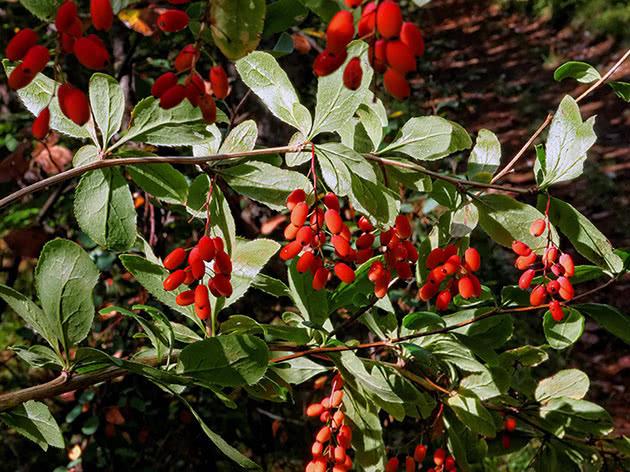
A thorny, lush shrub with a spreading crown, reaching a height of up to 2.65 meters. Tall, upright, brownish shoots bear alternately arranged oval leaves. At the tops of the stems or on short side branches are 6-centimeter-long flower clusters. Each cluster contains 14 to 26 yellow flowers up to 1 centimeter in diameter.
Barberry blooms in April and May. By the end of September, the flowers are replaced by red, oblong berries containing seeds.
This thorny shrub makes a living (impenetrable) hedge. There are varieties with interesting leaf colors: white-variegated, purple, and with a golden edge. Seedless berry varieties (Asperma) are grown for edibility.
Amur variety
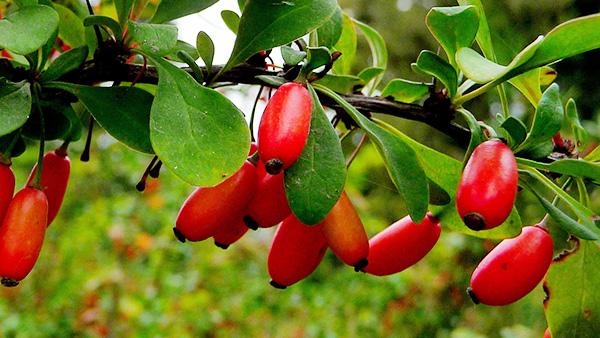
Botanists first encountered this variety on the banks of the Amur River. It's a thorny barberry shrub with a lush, spreading crown. It grows up to 2.95 meters tall. The ovoid leaves are greenish in summer and turn golden-red in autumn. Golden-hued flowers bloom in spring, followed by reddish berries in September. However, the berries can only be harvested in November.
Variegated crops
There are barberry bushes with interesting leaf colors. These plants are used in flower arrangements, hedges, and as border plants.
Special Gold
A low-growing, slow-growing, thorny, and lush shrub. It reaches 22-35 centimeters in height. Its crown is spherical. The bush is covered with numerous bright, yellowish-green, oval leaves. Golden-hued flowers bloom in the spring, followed by fruit in the fall.
Admiration
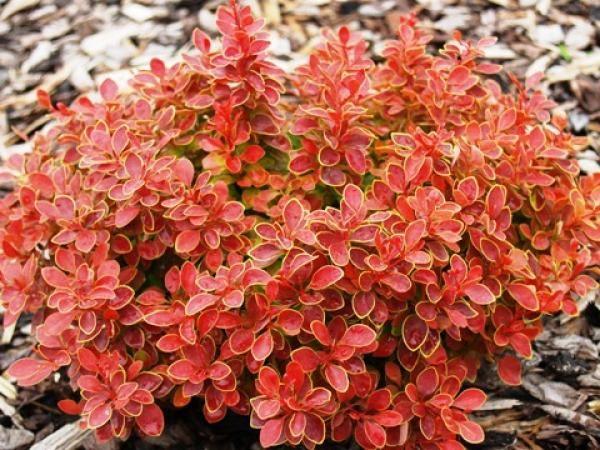
A dwarf, deciduous, thorny, lush shrub. Height: up to 0.50 meters. The crown is rounded and dense. The leaves are small, oval, coral or reddish-orange in color, with a yellowish edge. Yellowish-red flowers appear in spring, and oblong, scarlet berries ripen in September and October.
Bagatelle
A compact, dwarf bush with a rounded shape, 44 centimeters tall. The plant grows only 3-5 centimeters per year. Straight, stiff, thorny branches are covered with small, oval, reddish-brown leaves. In autumn, their color changes, turning a vibrant scarlet.
Columnar barberry
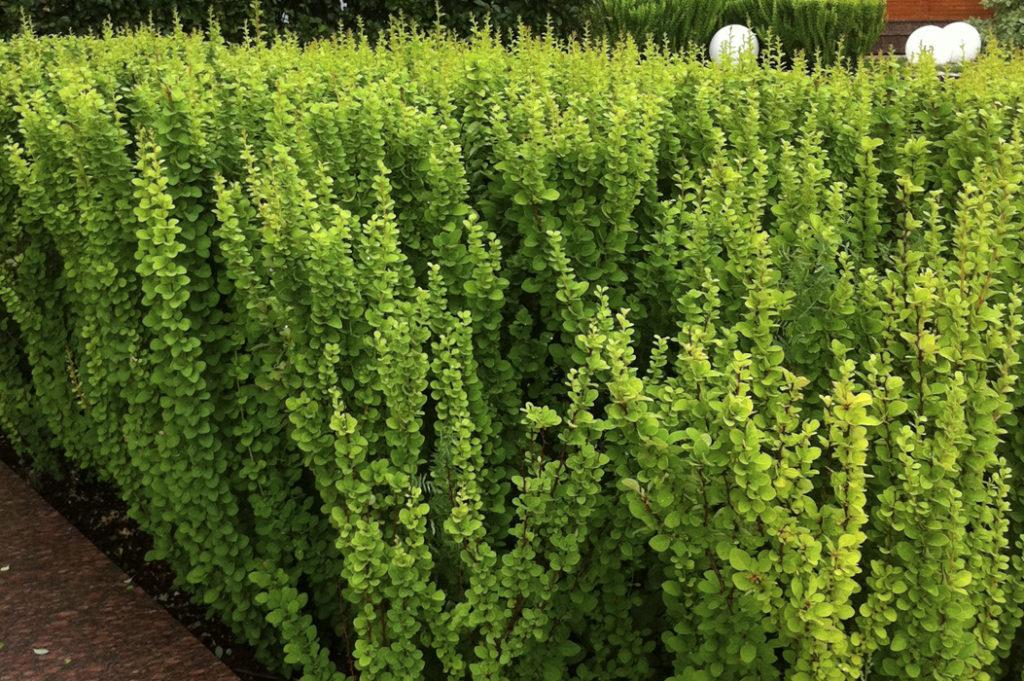
This group includes shrubs with erect stems. Plants range in height from 0.45 to 1.65 meters. The stems are heavily covered with leaves, either solitary or clustered. In spring and summer, the foliage is emerald or purple, and in autumn, orange or bright crimson. In spring, the bushes bear single or clustered yellowish-red flowers. By the end of September, these flowers are replaced by oblong, coral-colored berries.
Golden Torch
A tall, upright (columnar) shrub, growing up to 1.45 meters in length. The leaves change color several times: yellowish-green in summer, reddish in autumn. Yellowish-red flowers bloom in mid-spring, and coral-colored, oblong fruits ripen in September.
Erectile dysfunction
A shrub up to 1.45 meters tall. The shoots grow straight upward from the base, without branching. The leaves are small and greenish, turning orange in the fall. In spring, numerous bright yellow flowers bloom on the clusters. In the fall, oblong, reddish-coral berries ripen.
Orange Rocket
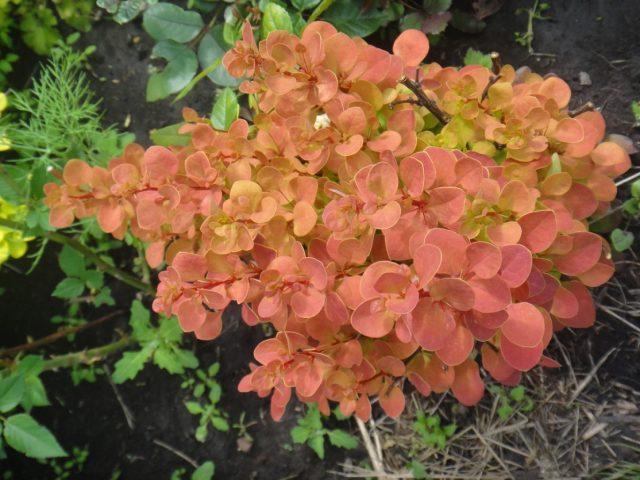
A columnar shrub growing to 1.25 meters tall. The stems grow vertically, growing 15-25 centimeters per year. The ovoid leaves are purple-orange all summer, turning a vibrant scarlet in the fall. Tiny yellowish flowers bloom in May, and by September, coral-colored fruits appear in their place.
Golden (Helmond) Pillar
A shrub up to 1.45 meters tall with a narrow, columnar crown. The leaves are small, rounded, and pinkish-red, eventually turning a rich purple and, in shade, can turn greenish. Barberry bushes grow almost 20 centimeters per year.
Low-growing plants
Dwarf barberry varieties reach a height of 39-60 centimeters. These low-growing shrubs are used as border plants, garden hedges, or in landscape compositions.
Kobold
A lush shrub with erect stems, up to 49 centimeters tall. The leaves are small, oval, emerald green, turning bright yellow in autumn. Yellowish flowers open in May. In September, reddish berries ripen in their place, which are edible.
Bagatelle
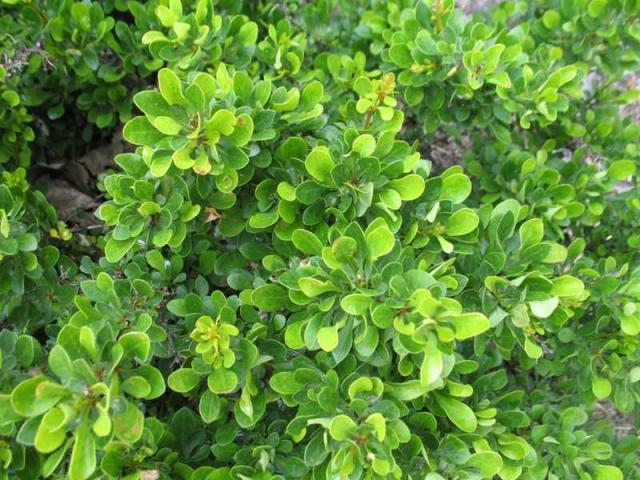
A shrub with erect stems, up to 0.40 meters tall. The leaves are initially greenish, then turn orange-brown, and then bright red in autumn. It blooms with small yellowish flowers. Edible red berries ripen on the bushes by the end of September.
Atropurpurea Nana
Planted in a single row, the low, thorny bushes of this variety create a dense hedge. Burgundy leaves grow on shoots up to 0.60 meters tall in spring, turning fiery red in autumn. Barberry blooms in May, with yellowish flowers appearing on clusters. Scarlet, oblong-shaped fruits ripen in September.
Evergreen varieties
Evergreen shrubs are distinguished by smaller, glossy leaves. These prickly garden varieties of barberry are usually grown in warm climates as hedges. Their berries are inedible.
Juliana
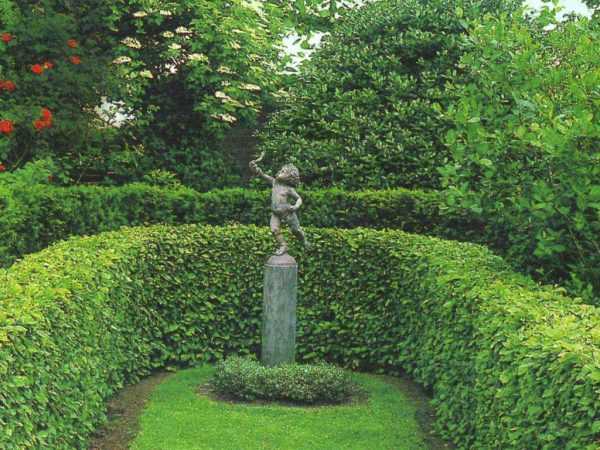
An evergreen, thorny, lush shrub with a spreading crown. It grows to just 1.95 meters in height in ten years. It has greenish, oblong leaves with prickly edges. Yellow-red flowers open in May, and by the end of September, dark blue berries ripen in their place.
Gagnepena
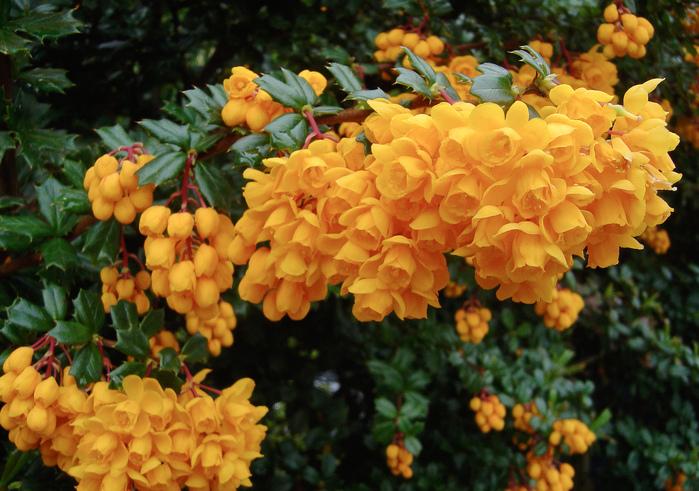
A slow-growing, thorny shrub. At ten years old, it reaches two meters in height. Elongated stems with sharp spines (up to 2 centimeters long) form a wide, spreading crown. The leaves are oblong and serrated. Yellow flowers bloom in late May, and by early autumn, blue berries with a white bloom appear in their place.
Darwin
A slow-growing shrub reaching a maximum height of 2 meters. In spring, it blooms with light orange flowers, which are replaced by dark blue berries in the fall. The leaves are small, glossy, and thorny along the edges. This plant is characterized by moderate frost resistance, withstanding temperatures down to -15 degrees Celsius.
Fast growing species
Barberry bushes typically grow very slowly, growing only 3-5 centimeters per year. However, there are varieties whose shoots "stretch" very quickly. Fast-growing varieties of barberry grow 25-35 centimeters per year.
Emerald
An upright shrub with a spreading crown, 1.45-2 meters tall. Barberry gets its name from the emerald color of its foliage. In autumn, the oval leaves turn golden yellow. Yellow flowers appear towards the end of May, and inedible fruits ripen in the fall.
Red Chef
A fast-growing, thorny shrub up to 1.95 meters tall. The leaves are reddish-brown in summer, turning crimson in autumn. Yellowish flowers bloom towards the end of May, and in autumn, reddish berries appear in their place.
Atropurpurea
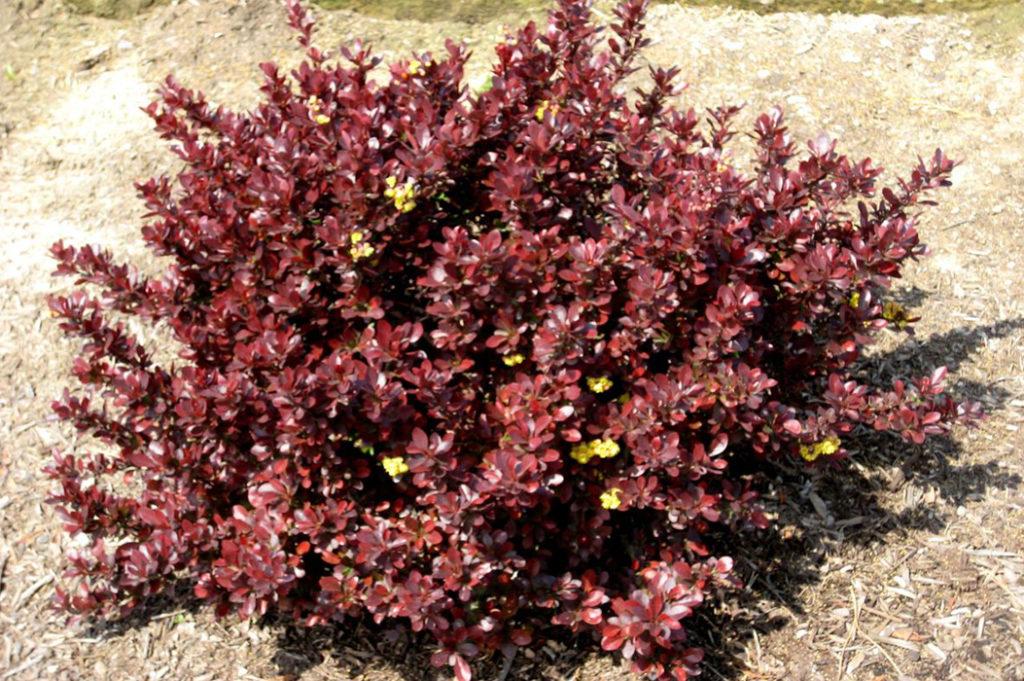
A fast-growing, ornamental shrub, reaching a height of 1.5 meters. The plant grows 20-30 centimeters per year. The ovoid, reddish-brown leaves fall in the fall. Yellow-red flowers bloom in late May, and the coral-colored berries ripen in September.
Take a look Also
Frost-resistant varieties
For regions with long, cold winters, it's advisable to choose frost-resistant barberry varieties. Most varieties are heat-loving and won't survive extremely cold winters. In northern regions, the following barberry varieties can be planted: common barberry (Lutea, Atropurpurea, Alba variegata), Thunberg barberry (Golden Ring), and Amur barberry.
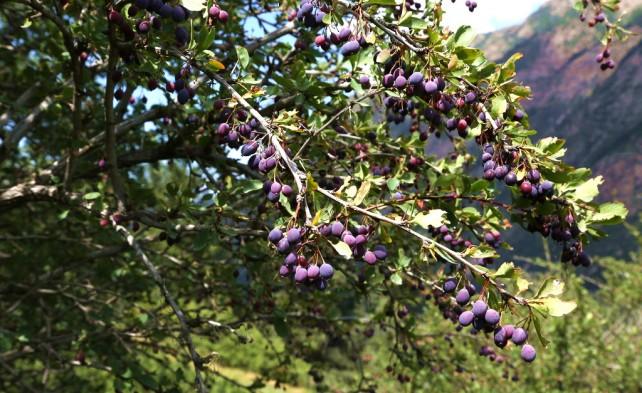
Black fruit crops
Black-fruited barberry bushes are grown for garden decoration. Some varieties produce edible berries. The best varieties of black chokeberry include Juliana, Ganiepin, and Klugowski.
Thornless varieties
Thornless barberry varieties have been developed. These ornamental, thornless shrubs with red berries can be grown to enhance gardens. Thornless barberry varieties include Aurea, Mentor, and Helmond Pillar.
What to choose depending on the growing region
Barberry is considered a heat-loving crop. Not all varieties can survive extremely harsh winters. It's best to plant varieties best suited to a particular climate zone.

For the Altai Territory
In the Altai Krai, you can plant the following varieties: Ottawa, Thunberg, Common, and Amur barberry. These barberry varieties are known for their resistance to low temperatures. They differ in bush height, foliage color, and fruit color. They are grown to create hedges or as garden ornamentals.
For the Moscow region
Barberry bushes are perennials that grow in the same place for several years and require winter protection. In this region, barberry varieties that tolerate winter frosts and temperatures down to -20 degrees Celsius are grown. The following varieties are recommended for the Moscow region: Alba Variegata, Superba, and Atropurpurea.
For Siberia, the Urals
For regions with long, frosty winters, subzero-hardy barberry varieties are suitable. Before the onset of cold weather, it's advisable to insulate the bushes to prevent them from freezing. Suitable barberry varieties for cold climates include Siberian barberry, Amur barberry, and common barberry (Atropurpurea).
For southern regions
In regions with a long warm season and short, cool summers, any variety of barberry is grown. The bushes don't even need to be insulated for the winter. Barberries can easily withstand temperatures down to -5-8 degrees Celsius. Heat-loving varieties suitable for growing in southern regions include Korean, Monetchaty, and Turkmen. Evergreen barberry varieties thrive in warm climates.
Related posts:
 Planting and caring for barberry bushes in open ground
 Useful properties and contraindications of barberry fruits, rules of application
 When is the best time to harvest barberries, how to dry them, and storage rules
 When and how to prune barberries for beginners
 Description of 36 of the best sweet and large varieties of gooseberries
 Description and characteristics of the 60 best sea buckthorn varieties, how to choose depending on the region
 How to propagate barberry at home using cuttings in summer, growing rules
 Signs of pest and disease attacks on barberry, treatment methods