
- Description and Features
- Advantages and disadvantages of hazelnut
- Popular species and varieties
- Lambert
- Kontorta
- Warsaw
- Siren
- Purple
- Ordinary
- How to plant correctly
- Recommendations for choosing deadlines
- Selection and preparation of planting material
- Requirements for the location
- Soil and site preparation
- Planting diagram
- Care instructions
- Watering mode
- Top dressing
- Trimming
- Loosening and weeding
- Mulching
- Crown formation
- Preparing for winter
- Protection from diseases and pests
- Methods of reproduction
- Seeds
- Root cuttings
- shoots
- Cuttings
- Harvesting and storage
- Tips from experienced gardeners
- Application in landscape design
Red-leaved hazel is an interesting plant that is very popular among gardeners. This cultivar is distinguished by its unusual, lush crown with red leaves. Because of this, it is often used in landscape design. The plant produces tasty and healthy fruits. Moreover, it is an excellent honey plant. For this reason, many gardeners plant this hazelnut variety in their gardens.
Description and Features
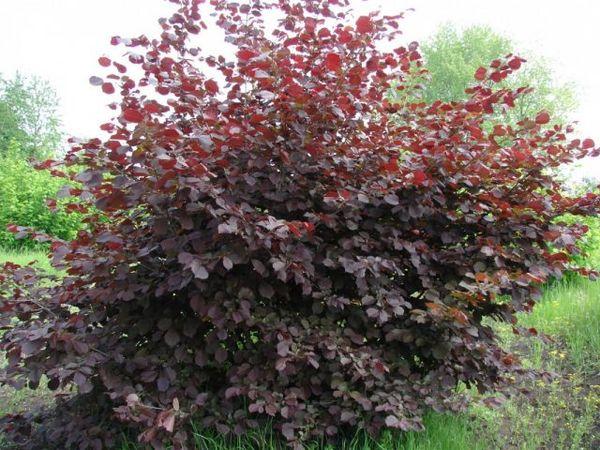
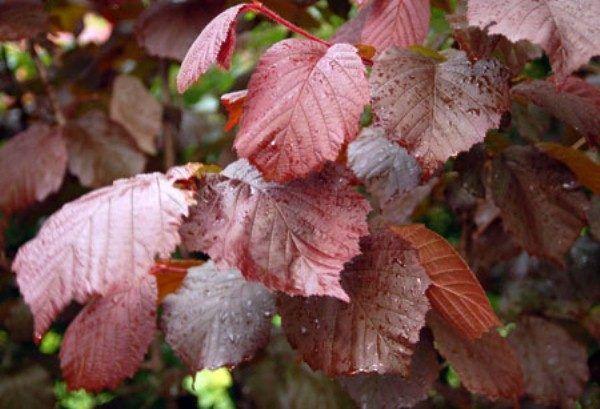
This hazelnut variety has unusual red leaves. The plant is considered quite undemanding and can grow in any soil. The bushes have a spreading crown, large branches, and dense burgundy leaves. Therefore, this hazel variety is often used for ornamental purposes. It can be used to create a beautiful hedge.
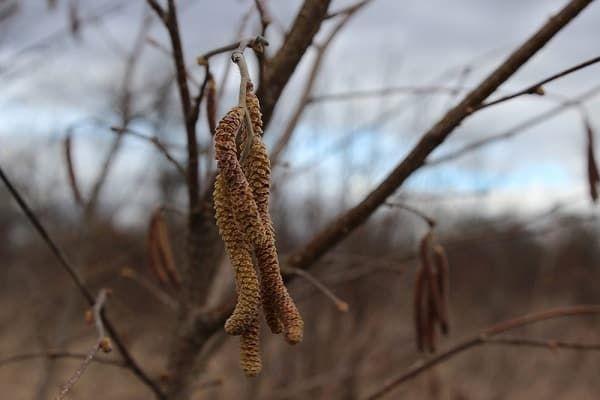
The plant is considered bisexual. Catkins appear in early spring, before the leaves unfurl. These catkins subsequently develop into fruit ovaries. In August-September, the fruit ovaries turn dark brown.
A single bush can yield up to 20 kilograms of fruit. They are distinguished by their excellent nutritional properties. The kernels help treat respiratory, cardiac, and vascular conditions. The plant is easy to care for and tolerates both heat and cold.
Advantages and disadvantages of hazelnut
This type of hazelnut has undeniable advantages:
- The spherical crown and red leaves make these bushes widely used in landscape design;
- beneficial properties of fruits – nuts contain a lot of proteins and various microelements;
- ease of care;
- resistance to temperature fluctuations.
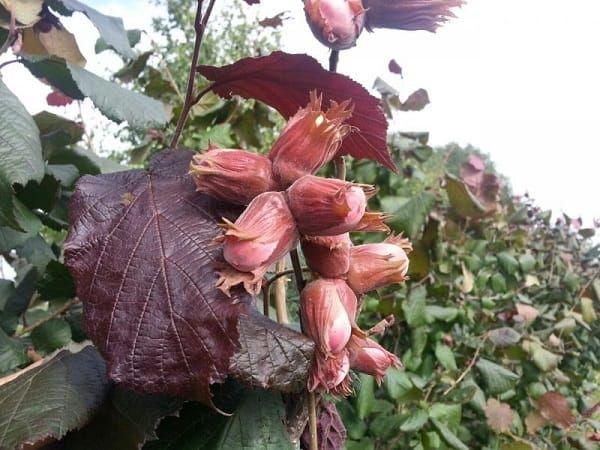
The main disadvantage of the plant is considered to be the insufficient development of the root system, which creates difficulties with reproduction.
Popular species and varieties
Today a large number of varieties of red-leaved hazelThey are used not only for harvesting, but also for decorative purposes.
Lambert
The cultivar was developed in Holland. It is a small bush, 4 meters tall, covered in red leaves. Flowering begins in February and is frost-tolerant. The berries are small, weighing only 2 grams. They have an excellent flavor. The harvest begins in mid-August.
Kontorta
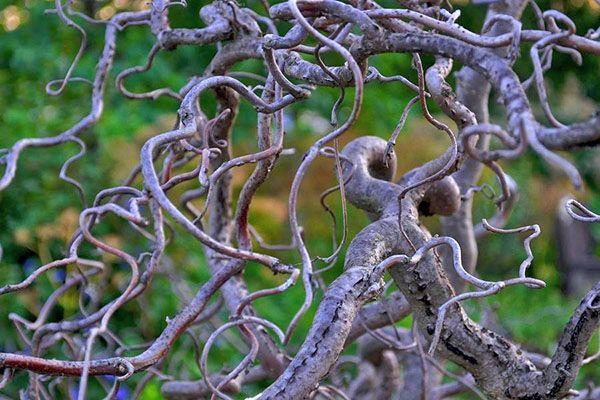
This plant variety is considered the most unusual. It is characterized by long, curved branches and wrinkled foliage. The branches are densely covered with pink-red catkins. In the wild, this plant grows in the Caucasus, Crimea, and Western Europe. It is a low shrub, no more than 3 meters tall. The crown spreads to 2-3 meters. Once planted, it quickly adapts and thrives.
Warsaw
This variety was bred in Warsaw. It is a fairly tall plant, reaching 7 meters. It is characterized by a lush, spreading crown up to 6 meters in diameter.
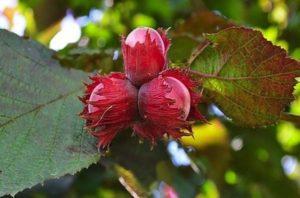
The leaves are large and reddish-brown in spring. In summer, the foliage turns green and orange in autumn. This is a rather demanding crop, sensitive to frost and excessive soil moisture. Hazelnuts ripen in early autumn and produce medium-sized fruits.
Siren
This variety was bred in Poland. It grows as a low bush, 4-5 meters tall. Once planted, it grows quickly. The hazelnut is adorned with large, oval leaves that are a deep red.
In spring, the shoots are adorned with gray catkins. After they bloom, they turn bright red. Hazelnuts begin bearing fruit in late summer. The fruits are large.
Purple
This type of hazel is called purpurea. It is a hybrid variety distinguished by excellent frost and drought resistance. The fruits ripen in August-September. The bush is medium-sized, reaching 3.5 meters in height. The fruits are small, weighing 1.5 grams.
Ordinary
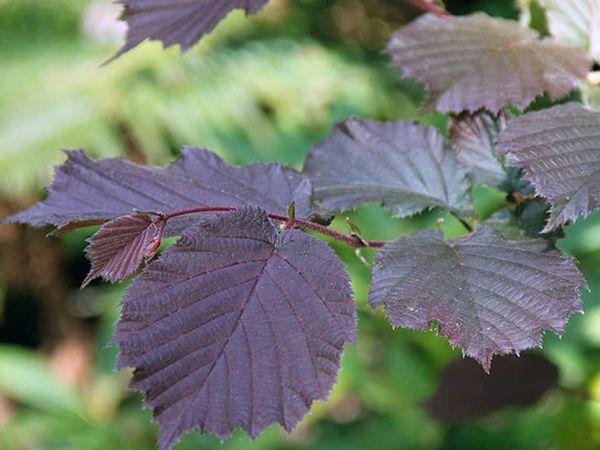
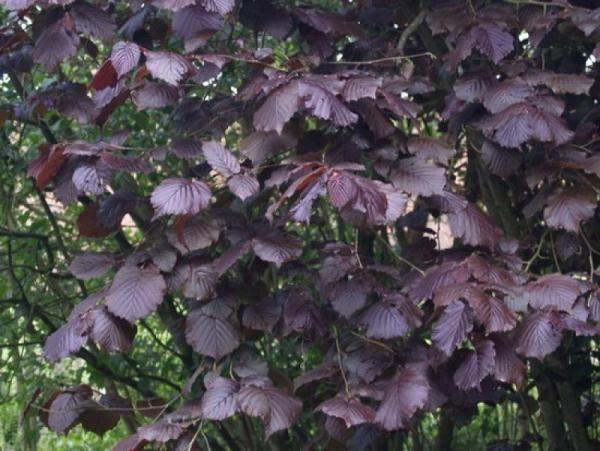
The common hazel is a fairly popular plant. It is a shrub that grows 4-6 meters in height. It is characterized by large reddish-brown leaves, which can also be dark purple. The undersides are covered with lighter fuzz than the upper parts. By autumn, the foliage turns green.
How to plant correctly
To achieve successful crop cultivation, it's essential to ensure proper planting. Preparing the seedlings and meeting the appropriate timing are crucial.
Recommendations for choosing deadlines
Planting the bush in open ground is permitted in the spring, before the sap begins to flow. This can also be done in the fall. In the latter case, planting is recommended 3-4 weeks before the first frost. This will give the plants time to take root and adapt to the new conditions.
Selection and preparation of planting material
To grow the crop, you'll need several seedlings, each with a different maturity period. This will ensure proper pollination. The seedlings should have a small number of leaves and well-developed roots. Ideally, they should be at least 30 centimeters long.
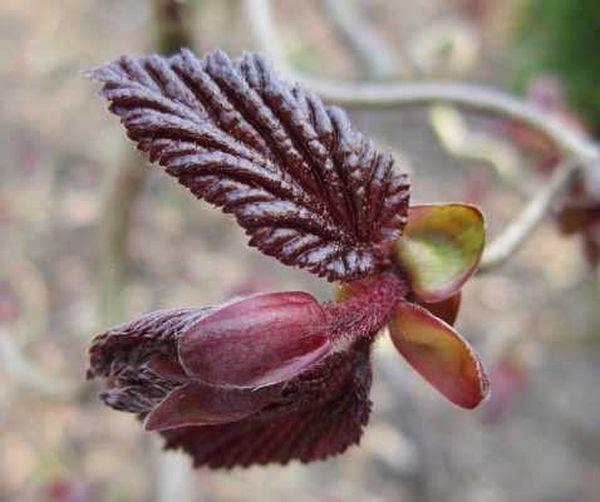
When choosing a plant, make sure it has more than three shoots. It's also worth inspecting the plant to ensure there are no signs of damage or rot.
Before planting, seedlings should be trimmed to 30-35 centimeters. It is recommended to soak the root system in a growth stimulant.
Requirements for the location
To ensure a good harvest, plant several hazelnut bushes close together. Choose an open, sunny, and wind-protected location for this plant.
Soil and site preparation
One month before planting, dig a hole in the ground. This will allow the soil to settle and compact. The hole should be at least 70 x 70 centimeters. Add a bucket of compost to the bottom of the hole. It's also recommended to add a cup of superphosphate and 50 grams of potassium sulfate.
Planting diagram
To improve the survival rate and rooting of hazelnuts, it's important to follow certain rules when planting. Plants should be spaced 3-5 meters apart. Choose a location that's not susceptible to spring flooding.

To carry out planting, do the following:
- It is recommended to add a mound of soil to the central part of the hole so that the hazel can take root.
- Remove the roots from the solution, straighten them out and place them in the center of the mound.
- Secure the shoots vertically and tie them to a wooden stake. This stake should be placed in the hole.
- Sprinkle the roots with loose soil and tamp down lightly.
- Leave the root collar 5 centimeters above ground level.
- Water the seedling with 3 buckets of water.
To speed up rooting, it's recommended to mix the planting soil with forest soil. This soil is best taken from the rhizomes of wild hazelnuts.
Care instructions
To ensure normal development and a bountiful harvest, it is recommended to properly care for the plant.
Watering mode
The plant requires moist soil, but avoids excess water. After planting and watering, it is recommended to cover the soil with a layer of mulch. Watering should be repeated after one week. It is important to ensure that the moisture is fully absorbed. Avoid stagnant water around the shoots and root rot.
In summer, it's recommended to water the plant 2-3 times a month. Each bush requires 10 liters of water. It's important to ensure the roots don't dry out in June and July. Fruit formation occurs during this period.
Top dressing
Fertilizing after planting is recommended no more than once every three years. Compost and humus are used for this purpose. 5 kilograms of fertilizer are required per crop. In early summer, nitrogen fertilizers are used to increase yield. 100 grams of fertilizer are used per bush.
Trimming
It is recommended to prune the plant in late autumn, after the leaves have fallen. Young plants should be thinned out before they reach 4 years of age. This will help increase their yield.
When pruning in the fall, remove dry, damaged, and long branches. It's recommended to bend lateral shoots downward and to the sides, then secure them with wire. This will facilitate sunlight and air penetration into the deep canopy.
Loosening and weeding
In summer, loosen the tree trunks several times a month. This procedure should be done carefully, as the roots are located near the soil surface.
Mulching
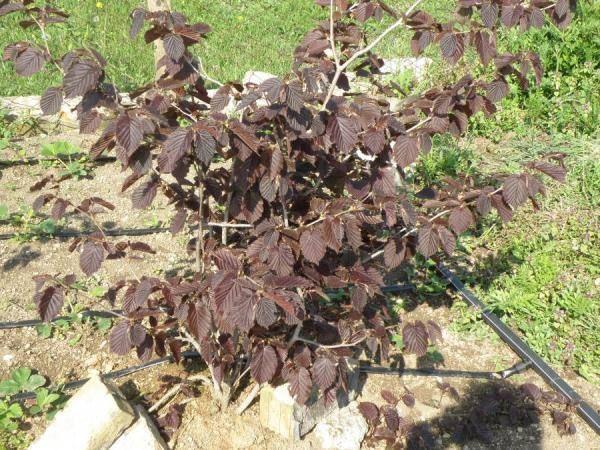
After watering and allowing the moisture to soak up, mulch the soil around the plant. Use grass clippings or tree bark. This will help retain moisture in the root area. It's important that the mulch doesn't touch the trunk or shoots of the bush, as this will cause them to rot.
Crown formation
Starting from the center of the crown, it's recommended to prune hazelnuts to create a vase-like shape. This will allow sunlight to reach the young, undeveloped shoots, increasing the number of fruit buds.
Preparing for winter
Young plants less than four years old should be covered for the winter. Plastic film or agrofibre is suitable for this purpose. Long shoots can be bent to the ground and secured with metal staples. The top of the plant should be covered with spruce branches. If snow falls, it is recommended to pile it on the bush.
Frost-resistant varieties over four years old can survive the winter without cover. These include 'Miracle of Vsesvyatskogo' and 'Maria Makarevich'.
Protection from diseases and pests
Hazelnuts are highly disease-resistant. They are occasionally attacked by pests. The plant can be attacked by bud mites, scale insects, and caterpillars. Common aphids, nut weevils, and borers also cause problems.
Take a look Also
To control pests, use Inta-Vir. The first application should be before bud break. The second application should be after the leaves emerge.
If agricultural recommendations are not followed, the plant may suffer from fungal infections. Colloidal sulfur and Bordeaux mixture treatments can help combat these.
Methods of reproduction
Hazelnuts can be propagated in a variety of ways, allowing every gardener to choose the best option.
Seeds
Using seeds is considered the most difficult and labor-intensive method of propagation. To do this, you need to select the strongest nuts and germinate them in a separate container. Then, the seedlings should be transplanted into the ground.
Root cuttings
To propagate the crop by layering, use young shoots. It is recommended to bend the layers toward the soil and place them in a trench. The end of the branch should be secured and covered with soil. This will help form new shoots.
shoots
The easiest way to propagate the plant is by dividing the bush. To do this, separate a plant containing 2-3 shoots. Make small cuts at intervals of 15-20 centimeters. This will help form new branches.
Cuttings
To do this, take strong, healthy cuttings from two-year-old bushes and place them in containers made from peat and sand. Regular watering will help the shoots establish their own roots.
Harvesting and storage
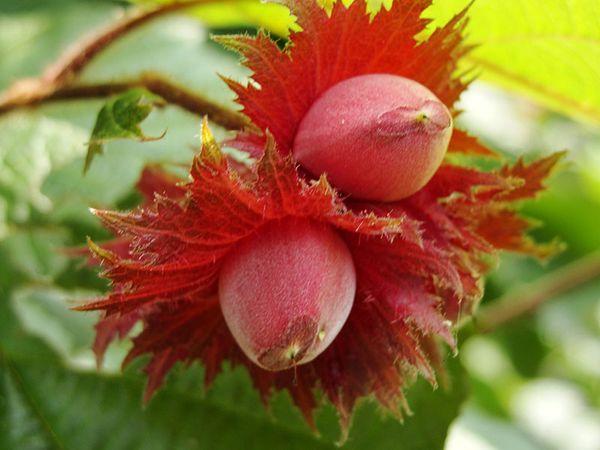
Red-leaved hazelnuts begin bearing fruit after 4-5 years. The nuts ripen in August or September. Ripeness is indicated by the yellowing of the berries. The harvested fruit should be dried and placed in canvas bags.
Tips from experienced gardeners
To achieve success in growing the crop, it is necessary to follow these recommendations:
- carry out planting operations correctly;
- fertilize the plant in a timely manner, taking into account seasonal factors;
- water the crop, avoiding over-watering the soil;
- trim the plant.
Application in landscape design
Red-leaved hazelnut can be planted as a hedge. Its dense crown provides reliable wind protection. The bush is well suited for edging tall trees. It can also be planted around flowerbeds.
The plant can be used to stabilize areas prone to sliding. The plant has strong roots that help stabilize the soil.
Red-leaved hazel is a beautiful and popular plant that produces tasty and healthy fruits. To achieve successful cultivation, proper planting and quality care are essential.
Related posts:
 Methods for planting and propagating cherries at home
 The best grape varieties for growing in the Urals, planting and care rules in summer
 Growing and caring for hazelnuts in open ground, rules for planting hazelnuts
 The best methods for growing grapes from seeds at home
 Description and cultivation of the 15 best cherry plum varieties for the Moscow region, planting and care rules
 Conditions for growing mandarin at home and rules for caring for the tree
 Description and rules for growing Solaris grapes
 Description of the 10 best columnar plum varieties, planting and care rules