
- Botanical description of the plant
- Habitat
- Benefits of growing crops
- Application in landscape design
- Medicinal and beneficial properties
- Varieties and popular types of elderberry
- Blue
- Siberian
- Herbaceous
- Canadian
- Racemose or red
- Siebold
- Black Madonna
- Laciniata
- Yellow-leaved
- Aurea
- Black Beauty
- Black lace
- Variegated
- Black Lace
- Golden
- Eve
- Planting in open ground
- Preparing the site and planting hole
- What to plant next to it
- Timing and technology of planting seedlings
- We organize competent care
- Watering and fertilizing
- Forming an elderberry bush
- Pest control
- Disease prevention
- Preparing trees for winter
- Methods of reproduction
- Cuttings
- We propagate by layering
- Seed method
- By vaccination
- Possible difficulties
Although many people in ancient times associated black elderberry with evil spirits, in Northern Europe the shrub was believed to have immense power because its branches quickly grow and take root. Elderberries were planted near every fence to protect the home from disease and misfortune. The flowers and berries of the small tree or dense shrub were dried to make medicinal decoctions and infusions. Almost any soil is suitable for planting black elderberry; caring for this easy-to-grow crop requires minimal knowledge.
Botanical description of the plant
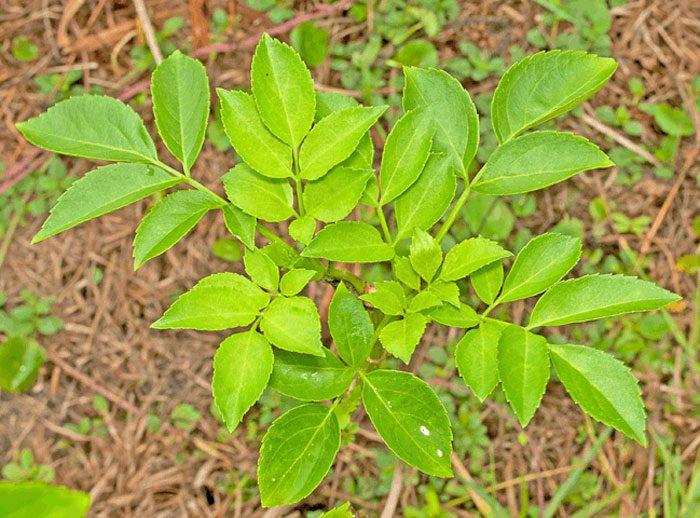
A shrub or small tree, rarely exceeding 6 meters in height, with branched stems covered with a sheath. Green young shoots turn brown over time, and numerous lenticels appear on the bark. Large leaves are formed from several smaller ones.
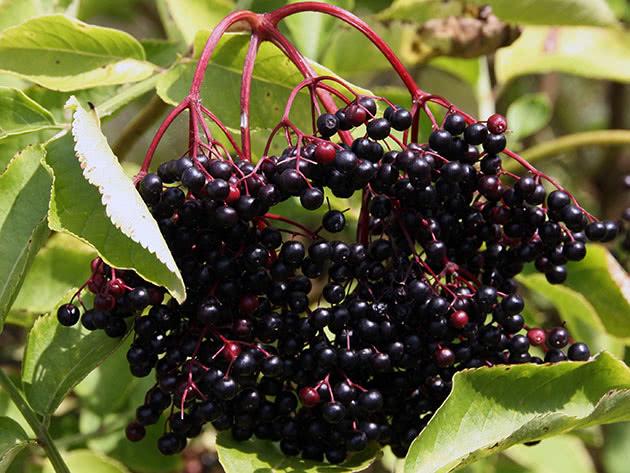
Fragrant white and yellow flowers reach 8 mm in diameter and consist of five petals that fuse at the base of the corolla. Black elderberry corymbose inflorescences appear in May, and fruits containing up to four seeds form in June. They ripen by early autumn, the flesh turning a deep red.
Habitat
In the wild, the undemanding elderberry is found on islands in the Atlantic Ocean, in North Africa, and in temperate and subtropical regions of Asia. The shrub has become established in Australia and New Zealand, grows in southern Siberia and Russia, and is found throughout almost all of Europe—in Ukraine, Moldova, Germany, France, the Balkans, and the Pyrenees.
Benefits of growing crops
Blooming elderberries attract a multitude of beneficial insects to the garden, which pollinate fruit trees. The shrub annually produces a bountiful harvest of berries, which are used in jams, compotes, and alcoholic beverages in Europe. However, birds and animals do not eat the leaves or stems of black elderberries, as they are poisonous.
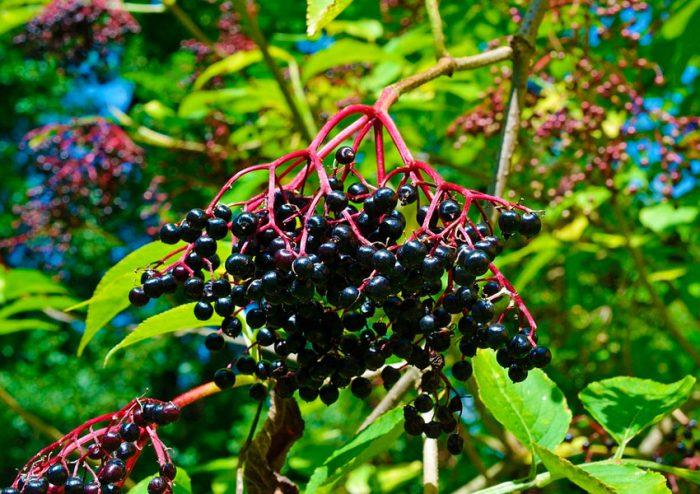 The plant releases substances into the air, preventing harmful insects from landing even on nearby crops. The shrub's flowers have healing properties.
Application in landscape design
Low trees with carved leaves are used in garden design. Neat shrubs planted in a row look like a hedge. low-growing varieties of plants together with barberry, thuja, and hawthorn create beautiful compositions. The delicate elderberry with its purple and gold leaves looks stunning in a clearing. Dwarf varieties pair beautifully with phlox, vibrant coleus bushes, and delicate hydrangea flowers.
Medicinal and beneficial properties
In ancient times, people believed that elderberry protected against evil spirits; magicians used the plant's branches in their rituals; healers prepared infusions to treat illnesses.
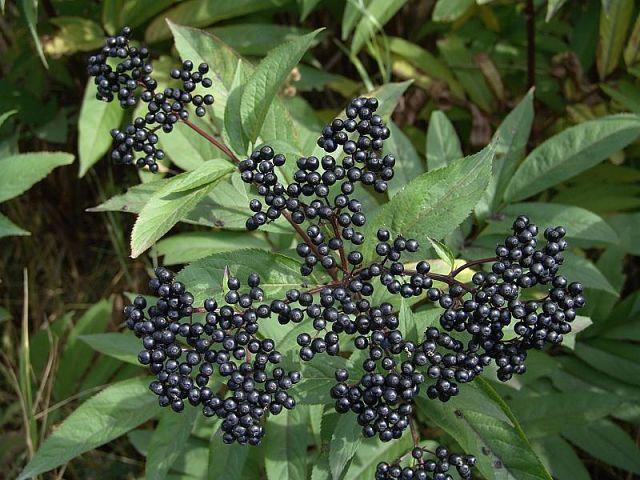
The berries of the bush are rich in:
- microelements;
- organic acids;
- vitamins and fructose;
- tannins.
Elderberries relieve inflammation, disinfect, strengthen the immune system, and have a diuretic effect.
The plant's leaves contain essential oils and alkaloids, and the bark contains choline, an organic compound that helps reduce cholesterol and acts as an antioxidant.
Fresh berries improve vision, and decoctions of flowers and leaves are used to treat:
- cold;
- peptic ulcer;
- neuroses;
- rheumatism;
- skin pathologies.
Elderberry is beneficial for people with diabetes and liver and kidney problems. Decoctions of the roots relieve inflammation in the mouth and throat, and compresses are applied to burns and boils. Infusions of black elderberry are used to prevent cancer, calm nerves, treat chronic constipation, and normalize metabolism.

Varieties and popular types of elderberry
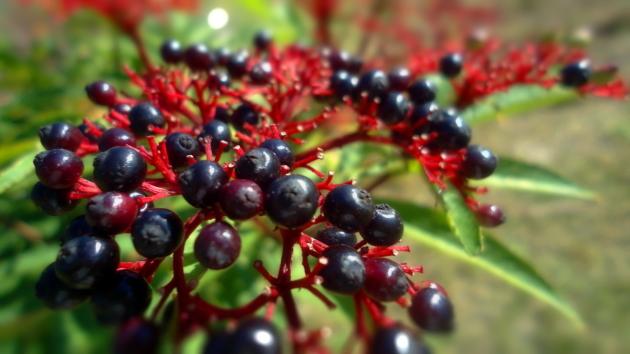
The genus Sambucus comprises approximately 40 species of deciduous trees, perennial herbs, and shrubs found in temperate and subtropical forests. Only a few species are cultivated for medicinal purposes, while others are used in landscape design.
Blue
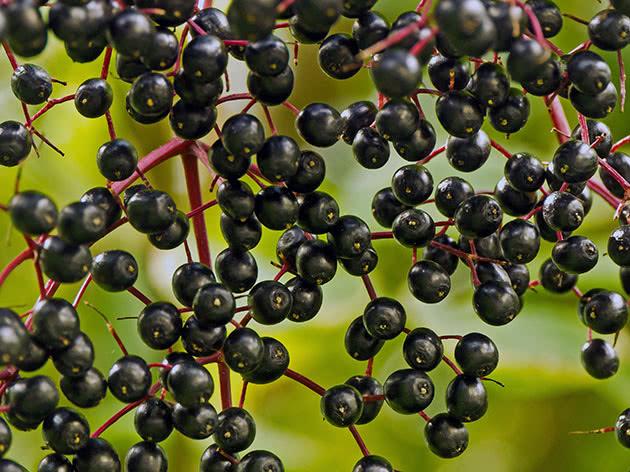
Elderberry, which grows near water in Canada and in the mountains of the United States, is an excellent ornamental plant, often used to decorate yards. This tall tree or shrub has slender branches and compound leaves of blue or blue-green. Yellow or white flowers grow up to 15 cm long. The scent emanating from the petals attracts insects. The black fruits are covered with a bluish bloom.
Blue elderberry blooms for a little less than a month, sometimes twice a summer. It produces a profusion of berries, but most of them fall off. The shrub has a striking appearance thanks to the combination of red shoots and blue leaves. The plant tolerates winters well, but freezes in severe frosts.
Siberian
A perennial shrub up to 4 meters tall, with a beautiful, dense crown formed by branched shoots, it grows in coniferous and deciduous forests of the Far East, Siberia, and the Volga region. Elderberry blooms in May, and red fruits containing up to 5 seeds ripen in August. The bark, berries, and serrated leaves of the plant all have medicinal properties.
Infusions of Siberian elderberry relieve pain and are used to treat rashes, bronchitis, constipation, and migraines.
Herbaceous
The poisonous elderberry, with its straight stem and unpleasant odor, grows in the forests of Belarus, the steppes of Ukraine, and the Caucasus and Central Asian mountains. This herbaceous perennial's long leaf blades have a short petiole and consist of 10 pointed leaflets. The inflorescence resembles a panicle and smells of almonds. The black, shiny berries of the herbaceous elderberry are used medicinally.
Canadian
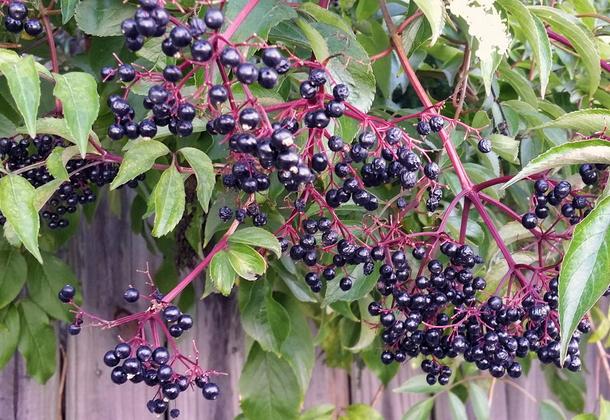
This beautiful deciduous shrub delights with its decorative appearance and the fragrance of its large flowers, gathered in umbels, and surprises with its graceful, glossy blue-violet berries. Elderberry has several varieties, but Maxima, with its large, long leaves and inflorescences about 50 cm in diameter, is most commonly used in landscape design.
Racemose or red
This shrub, growing up to 3 meters tall, has a round crown formed by shoots of an unusual violet-purple hue. The feather-shaped leaves consist of several petals. Yellowish inflorescences form at the top of the bush. In summer, the elderberry, native to Eurasia and North America, bears poisonous, bright red berries on its clusters.
Siebold
A perennial with a beautiful crown, the trunk of which reaches 8 meters in height in nature, is covered with palm-shaped leaves. They grow up to 20 cm in length and have pointed tips. When in bloom, the Sieboldii looks elegant and elegant.
Black Madonna
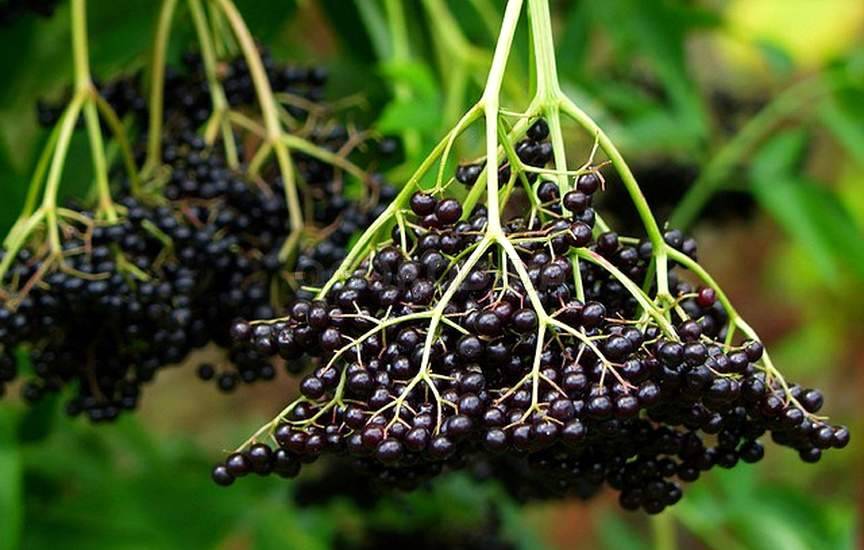
An upright elderberry with compound leaves edged in yellow and white, it's used in flower arrangements as a shrub with numerous branches that extend from the base. Black Madonna grows quickly and is resistant to insects and diseases. Fragrant elder flowers form umbels. The small berries turn black when ripe.
Laciniata
In the wild, this perennial shrub grows along lakes and rivers on the Kuril Islands and Sakhalin, and is used in landscape design in Europe and Japan. Sambucus laciniata has a broad, beautiful crown, oblong leaves with pointed tips, and white petals that form large inflorescences. The berries, which ripen in early October, are added to tea and baked goods.
Yellow-leaved
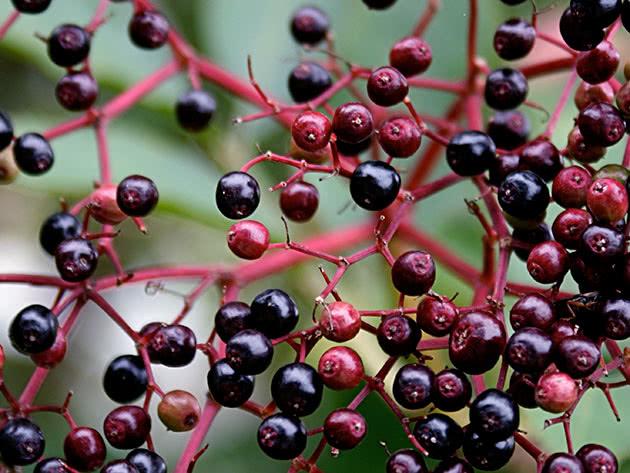
In the wild, elderberries, used for landscaping courtyards, grow up to 4 meters in height. The crown of the bush is formed by gray shoots with large yellow leaves. The flowers are the same shade, gathered in umbels. In summer, shiny purple berries ripen, which are eaten as food.
Aurea
This elderberry variety, native to North America, has attracted the attention of European and Russian landscape designers with its spreading crown, which is trained vertically into a ball or oval shape. Its bright green leaves with sharp golden tips reach 0.3 m in length.
Aurea flowers bloom in clusters, and in their place small fruits are laid, which, when ripe, acquire a shiny, dark color.
Black Beauty
This fast-growing shrub boasts striking, feathery purple leaves of a unique shape. In early May, Black Beauty blooms with fragrant pink flowers, gathered in large clusters. Elderberry tolerates severe frosts and is drought-resistant, and is grown in temperate regions of Russia.
Black lace
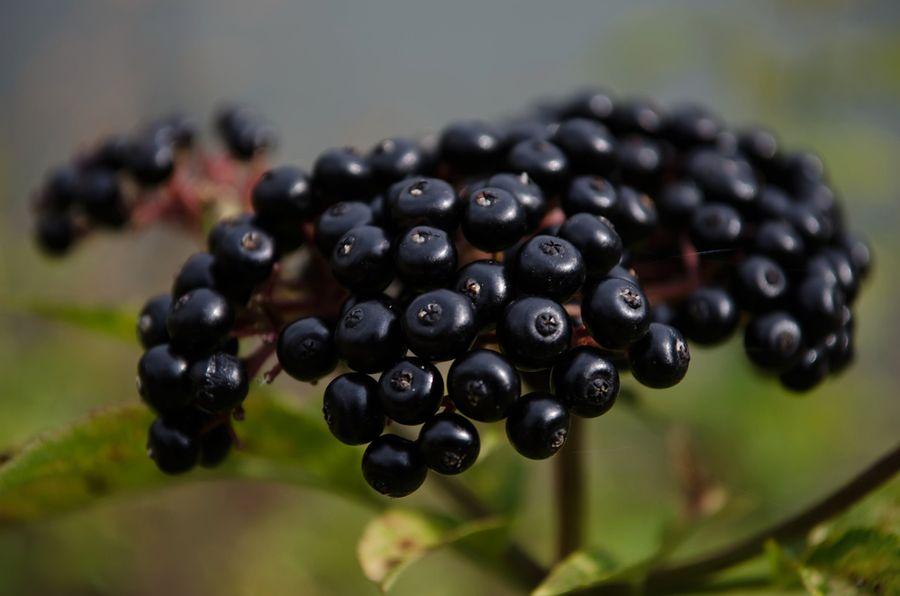
This attractive cultivar was recently bred and is used for ornamental purposes. The shrub boasts elegant, lacy, purple-hued leaves and a crown reminiscent of a Japanese maple. Black Lace grows up to 3 meters tall. Pink flowers bloom in early summer, strikingly contrasting with the dark foliage. With proper pruning, the bush acquires a neat shape and looks exquisite in group and individual arrangements.
Variegated
The herbaceous elderberry, native to North America and rare in Russia, is prized not only for its unusual appearance but also for its medicinal properties. The plant differs from other elderberry species in its bright green leaves, veined with white.
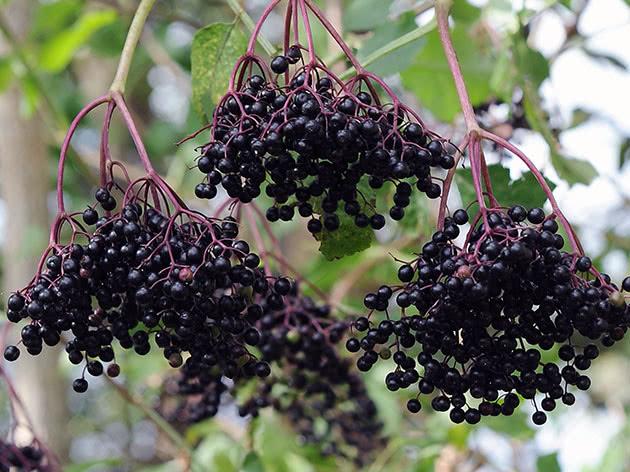
Black Lace
This shrub, whose crown reaches 2 meters in width, thrives on the slopes of the Caucasus Mountains and grows in clearings and forests throughout Europe and Asia. Elderberry's lacy leaves are distinguished by a purple hue. Large pink flowers are replaced by fruit. The red berries ripen in late summer and are used to make jellies and baked goods.
Golden
Elderberries growing in the garden need to be pruned regularly, as they choke out everything in their path. These vigorous bushes require no fertilizing, are drought-resistant, and quickly reach a height of almost 4 meters.
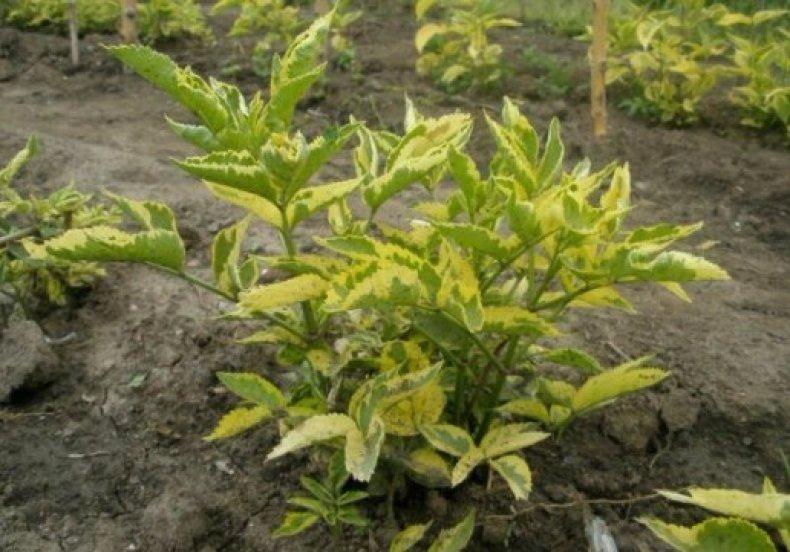
The Golden Elder gets its name from the striking color of its large leaves, which remain yellow until autumn. Fragrant white flowers bloom in the spring, and clusters of dark red berries ripen by late summer.
Eve
An ornamental shrub with crimson, opposite leaves, it is used to create layered gardens, create hedges, and adorn arbors. Elderberry Eva grows upright, forming a broad crown from branched shoots. In spring, the shrub is covered with delicate pink flowers. The red berries are edible.
Planting in open ground
Elderberry does not require any special growing conditions, but in the shade it does not look as attractive as in sunny places and develops worse.
Preparing the site and planting hole
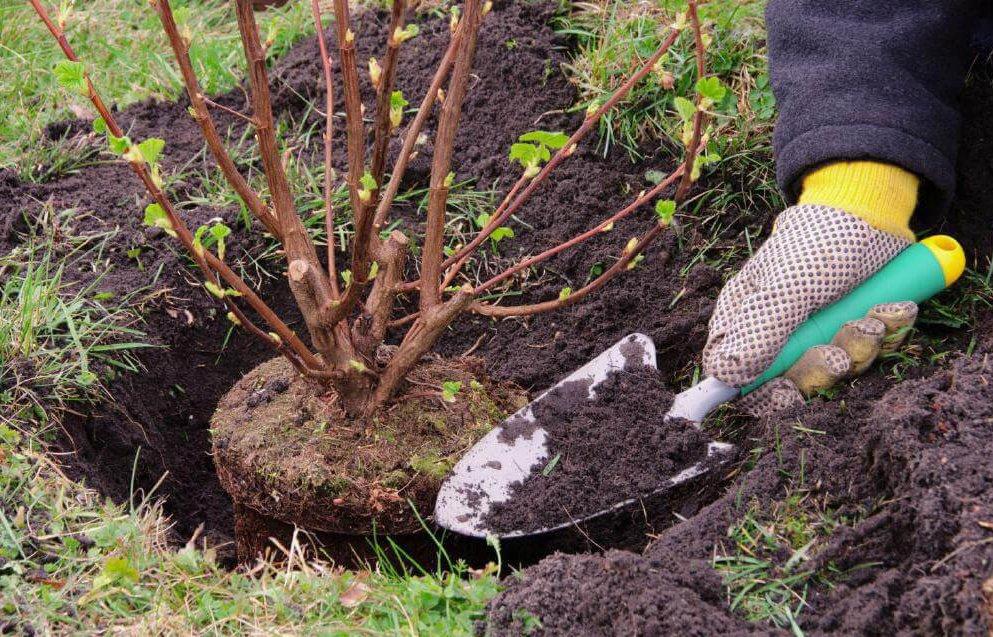
Both the shrub and tree thrive not only in black soil, but also in loam and podzolic soils, where the acidity is no higher than 7. A month before planting the elderberry, weed the area, apply lime if necessary, dig a hole 80 cm deep and half a meter in diameter, and apply mineral fertilizer.
What to plant next to it
This undemanding plant secretes substances that flies and other harmful insects cannot tolerate. Elderberry grows well alongside raspberries, blackcurrants, and redcurrants, and protects gooseberries from pest infestations.
Timing and technology of planting seedlings
If the plant is being grown as a tree, a stake at least 60 cm long should be driven into the center of the hole. A shrub requires no support. In spring or fall, place the seedling in the hole, ensuring the root collar remains level with the surface. Fill the hole with soil, compact it, and add a bucket of water. Immediately prune the shoots back to 10 cm. When planting multiple shrubs, space them at least 3 m apart.
We organize competent care
In Moldova and Ukraine, elderberry grows as a weed, making it very difficult to control. However, to keep the bush looking neat and beautiful, it requires care:
- to form a crown;
- cut off dried shoots;
- feed with fertilizers.
Watering and fertilizing
In humid climates with frequent rainfall, neither seedlings nor mature shrubs and trees require irrigation. In regions with dry summers, elderberries are watered once a week, and the soil is loosened to prevent crusting. If the soil is fertile, no fertilizer is needed. Add compost or well-rotted manure to depleted soil in the spring, and urea in the summer.

Forming an elderberry bush
The plant grows vigorously due to its branched shoots. Pruning, which is done in March and October, helps give the tree and bush a decorative appearance. To rejuvenate the plant, all elderberry branches are shortened every three years to a length of just 10 cm. After harvesting the berries, dry and damaged shoots are removed.
Pest control
The plant, whose leaves, branches, and roots contain poison, does not attract insects, but rather repels them. However, fungal spores often overwinter in the bark and soil, and mice and hares feast on the young shoots. To protect the elderberry from rodents and burns, in the fall, the trunk is whitewashed with a lime solution containing wood glue and copper sulfate. In the spring, the plant is treated with urea.
Disease prevention
Before bud break and after leaf fall, shrubs and trees are sprayed with Nitrafen or Bordeaux mixture. This treatment helps destroy the spores of pathogenic fungi that overwinter in the soil and bark. Elderberries are not susceptible to bacterial diseases or viruses.
Preparing trees for winter
In temperate latitudes, where temperatures drop to -30°C, saplings and young shrubs are insulated. The area around the trunks is covered with spruce branches, dry leaves, or peat, and then covered with fallen snow.
Methods of reproduction
Elderberry can be easily propagated in a garden using both layering and cuttings. It's much more difficult to get rid of the shrub, which grows rapidly in the garden without pruning, feeling like the master of the plot.
Cuttings
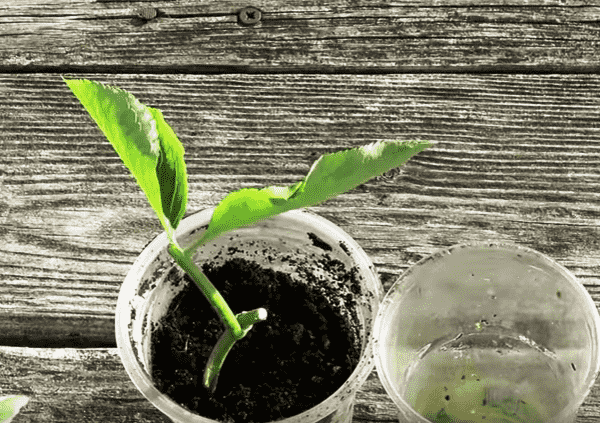
In midsummer, harvest 10-cm-long green shoots with two leaves and three internodes and plant them in a box filled with a mixture of sand and peat, covered with plastic film. To encourage rooting, create high humidity in the greenhouse. Spray the branches and substrate with a spray bottle. The cuttings are planted outdoors in the fall.
We propagate by layering
In late spring, young or woody shoots are bent to the ground and placed in dug trenches filled with peat. They are covered with soil, and the tops are secured above the soil. To propagate elderberries, the layers are tied at the base with wire, separated from the bush in the fall, and planted separately.
Seed method
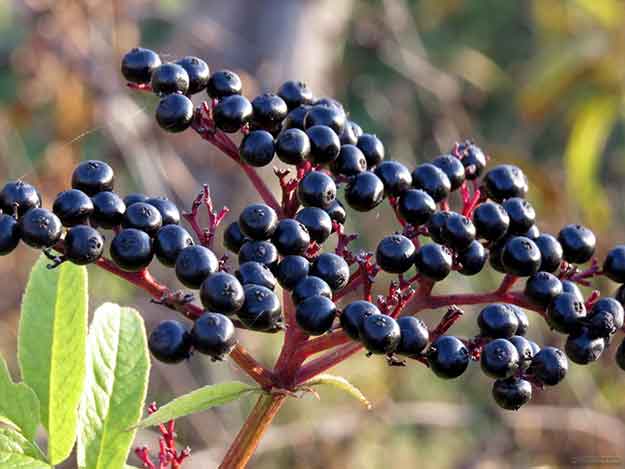
This method doesn't preserve the plant's varietal characteristics, and almost no one propagates the bush from seeds. To extract the seeds, ripe berries are pressed through a sieve. The seeds are sown in the soil to a depth of 30 mm.
By vaccination
Elderberry is propagated by division. The shoots of this branched plant can be grafted onto various trees used as rootstock, but it is rarely propagated by grafting.
Possible difficulties
Elderberry is considered a weed, growing quickly and spreading across the plot. The shrub thrives in both shade and sand, but in these situations it flowers poorly, produces no fruit, and loses its decorative appeal.
Related posts:
 Description of 36 of the best sweet and large varieties of gooseberries
 Description of the 20 best varieties and types of barberry, planting and care rules
 Description and cultivation of the best varieties of felt cherry, planting and care
 When and how to properly pick gooseberries with your own hands to avoid getting pricked
 Beginner's Guide to Growing Grapes in Open Ground in Central Russia
 Description and characteristics of the 30 best hazelnut varieties, cultivation
 Description and characteristics of the 60 best sea buckthorn varieties, how to choose depending on the region
 Description and propagation of the Bessey cherry variety, planting and care rules