
- Ripening times of berries in different regions
- Southern latitudes
- Middle zone
- Urals and Siberia
- Signs it's time to start cleaning
- How to harvest properly
- Manual assembly
- Mechanical cleaning
- Comb method
- plastic bottle
- Methods for increasing crop yields
- Timely pruning and shaping of the bush
- Weed control
- Fertilizer and feeding
- Prevention and control of diseases and pests
- Two roots
- Landing at an angle
- Gravel and sand at the base
- Spraying with plain water
- Rules for choosing neighbors
- Recommendations for choosing planting material
- Location selection criteria
- Drainage and loosening
- Post-harvest care
- Clearing weeds and fallen leaves
- Protection from diseases and pests
- Potassium-phosphorus fertilizers
- Pruning and shaping the bush
- Hilling
- Rules for storing the harvested crop
- Application
How do you determine when gooseberries are ripe and when to pick them? This question is of interest to gardeners who grow this sweet and sour berry in their gardens. It's not necessary to wait until the fruit becomes soft and sweet. Gooseberries are harvested when they have changed color and lost their astringent flavor. Only firm fruits are suitable for canning; too soft berries are used for wine and juice.
Ripening times of berries in different regions
Gooseberry is a low, perennial shrub with thorny branches and delicious berries. There are over a hundred known varieties, varying in ripening time, fruit size, and color. Heat-loving varieties can be grown exclusively in the south. Cold-hardy varieties adapt well to the climate of the Central Russian region and Siberia.
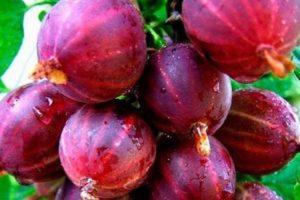
At the beginning of development, the berries are green. As they ripen, the fruit changes color. Depending on the variety, ripe gooseberries can be reddish, yellowish, light green, or dark burgundy. The berries ripen 1-2 months after flowering ends. The bush blooms in April-May-June, that is, 20 days after bud break. The harvest is ready in late June-July or in August.
Southern latitudes
In southern latitudes, heat-loving ones are grown sweet varieties of gooseberries, blooming in late April or early May, when the air warms up to 10 degrees Celsius. Flowering lasts about 5-10 days. A month later (at the end of June), the berries ripen.
Middle zone
In the central part of the country, warm weather sets in by mid-May. This is when gooseberries begin to bloom. Early varieties ripen by the end of June, mid-season varieties ripen in July, and late varieties should be expected to ripen in August.

Urals and Siberia
In colder regions, the flowering season begins in late May or early June. Depending on the variety, the berries ripen in late July or mid- to late August.
Signs it's time to start cleaning
Ripe gooseberries can hang for a long time without falling. The longer the berries remain on the branches, the sweeter they become. The fruits hanging on the bush usually ripen simultaneously. Gooseberries are harvested at the stage of technical and full (consumer) ripeness. Technical ripeness occurs first, meaning the berries have reached their full size and acquired the color typical of the variety. These fruits are still slightly tart, but they are used to make jams and preserves. Unripe berries are easy to transport and are perfectly suitable for sale.
Full ripeness occurs in 10-15 days. At full ripeness, gooseberries are softer and sweeter. The fruits are eaten fresh or used to make juice and wine. Ripeness is determined by appearance. Green gooseberries turn yellowish, red, or dark burgundy. You can touch the berries. Unripe fruits will feel firm to the touch, while overripe ones will be too soft.
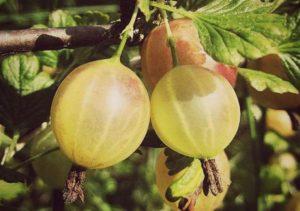
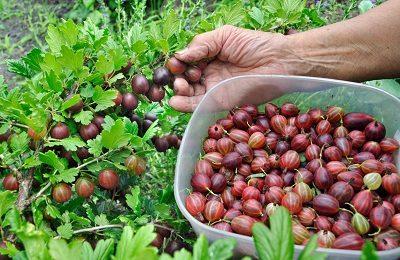
You can taste the berries. Reddish gooseberries become sweet as they ripen, while yellow and greenish varieties retain a slight tartness. Ripe berries should be firm, dry, not too hard, and have a sweet-tart flavor, with translucent skin and gelatinous flesh. Ripe gooseberries lose their cloying, astringent taste.
How to harvest properly
On a small garden plot, berries can be picked by hand. On industrial plantations, the fruit is harvested mechanically, using machines that vibrate the branches.
Manual assembly
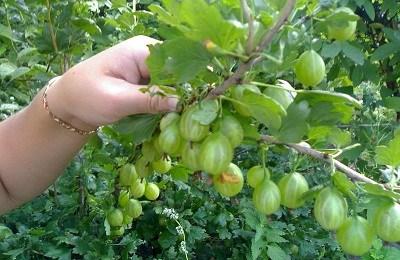
A gooseberry bush, with proper care, can produce 5-10 kilograms of berries. The fruits are harvested during the day, after the dew has subsided and the berries have dried in the sun. This harvesting method is completely harmless to the plant. The branches are carefully lifted and the ripe gooseberries are plucked. The fruits are harvested with their stems intact, maintaining their attractive marketable appearance.
Anyone harvesting by hand should wear special gloves and long-sleeved clothing to avoid scratching their hands on the thorns. Berries should be picked slowly, carefully, and attentively.
Mechanical cleaning
A special device—an electric vibrator powered by a wall outlet or a car's electrical system—will help quickly harvest the fruit. A plastic sheet is spread under the bush. Then, each branch is vibrated. The berries break off and fall onto the sheeting. However, this method is best for harvesting fully ripe fruit. Berries at the technical stage of ripeness are not so easily plucked from the branch with a vibrator. Gooseberries that fall onto the plastic sheeting should be cleared of leaves and sorted the same day.
Comb method
This is a faster method of harvesting by hand. A comb, a thimble with a comb, is placed on a finger to help pluck the berries from the branches. A plastic sheet should be laid under the bush to catch the gooseberries. Instead of a thimble, you can use a comb-like device to "comb" the branches, separating the berries from the stems.
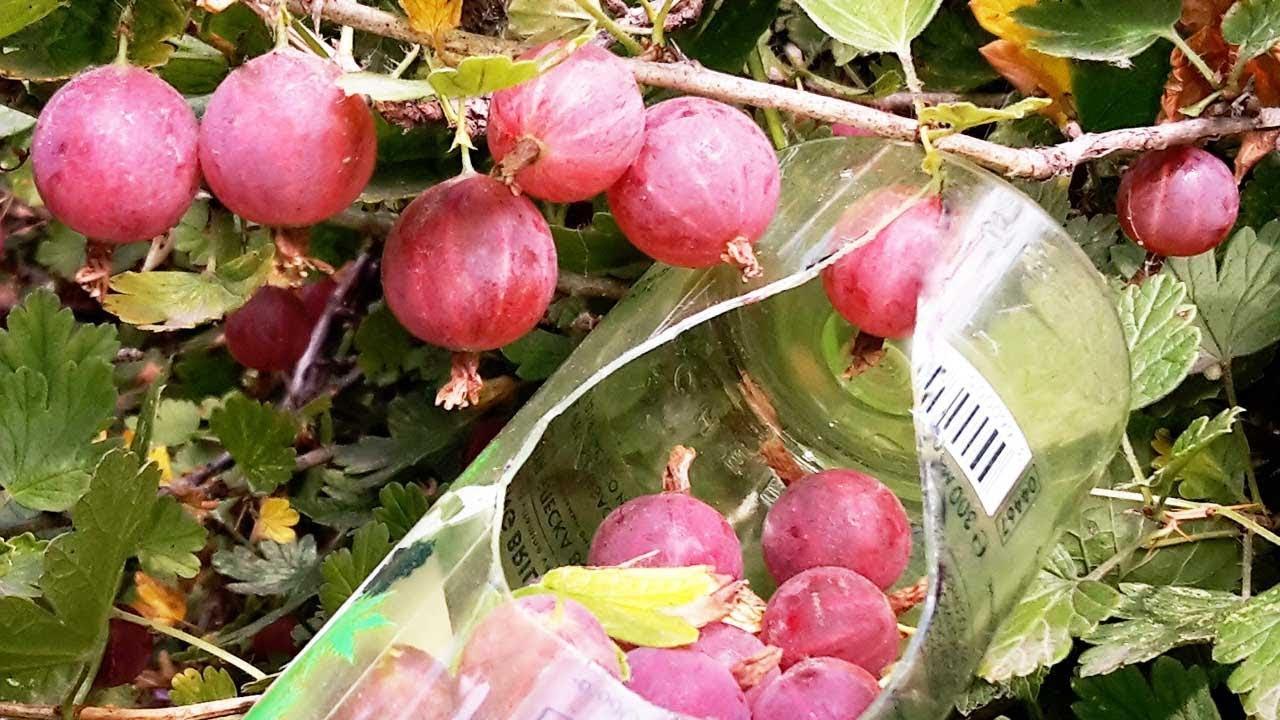
plastic bottle
When picking berries from thorny branches, you can get pricked by the thorns. Gardeners have come up with a way to solve this problem. In just a few minutes, you can make a special berry picker out of a plastic bottle. Take a small container with a capacity of 0.5 liters. Cut a small hole 7 centimeters from the bottom and make a long, wedge-shaped cut from this hole to the base. Hold the bottle by the neck and pick the berries, dropping them into the hole.
Methods for increasing crop yields
Gooseberries are considered an easy-to-grow crop. However, to achieve a good yield, regular care and timely application of sufficient organic and mineral fertilizers are necessary.
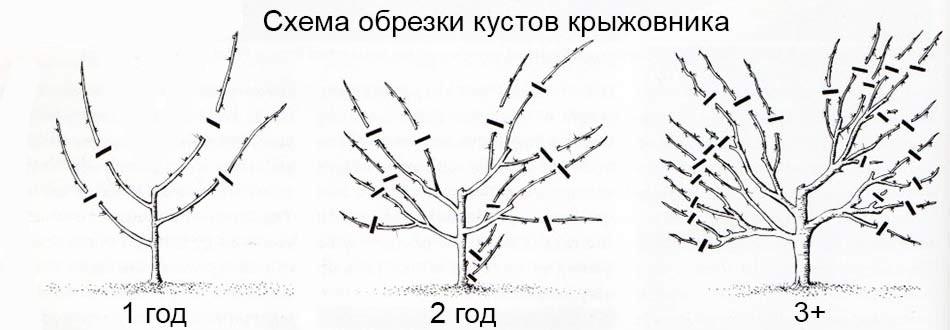
Timely pruning and shaping of the bush
Immediately after planting, the shoots are cut back almost to the ground, leaving five buds on each. The following year, in early spring, before the buds open, the bush is pruned for formative purposes. Several main shoots extending from the base of the bush are left, and excess basal shoots are removed. Last year's branches are trimmed back slightly.
The following season, when the bush begins to bear fruit, the tops of the branches are left alone; berries will appear on them. Shoots growing inward, as well as lower branches, are removed. After pruning, the wounds are treated with a solution of copper sulfate and garden pitch. Starting in the 7th or 8th year, rejuvenation pruning is performed, gradually removing old branches and replacing them with new basal shoots or young lateral shoots.
Weed control
Weeds should not be allowed to grow under the bush. They not only rob the gooseberries of nutrients, but also collect moisture and can promote the development of various diseases.
Fertilizer and feeding
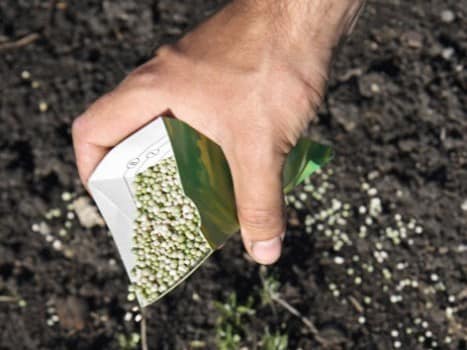
Fertilizing the bush begins in the second year after planting. Young plants are fed with saltpeter in early spring (50 grams per 10 liters of liquid). Three- to four-year-old plants are fertilized twice a season—before and after flowering. Gooseberries respond well to humus (5 kilograms per plant). Organic matter is best applied before wintering.
Humus can serve as mulch, protecting the plant from cold. In the spring, fruiting shrubs are fed with mineral fertilizers (superphosphate, ammonium nitrate, potassium chloride). Use 50 grams of each substance per 12 liters of water for irrigation.
Prevention and control of diseases and pests
To prevent diseases, it is recommended to follow proper cultivation practices. Pruning should be done promptly, removing excess and diseased branches. Fallen leaves should be removed and burned. Plant insect-repellent plants (garlic, marigolds) near the bush.
In early spring, the soil around the tree trunk should be dug over and watered with a copper sulfate solution. It's advisable to whitewash the bush with lime. Before the leaves emerge, treat the bush with insecticides (Karate, Bi58, Danadim) to control insects. Before flowering, spray the foliage with the fungicide Strobi to prevent diseases.
Additionally, the plant is treated with the insecticide Karbofos or Actellic. After harvesting, before winter, the bush is sprayed again with fungicides and insecticides.
Two roots
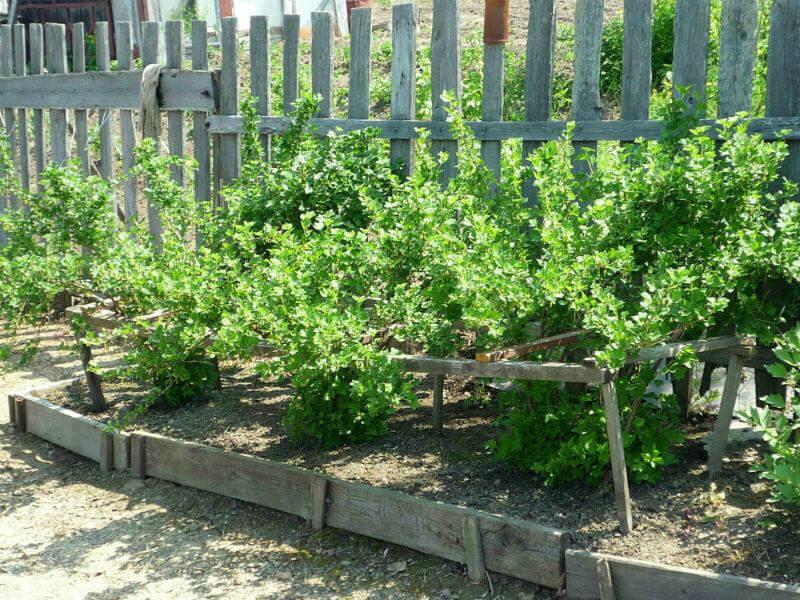
Gooseberries have a fibrous root system that expands both broadly and deeply. The bulk of the roots are located around the bush, at a depth of 25-50 centimeters. Some skeletal roots can penetrate into the lower soil layers. This root system helps the bush survive dry periods and absorb nutrients introduced into the trunk area.
Landing at an angle
Gooseberries are planted upright, but if the soil is too heavy and clayey, the roots will have difficulty reaching downwards. Therefore, planting at a 45-degree angle is recommended. The shoots covered with soil will develop additional roots, which will provide the plant with more nutrients.
Gravel and sand at the base
Gooseberries don't tolerate stagnant water or waterlogged soil. When planting, it's recommended to add a small amount of gravel to the bottom of the hole and dilute the soil with sand and peat. When planting in a low-lying area, you can create a special bed of gravel and sand at the base of the hole. This bed will raise the bush above the ground, preventing it from becoming flooded during rain.
A fertile layer of soil is poured onto a bed of gravel and sand, only then is the seedling placed on it, and then the root collar is covered with soil.
Spraying with plain water
Gooseberries prefer moderate moisture. During the fruiting period, the bush should be sprayed with plain water, and a few liters of warm rainwater should be poured under the bush.
Rules for choosing neighbors
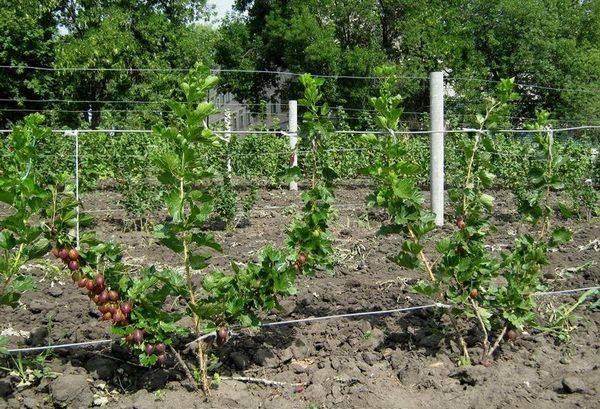
When planting gooseberries, remember to leave 1-1.5 meters of space between them and neighboring plants. This plant produces bisexual flowers that are self-pollinated. Planting two or three gooseberry varieties in a plot will increase the yield due to cross-pollination.
Recommendations for choosing planting material
The shrub begins bearing fruit in the 3rd to 4th year. Fruiting lasts for 15-25 years. For planting, purchase 1-2 year-old seedlings with healthy roots, 3-4 shoots 25-35 centimeters long, and moist buds.
In warm climates, plants are planted in the fall, before October, 1-2 months before the onset of frost. In colder regions, this is done in late August. In rare cases, seedlings are planted in the spring.
Location selection criteria
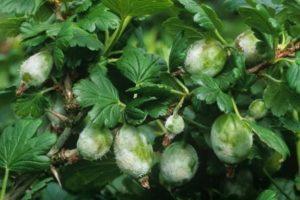
Gooseberries can even grow in the shade, although the berries will be sweeter in full sun. The plant prefers fertile, slightly acidic soil. The seedling is planted in a specially dug hole 50 centimeters deep. This hole is prepared 2-3 weeks before planting. The soil is amended with humus and minerals. Each hole requires 5-10 kilograms of humus, 100 grams each of superphosphate and potassium sulfate, and 300 grams of wood ash. Peat and sand are added to soil that is too clayey.
Drainage and loosening
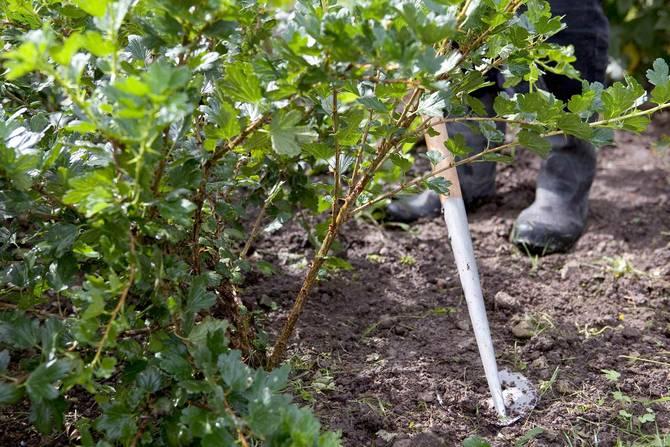
The shrub prefers to grow in light, well-drained soil. Drainage is installed at the time of planting. A small amount of fine crushed stone or gravel is added to the bottom of the hole. As the shrub grows, its roots spread outward, sometimes reaching close to the surface. Carefully loosen the soil around the trunk to improve oxygenation, being careful not to disturb the roots.
Post-harvest care
Gooseberries require attention even after harvest. The bush needs help preparing for winter and accumulating sufficient nutrients.
Clearing weeds and fallen leaves
Until the leaves fall, the shrub is left alone, only removing any weeds that emerge from the ground. In late autumn, all fallen leaves are swept from the area around the tree trunk and burned outside the garden.
Protection from diseases and pests
Before wintering, the shrub is treated with Bordeaux mixture or whitewashed with lime. The trunk area is watered with a solution of copper sulfate and insecticide.
Potassium-phosphorus fertilizers
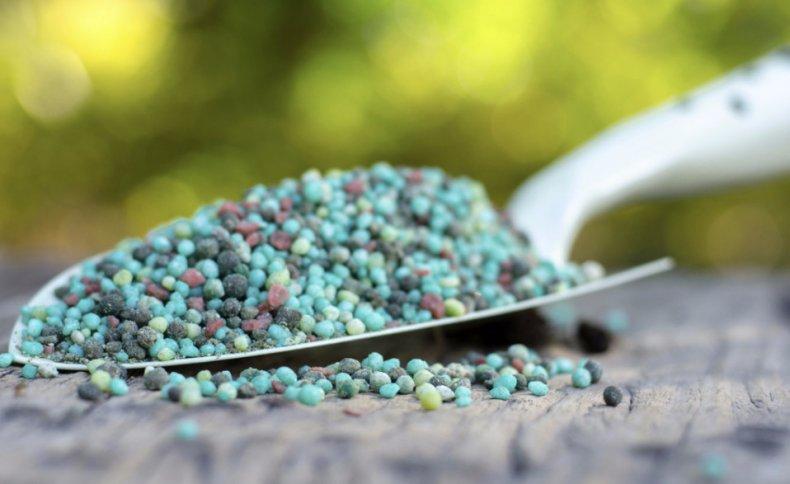
After the berries are harvested, the bush is fed again with potassium and phosphorus. This feeding allows the plant to set fruit buds for next year's harvest. Use 35 grams of superphosphate and potassium sulfate per 12 liters of water.
Pruning and shaping the bush
In the fall, after the leaves have fallen, trim away dead and diseased branches. If the bush hasn't borne fruit well, you can prune a few old branches, leaving young ones and a couple of shoots from the basal growth.
Hilling
Before the onset of cold weather, the bush needs to be watered generously, then hilled up with a layer of peat and humus, or a thick layer of mulch made of sawdust (straw, spruce branches) should be added under the base.
Rules for storing the harvested crop
Berries picked at full ripeness should be eaten or processed within 5-7 days. Gooseberries picked at the technical ripeness stage should be thoroughly dried and the skin should be checked for integrity. Firm berries can be stored in a cool place (at a temperature of 0 to +2 degrees Celsius) for up to 2 months. It's best to pour gooseberries into a small plastic container with a capacity of 2-3 liters and close the lid.
If desired, the berries can be frozen, dried, or wilted in the oven or in the sun.
Application
Gooseberries are used to make jams, preserves, juices, and wine. The berries are added to preserves, such as tomatoes or cucumbers, instead of vinegar. Gooseberries can be made into marmalade or a delicious dessert. The berries are rich in vitamin C, half of which is retained in jams and compotes.
Homemade gooseberry preparationsDried fruits have diuretic and choleretic properties. They are an indispensable vitamin supplement to the diet during the autumn and winter.
Related posts:
 Description of 36 of the best sweet and large varieties of gooseberries
 Pests and diseases of gooseberries and their control using chemical and folk remedies
 TOP 20 ways to preserve fresh gooseberries for the winter
 Description and characteristics of the gooseberry variety Commander, planting and care
 Description of 34 best gooseberry varieties for Siberia and the Urals, cultivation techniques
 Description of the Malachite gooseberry, varieties, planting and care
 22 Best Large-Fruited Gooseberry Varieties for the Moscow Region: Planting and Care
 Description of the Hinnonmaki gooseberry, varieties, planting and care