
- The origin of the Kolobok variety
- Description and characteristics of the Kolobok gooseberry
- Resistance to diseases and pests of gooseberry Kolobok
- Drought resistance and winter hardiness
- Gooseberry yield Kolobok
- Transportability
- Pros and cons
- Choosing a location
- Soil composition
- How to select and prepare Kolobok gooseberry planting material
- When to plant gooseberry Kolobok
- Kolobok planting scheme
- Growing and care
- Watering
- Fertilizing gooseberries Kolobok
- Pruning and preparation for winter
- Weeding and loosening
- Reproduction
- Diseases and harmful bugs
- Harvesting and storing gooseberries
- Application
The Kolobok gooseberry variety is renowned for its successful adaptation to new locations and its large, sweet berries. Even an inexperienced gardener can grow the plant, provided they follow proper growing practices. For successful planting and proper care, please read the information below.
The origin of the Kolobok variety
The Kolobok gooseberry variety was developed in 1977 by I. Popova. It can be grown in the central, northern, and southern regions of Russia. To create this variety, the Smena and Rozovy 2 varieties were used as parents. The hybrid inherited their best qualities: few thorns, large fruits, and resistance to powdery mildew. The variety was added to the state register in 1988. To grow gooseberries in the north, they are covered with spunbond for the winter.
Description and characteristics of the Kolobok gooseberry
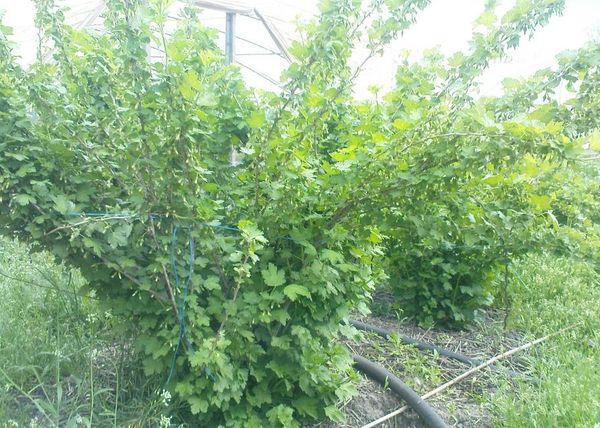
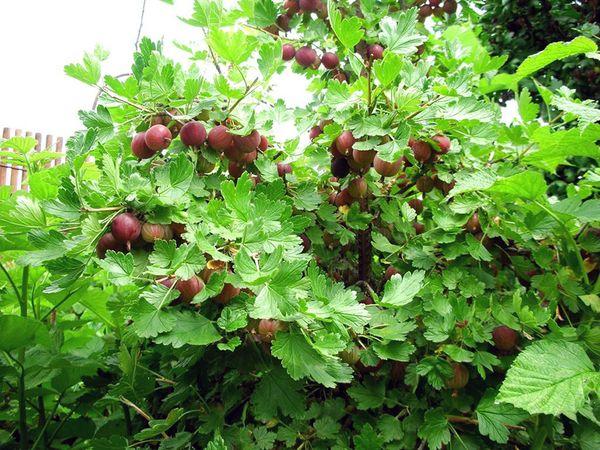
The Kolobok gooseberry is a mid-season variety, with fruits ripening by mid-July. The plant begins bearing fruit in its second or third year. Gooseberries form a spreading, vigorous bush up to 1.5 meters tall. The shoots have few thorns, which are located at the nodes. The buds are large and brown. The leaves are located on short petioles and have smooth outlines. They are bright green, with colored veins. The bush can bear fruit in one place for 25-30 years.
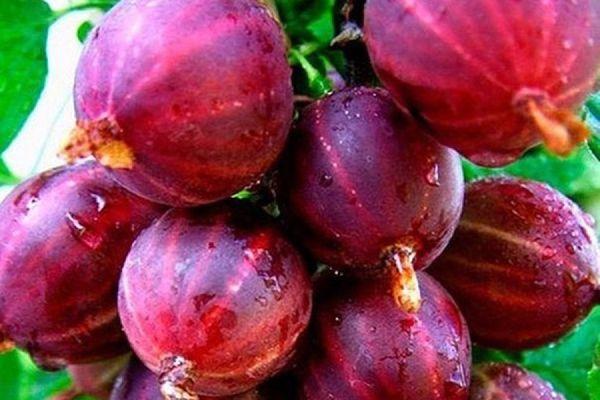
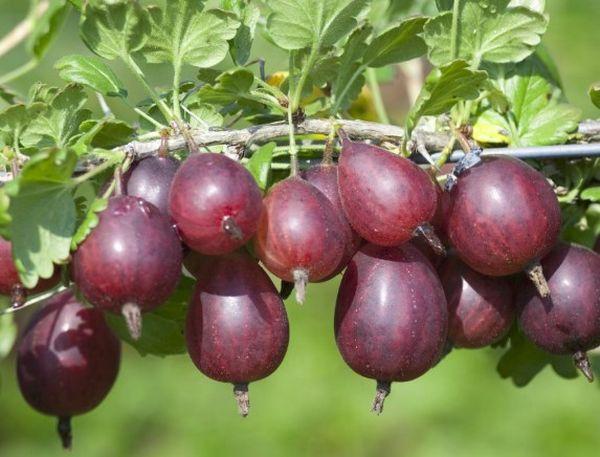
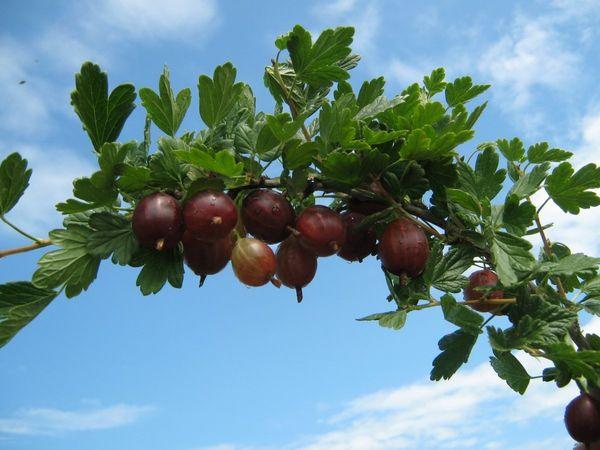
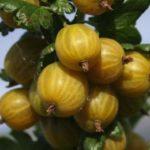
The berries are thick-skinned, bright red, and weigh between 4 and 7 grams. They are round, slightly elongated. The flesh is juicy, slightly crunchy, and the seeds are large. The flavor is sweet and sour, and the berries have a slight waxy coating. The fruits contain ascorbic acid, sugars, and anthocyanins.
Resistance to diseases and pests of gooseberry Kolobok
The Kolobok gooseberry has a strong immune system and resists common diseases and beetles. Its protective properties depend on proper care of the bushes.
Drought resistance and winter hardiness
The bushes can withstand short-term droughts and frosts down to -45 degrees Celsius. Without proper watering, the yield thins out, and the Kolobok gooseberries become smaller.
Gooseberry yield Kolobok
With full adherence to agricultural practices, one bush will yield up to 10 kg of berries. Ripe fruits adhere well to the shoots. When harvested, they are easy to remove without damaging the fruit. This variety is distinguished by its excellent transportability.
Transportability
The Kolobok gooseberry variety is distinguished by its excellent transportability. It's best to pick the berries at the technical ripeness stage if long-distance transport is planned.
Pros and cons
The Kolobok variety offers many advantages. Some gardeners have found some drawbacks, but they are minor.
| Pros | Cons |
| Resistance to frost and drought Precocity |
Tendency to bush thickening
Spreading |
| Extended harvest period | |
| Large size of berries | |
| Immunity to diseases and bugs | |
| Good transportability | |
| Commercial appearance | |
| A small number of thorns | |
| Undemanding to care and soil |
Choosing a location
Kolobok prefers a sunny location, not under a canopy of trees. In the shade, the berries become smaller, reducing the yield. Avoid drafts at the planting site, as wind damages the plant. Undesirable precursor plants include currants and raspberries. Fungal spores or harmful beetle eggs remaining in the soil will damage the young bushes. Better precursor plants include row crops and vegetables.
Soil composition
The Kolobok gooseberry prefers sandy, sandy loam, or loamy soil. It should not be planted in acidic, waterlogged, or cold soils. The optimal soil pH is 6. Avoid high groundwater tables, as excess moisture will cause root rot and the death of the plant.
How to select and prepare Kolobok gooseberry planting material
It's preferable to plant 1-2-year-old bushes, purchased from reputable vendors at the market or nursery. They should be intact, free of defects, bug attacks, or disease. Before planting, discard the seedlings, trimming off any damaged or dry parts. Place the seedlings in a growth-stimulating solution of potassium humate—3 tablespoons per 5 liters of water.
When to plant gooseberry Kolobok
Experienced gardeners recommend planting gooseberries in the fall, three weeks before the expected frost. This allows the root system to strengthen and expand. Planting can also be done in the spring, at the end of March, before the buds begin to swell. Two weeks before planting, till the soil with a spade-sized depth and remove weeds. Add 6 kg of compost, 200 g of superphosphate, and 1 cup of ash. The soil can be treated with insecticides and fungicides.
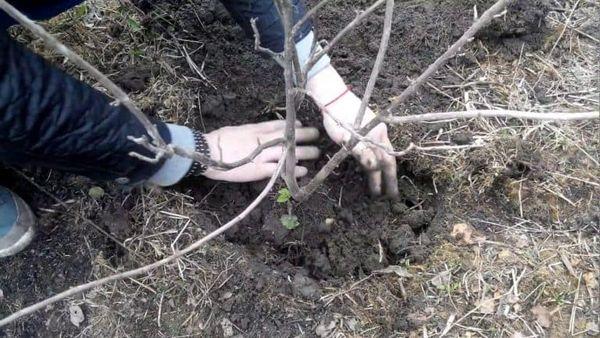
Kolobok planting scheme
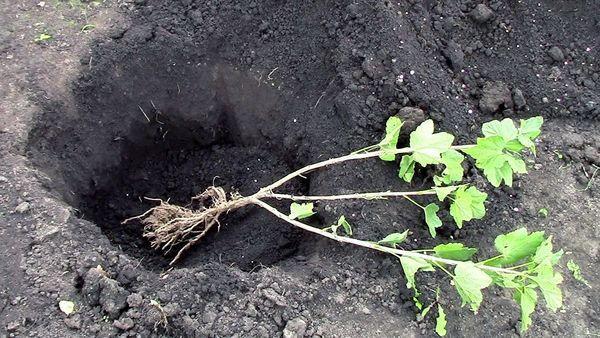
Dig a hole 50 x 50 cm in diameter, remove the bottom layer of soil, and set the top layer aside for seedlings. Fill the hole two-thirds full with the reserved soil mixture, add compost, humus, superphosphate, and wood ash, and mix thoroughly. Place the seedling vertically in the hole, and spread out the root system.
Fill the holes with the remaining soil, burying the rhizome collar 5 cm deep. Compact the soil, creating a raised border around the holes. Water the plants; 10 liters per bush is needed. Mulch the soil with humus. If planting gooseberries in the spring, prune the shoots, leaving 3-4 buds.
Growing and care
To successfully grow the Kolobok gooseberry, it is important to organize timely watering, mulching, loosening, and fertilizing..
The bushes are treated with insecticides or fungicides 2-3 times during the growing season.
Watering
The Kolobok variety prefers moderate irrigation and tolerates temporary water shortages. Watering is essential during flowering, active growth of young branches, and fruit formation. Water should not stagnate near the root system, as this increases the risk of fungal diseases. To ensure a successful wintering of gooseberries, perform moisture-recharging irrigation before the first frost in October or November.
40-50 liters of water are poured under each bush.
Fertilizing gooseberries Kolobok
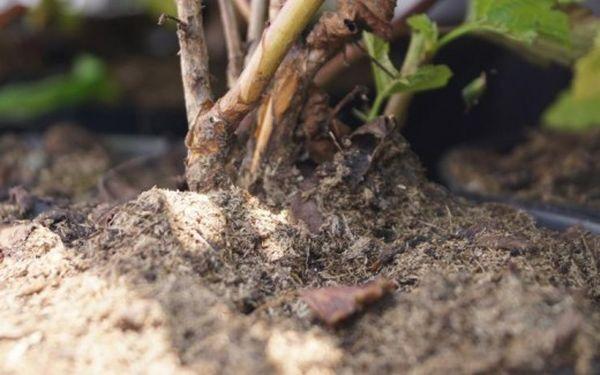
The initial supply of fertilizer is sufficient for three years. In the fourth year, gooseberries require a complex of fertilizers to maintain high productivity. These fertilizers should include the following:
- compost;
- superphosphate;
- ammonium sulfate;
- potassium sulfate.
The ingredients are calculated at the following ratio: 25 g each of ammonium sulfate, potassium sulfate, and 50 g of superphosphate per 5 kg of compost. Place this mixture under the bush and pat it down with your hands.
Pruning and preparation for winter
Kolobok gooseberry bushes require shaping up to twice during the growing season. Pruning thins out the plantings, reduces overcrowding, and improves light. This stimulates young branches and increases yield, as most berries form on two- to three-year-old shoots. Proper shaping of the bushes allows for the largest possible fruit size.
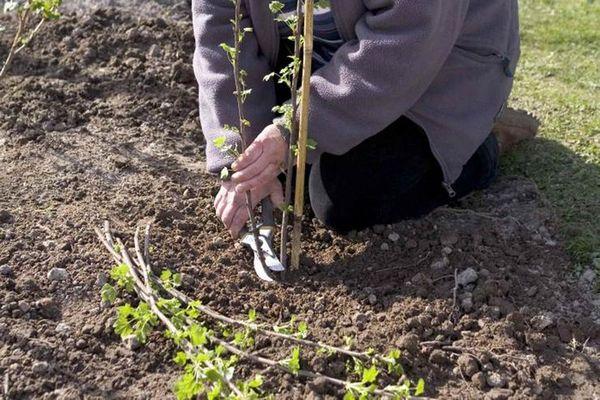
Pruning of the Kolobok gooseberry is carried out in several stages:
- in the first year after planting, leave 2-3 buds on the shoots;
- and in the 2nd year, remove all branches that have reached 20 cm in length, and trim off all specimens that are leaning towards the ground;
- In the 3rd year, the bush is thinned out.
In subsequent years, only those shoots that are close to the ground are cut out.
Preparing the Kolobok gooseberry for winter involves the following steps:
- the shoots are collected together and carefully tied with a rope;
- the soil is plowed and fertilized;
- the ground around the bushes is mulched;
- Young plants are covered with agronomic fiber or burlap.
In case of severe frosts, you can pile snow on the planting site, then they will be additionally protected.
Weeding and loosening
It's best to loosen the soil around the Kolobok gooseberry bushes after each watering with a hoe, to a depth of 10 cm. It's important not to disturb the root system. This procedure oxygenates the soil and removes weeds. If the area around the gooseberry bushes is mulched, loosening is carried out 2-3 times during the growing season.
Reproduction
The Kolobok gooseberry is propagated by layering, cuttings, and division. Each method has its own nuances.
- Layering. Dig a hole under the new plant, select the strongest side shoot on the parent plant, bend it down to the ground, and place it at the bottom of the hole. Secure it with staples and cover with soil.
- Cuttings. Several one-year-old shoots are cut into 8-10 cm long pieces. The cuttings are dipped in a rooting stimulator and planted in a greenhouse at a 45-degree angle. The soil should be moist and fertile.
- Dividing the bush. The mother bush is dug up, and 2-3 lateral branches with part of the root system are separated. The new bush is immediately planted, and the branches are trimmed back by 1/3.
It is better to carry out propagation work in the fall, after the harvest.
Diseases and harmful bugs
The Kolobok gooseberry is rarely attacked by bugs or diseases, but with improper care, this can happen. Preventative spraying with chemicals is recommended starting March 15th. To prevent fungal and bacterial diseases, aphids, and spider mites, use Fitoverm, copper sulfate, Trichodermin, 1% Bordeaux mixture, and Karbofos.
When diseases have already developed on the bush, or beetles have appeared, they are destroyed using the methods below.
- White spot. This problem occurs in overly dense bushes that haven't been pruned. To combat the disease, spray gooseberries with Bordeaux mixture. Use 100 grams per 10 liters of water.
- Goblet rust. This disease is characterized by bright orange pads on the underside of leaves. Fruit buds, flowers, and unripe berries are affected. The disease is detected in the spring. To treat gooseberries, spray with a 1% Bordeaux mixture at a rate of 100 g per 10 liters. This treatment is repeated three times: at leaf unfolding, during bud formation, and immediately after flowering.
- Geometrid moth caterpillars. They cause significant damage to leaves, attacking buds as they open. The insects remain on the gooseberry bush to pupate. To remove them, spread plastic film under the bush in the summer and shake the caterpillars off. Since they attach themselves to the foliage in the fall, fallen leaves are raked, burned, or deeply buried. In the spring, you can treat with Bitobixicillin or Karbofos – 100 g per 10 liters.
- Shoot aphids. These beetles attack young shoots, sucking out their sap, causing them to curl and twist, and stunting growth. Experienced gardeners collect ladybugs and introduce them to the aphids, where they eat them. Affected leaves are torn off. For severe aphid infestations, gooseberries are sprayed with Beta-cypermethrin-kinmix at a rate of 0.24 to 0.48% during the growing season, but not during the flowering and early fruiting periods.
These measures will help save the bushes if the disease is detected early. When the infestation is extensive, the plants are uprooted and burned away from the garden.
Harvesting and storing gooseberries
Kolobok gooseberries are harvested in July using several methods. Hand picking is preferred. Fruits intended for processing should be picked at the technical ripeness stage. Gooseberries intended for immediate consumption are harvested fully ripe.
The harvest should be stored in a basement or cellar, placed in wooden boxes. Line the bottom with oilcloth or fabric. Gooseberries can also be stored at home in the freezer; the shelf life is up to 1 year.
Application
Gooseberries are used to make jams, preserves, freeze them, or eat them fresh. They can also be used to make compotes and smoothies. They have a wide range of uses.
Related posts:
 Description of 36 of the best sweet and large varieties of gooseberries
 Description and characteristics of the gooseberry variety Commander, planting and care
 Pests and diseases of gooseberries and their control using chemical and folk remedies
 Description of 34 best gooseberry varieties for Siberia and the Urals, cultivation techniques
 22 Best Large-Fruited Gooseberry Varieties for the Moscow Region: Planting and Care
 Description and characteristics of the Consul gooseberry variety, planting and care
 Description of the Malachite gooseberry, varieties, planting and care
 Description of the English Yellow gooseberry variety, planting and care