
- Description and Features
- Appearance
- Taste qualities
- Drought resistance, frost resistance
- Fruiting
- Productivity
- Transportability
- How to plant correctly
- Choosing a location
- How to prepare the soil
- How to select and prepare planting material
- Planting diagram
- Care Features
- Watering
- Trimming
- Top dressing
- Root
- Foliar
- Support
- Preparing for winter
- Pests and diseases
- Aphid
- Spider mite
- Firefly
- Anthracnose
- American powdery mildew
- Columnar rust
- Advantages and disadvantages of the variety
- Harvesting and storage
- Application areas
Experienced gardeners have been growing the English Yellow gooseberry variety since the Soviet era. Despite the development of new varieties with improved properties, English Yellow remains popular in northern European Russia, central Russia, and the Non-Black Earth Region due to its reliability, productivity, and sweet fruit flavor.
Description and Features
The English Yellow gooseberry differs from other varieties in its adaptability to growing conditions. Marketable fruit appearance, excellent taste, and resistance to cold and disease are just a few of its positive characteristics.
Appearance
English Yellow is a tall (up to 1.5 m) bush with a gently spreading habit. Its strong, upright shoots are dark gray, and on branches older than two years, brown. Long, single, or rarely double, spines grow along the entire length from the top to the base.
The crop's wrinkled green leaves are variable in size, three- and five-lobed, and edged with blunt teeth. Gooseberries are self-fertile and require no pollinators.
The compactness of the bush ensures ease of harvesting.
Taste qualities
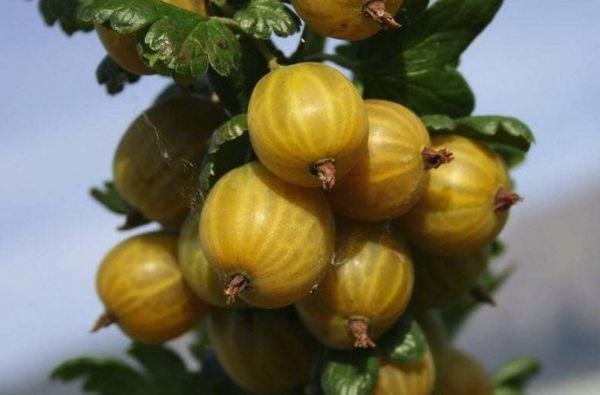
English Yellow gooseberries have a dessert-like, sweet-and-sour flavor with a predominantly sugary aroma. The tasting committee awarded the gooseberries a score of 4.8. The berries' high ascorbic acid content—12 mg per 100 g—enhances their value.
Drought resistance, frost resistance
The English Yellow gooseberry is undemanding when it comes to watering, but often suffers from excess moisture. It survives winters with temperatures down to -20–26°C without loss, but requires some protection.
Fruiting
Small, white flowers with a yellowish tint bloom in May. The blooming period lasts 5–7 days. This honey plant attracts large numbers of bees. The fruits ripen by mid- to late July.
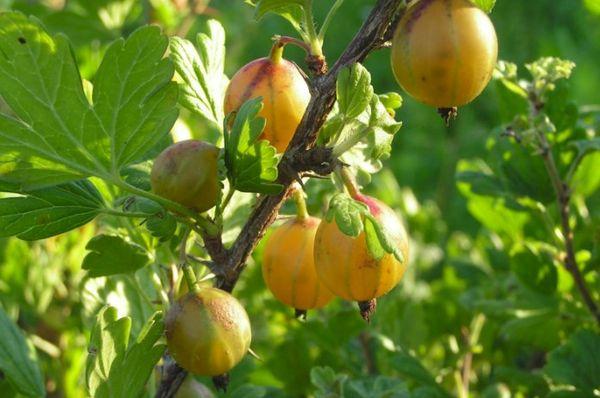
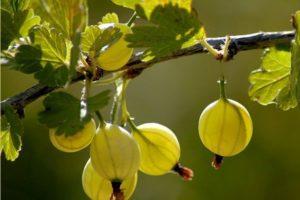
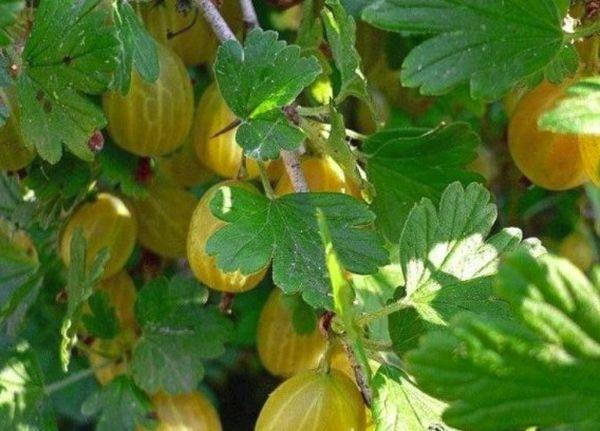
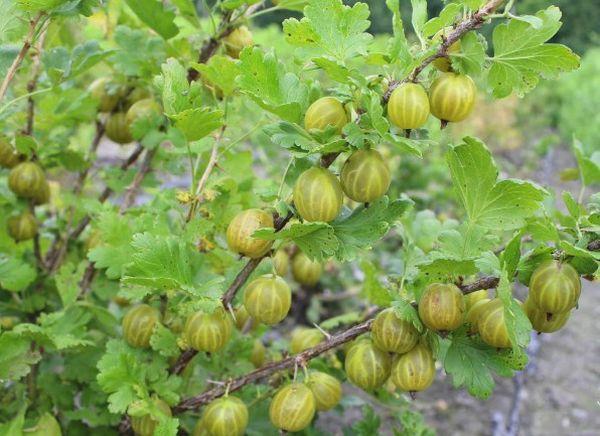
The oval-shaped berries of the English yellow gooseberry weigh 4-8 g. The skin is pubescent, opaque, with visible veins, and contains few seeds. When fully ripe, the fruits turn bright yellow. The plant bears fruit annually for 10-12 years.
Productivity
A bountiful harvest is achieved with intensive farming practices, yielding up to 14 kg per bush or 12 tons per hectare. In northern regions, productivity is much lower—4 kg per plant.
The fruits are harvested once at the technical ripeness stage. If the berries are not intended for sale, but for personal consumption, it is recommended to harvest in two stages to prevent cracking.
Transportability
Thanks to the thin but strong skin, the berries retain an attractive presentation during transportation and do not wrinkle or leak.
How to plant correctly
Stability of fruiting and harvest volume depend on the completion of preparatory work and compliance with planting rules.
Choosing a location
For planting English Yellow gooseberries, choose a sunny spot with fertile, light loam or black soil. The crop does not tolerate heavy, acidic clay soil, lowlands, or cold winds. If the groundwater level in the area rises above 1 meter, create an artificial mound and plant the gooseberries on the south-facing slope.
Unsuitable predecessors for the crop are other varieties of gooseberries, raspberries, and currants, which suffer from the same diseases and are subject to attacks by the same parasitic insects.
How to prepare the soil
The area allocated for the gooseberries is weeded. The soil is dug to the depth of a spade, and fertilizer is added at a rate of 100 square meters per hectare of soil:
- 20 kg of rotted manure or compost;
- 5 kg of potassium salt;
- 20 kg of phosphate flour.
Soil acidity is reduced by liming or adding ash (15 kg per hundred square meters).
If the bed was not fertilized before planting, add 5 kg of humus and a glass of ash directly into the planting hole, half a meter deep and half a meter in diameter.
For spring planting, prepare the hole in the fall; for spring planting, prepare it three weeks before planting the gooseberries. Experts recommend preparing the bed a year before planting.
How to select and prepare planting material
When choosing English Yellow gooseberry seedlings from a licensed nursery or garden center, pay attention to the following points:
- plant age - 1 or 2 years;
- branching of the root system, length of roots (at least 10 cm);
- shoot height - 30-40 cm, number - 1-2.
If choosing seedlings with a closed root system, check the plant's stability in the container. A seedling that emerges easily from the soil has recently been repotted. In this case, the advantages of the planting material are nullified. If the plant remains in the container, there's no need to rush planting.
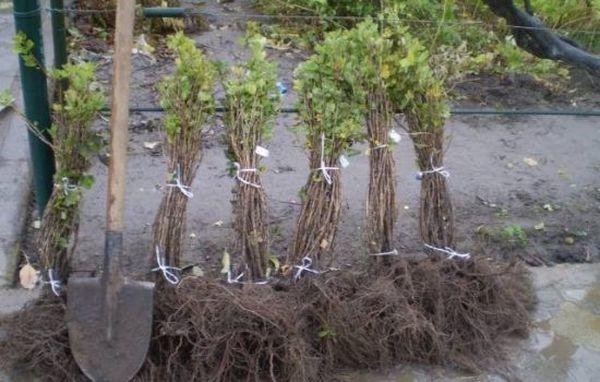
Seedlings that are sick, weak, have dried out areas, have defects and show signs of disease are rejected.
The day before planting, bare-root bushes are soaked in water with Heteroauxin, Vympel, Kornevin, and Zircon. Containerized plants are watered generously.
Planting diagram
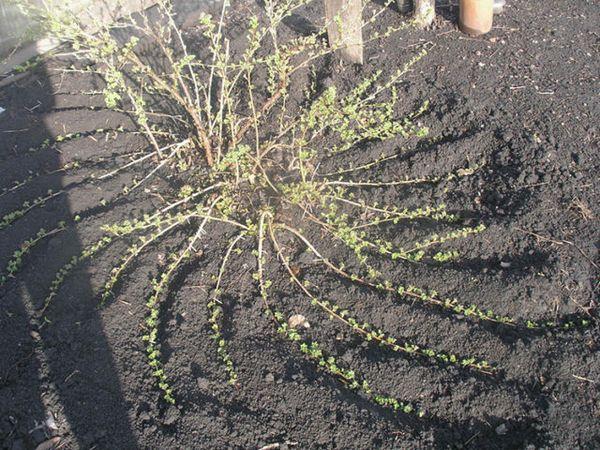
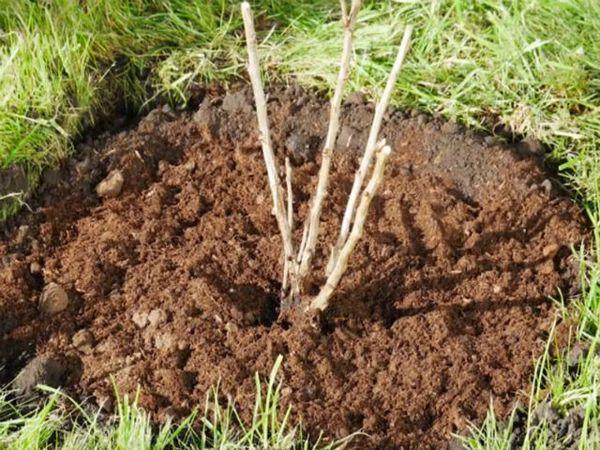
Gooseberries are planted in holes 50 cm deep and wide. A distance of 1.5 m is maintained between bushes, and 1.5–2 m is left between rows.
English Yellow Planting Algorithm:
- at the bottom of the hole, a mound is built from prepared fertile substrate, occupying a third of the depression;
- the seedling is lowered to the top, the roots are straightened along the slopes, directed downwards;
- the bush is partially covered with soil, watered, and the rest of the soil mixture is poured out;
- the soil on top is compacted, watered, and mulched;
- The shoots are shortened to 6 buds.
After planting, the root collar of the seedling should be level with the surface or 1–3 cm higher.
Care Features
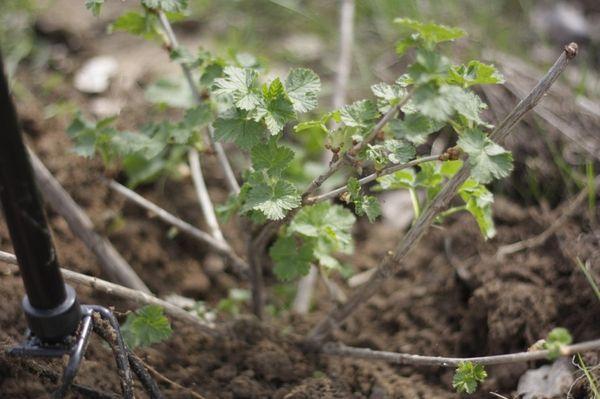
Further care for English Yellow gooseberries after planting includes moistening, loosening, and weeding the soil. Pruning, protection from parasitic fungi and insects, and winterization help prevent crop loss. Fertilizing and supplementing throughout the season increases productivity by a quarter.
Watering
Around the bush, stepping back half a meter from the base, dig a 15 cm deep groove, through which the English yellow gooseberry is watered three times a year.
The first irrigation is during fruit set after flowering. The next irrigation is done when the fruit is filling out, three weeks before ripening.
The last time the soil under the bush is moistened is in the fall, when preparing the plant for winter. Gooseberries under three years old require 20 liters of water. Mature bushes require 30-40 liters.
Trimming
Formation of a gooseberry bush English yellow begins in the first year, when, upon planting, the shoots are shortened to six buds, and in the autumn, after the leaves have fallen, up to three branches are left, cutting out the rest.
The following year, 6 shoots are left, and the branches of the current year are shortened by a third.
In the third year, 4 young basal shoots are selected and the young shoots are shortened.
By the seventh year, a gooseberry bush should consist of 20 branches of varying ages. Shoots with dark bark that are seven years or older are pruned, as they are unproductive.
It is recommended to trim the tips of one-year-old shoots above the inner bud with sharp pruning shears. This procedure stimulates the growth of fruiting branches.
During sanitary pruning, performed before sap flow or after leaf fall, broken branches, branches with signs of disease, and branches lying on the ground are removed.
Top dressing
The nutrients added to the planting hole are sufficient until the English Yellow gooseberry begins to bear fruit. From the third year, after fruiting begins, the plant is fed.
Root
In early spring, before the first loosening, fertilizers are scattered between the bushes at the rate of 1 square meter:
- 5 kg of manure, compost;
- 15 g each of potassium sulfate and urea;
- 25 g superphosphate.
A complex of minerals and organic matter is added to the soil along the projection of the bush crown.
The next feeding is carried out before the gooseberry blooms, adding 20 g of nitrophoska per 1 sq. m under the bush, watering generously from above.
Take a look Also
The third time the plant is fed is during the fruiting period in June-early July. The bushes are watered using slurry along a ditch. After 1-2 weeks, 1 kg of ash is added to the tree trunk circle before watering.
To improve the bushes' resistance to winter cold, and to ensure successful formation of next year's fruit buds, manure is added to the soil during autumn digging (8 kg per 1 sq. m).
Foliar
To speed up flowering and successfully set ovaries during the budding period, English yellow gooseberry is sprayed with urea and ammonium sulfate in the amount of 30 and 20 g per bucket of water, respectively.
Similarly, foliar feeding is used to improve the flavor of the bushes during fruit ripening. If the leaves are becoming smaller, ovaries are failing, or the fruit is deformed, it is recommended to treat the bushes with a boric acid solution (2 g per 10 liters of water).
Gooseberries are sprayed in dry, cloudy, windless weather.
Support
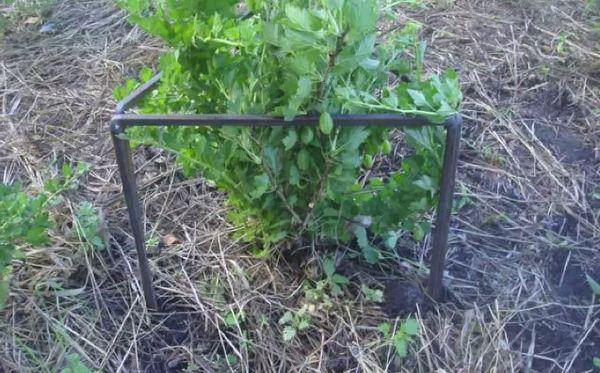
To ensure uniform illumination of the English yellow and to facilitate harvesting, tall shoots of gooseberry bushes are cut to 60 cm and tied in a fan-shaped circle to a trellis.
Preparing for winter
After digging the soil and watering it to replenish moisture, the branches are tied into a bundle, bent toward the ground, and pressed down with metal staples or boards. Burlap is draped over the top, with soil dug in around the edges. Spruce branches are laid on top of the structure, and in winter, a snowdrift is piled on top.
Pests and diseases
The high immunity of the English Yellow gooseberry is weakened by failure to follow agricultural practices and insufficient care, which leads to fungal diseases and attacks by insect pests.
Aphid
Green or black shoot aphids lay eggs every two weeks, which quickly increases the population of insects parasitizing gooseberries. The aphids feed on shoots and leaves, causing damage to the plant—leaf blades curl, tips become deformed, and shoot growth is inhibited. Untreated, massive pest attacks lead to the death of the bushes.
If there is a small number of aphids, folk remedies and preventive measures are used:
- Before the sap starts to flow, pour hot water over the bushes;
- gooseberries are treated with an infusion of garlic, lilac flowers, tansy, and tomato tops;
- plant spicy greens nearby;
- destroy anthills;
- burn fallen leaves.
Of the ready-made chemical means for destroying aphids, Aktara, Fufanon, and Fitoverm are effective.
Spider mite
A microscopic insect, its coloration changing from yellow to bright red, weaves a web across the underside of the leaf. A growing, discolored spot appears at the puncture site through which the insect drinks the sap. The gooseberry plant loses its leaves and fruit.
Mites are destroyed by two acaricide treatments: Akartan, Cidial, and Tedion. Spraying the plant with a colloidal sulfur solution (10 g per liter of water) also eliminates the parasites. Avoid treatments during flowering and fruiting.
Spraying the bush with a hose under pressure with cold water and moistening the soil with a hot solution of potassium permanganate brings results.
Firefly
The threat to the English yellow gooseberry isn't the small gray-brown moth itself, but its gray-green, 14 mm-long caterpillar. In spring, the moths lay eggs in flower buds. The caterpillars consume flowers, ovaries, and the flesh of the fruit. Damaged berries prematurely turn bright yellow and dry out. The caterpillars' life companion is a fine web that envelops the berries.
To prevent butterflies from emerging from their larvae overwintering in the soil in the spring, the crop is hilled before being insulated.
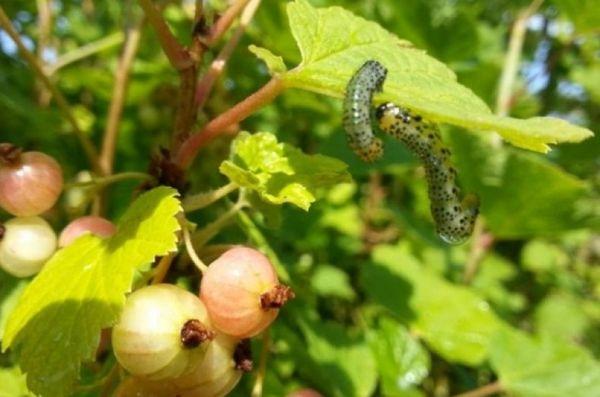
To combat caterpillars, gooseberries are sprayed with ash water, tomato tops infusion, or mustard solution (50 g dry matter per 10 l of water).
Among ready-made preparations, the following insecticides are effective: Karate, Iskra, Kinmiks.
Anthracnose
First, small brown spots appear on the leaves at the base of the gooseberry bush, gradually merging. Leaves fall off, new shoot growth is inhibited, and yield and sugar content in the fruit decrease.
Treatment consists of spraying the English yellow four times with 1% Bordeaux mixture before flowering, after flowering, after 2 weeks, and at the end of fruiting, when there are no berries left on the bush.
Before the growing season and after harvest, spraying the crop with Kuprozan and Phtalan is effective. To prevent the spread of pathogens, fallen and damaged leaves are burned, and the bush is not allowed to become dense.
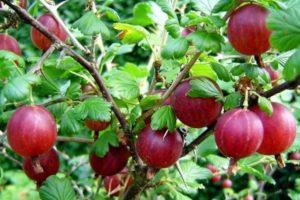
American powdery mildew
This disease, which most commonly affects gooseberries and less commonly currants, appears after flowering. A powdery coating appears on the leaves at the tips of shoots, developing into brown spots with black dots. Gradually, the fungus takes over the entire leaf blade. Bush growth slows, and the fruits crack and fall off. Without human intervention, the gooseberry dies.
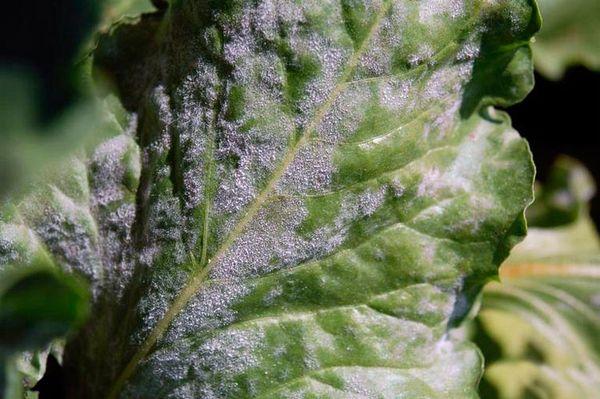
To get rid of spheroteka, early in the spring, the gooseberry bush and the soil beneath it are doused with hot water (50°C). Before and after flowering, the plant is sprayed with Topaz, Skor, and Fundazol. Damaged parts of the plant are removed.
Columnar rust
The first signs of the disease appear in midsummer. Yellow spots with protruding cup-shaped pads, where fungal spores accumulate, appear on the undersides of the leaves. The leaves gradually wither and fall off, and the fruits become deformed and dry out.
Columnar rust on gooseberries is controlled by three treatments with Bordeaux mixture or two sprayings (after flowering and harvest) with the fungicide Bayleton.
Preventive measures include regulating watering, burning fallen leaves, and loosening the soil.
Advantages and disadvantages of the variety
Among the disadvantages of the English Yellow gooseberry, gardeners note the presence of thorns, cracking of the berry skin when there is excess moisture, and insufficient resistance to some fungal diseases.
The culture has many more advantages. Positive characteristics of English Yellow include:
- the commercial appearance of fruits that ensures consumer demand;
- high productivity;
- adaptability to growing conditions;
- winter hardiness down to -26°C, drought resistance;
- maintaining the original appearance during long-term transportation;
- dessert sweet and sour taste of berries.
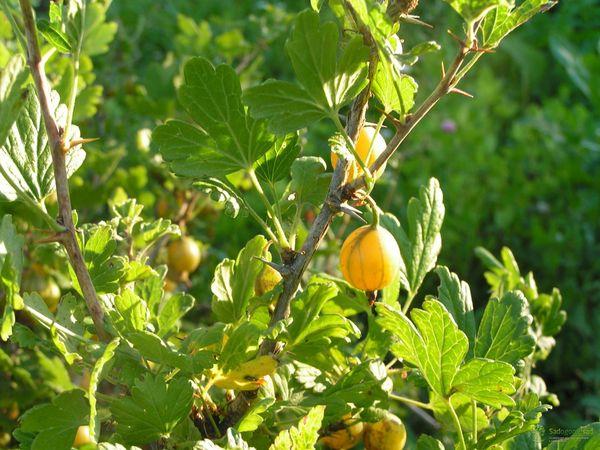
The compactness of the bushes, which facilitates agricultural technology, high immunity, and the attractive appearance and taste of the fruits make gooseberries attractive not only for personal use but also for growing for commercial purposes.
Harvesting and storage
English yellow gooseberries are harvested from mid-July. Berries intended for processing are picked at the technical ripeness stage. They are stored at 1–2°C in quantities of 2–3 kg, placed in wooden boxes with paper-lined bottoms, for up to a month.
For fresh consumption, the fruits are harvested with the stems attached to avoid damage during the ripeness phase. The sweet, bright yellow berries can be stored in the refrigerator for up to 5 days.
Freezing gooseberries is not recommended, as the taste deteriorates sharply after defrosting.
Application areas
Thanks to painkillers, laxatives and diuretics properties of gooseberry fruit extract They are included in dietary supplements. Due to their low calorie content (43 kcal per 100 g of product), the berries are used in dietetics.
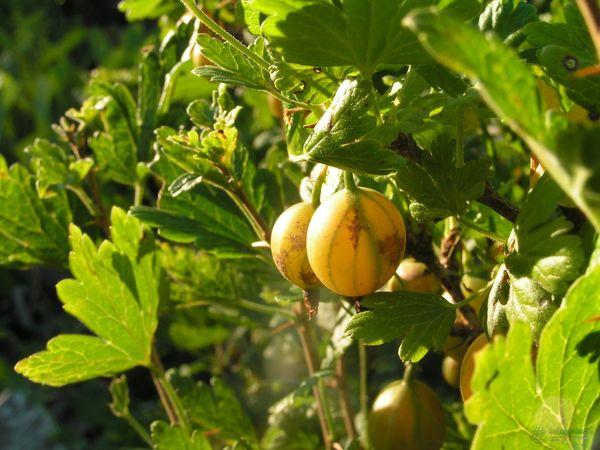
Fruit-based masks restore the elasticity and structure of facial skin. Berry infusions are used as hair rinses to eliminate brittleness and split ends.
In folk medicine, the berries are used as a choleretic. Decoctions of the plant's leaves are used to treat pneumonia.
Gooseberries are rich in ascorbic acid, which prolongs youth, and vitamin B6, which is responsible for vascular health. Eating the fruit fresh provides the body with not only vitamins but also iron, potassium, and phosphorus.
English yellow berries are used to make sauces and fruit salads. Gooseberries are used to make jam, compotes, marmalade, juice, and liqueurs.
A wide range of applications, sweet fruit flavor, adaptability to adverse climatic conditions, and consistent fruiting make the English Yellow gooseberry variety popular in four autonomous republics and 34 regions of Russia.
Related posts:
 Description of 36 of the best sweet and large varieties of gooseberries
 Description and characteristics of the gooseberry variety Commander, planting and care
 Pests and diseases of gooseberries and their control using chemical and folk remedies
 Description of 34 best gooseberry varieties for Siberia and the Urals, cultivation techniques
 22 Best Large-Fruited Gooseberry Varieties for the Moscow Region: Planting and Care
 Description of the Malachite gooseberry, varieties, planting and care
 Description and characteristics of the Consul gooseberry variety, planting and care
 Description and characteristics of the Yantarny gooseberry variety, planting and care