
- History of the variety's origin
- Appearance of bushes
- Taste qualities of gooseberry Consul
- Resistance to diseases and pests
- Drought resistance and winter hardiness
- Transportability
- Pros and cons of the Consul variety
- Landing
- Choosing a location for the Consul gooseberry
- How to select and prepare planting material
- When to plant
- Planting diagram
- Growing and care
- Watering
- Top dressing
- Trimming
- Loosening
- Preparing for winter
- Prevention and control of diseases and pests of gooseberries Consul
- Garter and support
- Propagation of gooseberry Consul
- Harvesting and storage
- Application
- Reviews of the Consul variety
The Consul gooseberry variety produces a profusion of delicious fruit and is easy to care for. This variety is popular among gardeners in the CIS countries. It is grown for sale or for personal consumption. The bushes are renowned for their thornlessness, making harvesting and care easier. It's important to familiarize yourself with all the specifics of its cultivation in advance.
History of the variety's origin
The Consul gooseberry, also known as "Senator," is a new variety developed in the late 1990s. Breeders aimed to create a modernized variety for cultivation in the harsh mid-latitude conditions. As a result of the experiment, a new frost-hardy gooseberry was developed with large, sweet-tasting berries and thornless shoots.
Appearance of bushes
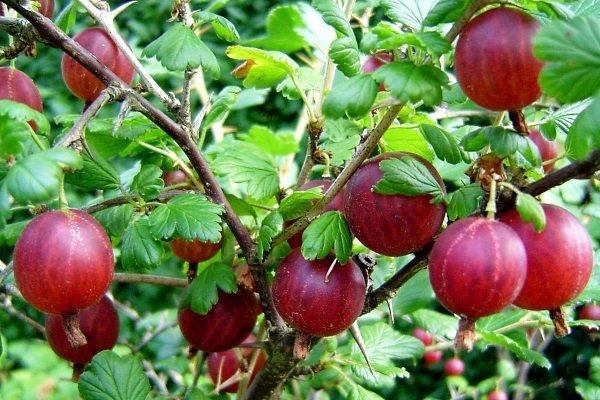
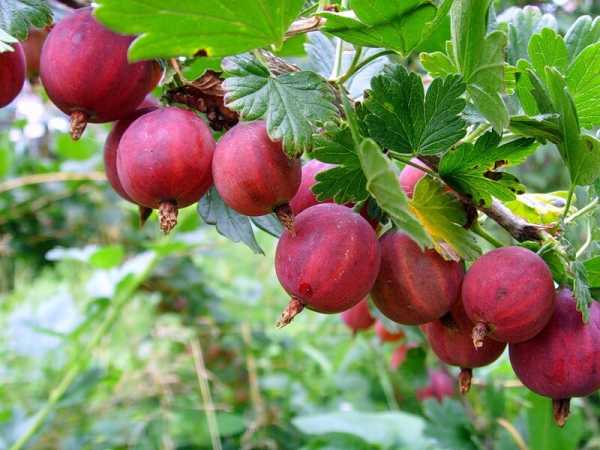
The shrubs are vigorous, reaching 180 cm in height. They have a moderately spreading habit, with dense canopy and good shoot formation. The branches are medium-thick, straight, and slightly concave, with grayish-brown bark. The bark is reddish-brown at the base. The leaves are medium-sized, emerald green, and wrinkled. These shrubs are space-saving and easy to care for.
Taste qualities of gooseberry Consul
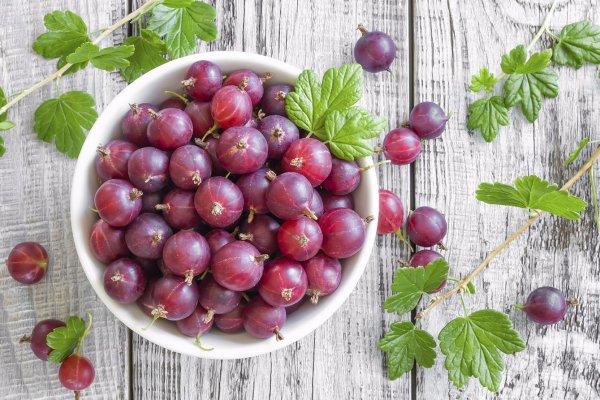
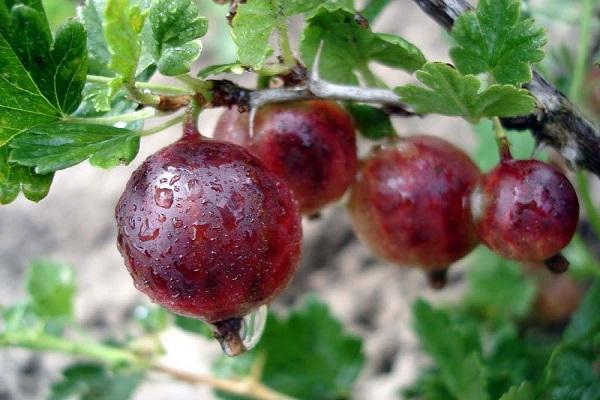
Gooseberries begin to ripen in late July. Each fruit weighs 2.5-6.5 grams, is red or burgundy, has a thin skin, and contains a small number of seeds. The flavor is sweet with a hint of tartness, and the flesh is soft and translucent. A single bush can yield 3-6 kg of berries.
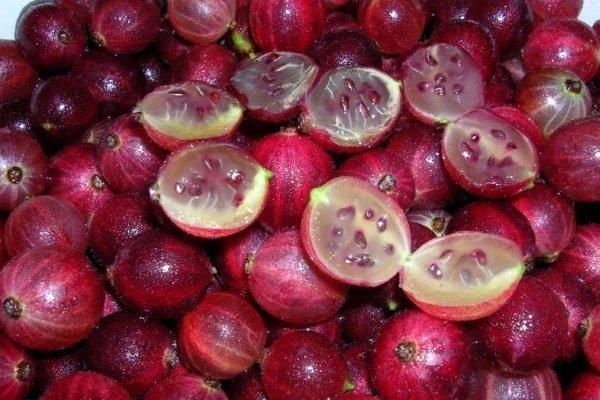 With proper care, the plant can live for over 20 years, producing a harvest every year. The Consul gooseberry contains large amounts of vitamin C and ascorbic acid.
Resistance to diseases and pests
The Consul gooseberry variety exhibits resistance to diseases and beetle attacks. Bushes are rarely affected by sawflies, septoria leaf spot, or powdery mildew. During periods of drought, attacks of gooseberry moths or aphids sometimes occur. The plant's immunity depends on the quality of care.
Drought resistance and winter hardiness
The Consul gooseberry tolerates frosts down to -30 degrees Celsius. This variety produces fruit most successfully in the southern, hot climate. The plants do not tolerate drought well, preferring moisture. Severe water shortages can cause the bushes to wilt.
Transportability
Consul gooseberries don't travel well; the berries should be carefully placed in wooden or plastic crates. Because the skin is thin, the fruit may become misshapen and leak juice. For transport, the harvest is harvested at the technical ripeness stage.
Pros and cons of the Consul variety
Gardeners prefer to grow the Consul gooseberry because of its low-maintenance nature and abundant yield. This variety is particularly popular in Siberia and the Far East, as it tolerates climate fluctuations. This variety also has a number of disadvantages.
| Pros | Cons |
| High resistance to cold | Poor transportation |
| Lack of thorns | Vulnerability to wind gusts |
| Immunity to diseases and bugs | Moisture requirement |
| Abundant harvest | |
| The ability to bear fruit for 20 years | |
| The variety is self-fertile |
Landing
Experienced gardeners recommend planting currants in loamy or sandy loam soil, where the crop thrives. This type of soil provides the rhizome with ample nutrition. The soil should be moderately moist. Gooseberries do not tolerate heavy, excessively wet, or clayey soils. They should not be planted in swampy areas near bodies of water.
Choosing a location for the Consul gooseberry
The plot should be well-lit. Shrubs produce poor fruit in the shade. Partial shade is also acceptable. Two weeks before planting, till the soil to the depth of a spade blade and remove weeds. Add peat, compost, and humus to the soil.
How to select and prepare planting material
It's best to purchase seedlings from nurseries or reputable market sellers. One-year-old seedlings with small, dense roots, free of defects and peeling, are suitable for planting. Two-year-old plants should have a root ball, smooth rhizomes, and no rot. The optimal shoot length is 10-15 cm.
Soak the seedlings in Epin or Matador growth stimulant for 2 hours. To disinfect the seedlings, place them in a potassium permanganate mixture for 30 minutes.
When to plant
It's best to plant the Consul gooseberry in the first half of March, after the snow melts, or in September. Leave at least one month before the cold weather sets in, allowing the bushes time to establish roots.
It is better to carry out planting work immediately after purchasing seedlings.
Planting diagram
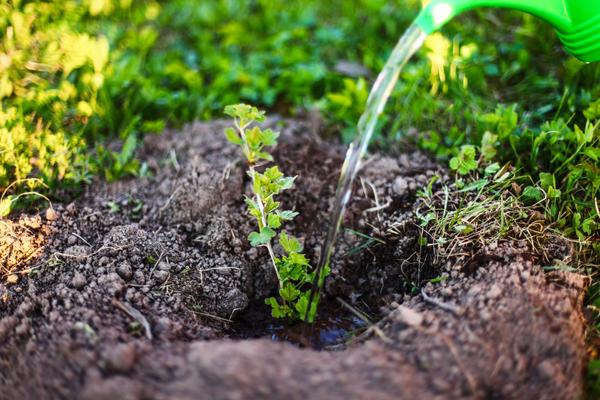
The fruiting of the Consul gooseberry depends on proper planting. It's important to follow the following diagram:
- Place seedlings no closer than one and a half meters to each other to allow the rhizome to develop;
- dig a hole measuring 50*60 cm, fertilize with peat;
- carefully place the bushes into the holes, straightening the rhizomes so that the root collar is 6 cm deep;
- sprinkle with soil, compact with hands.
After planting, mulch the seedlings and water the roots with 0.5 buckets of settled water.
Growing and care
To ensure a consistent harvest of high-quality berries, the Consul gooseberry requires regular watering, loosening of the soil, mulching, and fertilizing. The plantings should be treated monthly against beetles and diseases with insecticides or fungicides.
Watering
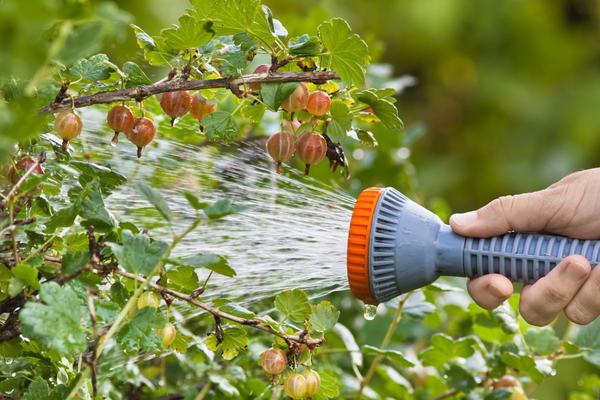
The Consul gooseberry should be watered once every 14 days. This variety is sensitive to overwatering, which can lead to root rot. Water during the flowering and ripening periods. The last watering should be done two weeks before harvest. Apply water from a hose or a watering can with the spray nozzle removed to avoid splashing water on the leaves, as they can get sunburned. The optimal watering rate is 5 liters per plant. Use settled water; using cold water will cause the leaves to fall off.
Top dressing
The Consul gooseberry variety is fertilized to increase yield and improve the flavor of the berries. Fertilizer is applied three times during the growing season according to the schedule below.
- When the first leaves emerge, prepare a solution of 1 tablespoon of urea, 2 tablespoons of nitrophoska, and 10 liters of water. Pour 15 liters of the nutrient solution under each bush.
- During flowering, make a solution of 1 tablespoon of potassium sulfate and 2 tablespoons of complex berry fertilizer per 10 liters of water. Apply 25 liters of the mixture to each plant in three doses, combining the fertilizer with irrigation.
- During fruit set, you'll need 1 tablespoon of nitrophoska and 2 tablespoons of potassium humate. Dissolve them in 10 liters of water. Each bush requires 30 liters of solution, applied in 4 portions, in combination with irrigation.
 In the absence of fertilizers, crop yields and plant immunity decrease.
Trimming
The Consul gooseberry requires shaping. When planting, prune the bush by 1/3 of its length. Remove dry, diseased branches. Subsequent pruning is done to prevent diseases and excessive growth. Branches should not become dense and block ultraviolet rays. Without sun exposure, the berries' flavor will suffer. After pruning, loosen the soil to a depth of half a spade, avoiding the rhizomes.
Loosening
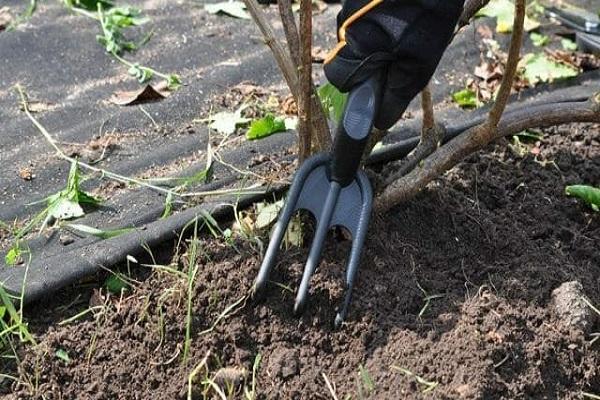
Gooseberries prefer loose, aerated soil. The soil around the bushes is tilled to a depth of 15 cm, every three weeks. Experienced gardeners recommend combining tilling with a layer of mulch. Mulch prevents the soil from drying out, inhibits the growth of couch grass, protects the bushes from rotting, and acts as a source of nutrients. Straw, leaves, sawdust, and rotted manure are commonly used as mulch.
Preparing for winter
The Consul gooseberry variety survives winters well and can be grown without cover. At the end of October, a series of steps are taken to help the bushes successfully withstand frosts and produce abundant fruit the following season. These preparatory steps include:
- sanitary pruning;
- spraying shrubs with insecticides against harmful insects;
- cleaning, burning of garbage, fallen leaves.
At the end of October, humus, compost, and peat are added as fertilizer.
Prevention and control of diseases and pests of gooseberries Consul
In hot weather, due to a lack of moisture, the Consul gooseberry can be attacked by moths or aphids. To prevent these insects, timely watering and spraying with chemicals are important. Ants are also a danger; they prefer to dig colonies under the root system. They can be controlled with sulfur compounds and dust in small doses.
Garter and support
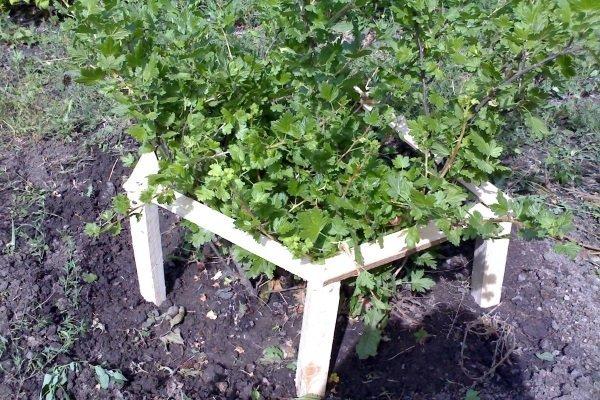
Young branches of the Consul gooseberry require support. This can be wooden stakes or netting attached to the bushes. Supporting the berries facilitates harvesting, prevents shoots from touching the ground, and reduces spoilage. The supports and netting are inserted into the soil to protect the rhizomes. As the branches grow and the yield increases, they are tied to the support structure. Additional support is not required because the shoots grow upward.
Propagation of gooseberry Consul
Gooseberries are propagated by dividing the bush, layering or stem cuttings.
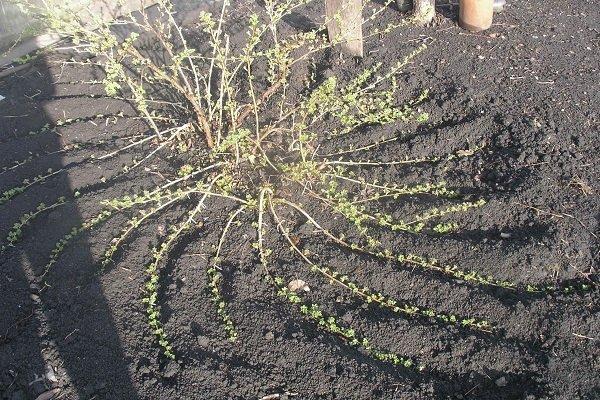
- Layering. Select a strong, healthy branch, pin it to the ground, and cover it with soil. Keep the soil moist. Over time, roots will form on the shoots, and new shoots will emerge from the soil. The following season, separate the new shoots from the parent plant and transplant them to their permanent location in the garden.
- Stem cuttings. The planting material is selected as in case 1: the branch is cut into pieces, each containing 4-5 buds. The cuttings are planted in a container with nutritious soil, leaving only one stem above the surface. After rooting, the cuttings are transferred to a greenhouse for further growth or directly planted in the garden.
 If you strictly follow the rules, even inexperienced gardeners will be able to successfully propagate gooseberries.
Harvesting and storage
The Consul gooseberry harvest begins on July 15th, and continues for one month. Hand-picking is preferred, as several pickings will be necessary. Fresh berries can be stored in the refrigerator for one week. For longer shelf life, they can be placed in the freezer; there, they will keep for up to one year.
Application
The Consul gooseberry can be heat-treated to make delicious preserves, jellies, and compotes. The berries are also eaten fresh, after being rinsed with water.

Reviews of the Consul variety
Reviews of the Consul gooseberry from experienced gardeners will help you make purchasing decisions and learn more about the plant.
Natalia Ivanova, 59 years old, Kyiv
Hi everyone! The Consul gooseberry is my favorite variety; I've been growing it at my dacha for four years. The berries ripen by the end of July, and I get a plentiful harvest. I make jam from the berries and eat them fresh. Sometimes I add them to baked goods. Gooseberries don't require much care; I water them periodically, fertilize them, and prune them. I highly recommend this variety!
Viktor Ilnitsky, 35 years old, Energodar
Hello everyone! I planted the 'Consul' gooseberry at my dacha on a friend's advice, using cuttings. I bought them at the market and planted them in the fall. The following year, the berries have already appeared. The ripening fruits are large, juicy, sweet, and slightly tart. The bushes were plagued by aphids, but I used chemicals to control them. The gooseberries grow near a fence and are fairly easy to care for.
Grigory Kovalenko, 67 years old, Bila Tserkva
I've loved gooseberries since childhood, always growing them at my dacha. In 2017, I planted the 'Consul' variety, borrowing cuttings from a neighbor. The bush is easy to care for: I water, fertilize, and till the soil according to a schedule. The harvest ripens by mid-July, producing juicy, marketable fruits. So far, the plant hasn't been attacked by bugs. I periodically apply preventative chemical treatments.
Related posts:
 Description of 34 best gooseberry varieties for Siberia and the Urals, cultivation techniques
 Description of 36 of the best sweet and large varieties of gooseberries
 Description and characteristics of the gooseberry variety Commander, planting and care
 Pests and diseases of gooseberries and their control using chemical and folk remedies
 22 Best Large-Fruited Gooseberry Varieties for the Moscow Region: Planting and Care
 Description of the Malachite gooseberry, varieties, planting and care
 Description of the English Yellow gooseberry variety, planting and care
 Description of the Chernomor gooseberry variety, planting algorithm and care