
- Description of the bush and berries of the Komandor variety
- Productivity
- Drought resistance and winter hardiness
- Resistance to diseases and pests
- Ripening period
- Transportability of gooseberry Commander
- Pros and cons
- Growing conditions for the Komandor variety
- Landing features
- Selecting a site
- Preparatory work
- How to plant the Commander gooseberry
- Rules for caring for plantings
- Watering
- Support
- Top dressing
- Loosening
- Pruning bushes
- Preparing the Commander gooseberry for winter
- Reproduction
- Pest and disease control
- Harvesting and storage
- Gardeners' reviews of the Komandor gooseberry
The Komandor gooseberry variety is renowned for its abundant yields and low maintenance requirements. It's easy to grow, even for inexperienced gardeners. The bushes are thornless, simplifying care and fruit picking. To successfully grow gooseberries, it's important to familiarize yourself with all the necessary agricultural practices.
Description of the bush and berries of the Komandor variety
The 'Komandor' gooseberry, also known as 'Vladil', is a bush up to 1.5 meters tall. Young branches are slightly arched, spreading slightly, and of medium thickness. The plant is prone to dense growth; without regular pruning, yields decrease and berries become smaller. The stems are pubescent and turn pinkish after exposure to sunlight. The leaves are large, light green, and glossy. The buds are medium-sized, elongated, and pointed at the tip. The 'Komandor' gooseberry produces yellowish-green flowers with a blush in the second ten days of May.
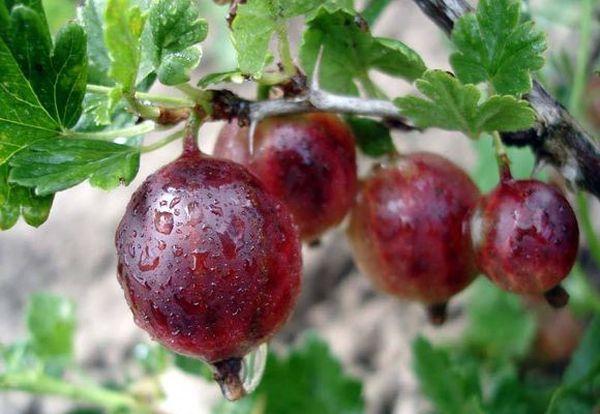
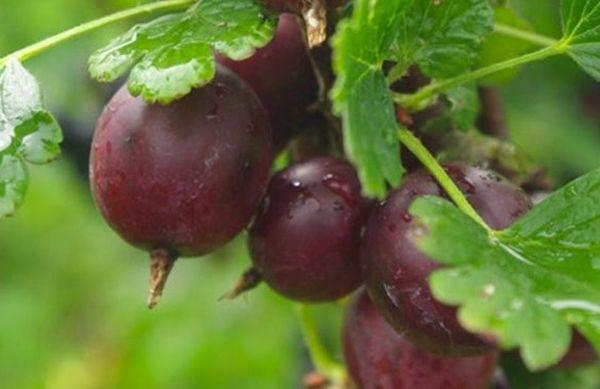
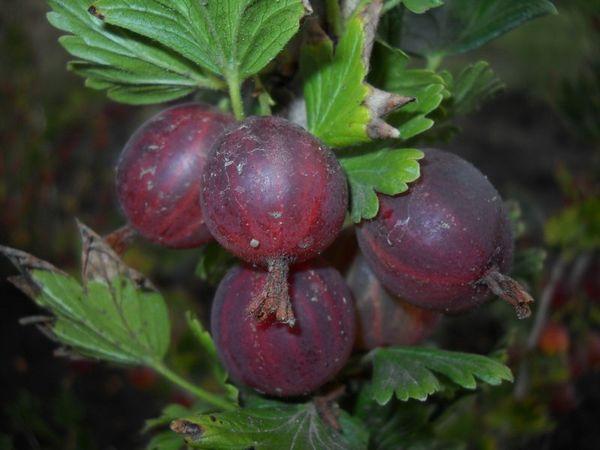
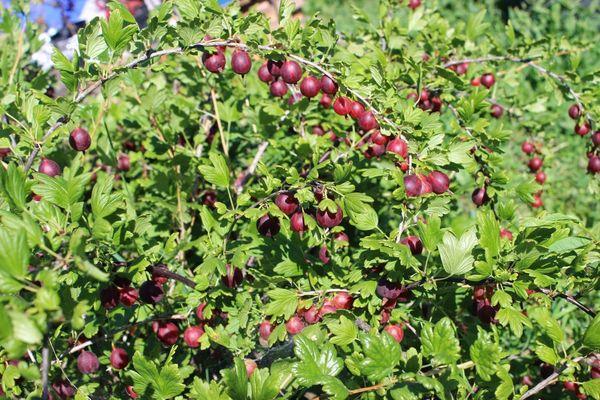
The berries are crimson-brown, turning black toward the end of the ripening period. Depending on cultivation practices, the fruits ripen to medium or large sizes. The average weight of a single berry is 5-7 grams. The fruits are round, without pubescence.
They contain 13.1% sugar and 3% acid. The pulp is sweet and sour, juicy, and has a pleasant aroma. The skin does not crack during transportation, so gooseberries can be shipped long distances. The seed pod is small, and the berries contain few seeds.
Productivity
A single bush can yield up to 6.5 kg of fruit. Tasters rated the berries' flavor at 4.6 points. Due to its high yield, the Komandor gooseberry is widely grown for commercial purposes. In addition to care, weather conditions also influence the yield. In northern regions, bushes bear fruit less abundantly, unlike in warmer southern climates.
Drought resistance and winter hardiness
The Komandor gooseberry is a moisture-loving plant; in hot weather, the bushes should be watered frequently. It tolerates short-term drought well. It is highly resistant to low temperatures, withstanding temperatures as low as -35°C.
Resistance to diseases and pests
The Komandor gooseberry is renowned for its strong resistance to diseases and harmful bugs. It is resistant to sawflies, powdery mildew, and viral diseases when sprayed prophylactically.
Ripening period
Under optimal weather conditions, the first gooseberries are harvested in early June. The berries have not yet acquired their sweetness and are tart in taste. The main harvest ripens by mid-July. If you plan to eat gooseberries fresh or for processing, it's best to wait until the second flush of fruiting. This is when the berries acquire a burgundy color and sweetness. Storage-ready gooseberries are harvested starting on June 15, 2-3 days before they reach full ripeness.
Transportability of gooseberry Commander
To successfully transport gooseberries, they should be placed in cardboard boxes in 3-4 layers. Otherwise, they will leak juice and become misshapen. Berries should be picked with the stems attached, after rain, or in the morning when there's dew. Allow the fruit to dry naturally.
Pros and cons
The Komandor gooseberry variety boasts numerous advantages; it's one of the best thornless varieties. Some gardeners have found a few drawbacks.
| Pros | Cons |
| High yield | Small size of berries |
| Lack of thorns | Average transportability |
| Strong frost resistance | Short shelf life of gooseberries |
| Sweet taste | Resistance to spotting |
| Extended fruiting period | |
| Resistance to diseases and beetle infestations | |
| Low maintenance | |
| The versatility of using berries | |
| Compact bush size |
Growing conditions for the Komandor variety
The Komandor gooseberry adapts well to new conditions and is grown according to standard cultivation practices. Proper care and proper planting are essential.
Landing features
Planting should be done in the fall, when the plant is most likely to establish itself. September or early October is preferred. Allow at least one month before the onset of cold weather. This allows the root system to successfully adapt to the new location and prevent frost. You can purchase cuttings in the spring, but plant them before the buds begin to open. The air temperature should be consistently above 10 degrees Celsius, with no risk of frost.
Selecting a site
The Komandor gooseberry prefers sunny locations; in shade, it bears fruit poorly and is susceptible to disease. Avoid planting bushes in low-lying areas where moisture often accumulates. The plants thrive in partial shade, but they should not be exposed to northerly winds.
Preparatory work
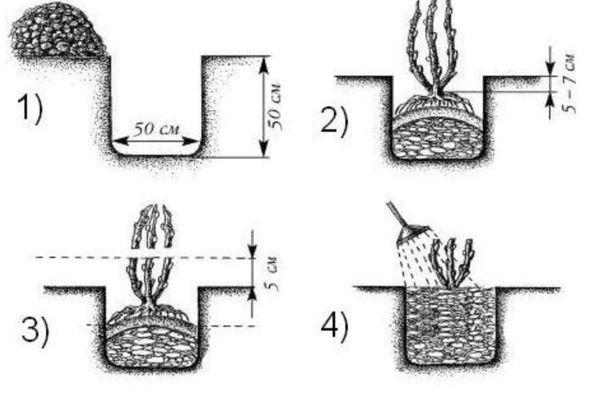
Prepare the soil two weeks before planting, loosening it with a spade-width of a shovel, and removing weeds. Add compost, peat, and wood ash. Treat the soil with insecticides and fungicides to prevent diseases and pests. Dig a hole at least 30 cm deep and 0.5 meters in diameter. Add compost mixed with superphosphate and potassium salt. Add 50 grams of each of the last two ingredients. Space the bushes 1 meter apart.
If there is a tree or a tall building nearby, the gap should be increased to 2-3 meters so that the shadow does not block the sunlight.
How to plant the Commander gooseberry
Gooseberry seedlings are planted according to the diagram below:
- dip the seedlings in the growth stimulator Zircon for 2 hours, then in a weak solution of potassium permanganate for 30 minutes;
- the planting material is placed vertically in the hole and covered with soil;
- the root collar is shortened to the 5th bud for better survival;
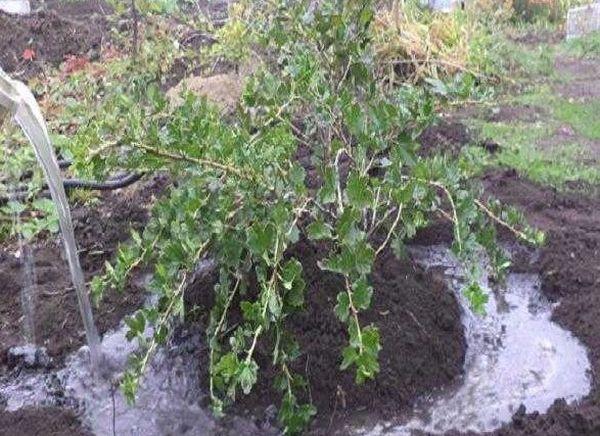
- Water the plantings generously, using 0.5 buckets of water for each bush.
Provided the planting is successful, the harvest will ripen by the next season.
Rules for caring for plantings
The Komandor gooseberry should be watered regularly, the surrounding area should be loosened, fertilized, and treated for bugs and diseases. The bushes are pruned according to a schedule to form a bushy mass and prevent overcrowding.
Watering
The Komandor gooseberry prefers moisture, especially in hot weather. Until fruit appears on the shoots, water the plant daily, 3 liters of water per bush. Use settled water, but avoid letting it come into contact with the leaves, as this can cause sunburn. Once the gooseberry's fruit turns burgundy, water every other day.
If frequent watering is not possible, the area around the tree trunks can be mulched with hay or peat. This will prevent excess moisture evaporation in the root zone.
Support
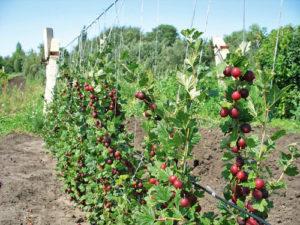
Komandor gooseberry bushes require a supporting structure. This will prevent the shoots from bending toward the ground or breaking under the weight of the fruit during a bountiful harvest. Two supports are installed at the beginning or end of a row of seedlings. A strong nylon thread or wire is stretched between them, creating a trellis. Individual bushes are best supported individually with stakes, to which the shoots are tied.
Top dressing
In the first year after planting, the Komandor gooseberry is fertilized with nitrogen-containing compounds at a rate of 20 grams per square meter of trunk circumference. This stimulates the growth of the bush's green mass.
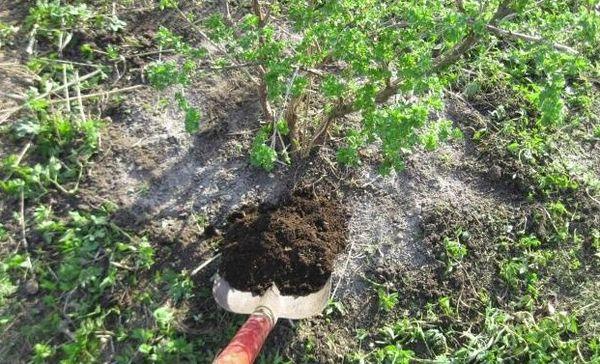
Every year, gooseberries should be fed with the following components:
- ammonium sulfate – 25 g;
- potassium sulfate – 25 g;
- superphosphate – 50 g;
- compost - half a bucket.
After flowering, and again 2-3 weeks later, fertilize the gooseberries with mullein diluted in water at a rate of 1 kg per 5 liters. One bush will require 5-10 liters of nutrient mixture. All fertilizers are applied around the perimeter of the crown, in the area where the root system's absorptive parts are located.
Loosening
The Komandor gooseberry appreciates regular weeding, which ensures access of moisture and oxygen to the root system. This has a beneficial effect on growth and fruiting. Weeding should be done shallowly, at a distance of 10-15 cm. It is important not to damage the root system.
Pruning bushes
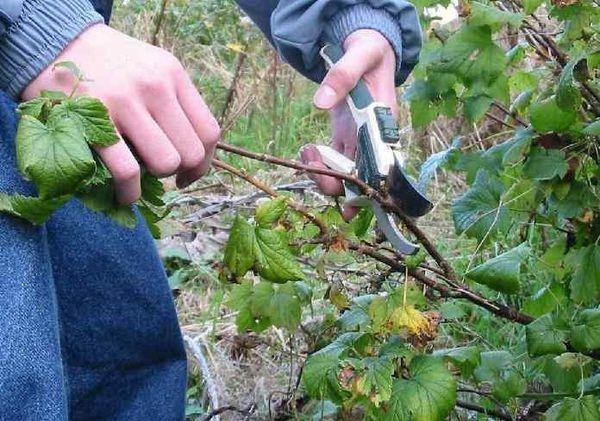
The Komandor gooseberry variety is prone to dense growth and requires regular pruning. The first pruning is for sanitation purposes—removing old, dried-out shoots. Subsequent pruning is carried out in accordance with the chosen bush training method. No more than three branches are pruned annually, otherwise the plants will be susceptible to disease and wither.
Preparing the Commander gooseberry for winter
In November, the area around the trunk is carefully plowed to destroy harmful beetle larvae and fungal spores. If winters in the region are snowy, the shoots of the Komandor gooseberry are tied and bent to the ground. This will prevent them from breaking under the weight of the snow.
When winters are characterized by little precipitation and severe frosts, gooseberry bushes are covered with protective material such as straw or peat, and secured with plastic film. The covers are removed at the end of March, once the threat of frost has passed.
Reproduction
Gooseberry variety Commander can be propagated by cuttings, division of the bush or layering.
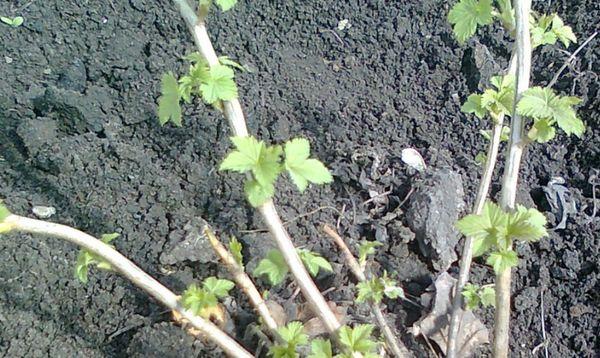
Each technique has its own nuances.
- Using cuttings. Young branches cut in June are planted in the soil after harvesting from mature plants.
- Dividing the bush. Young gooseberry shoots are dug up from the old bush due to their separate growth. The seedlings already have a well-developed root system and are completely ready to adapt to their new location.
- Layering. Gooseberries can be propagated this way using the lower shoots. They are dug into the ground to a depth of 15 cm. The branches from the parent plant are not cut off, but covered with soil. New shoots appear with the arrival of spring.
When propagating the Commander gooseberry using the methods described above, fruiting will begin by the 6th year of life.
Pest and disease control
The Komandor gooseberry variety is rarely attacked by beetles or pathogens, but under adverse weather conditions or poor care, this can happen. The sooner the problem is detected, the better the chances of saving the plants.
Most often, gooseberries are susceptible to the following diseases.
- Stem drying. Cracks appear in the bark, and fungal spores are present. To eliminate this problem, use Bordeaux mixture. Prepare the mixture according to the instructions. Apply the mixture to affected shrubs before the leaves emerge.
- Septoria leaf spot. Grayish spots appear on the leaves. This condition is treated using the same method as stem blight.
- Rust. Orange and copper-colored bumps are visible on the underside of the leaves. The disease is controlled with copper oxychloride. Apply the substance to gooseberries before the bloom.
- Gray mold. Fruit, shoots, and leaves fall off and rot. Infected parts of the bushes are removed.
- Mosaic disease. The foliage wilts, and pale green spots appear along the inner veins. Plants affected by mosaic disease cannot be cured; the bushes are burned in a location away from the garden.
Among the pests that attack the Commander gooseberry are:
- aphids - destroyed with Aktara, Actellic, bushes are treated with a solution of laundry soap;
- geometer moth - to eliminate the beetle, use Iskra, Actellic, chamomile infusion;
- spider mites - they are removed with wormwood tincture or Bankol or Sanmite;
- gall midge - insects are removed using Fufanon, Karbofos;
- Currant glassworm - beetles are destroyed using the substance Actellic.

To prevent the Komandor gooseberry variety from being attacked by harmful beetles, use systemic or contact chemicals. Spray in the spring, targeting the green foliage, and repeat after two weeks. Experienced gardeners recommend using products such as Karbofos, Aktara, and Actellic.
Harvesting and storage
Gooseberries are harvested starting in mid-June. The bushes are thornless, so there's no risk of injury to your hands when picking the berries, but gloves are a must. Protect your hands with thick fabric or leather. The berries should be picked from the bottom of the bush, gradually moving upward. It's important to pay attention to the color and size of the berries: when they're green, allow them 5-7 days to ripen.
Gooseberries should be picked with the stems attached; this will ensure a longer shelf life. It's not advisable to pick them after a heavy rain or morning dew. Wet fruit is more likely to rot.
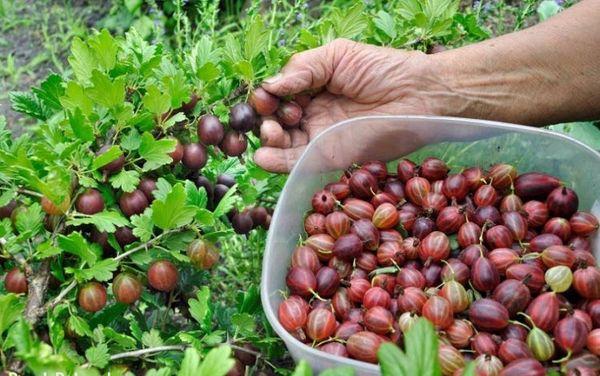
When left without a choice, the harvest should be immediately spread out on newspaper and dried naturally. Gooseberries shouldn't be stored for long periods; fresh fruit will remain marketable for 3 days. They will keep for up to 5 days in the refrigerator.
Frozen gooseberries can be stored for six months without losing their flavor or shape. Before placing them in the freezer, they are sorted, discarding any rotten or soft ones. If transporting the berries long distances, they are placed in a plastic container with a lid. Line the bottom with a soft cloth.
Gardeners' reviews of the Komandor gooseberry
The following reviews of the Komandor gooseberry will help you learn more about the variety and become familiar with its shortcomings.
Valentina Akopyan, 59 years old, Sergiev Posad
Greetings! I have only positive experiences with the Komandor gooseberry. I've been growing it in my garden for five years, and the fruits ripen by the end of June, always juicy and sweet. I make jam with them, add them to baked goods, and freeze them. They also make an incredibly delicious compote. The bushes require regular pruning, but are virtually disease-free. They've been attacked by aphids a couple of times, but I've controlled them with a soapy solution containing Actellic.
Viktor Golunov, 48 years old, Mariupol
Hello! The Komandor gooseberry is my favorite variety; I've been growing it at my dacha since 2014. The berries are top-quality, with a sweet, slightly tart flavor. I learned about this variety from a neighbor and planted it using cuttings bought at the market. It's easy to care for and produces a consistent harvest.
Olga Alekseeva, 60 years old, Kyiv
Hello everyone! I've loved gooseberries since childhood, and I grow several varieties at my dacha. I consider the Komandor variety to be the tastiest. The downsides include a slightly sour berry and the need for regular pruning. I take good care of the berries, harvesting about 5 kg of berries from a single bush. They don't keep for long, about a week in the refrigerator. I recommend everyone grow Komandor gooseberries.
Related posts:
 Description of 36 of the best sweet and large varieties of gooseberries
 Description of 34 best gooseberry varieties for Siberia and the Urals, cultivation techniques
 Pests and diseases of gooseberries and their control using chemical and folk remedies
 22 Best Large-Fruited Gooseberry Varieties for the Moscow Region: Planting and Care
 Description of the Malachite gooseberry, varieties, planting and care
 Description of the English Yellow gooseberry variety, planting and care
 Description of the Hinnonmaki gooseberry, varieties, planting and care
 Description and characteristics of the Consul gooseberry variety, planting and care