
- History of selection
- Description and characteristics
- Precocity
- Ripening period
- Productivity
- Self-fertility
- Immunity
- Drought resistance
- Winter hardiness
- Transportability
- Varieties
- Green
- Red
- Yellow
- Gelb
- How to plant
- Choosing a location
- Deadlines
- Soil requirements
- How to prepare the soil
- Planting diagram
- Care instructions
- Watering
- Top dressing
- Trimming
- Thinning
- Sanitary
- Formative
- Rejuvenating
- Protection from diseases and pests
- Anthracnose
- White spot
- Gray rot
- Goblet rust
- Mosaic
- Spider mite
- Firefly
- Sawfly
- Currant gall midge
- Aphid
- Reproduction
- Layering
- Cuttings
- Dividing the bush
- Advantages and disadvantages of the variety
- Harvesting and storage
- Application areas
The Hinnonmaki gooseberry variety hasn't yet achieved widespread popularity among gardeners, farmers, and vegetable growers, but it's steadily making progress toward that goal. This new fruit variety boasts high yields, excellent berry flavor, and a diverse variety of varieties.
History of selection
The Hinnonmäki berry variety was developed by Finnish breeders in the 1980s. The scientists' goal was to create a fundamentally new, frost-resistant, and productive gooseberry variety. This fruit also boasts natural immunity to most diseases and drought tolerance.
But the breeders did not stop there and, based on the Hinnonmaki variety, they developed fruit bushes with multi-colored berries.
Description and characteristics
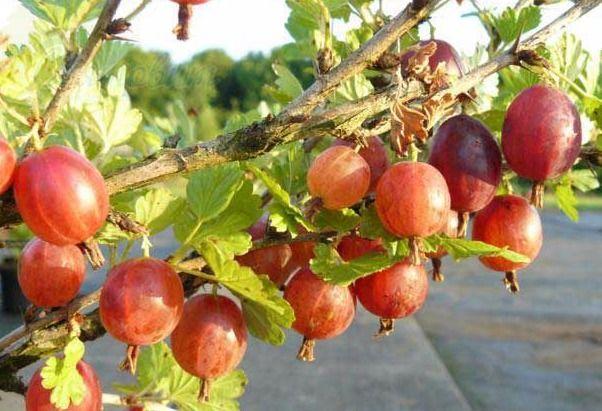
The Hinnonmaki gooseberry variety is characterized by a compact, round bush with numerous, thin, strong shoots covered in sharp thorns. The maximum plant height is up to 1.5 m.
The leaves are medium-sized and a rich green hue. During flowering, cluster-shaped inflorescences appear, which produce berries.
Important! Hinnonmaki gooseberry is easy to care for, grows quickly, and is hardy to various climates.
Precocity
Berry bushes begin bearing fruit in the second year after planting in open ground. Peak yields occur between the third and fifth years of growth. It is during this period that the fruit crop produces its greatest yields.
Ripening period
The ripening time of berries depends directly on the climate of the growing region and the variety. In southern latitudes, gooseberries ripen in the first half of July; in temperate climates, the fruits are ready for consumption at the end of July; and in northern regions, ripening is delayed until August.
Productivity
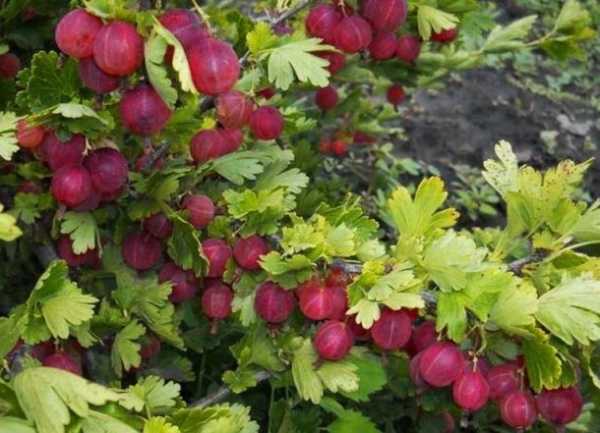
The breeders who developed the Hinnonmaki gooseberry touted the variety as high-yielding, and that's true. With proper and timely care, each bush yields up to 7 kg of large, juicy berries. The fruits ripen large, and their color varies depending on the variety, but they all have juicy, sweet flesh and a dense, thin skin.
 Important! Harvesting the fruit on time will prevent massive berry fall from the bushes.
Self-fertility
The Hinnonmaki gooseberry is self-pollinating and does not require neighboring varieties of different varieties to bear fruit. However, as gardeners and farmers worldwide have shown, planting different varieties of this berry crop significantly increases yield.
Immunity
Berry bushes have strong immunity to powdery mildew and certain pests. If agricultural practices are not followed, the crop is susceptible to fungal and viral diseases.
Drought resistance
Drought resistance isn't a key characteristic of this gooseberry variety. The plant requires watering; during drought, yields drop, and the berries' flavor deteriorates. Also, with prolonged lack of moisture, the berries become smaller, dry out, and fall from the bush.
Winter hardiness
The Hinnonmaki gooseberry is highly resistant to frost and temperature fluctuations. This berry bush easily survives winters down to -30°C (-22°F) and is unaffected by spring frosts. In extreme cold, the fruit tree requires additional insulation.
Transportability
Gooseberries ripen with a thin but dense skin, which allows for long-term storage and long-distance transportation of the harvest.
Varieties
Using the Hinnonmäki gooseberry as a basis, Finnish breeders developed varieties that retained the best properties and characteristics of the berry crop, but differed fundamentally in berry color and bush size.
Green
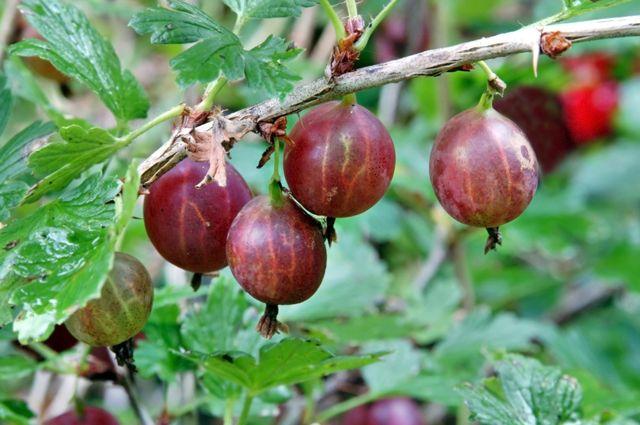
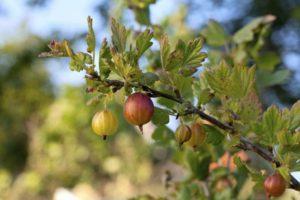
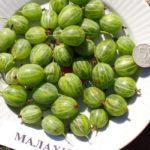
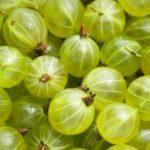
A miniature representative of the variety, the maximum height of a mature bush is 80-100 cm, with multiple, thorny shoots creating a dense crown. The berries are large, fuzzless, bright green, with thin skin and sweet, translucent flesh. The main characteristics of this variety are high yields (up to 7 kg per bush), resistance to low temperatures, and reliable immunity to some diseases and pests. The berries ripen in late July.
Red
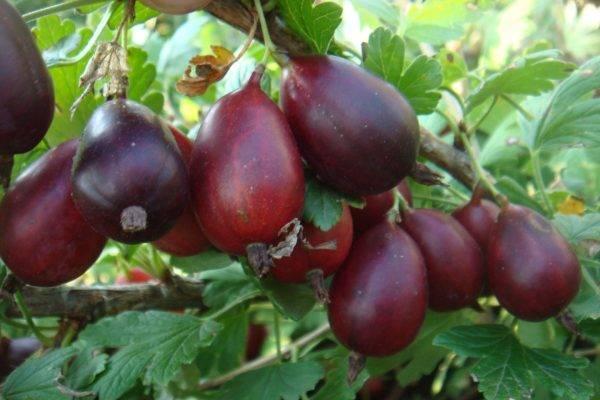
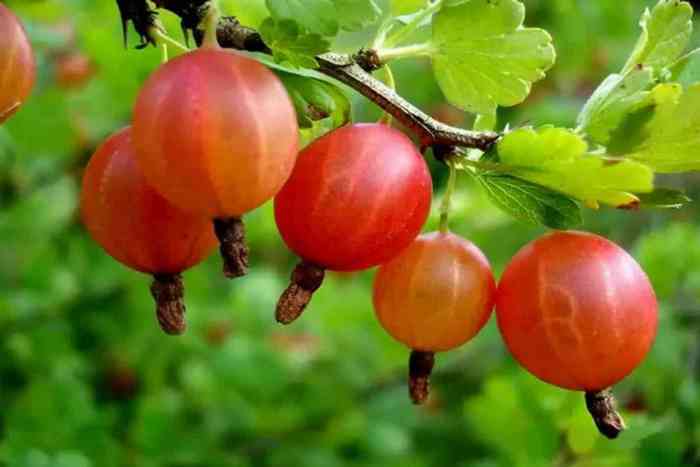
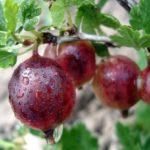
A spreading berry bush, growing up to 1.5 m, with strong, multiple shoots. Small, sharp spines line the branches and shoots. The berries are fully ripe by early August. The fruits are large, up to 5 g, with thin skin and sweet-tart flesh, turning dark burgundy as they ripen. Ripe fruits quickly fall from the branches.
Yellow
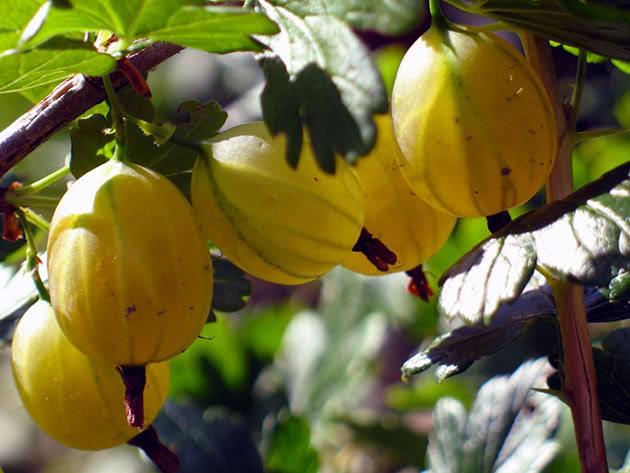
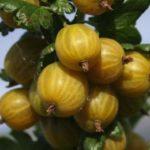
This compact berry bush grows up to 1 m tall, with straight, thorny, multiple shoots. It tolerates low temperatures and short-term droughts well, and is resistant to some fungal and viral diseases. The berries are large, up to 5 g, yellow, with juicy, sweet flesh, and ripen in the second half of July. This versatile variety is recommended for fresh consumption and processing.
Gelb
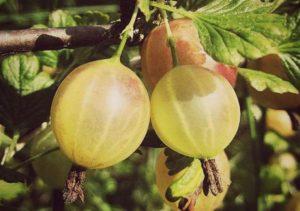
A frost-hardy variety. Large, golden berries with thin, hairy skin and juicy, sweet flesh ripen on a compact bush. The first berries appear in the first half of July, and the fruiting period is prolonged, with ripe berries prone to falling from the bush. This variety is considered a dessert variety for general use.
How to plant
The Hinnonmaki gooseberry variety grows and develops quickly, provided the location is chosen correctly and the seedlings are planted in a timely manner.
Choosing a location
For berry crops, choose well-lit, level, dry sites sheltered from north winds and drafts. Gooseberries will not thrive in lowlands, marshy soil, or areas with a high groundwater table.
Important! This fruit crop requires light; if it lacks sufficient light, the variety loses immunity to fungal and viral infections.
Deadlines
Depending on the climate, hybrid gooseberry seedlings are planted in spring or fall. In regions with long winters, it's best to postpone planting until spring, allowing the plants time to establish themselves in the open ground and take root. In temperate or warm climates, the bush is planted in the fall. This way, a harvest of ripe berries will be harvested the following summer.
Soil requirements
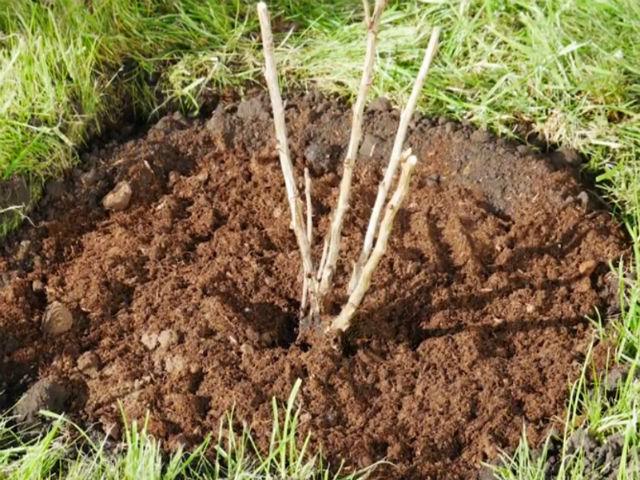
The Hinnonmaki gooseberry is a productive fruit crop, so it's demanding of soil conditions. The bushes grow and thrive best in loose, fertile soil. Lime is added to highly acidic soil, heavy clay soil is amended with river sand and humus, and sandy soil is mixed with sand and peat.
How to prepare the soil
The land plot is prepared 2-3 weeks before planting.
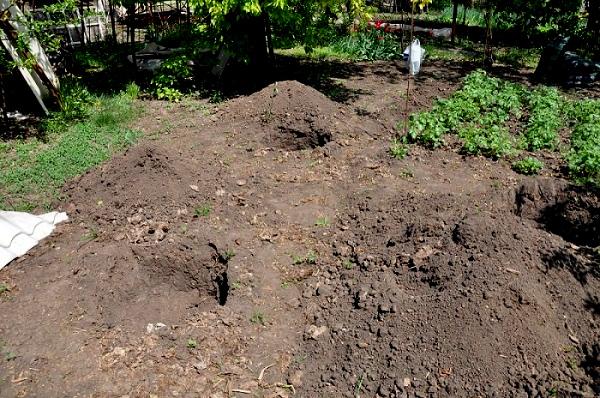
- The soil is dug to a depth of 35 cm, weeds are removed and thoroughly loosened.
- Humus, organic and mineral fertilizers are added to the soil.
- Planting holes are dug on the prepared area.
- The depth and width of the holes are 40-50 cm.
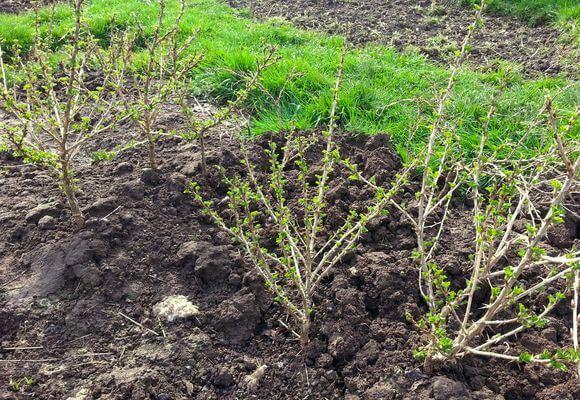
- The distance between plantings is from 1 to 1.5 m, between rows 2.5 m.
- Drainage consisting of sand and small stones is placed at the bottom of the hole.
- Fertile soil is poured into the hole and watered.
Important! When selecting seedlings, carefully inspect the rhizomes and appearance of the plants for diseases and pests.
Planting diagram
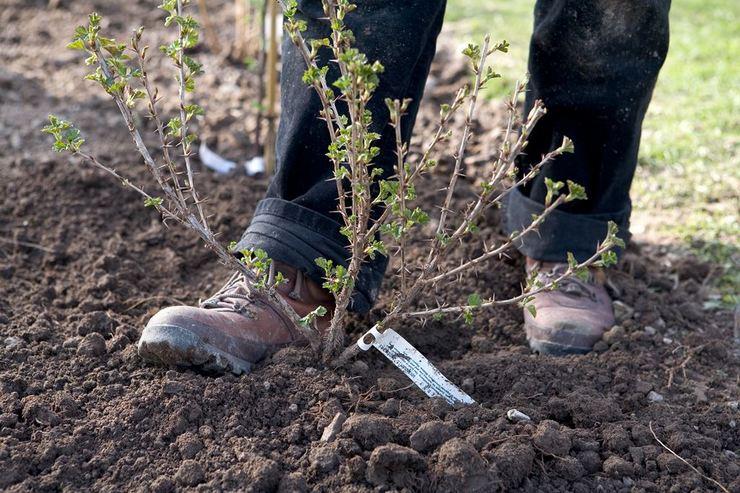
Before planting in open ground, the roots of the seedlings are soaked for 10-12 hours in a settled mixture of clay and water, and then treated with a weak solution of manganese or special preparations.
- A gooseberry seedling is placed in the prepared hole.
- The plant roots are spread evenly throughout the hole and covered with fertile soil.
- The root collar is deepened no more than 6 cm.
- The soil is compacted slightly and watered.
- The tree trunk circle is mulched with natural materials.
Important! When planting seedlings, there should be no gaps between the soil and the roots. Gaps in the soil encourage the growth of fungi and viruses.
Care instructions
The Hinnonmaki gooseberry is easy to care for, but to obtain a high-quality and abundant harvest, the bushes require timely fertilizing and pruning.
Watering
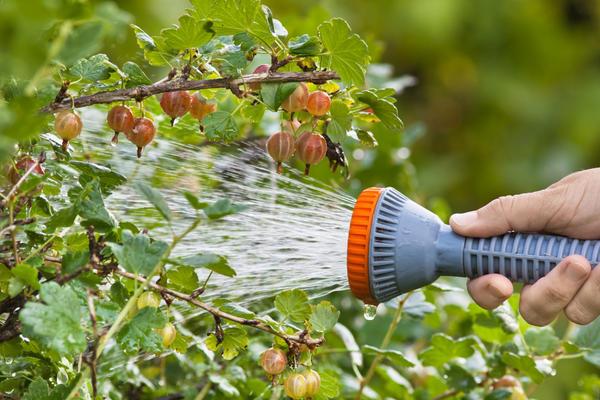
Water the berry crop as needed, once the top layer of soil dries out. The plant tolerates drought moderately, but in extreme heat, it requires additional watering.
Also, irrigation work is important during the period of ovary formation and fruit ripening.
Before winter dormancy, water the shrub thoroughly. Water the roots, avoiding contact with the green parts of the plant.
Top dressing
When planting seedlings in fertile soil, fertilizing begins in the second or third year of growth. During flowering, fruiting, and ovary formation, berry plants are fertilized exclusively with organic matter. In the fall, after harvest, and in the spring, before the growing season begins, gooseberries are fed with a mineral complex.
Trimming
Timely pruning of the bush activates the growth and development of berry crops, increases the yield and taste of berries.
Thinning
With the onset of spring and late autumn, weak and irregularly growing branches are pruned. Pruning is done right down to the root.
Sanitary
In early spring, remove dry, broken, damaged, and frost-damaged branches and shoots. Diseased and pest-infested branches are completely pruned.
Formative
To ensure the bush grows and bears fruit properly, formative pruning is carried out annually.
During the growing season, gooseberries produce numerous basal shoots, of which 4-5 of the strongest and most powerful are left, and the rest are completely removed.
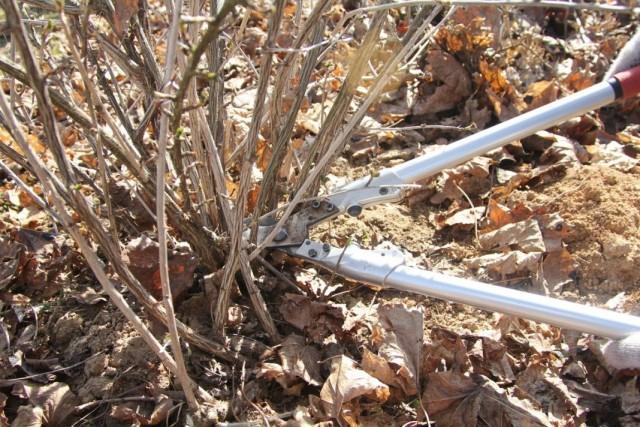 Important! To prevent disease, treat cut areas with garden pitch.
Rejuvenating
Before the onset of winter or before the beginning of the growing season, all branches and shoots older than 5-6 years are completely cut off from the bushes.
Protection from diseases and pests
Incorrect and untimely care of berry bushes provokes the development of fungal and viral infections, as well as attacks by pests on the plant.
Anthracnose
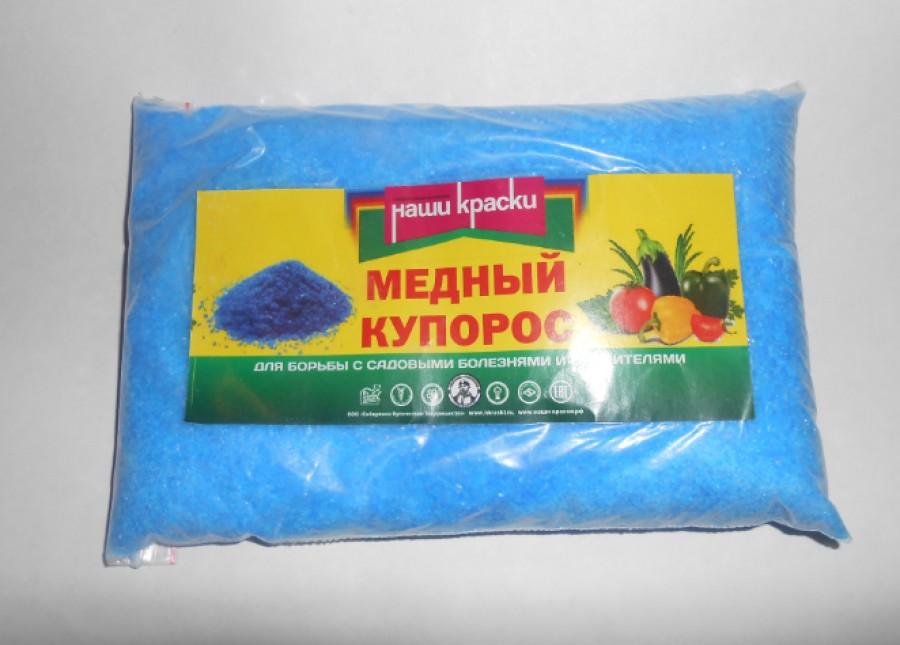
This fungal disease attacks berry crops at the end of the flowering period. It appears on the leaves as small dark spots that develop into bumps. Fungal spores spread quickly, affecting the yield and immunity of gooseberries. Bushes affected by anthracnose are treated with copper-containing fungicides.
White spot
White spot is caused by a fungus that attacks the above-ground parts of the plant. Light spots with dark edges appear on the leaves, with spore-bearing spots forming in the center. The leaves dry out, crumble, and fall off at the height of the growing season.
White spot is usually caused by a lack of nutrients and minerals. The shrub is fed with a balanced mineral supplement.
Gray rot
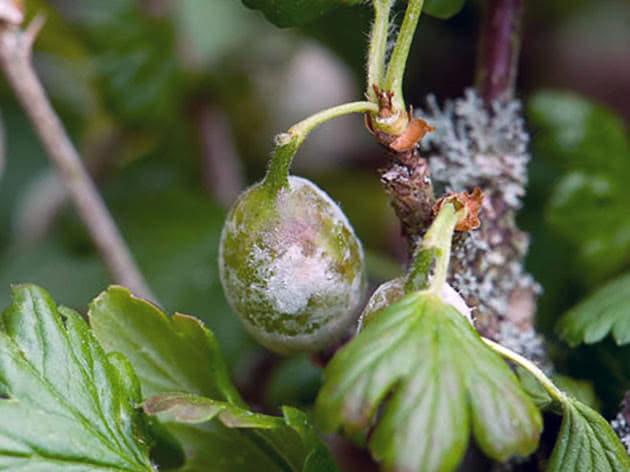
Fungal infection appears on the plant's leaves and shoots as a light-colored coating. Affected berries, fruits, and branches are pruned and destroyed, and the shrub is treated with professional fungicide-based products.
Goblet rust
The main carriers of fungal spores are sedges and moist soil. Leaves turn yellow, dry out, and fall off. The fungal spores then penetrate all parts of the plant. Copper-based fungicides are used for treatment and prevention.
Mosaic
Mosaic is a viral infection that is untreatable. If infected, the plant is dug up and destroyed, and the soil is treated with antibacterial agents.
Spider mite
Spider mites can be found on the undersides of leaves when they become covered in a thin, barely noticeable web. The pest feeds on plant sap, causing the leaves to dry out and fall off, and also weakening the shrub's frost resistance.
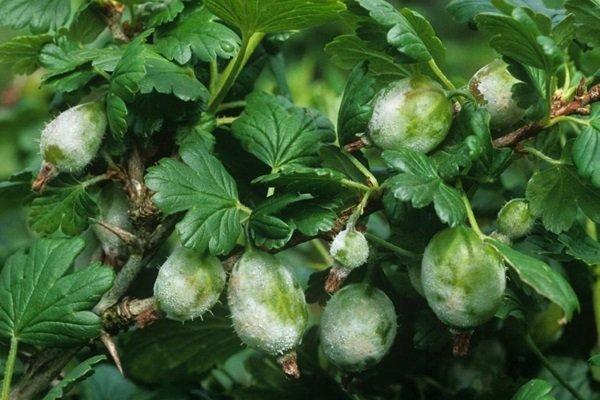
To combat the pest, acaricides are used, treating the bush before the growing season.
Firefly
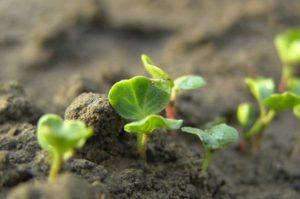
A tiny caterpillar can destroy not only the foliage of a bush but also the entire crop. Initially, the moth destroys the flowers, later moving on to the ripening berries, which rot and dry out.
To prevent damage to berry crops by pests, the tree trunk circle is cleared of weeds and debris and mulched.
The bushes are sprayed with a soap solution or onion decoction. If the pest has completely infested the plant, insecticides are used.
Take a look Also
Sawfly
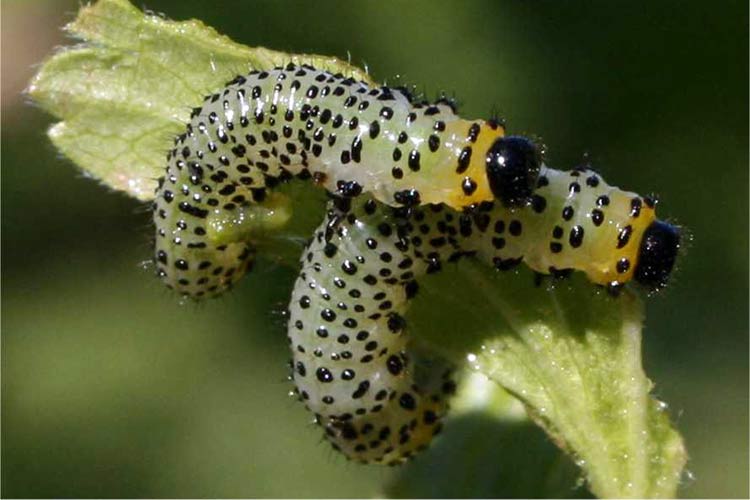
This small caterpillar causes significant damage to gooseberry leaves and fruits. Control methods for this pest are the same as for the moth.
Currant gall midge
A gall midge infestation can be determined solely by the plant's health. If branches, leaves, and buds are drying up, it's time to take action.
As a preventative measure, I plant mint next to the gooseberries, as most pests dislike its scent. I also spray the bushes with soapy water or professional pesticides.
Aphid
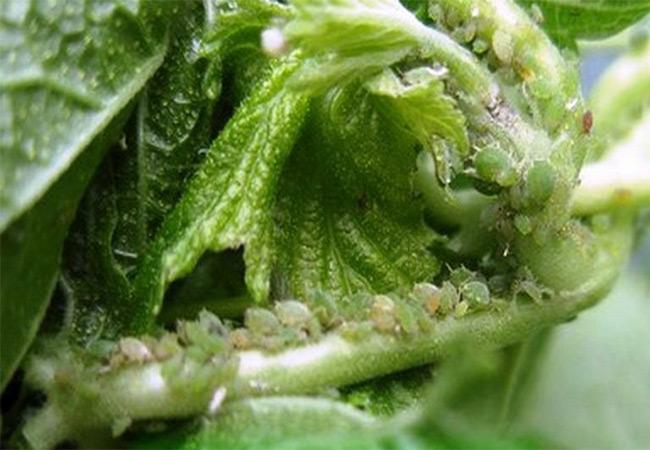
Aphids suck the plant's sap, causing the drying, deformation, and death of leaves, shoots, and twigs, and they also spread fungi and viruses. Gooseberries affected by these pests are sprayed with copper-containing insecticides.
Reproduction
To propagate the Hinnonmaki gooseberry variety, vegetative methods are used to obtain new plants.
Layering
In early summer, select a strong, healthy lower shoot from a mature bush and bend it down to ground level. Cover the shoot with soil, leaving the tip exposed. Water the shoot throughout the summer, then dig it up in the fall and separate it from the mother bush, roots included. The finished seedling is transferred to a separate hole.
Cuttings
Cuttings are obtained by pruning thick, healthy shoots from mature bushes. The shoot is divided into several 15-20 cm pieces. Each cutting should have at least 3-4 buds or leaves.
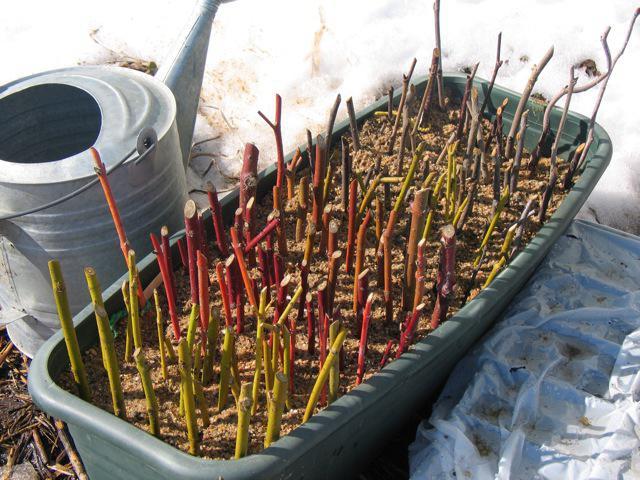
The plants are planted in containers with fertile soil and covered with plastic wrap. Once the seedlings have taken root, they are transferred to open ground.
Dividing the bush
Dividing a gooseberry bush is the easiest and fastest way to obtain new plants and rejuvenate an old one. A mature bush is dug out of the ground, and the rhizomes are divided into equal parts. Each seedling should have several buds or leaves remaining. The plants are planted in separate planting holes.
Advantages and disadvantages of the variety
Before growing Hinnonmaki gooseberries in your garden, it's a good idea to familiarize yourself with all the pros and cons of this berry variety.
Pros:
- High yield rates.
- Large berries of attractive appearance with excellent taste.
- Resistance to cold and temperature changes.
- Natural immunity to some fungal diseases and pests.
The advantages of this variety also include the possibility of growing berries on a standard tree.
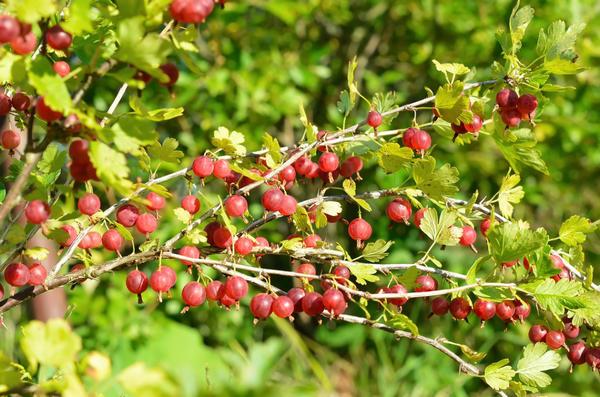
The only drawback of the Hinnonmaki gooseberry variety is its sharp thorns, which make harvesting and caring for the plant difficult.
Harvesting and storage
To avoid being pricked by the thorns, I recommend protecting your hands with thick gloves when harvesting. The first berries ripen in mid-July. However, since the fruiting season is prolonged, the berries are picked every 2-3 days. The harvested fruit is spread in a thin layer on a flat surface and dried. Gooseberries can be stored under normal conditions for up to 10 days. They will keep in the refrigerator for up to 2 months, and in a sealed container for up to 3 months.
Application areas
The Hinnonmaki gooseberry variety is universal and is recommended for consumption both fresh and processed.
The berries are used to make jams, preserves, compotes, and marmalades, and are added to baked goods, desserts, and dairy products. Containing a large number of vitamins and nutrients, gooseberries are often used in the complex treatment of various ailments and in dietary nutrition.
Related posts:
 Description of 36 of the best sweet and large varieties of gooseberries
 Description of 34 best gooseberry varieties for Siberia and the Urals, cultivation techniques
 Description and characteristics of the gooseberry variety Commander, planting and care
 Description of the Malachite gooseberry, varieties, planting and care
 Pests and diseases of gooseberries and their control using chemical and folk remedies
 22 Best Large-Fruited Gooseberry Varieties for the Moscow Region: Planting and Care
 Description of the English Yellow gooseberry variety, planting and care
 TOP 20 ways to preserve fresh gooseberries for the winter